Where are the 20 Leapfrog straight-‘A’ hospitals?

Twenty U.S. hospitals have received consecutive “A” safety grades from The Leapfrog Group since 2012, according to the group’s spring safety grades released May 3. 

Since 2012, Leapfrog has assigned letter grades to nearly 3,000 acute-care general hospitals across the nation every fall and spring. The safety grades evaluate hospitals’ performance on up to 22 patient safety measures from CMS, the Leapfrog Hospital survey and other supplemental sources. The safety grades are the only hospital ratings program solely based on hospitals’ ability to protect patients from preventable errors, accidents, injuries and infections. 

Twenty hospitals have received 23 consecutive “A” grades since the launch. 

Last fall, 22 hospitals achieved consecutive “A” grades. For the spring grades, two hospitals lost their consecutive “A” streak: Sentara Williamsburg Regional Medical Center in Virginia and Sierra Vista Regional Medical Center in San Luis Obispo, Calif., both earned a “B.”

Read more about Leapfrog’s hospital safety grade methodology here

Here are the 20 hospitals that have achieved 23 consecutive “A” grades:

Arizona 

Mayo Clinic Hospital (Phoenix) 

California

French Hospital Medical Center (San Luis Obispo) 

Kaiser Permanente Orange County-Anaheim Medical Center 

Colorado

Rose Medical Center (Denver) 

Florida 

AdventHealth Daytona Beach

Illinois 

Elmhurst Memorial Hospital 

University of Chicago Medical Center

Northwestern Medicine Central DuPage Hospital (Winfield) 

Massachusetts 

Beverly Hospital 

Saint Anne’s Hospital (Fall River) 

Michigan 

University of Michigan Health (Ann Arbor) 

Mississippi 

Baptist Memorial Hospital Golden Triangle (Columbus) 

North Carolina 

Rex Hospital (Raleigh) 

Ohio

OhioHealth Dublin Methodist Hospital 

OhioHealth Grady Memorial Hospital (Delaware)

Texas

St. David’s Medical Center (Austin) 

Virginia

Inova Loudoun Hospital (Leesburg)

Sentara CarePlex Hospital (Hampton) 

Sentara Leigh Hospital (Norfolk) 

Washington 

Virginia Mason Medical Center (Seattle) 
Majority of hospitals not meeting minimum volumes for high-risk surgeries, Leapfrog says

https://www.fiercehealthcare.com/hospitals-health-systems/leapfrog-surgical-study?mkt_tok=eyJpIjoiWm1Rd1kyVTNaVFl6WWpoayIsInQiOiJcL0ZDakZBUCtJWXhjNXBxUzVPRytqNUZBOU04ODlOU1I2ZFZyQ3ROcUo4eWoxckNMS2JsMVFBV1F6MEtHVkJZSVhZdWJQV2hoMVVTalwveTFnNUJYeFR6N3ZxaVZTUTNWVzI1UkMyQzh5MUxISUJaYm9KSEdYNlgyZVYyd0Q4Q0lvIn0%3D&mrkid=959610

medical surgery

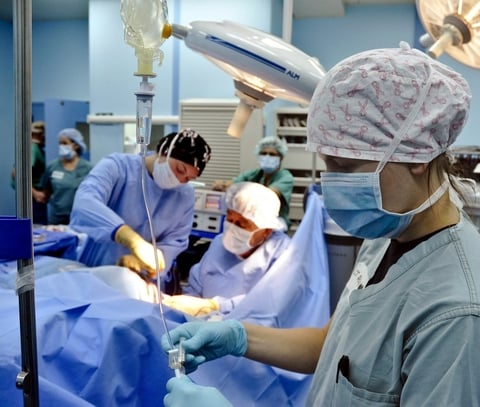
The majority of hospitals are electively performing high-risk surgical procedures without sufficient ongoing experience to safely do so, according to a new report.

The report from The Leapfrog Group, an independent hospital safety watchdog group, looked specifically at surgical volumes. The report, which relied on final hospital data from the 2019 Leapfrog Hospital Survey that had responses from more than 2,100 hospitals, also looked at the minimum standards those hospitals require surgeons to meet in order to gain privileges.

They were looking specifically at the safety of eight high-risk procedures identified by an expert panel as having a “strong volume-outcome relationship.” The report also looks at whether hospitals are working to make sure every surgery is necessary. 

According to the report, an increasing number of hospitals are meeting minimum volume standards if they perform high-risk hospitals. The majority of rural hospitals opt out of performing the high-risk surgeries because they can’t meet the volume standards. Further, more hospitals are implementing protocols to monitor for appropriateness of surgeries.

“The good news is we are seeing progress on surgical safety. The bad news is the vast majority of hospitals performing these high-risk procedures are not meeting clear volume standards for safety,” said Leah Binder, president and CEO of The Leapfrog Group, in a statement. “This is very disturbing, as a mountain of studies show us that patient risk of complications or death is dramatically higher in low-volume operating rooms.”

For instance, the report suggested hospitals should be performing a minimum of 20 esophageal resections for cancer and a minimum of 20 pancreatic resections for cancer to improve the odds of a safer surgery for their patients. Surgeons should perform at least seven and 10 of those procedures a year, respectively, to gain privileges.

But for those two procedures, only 3% and 8% of hospitals met the volume standards for patient safety, the report found.

Hospitals were most likely to meet the safety standard of a minimum of 50 procedures a year for the hospital and 20 procedures a year for bariatric surgery for weight loss. More than 48% reported meeting that standard in 2019, up from 38% in 2018.

The survey found more than 70% of reporting hospitals have protocols to ensure appropriateness for cancer procedures.

But for other high-risk procedures evaluated such as open-heart surgeries or mitral valve repair and replacement, hospital compliance with ensuring appropriateness dropped to a range of 32% to 60%, depending on the procedure.