Workplace violence costs hospitals more than $18B: report

https://www.axios.com/2025/06/05/hospital-assaults-workplace-violence-costs

Assaults against health care workers are costing hospitals upward of $18 billion a year in added security, training, workers compensation and other expenses, including treating victims, according to a new industry report.

Why it matters: 

Attacks by patients and visitors in hospitals and clinics already were a problem before the pandemic and got worse with backlash against public health measures.

  • The American Hospital Association says there’s a human toll beyond the financial burden, with burnout, staff turnover, legal concerns and negative public perceptions all plaguing health systems.

By the numbers: 

The University of Washington report for the trade group found prevention measures like active shooter training, hiring more security and reinforcing entry points and creating designated safe areas cost health systems $3.6 billion a year.

  • The cost of care for fatal and nonfatal injuries, lost productivity and replacing damaged equipment and infrastructure total about $14.6 billion a year. Health expenses for treating injuries alone account for more than $13 billion of that amount.

Between the lines: 

Violent incidents most often occur in psychiatric units, emergency departments, waiting rooms and geriatric units, with rural areas having higher prevalence than urban areas, the report found.

  • Registered nurses, nursing assistants and patient care assistants experience particularly high rates of workplace violence. A 2024 American Hospital Association poll found half of U.S. nurses reported being either verbally abused, physically assaulted or both by a patient or a patient’s family member within the previous two years.

What we’re watching: 

Congress is again considering legislation that would make assaulting hospital staff a federal crime, similar to protections for flight crews and airport workers.
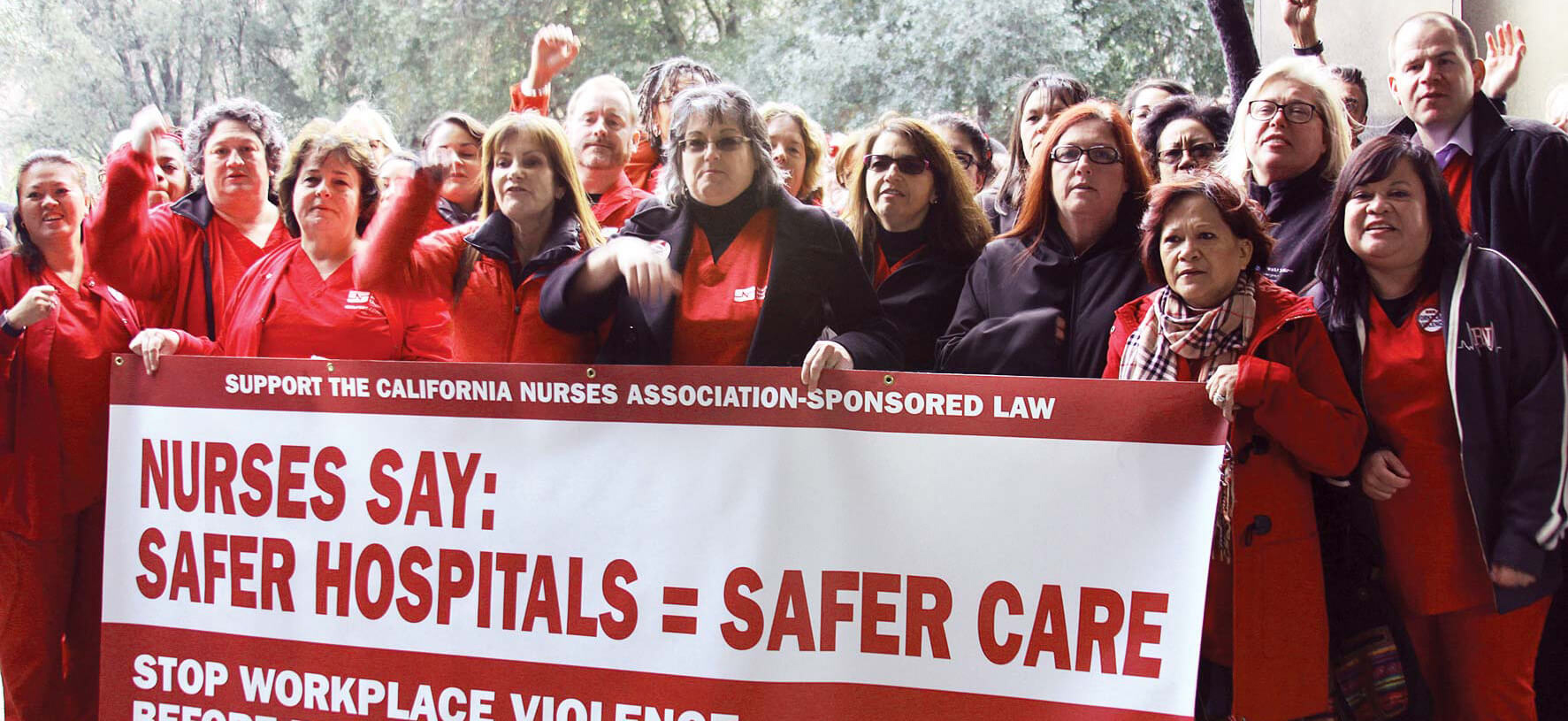
Workplace violence continues to strain hospitals 

https://mailchi.mp/3a7244145206/the-weekly-gist-december-9-2022?e=d1e747d2d8

Even before the pandemic, healthcare workers accounted for nearly three quarters of non-fatal injuries from violence in the workplace. Given the level of emotion and stress experienced in hospitals, that’s not surprising. But during the pandemic, once-sporadic violent outbursts became routine, leaving many healthcare workers fearful for their safety.

According to several health systems we’ve recently spoken with, violent events haven’t waned as the number of COVID admissions has fallen. One hospital CEO recently told us, “I never would’ve imagined that security would consume so much of my time. We keep looking for a great solution, but despite a ton of effort and a lot of money, it’s barely made a dent.” The cost of additional security—more personnel, metal detectors, restricted access—can run into millions annually for the average hospital. 

Another CEO shared, “We want the hospital to be a healing environment, not feel like a prison, so we were looking for less-threatening alternatives. But those were even more expensive. Placing a canine team in the ED would run over $1M per year!” And violent episodes are not limited to hospitals, with systems reporting an increase in incidents at outpatient and clinic sites where it’s not feasible to place onsite security, given the number of smaller-scale locations
 
Human resource leaders report that experiencing workplace violence, either personally or through a colleague, has been a tipping point for those considering leaving the field. According to one CHRO, workers experiencing repeat violence has been increasingly common: “We recognized the importance of having someone very senior—CEO, COO, or CMO—personally reach out to staff who have been assaulted in the workplace. But there are people who we’ve now had to call two or even three times. It’s hard to even know what to say in those situations.” 

In addition to visible security and constant staff communication, providers must lobby state and federal lawmakers for legislation that requires tracking and reporting of healthcare workplace violence, and increases penalties.  The Workplace Violence Prevention for Health Care and Social Service Workers Act was passed by the US House of Representatives in 2021, and was recently introduced into the Senate, so it’s time to contact your representatives and urge them to move this bill forward.  

Thought of the Day: On Toxic Culture

Wisconsin passes law making threats against healthcare workers a felony

Dive Brief:

  • Wisconsin Governor Tony Evers signed a bill Wednesday that makes it a felony to threaten a healthcare worker in the state, similar to laws covering police officers and other government workers.
  • The state already has a law making it a felony to commit battery against nurses, emergency care providers or those working in an emergency department.
  • “With significant workforce challenges in Wisconsin hospitals, we cannot afford to lose providers because they fear threats in the workplace,” Eric Borgerding, president of the state’s hospital association, said in a release. “Today’s new law will send a strong message to the public that threats against health care workers are taken seriously and not tolerated in Wisconsin.”

Dive Insight:

Healthcare workers have long been accustomed to both verbal and physical attacks in the workplace, often coming from distraught patients or family members.

In fact, workers in the healthcare and social service industries experience the highest rates of injuries caused by workplace violence and are five times as likely to get injured at work than workers overall, according to data from the Bureau of Labor Statistics.

A recent survey from staffing firm Incredible Health found nurses believe attacks are on the rise, partially due to ongoing COVID-19 guidelines. Some 65% of nurses said they had been verbally or physically attacked by a patient or patient’s family member in the past year, the survey found.

While 52% attributed that uptick to pandemic restrictions, 47% said it’s a result of longer wait times and other issues caused by a lack of staffing.

Hospitals across the country are grappling with dire staffing shortages as burned out healthcare workers quit, retire or leave for higher-paying traveling nurse positions two years into the COVID-19 pandemic.

recent report from the Wisconsin Hospital Association found 13 out of the 17 positions it surveyed had higher hospital vacancy rates in 2021 than the year prior, and seven of those positions had vacancy rates exceeding 10%.

“Threats against healthcare workers cause hospital staff to choose between caring for patients in the hospital or leaving the hospital altogether,” Borgerding said.

There are no federal laws that directly address violence against healthcare workers, though the Occupational Safety and Health Administration offers guidance for employers, and a handful of states have rules for employers or laws penalizing offenders.

Last April, the U.S. House of Representatives passed the Workplace Violence Prevention for Health Care and Social Service Workers Act, which would make healthcare employers develop and implement comprehensive workplace violence prevention plans, provide employees with annual training, keep detailed records of violent incidents and submit annual summaries to the federal labor department. The bill has yet to pass the Senate.

Labor unions representing healthcare workers, like National Nurses United, support that legislation and say a consistent and enforceable rule is necessary.

However, NNU opposes laws like Wisconsin’s that criminalize perpetrators of violence against healthcare workers, as those who do so are often vulnerable patients, the union said in an emailed statement.