Why Trump’s Plan Isn’t a Cure for High Drug Prices

http://www.thefiscaltimes.com/2018/05/11/Why-Trumps-Plan-Isnt-Cure-High-Drug-Prices

Image result for High Drug Prices


President Trump on Friday delivered a long-awaited speech outlining his administration’s blueprint for lowering prescription drug prices. Calling his plan “the most sweeping action in history to lower the price of prescription drug for the American people,” Trump promised “tougher negotiation, more competition and much lower prices at the pharmacy counter.”

Overall, Trump emphasized how businesses all across the pharmaceutical supply chain, from drugmakers to insurers to the pharmacy benefits manager “middlemen” and the government, are hurting Americans who take prescription drugs. And, in keeping with the blueprint’s title, “American Patients First,” the president called for other developed countries to pay more for medicines.

“When foreign governments extort unreasonably low prices from U.S. drugmakers, Americans have to pay more to subsidize the enormous cost of research and development. In some cases, medicine that costs a few dollars in a foreign country costs hundreds of dollars in America, for the same pill with the same ingredients in the same package made in the same plant, and that is unacceptable,” Trump said. “It’s time to end the global freeloading once and for all.”

The blueprint is centered on four broad strategies:

• Increasing competition in drug markets. The administration says it will look to advance generic drugs and biosimilars to promote price competition and will “take steps to end the gaming of regulatory and patent processes by drug makers to unfairly protect monopolies.”

• Better negotiation, including tools for Medicare Part D plans to negotiate for discounts.

• Creating incentives for drugmakers to lower list prices, including having the Food and Drug Administration evaluate the idea of requiring manufacturers to cite list prices in their advertising. The plan also calls for streamlining and speeding up the approval process for over-the-counter drugs.

• Reducing out-of-pocket costs for patients. The administration would, for one example, stop limiting pharmacists’ ability to tell Medicare Part D patients when they could pay less by not using insurance. And it would require prescription drug plans for Medicare patients to pass on some of the discounts and rebates they receive from pharmaceutical companies. “Health policy experts like this idea because it reduces the burden on patients with serious chronic illnesses and spreads the expense of needed medications across the entire insured population,” The New York Times said.

Why Trump’s Plan Isn’t a Cure

Health care analysts and observers were — well, lets’ just say underwhelmed by Trump’s presentation, with many saying that the details of the blueprint didn’t live up to the president’s tough talk. Notably absent from the plan, for example, was the idea of allowing Medicare to negotiate lower drug prices directly, which Trump had promised during his election campaign. The blueprint also does not call for allowing Americans to import cheaper drugs from foreign countries.

Here’s an overview of the drug-pricing problem and the Trump administration’s proposals:

The Problem: Americans spend more on prescription drugs — more than $1,100 per person, on average, in 2015 — than anyone else in the world. Drug prices here are high and have been rising rapidly, with patients who pay out of pocket for brand name drugs especially vulnerable to crushing costs.

As a Political Issue, This Has Plenty of Potential: The vast majority of Americans say that drug prices are too high and that the pharmaceutical industry has too much sway in Washington. And in a new poll released Thursday by the Kaiser Family Foundation, 66 percent of Republicans, 72 percent of independents and 78 percent of Democrats said they would be more likely to vote for a candidate vowing to lower prescription drug costs.

But This Might Be About Politics More Than Results: “The president’s tough talk on drug prices will no doubt be popular with the public. Will the fact that the specifics of the plan don’t seem to deliver on that tough talk ultimately matter?” Larry Levitt of the Kaiser Family Foundation asked on Twitter.

Trump’s Plan Includes Plenty of Steps He Can Take Without Congress: “It’s framed as a pro-competitive agenda, and touches on a range of government programs that the administration can change through regulation — so that the president can take unilateral action,” Daniel N. Mendelson, the president of research consultancy Avalere Health, told The New York Times.

But It Seems to Have More Questions Than Answers: A number of health care experts noted that the 44-page blueprint includes dozens and dozens of questions. “A lot of good questions in the plan but very little actual action, especially against PBMs,” Walid Gellad, who heads the Center for Pharmaceutical Policy and Prescribing at the University of Pittsburgh, tweeted.

Raising Drug Prices in Other Countries Won’t Help Here: “There’s not a sensible health economist alive, or any economist, that will tell you that higher prices abroad will lead to lower prices here,” Andrea Harris, senior vice president of health care at Height Capital Markets in Washington, told Bloomberg.

Ultimately, the Plan Could Have a Very Limited Effect: “This is not doing anything to fundamentally change the drug supply chain or the drug pricing system,” Gerard Anderson, a health policy professor at Johns Hopkins University, told CNNbefore the blueprint’s release.

And the Pharmaceutical Industry Doesn’t Seem Too Worried: Just check out how pharma stocks — and those of pharmacy benefit managers like Express Scripts — shot higher despite Trump’s harsh rhetoric.

But Big Pharma Should Still Be On Notice: “The industry is among the most profitable of any industry in the U.S. and as such probably has room to give,” Wells Fargo analyst David Maris told Bloomberg. “If it doesn’t reform itself, it will be reformed and this is the beginning of that reform.”

Did We Really Expect Anything Else from Trump? “I’m shocked!” tweeted Michael Linden of the liberal Roosevelt Institute. “You mean the guy who just gave drug companies a massive tax cut and then appointed a drug CEO as HHS secretary and has spent his entire time as president favoring the rich and powerful, that guy wasn’t genuine about lowering drug prices? Shocked.”
 

Pharma breathes easy as Trump’s drug pricing plan fizzles

https://www.healthcaredive.com/news/pharma-breathes-easy-as-trumps-drug-pricing-plan-fizzles/523387/

Image result for american patients first

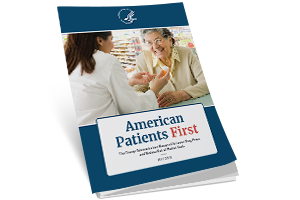
President Donald Trump took to the Rose Garden Friday, unveiling the “American Patients First” blueprint that senior administration officials touted as “the most comprehensive plan to tackle prescription drug affordability.”

Despite the rhetoric, Wall Street analysts, lobbyists and academics say the plan, which heavily targets the role pharmacy benefit managers play in the healthcare system, will do little to put downward pressure on healthcare spending.

Drugmaker stocks jumped immediately following the President’s speech.

“There are no major surprises, it spares the pharmaceutical industry of the reform that they most vehemently oppose,” a pharmaceutical lobbyist told BioPharma Dive in an interview following the Trump speech.

“Real reforms that advocates say will move the needle, none of them are included. There’s a lot of tinkering around the edges,” the lobbyist said. “By and large, the amount of money that this health system, that government and private payers are going to be spending on prescription drugs is probably not going to change significantly.”

The blueprint, which echoes many of the ideas first put forward in Trump’s FY 2019 proposed budget and the White House Council of Economic Advisers drug pricing report, focuses on four areas: lowering high list prices set by manufacturers; equipping government and private payers with new tools to negotiate prices; lowering out-of-pocket costs for consumers and taking steps to stop other countries from “freeloading” off of American innovation.

Notably, however, the blueprint only states that “HHS may” take many of proposed actions in response to Trump’s call to lower drug prices.

Pricing in drug ads?

Since Trump took office, most of the action on drug pricing has come from the Food and Drug Administration, which has gone about as far as it legally can on the issue by pushing for greater competition in drug markets.

The blueprint echoes some of those initiatives and says curbing abuse of FDA’s Risk Evaluation and Mitigation Strategy (REMS) programs will be a priority to help generic drugs come to market faster. It also seeks to promote uptake of biosimilars.

“We are getting tough on drugmakers that exploit our patent laws to choke out competition. Our patent system will reward innovation, but it will not be used as a shield to protect unfair monopolies,” Trump said.

The generic drug lobby immediately praised Trump’s speech.

“President Trump’s embrace of generic and biosimilar competition as a key to lowering brand-name drug prices is an important step forward for patients coping with skyrocketing health care costs,” Association for Accessible Medicines CEO Chip Davis said in a statement.

Perhaps the only notable deviation from ideas already hinted at in prior speeches by officials was a call for the FDA to evaluate whether direct-to-consumer drug advertising should include list prices.

​”Think about all the time everybody spends watching drug company ads, and how much information companies are required to put in them. If we want to have a real market for drugs, why not have them disclose their prices in the ads, too?” said Department of Health and Human Services Secretary Alex Azar, who spoke at the Rose Garden after Trump. “We’re immediately going to look into having the FDA require this.”

Medicare Part D changes

Proposed Part D reforms would allow greater benefit design flexibility; provide free generic drugs to low-income seniors; require such plans to pass on a minimum percentage of drug rebates with patients; disincentivize plans to accelerate beneficiaries into catastrophic coverage through branded drugs by establishing a new out-of-pocket maximum.

Requiring Part D plans to pass on rebates to consumers is one idea PBMs have rallied against. But the President’s blueprint hinted at further action the government could take, mentioning reexamination of how drug rebates are currently treated under safe harbor laws as a future “opportunity.”

Yet investors in PBMs didn’t appear to take that threat all that seriously. Shares in Express Scripts, one of the largest PBMs, traded up Friday afternoon, as did shares in UnitedHealth Group, which owns Optum.

“Getting rid of rebates and other price concessions would leave patients and payers, including Medicaid and Medicare, at the mercy of drug manufacturer pricing strategies,” said the Pharmaceutical Care Management Association, a lobby for PBMs, in a statement following Trump’s speech. “Simply put, the easiest way to lower costs would be for drug companies to lower their prices.”

CVS, which runs a large PBM, said policies that lowered drug prices would be aligned with its business model and are unlikely to have a negative impact on profitability.

The blueprint also proposes changing Part D plan formulary standards to require a minimum of one drug per category or class instead of two.

PhRMA immediately cautioned that any changes to the system could potentially limit access to new drugs. “The proposed changes to Medicare Part D could undermine the existing structure of the program that has successfully held down costs and provided seniors with access to comprehensive prescription drug coverage,” the drug lobby said in a statement.

The plan also will target Medicare Part B by limiting price increases that exceed the inflation rate within the program and restricting incentives for providers to prescribe high-cost drugs. Specifically, the blueprint calls for HHS to leverage the Competitive Acquisition Program for Part B.

Future disruption

Some more substantive changes are contemplated by the blueprint, although the document didn’t lay out any concrete steps for how to achieve them.

One question raised by the plan, for instance, asks whether PBMs should have a fiduciary duty to act solely in the interest of whoever they are managing benefits for, soliciting input on how this might impact PBMs’ ability to negotiate drug prices.

“Depending on how that is done, it could have a substantial effect,” Allan Coukell, a drug pricing expert at Pew Charitable Trusts, told BioPharma Dive in an interview.

Democrats and advocacy groups blast plan

One big idea not included in the blueprint is a call for the federal government to have Medicare negotiate drug prices. “We’re not calling for Medicare negotiation in the way that Democrats have called for,” one of the senior officials told reporters Thursday night.

Democrats blasted the speech, saying that Trump is turning his back on his campaign promise to stop the pharmaceutical industry from “getting away with murder.”

“The President spent last year pressing Congress to pass a massive tax cut — which gives away billions of dollars to drug companies and their executives who are already rich — but this year the President is apparently abandoning his campaign promise to authorize Medicare to negotiate directly with drug companies to lower prices,” House Committee on Oversight and Government Reform Ranking Member Elijah Cummings said in a statement Friday.

The pharmaceutical industry has spent heavily this year on lobbying the federal government, perhaps with Trump’s twice-delayed drug pricing plan in mind. According to a database maintained by the Center for Responsive Politics, spending by industry on lobbying this year totaled $84.8 million through April 24.

Click to access AmericanPatientsFirst.pdf