This new blood test can detect early signs of 8 kinds of cancer

http://www.latimes.com/science/sciencenow/la-sci-sn-blood-test-cancer-20180118-story.html

Image result for This new blood test can detect early signs of 8 kinds of cancer

Scientists have developed a noninvasive blood test that can detect signs of eight types of cancer long before any symptoms of the disease arise.

The test, which can also help doctors determine where in a person’s body the cancer is located, is called CancerSEEK. Its genesis is described in a paper published Thursday in the journal Science.

The authors said the new work represents the first noninvasive blood test that can screen for a range of cancers all at once: cancer of the ovary, liver, stomach, pancreas, esophagus, colon, lung and breast.

Together, these eight forms of cancer are responsible for more than 60% of cancer deaths in the United States, the authors said.

In addition, five of them — ovarian, liver, stomach, pancreatic and esophageal cancers — currently have no screening tests.

“The goal is to look for as many cancer types as possible in one test, and to identify cancer as early as possible,” said Nickolas Papadopoulos, a professor of oncology and pathology at Johns Hopkins who led the work. “We know from the data that when you find cancer early, it is easier to kill it by surgery or chemotherapy.”

CancerSEEK, which builds on 30 years of research, relies on two signals that a person might be harboring cancer.

First, it looks for 16 telltale genetic mutations in bits of free-floating DNA that have been deposited in the bloodstream by cancerous cells. Because these are present in such trace amounts, they can be very hard to find, Papadopoulos said. For example, one blood sample might have thousands of pieces of DNA that come from normal cells, and just two or five pieces from cancerous cells.

“We are dealing with a needle in a haystack,” he said.

To overcome this challenge, the team relied on recently developed digital technologies that allowed them to efficiently and cost-effectively sequence each individual piece of DNA one by one.

“If you take the hay in the haystack and go through it one by one, eventually you will find the needle,” Papadopoulos said.

In addition, CancerSEEK also screens for eight proteins that are frequently found in higher quantities in the blood samples of people who have cancer.

By measuring these two signals in tandem, CancerSEEK was able to detect cancer in 70% of blood samples pulled from 1,005 patients who had already been diagnosed with one of eight forms of the disease.

The test appeared to be more effective at finding some types of cancer than others, the authors noted. For example, it was able to spot ovarian cancer 98% of the time, but was successful at detecting breast cancer only 33% of the time.

The authors also report that CancerSEEK was better at detecting later stage cancer compared to cancer in earlier stages. It was able to spot the disease 78% of the time in people who had been diagnosed with stage III cancer, 73% of the time in people with stage II cancer and 43% of the time in people diagnosed with stage I cancer.

“I know a lot of people will say this sensitivity is not good enough, but for the five tumor types that currently have no test, going from zero chances of detection to what we did is a very good beginning,” Papadopoulos said.

It is also worth noting that when the researchers ran the test on 812 healthy control blood samples, they only saw seven false-positive results.

“Very high specificity was essential because false-positive results can subject patients to unnecessary invasive follow-up tests and procedures to confirm the presence of cancer,” said Kenneth Kinzler, a professor of oncology at Johns Hopkins who also worked on the study.

Finally, the researchers used machine learning to determine how different combination of proteins and mutations could provide clues to where in the body the cancer might be. The authors found they could narrow down the location of a tumor to just a few anatomic sites in 83% of patients.

CancerSEEK is not yet available to the public, and it probably won’t be for a year or longer, Papadopoulos said.

“We are still evaluating the test, and it hasn’t been commercialized yet,” he said. “I don’t want to guess when it will be available, but I hope it is soon.”

He said that eventually the test could cost less than $500 to run and could easily be administered by a primary care physician’s office.

In theory, a blood sample would be taken in a doctor’s office, and then sent to a lab that would look for the combination of mutations and proteins that would indicate that a patient has cancer. The data would then go into an algorithm that would determine whether or not the patient had the disease and where it might be.

“The idea is: You give blood, and you get results,” Papadopoulos said.
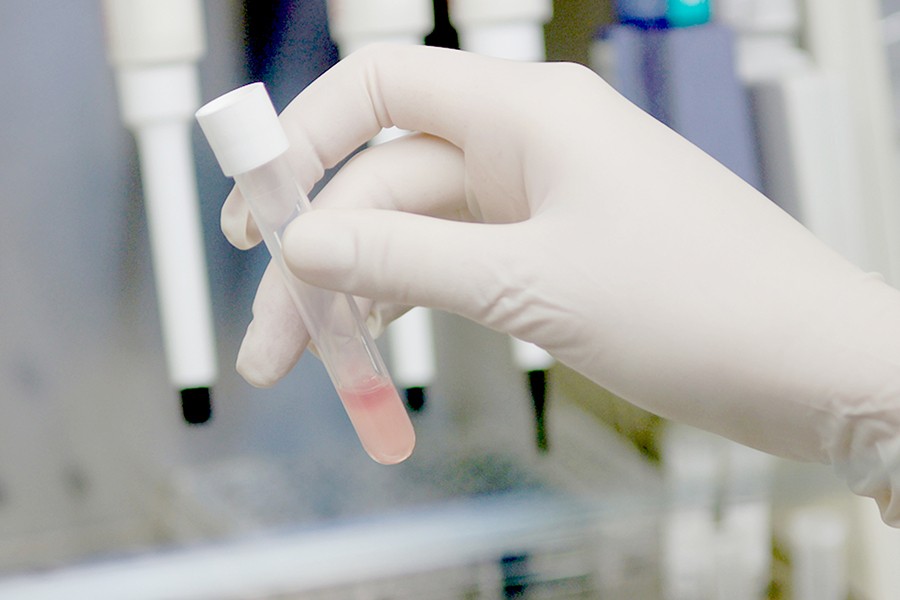
Scientists develop blood test that spots tumor-derived DNA in people with early stage cancers

https://hub.jhu.edu/2017/08/16/cancer-tumor-dna-blood-test/?utm_source=Hub+subscribers&utm_campaign=7a294dde15-EMAIL_CAMPAIGN_2017_08_17&utm_medium=email&utm_term=0_d8bf41c16e-7a294dde15-63587717


Promising screening test could cut down on over-testing for populations most at risk for certain cancers.

In a bid to detect cancers early and in a noninvasive way, scientists at the Johns Hopkins Kimmel Cancer Center report they have developed a test that spots tiny amounts of cancer-specific DNA in blood and have used it to accurately identify more than half of 138 people with relatively early stage colorectal, breast, lung, and ovarian cancers.

The test, the scientists say, is novel in that it can distinguish between DNA shed from tumors and other altered DNA that can be mistaken for cancer biomarkers.

OVERALL, THE SCIENTISTS WERE ABLE TO DETECT 62 PERCENT OF STAGE I AND II CANCERS.

A report on the research, performed on blood and tumor tissue samples from 200 people with all stages of cancer in the United States, Denmark, and the Netherlands, appears today in the journal Science Translational Medicine.

“This study shows that identifying cancer early using DNA changes in the blood is feasible and that our high accuracy sequencing method is a promising approach to achieve this goal,” says Victor Velculescu, professor of oncology at the Kimmel Cancer Center.

Blood tests for cancer are a growing part of clinical oncology, but they remain in the early stages of development. To find small bits of cancer-derived DNA in the blood of cancer patients, scientists have frequently relied on DNA alterations found in patients’ biopsied tumor samples as guideposts for the genetic mistakes they should be looking for among the masses of DNA circulating in those patients’ blood samples. To develop a cancer screening test that could be used to screen seemingly healthy people, scientists had to find novel ways to spot DNA alterations that could be lurking in a person’s blood but had not been previously identified.

“The challenge was to develop a blood test that could predict the probable presence of cancer without knowing the genetic mutations present in a person’s tumor,” says Velculescu.

The goal, adds Jillian Phallen, a graduate student at the Johns Hopkins Kimmel Cancer Center who was involved in the research, was to develop a screening test that is highly specific for cancer and accurate enough to detect the cancer when present, while reducing the risk of “false positive” results that often lead to unnecessary over-testing and over-treatment.

To develop the new test, Velculescu, Phallen and their colleagues obtained blood samples from 200 patients with breast, lung, ovarian, and colorectal cancer. The scientists’ blood test screened the patients’ blood samples for mutations within 58 genes widely linked to various cancers.

Among 42 people with colorectal cancer, the test correctly predicted cancer in 50 percent of patients with stage I, 89 percent of patients with stage II, 90 percent of patients with stage III, and 93 percent of patients with stage IV disease. For patients with lung cancer, the test correctly identified cancer among 45 percent of patients with stage I disease, 72 percent with stage II disease, 75 percent with stage III, and 83 percent with stage IV cancer. For 42 patients with ovarian cancer, the test identified 67 percent with stage I, 75 percent with stage II, 75 percent with stage III, and 83 percent with stage IV disease. Among 45 breast cancer patients, the test spotted cancer-derived mutations in 67 percent of patients with stage I disease, 59 percent with stage II, and 46 percent with stage III cancers.

Overall, the scientists were able to detect 86 of 138—62 percent—stage I and II cancers, and found none of the cancer-derived mutations among blood samples of 44 healthy individuals.

Despite these initial promising results for early detection, the blood test needs to be validated in studies of much larger numbers of people, say the scientists.

Velculescu and his team also performed independent genomic sequencing on available tumors removed from 100 of the 200 patients with cancer and found that 82 percent had mutations in their tumors that correlated with the genetic alterations found in the blood.

He says the populations that could benefit most from such a DNA-based blood test include those at high risk for cancer, including smokers, for whom standard computed tomography scans for identifying lung cancer often lead to false positives, and women with hereditary mutations for breast and ovarian cancer within BRCA1 and BRCA2 genes.