

https://www.axios.com/newsletters/axios-vitals-e30baa47-bebc-4081-81a6-cb96115c5e55.html
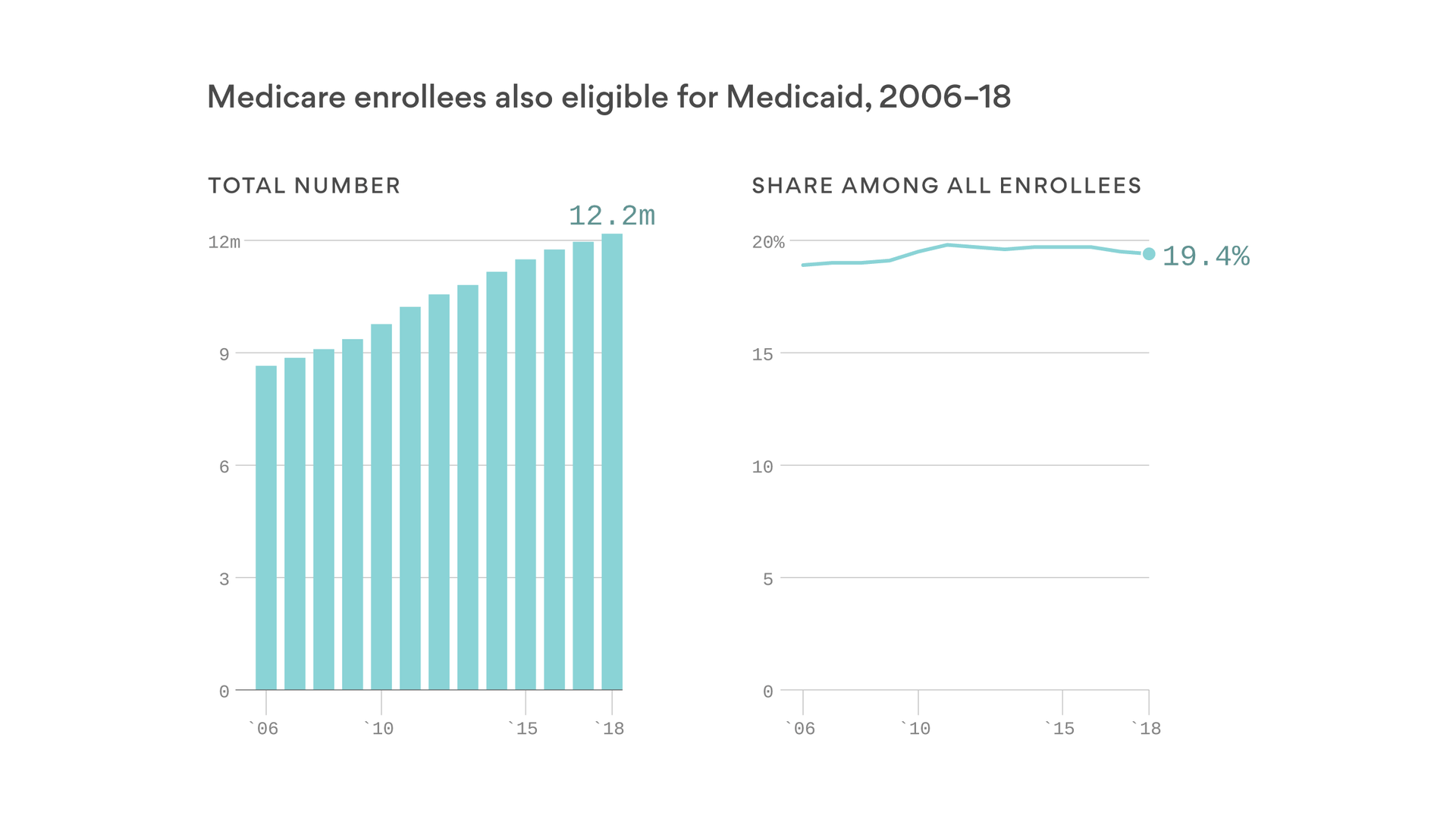
Retirement in America is growing less secure, physically and financially, given the omnipresent threat and cost of serious illness or disease, Bob reports.
Why it matters: Qualifying for Medicare does not guarantee that older adults will skirt potentially ruinous medical bills. Millions of seniors have also come to rely on the taxpayer-funded program for lower income people — Medicaid — and there’s no indication that will slow down.
By the numbers: More than 12 million Americans — most of them over 65 — have both Medicare and Medicaid coverage.
- That represents about one-fifth of all Medicare enrollees, a percentage that has stayed stable over time even as more baby boomers enter the program.
- This low-income population has some of the most expensive health care conditions and disabilities — averaging roughly $30,000 in annual spending per person, or double the average Medicare enrollee.
Between the lines: Some people who age into Medicare have very few assets and income, and therefore automatically qualify for Medicaid.
- But retirees who consider themselves middle-class increasingly have to resort to Medicaid because high costs, like dementia or nursing home care, consume their entire nest egg.
What to watch: The federal government has been experimenting with ways to coordinate care better for this population, but that’s a reaction to seniors falling into poverty due to health care costs.
- Unless policymakers address the high and rising costs of care, more retirees and their families will have to depend on both Medicare and Medicaid.
 HENRY KOTULA