

https://www.axios.com/2025/06/05/hospital-assaults-workplace-violence-costs
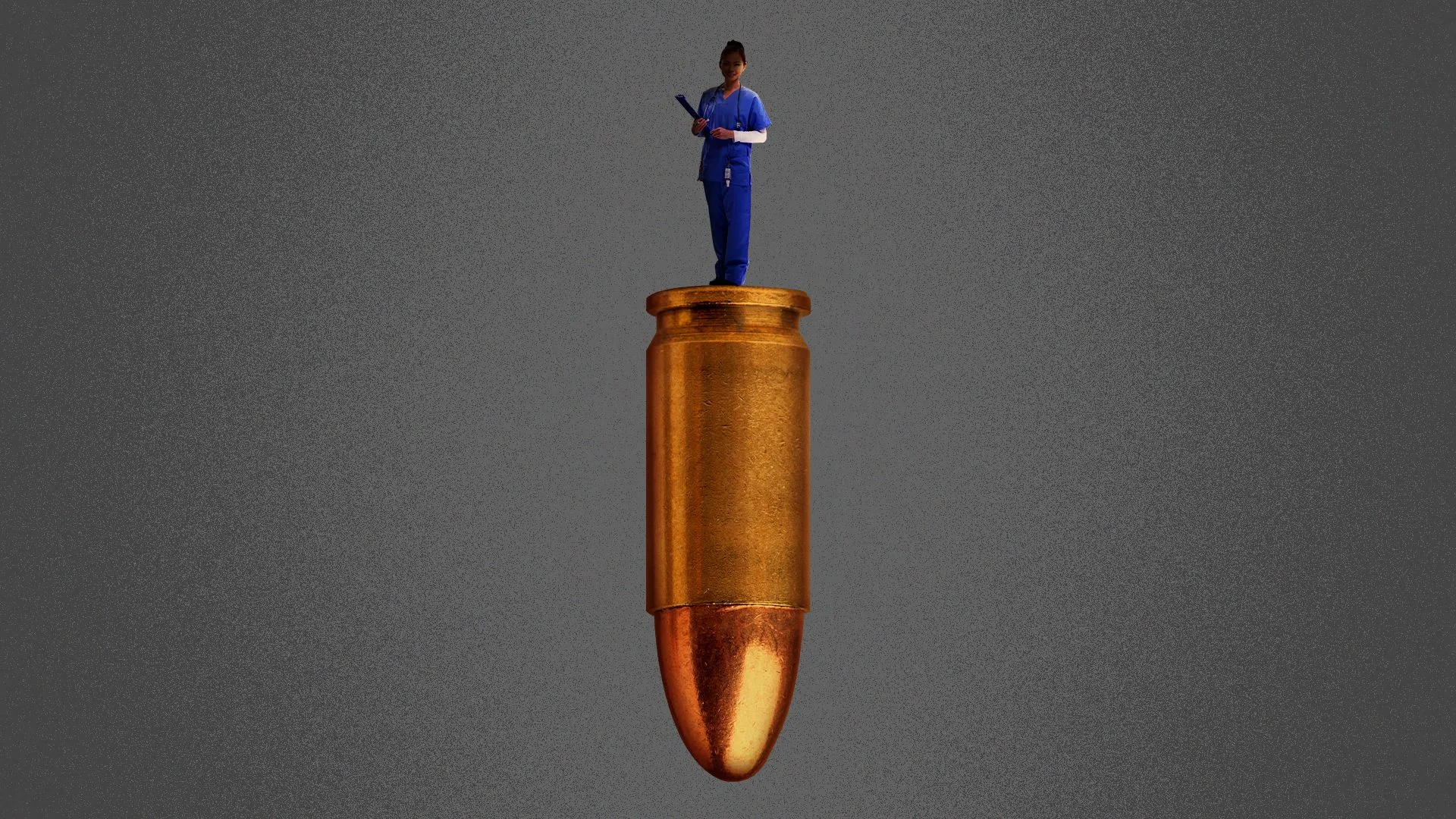
Assaults against health care workers are costing hospitals upward of $18 billion a year in added security, training, workers compensation and other expenses, including treating victims, according to a new industry report.
Why it matters:
Attacks by patients and visitors in hospitals and clinics already were a problem before the pandemic and got worse with backlash against public health measures.
- The American Hospital Association says there’s a human toll beyond the financial burden, with burnout, staff turnover, legal concerns and negative public perceptions all plaguing health systems.
By the numbers:
The University of Washington report for the trade group found prevention measures like active shooter training, hiring more security and reinforcing entry points and creating designated safe areas cost health systems $3.6 billion a year.
- The cost of care for fatal and nonfatal injuries, lost productivity and replacing damaged equipment and infrastructure total about $14.6 billion a year. Health expenses for treating injuries alone account for more than $13 billion of that amount.
Between the lines:
Violent incidents most often occur in psychiatric units, emergency departments, waiting rooms and geriatric units, with rural areas having higher prevalence than urban areas, the report found.
- Registered nurses, nursing assistants and patient care assistants experience particularly high rates of workplace violence. A 2024 American Hospital Association poll found half of U.S. nurses reported being either verbally abused, physically assaulted or both by a patient or a patient’s family member within the previous two years.
What we’re watching:
Congress is again considering legislation that would make assaulting hospital staff a federal crime, similar to protections for flight crews and airport workers.

 HENRY KOTULA