The concept of the “medical mall” is not new. Health systems and physician groups have long looked to build larger outpatient facilities that include several physician specialties, diagnostics, and outpatient procedure all under one roof—sometimes even converting defunct shopping malls. But recently some providers have questioned whether this “one stop shop” approach is delivering the value expected.
One CFO shared, the cost to build and operate these large facilities can be daunting: “we had two of these in our capital plan, but the real estate and construction costs are enormous. Given where margins are this year, we just couldn’t justify them.”
Others have also questioned whether their medical malls provide the value they anticipated. Another leader noted that “it seemed to make sense to put 15 primary care docs under one roof, which let us co-locate a host of other services. But patients told us they’d rather have primary care close to home. And a more distributed ‘low-key’ footprint might have been cheaper.” He also mentioned their operations fell short of the vision: “just because we have primary care and CT under one roof, doesn’t mean we can get a patient on the scanner right after their appointment.”
A physician group with two medical malls found that while they expected the vision to appeal to busy, commercially-insured patients, “it turned out that people with transportation issues or a lot of chronic conditions were the ones who chose to go there…it ended up being primarily a public-pay population, and we can’t support the cost.”
Consumers have rejected shopping malls for more distributed and technology-driven retail options. Given the cost of the medical mall, it’s worth considering whether they’ll apply the same logic to healthcare.
Instead of building new facilities, more and more health systems are now expanding their operations outside of traditional care settings by repurposing vacant retail spaces in malls, aiming to provide patients more convenient and accessible care, Lauren Berryman writes for Modern Healthcare.
The rise of ‘medical malls’
In recent years, shopping malls have struggled to stay in business and many big-city health systems have taken over available retail spaces in vacant malls.
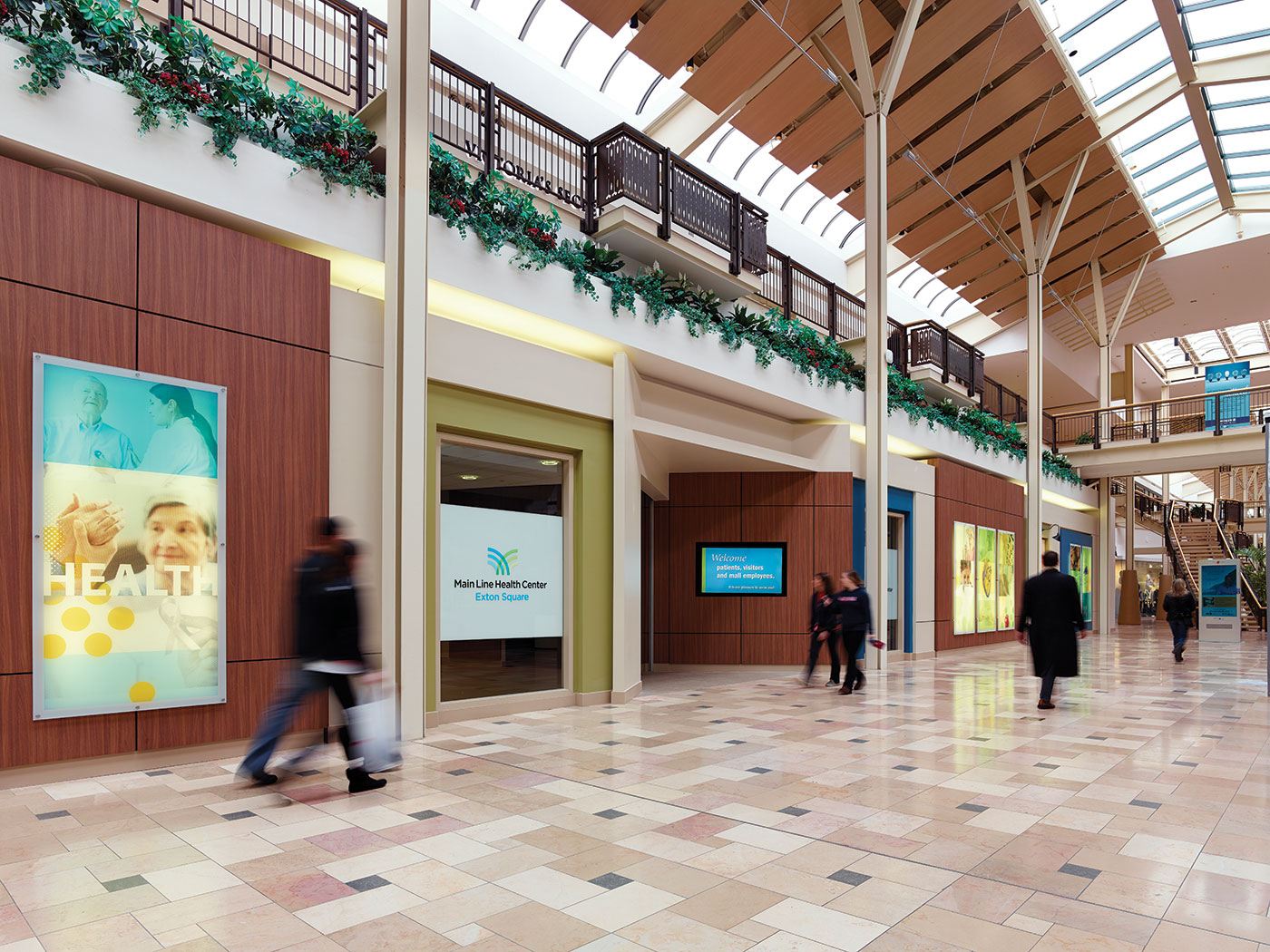
These “medical malls” are established inside of converted shopping malls as either full medical centers or a combination of leased spaces offering outpatient health care services alongside leased retail spaces. The facilities offer convenience for patients and providers and cost significantly less than expanding an existing facility.
“Most of these hospitals are in areas where there’s just no room to grow. And if you do, it’s so expensive,” said Andrew McDonald, a former hospital administrator who leads health care consulting at LBMC. “These buildings are old. They’re antiquated. They’re very expensive to maintain.”
According to McDonald, malls are a good fit—especially for large health systems—because they allow providers to move everything short of the ED and ICU and keep them clustered. Typically, physicians’ offices are scattered across a hospital district, but in a mall setting, almost everything is under the same roof.
“It just creates a whole lot more efficient flow for the patient going through the health care system with whatever infirmity they may have,” he added.
How 2 health systems made the ‘mall-to-medicine’ transition
Currently, there are 32 enclosed malls in the United States that house health care services in some part of their footprint, according to a database created by Georgia Tech urban design professor Ellen Dunham-Jones.
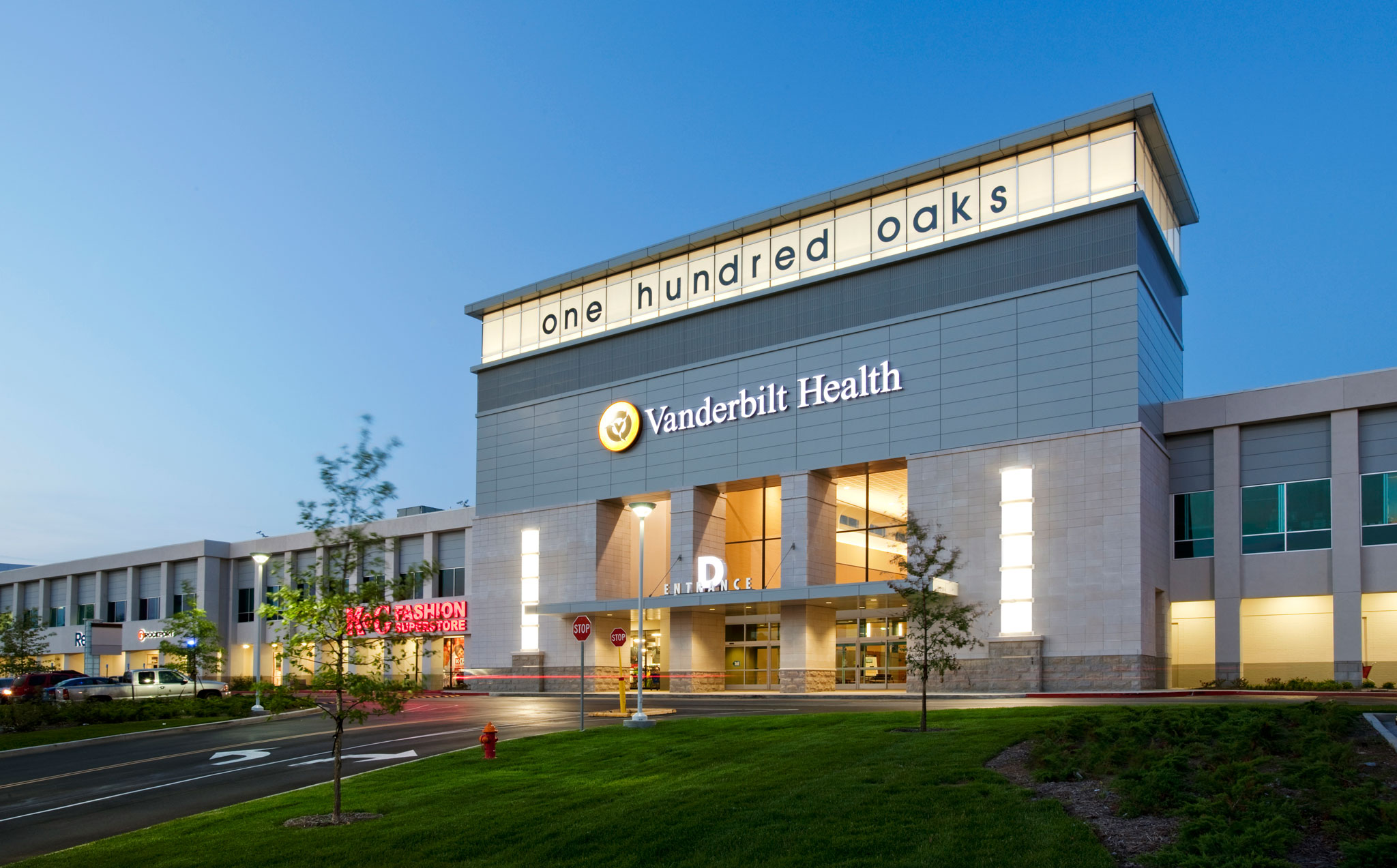
One health system that has taken advantage of available retail space is Vanderbilt University Medical Center (VUMC). Since 2009, VUMC has transformed 450,000 square feet of empty mall space, which formerly housed Reebok and JCPenney stores, into a women’s clinic, dermatology clinic, comprehensive spine clinic, and other specialty sites.
The health system also has several offsite clinics that work with the medical mall and offer telehealth options and free shuttle rides to and from the Monroe Carell Jr. Children’s Hospital and Vanderbilt Medical Center East.
In March, VUMC signed a letter of intent to negotiate a lease for 600,000 square feet in another mall just outside of Nashville and plans to add several new medical facilities there.
“I think that speaks to the success we experienced with our first foray,” said Janice Smith, an RN and VP of adult ambulatory operations at VUMC.
Another health system that has embarked on the “mall-to-medicine” transition is Medical University of South Carolina (MUSC) Health. According to hospital leaders, moving into the mall space makes sense because of its multiple entry points, ample parking, and interstate access.
“There were a lot of big wins for us, and it checked a lot of boxes from a care delivery standpoint,” said Tom Crawford, MUSC Health’s COO.
Originally, MUSC Health planned to break ground on a new piece of land, but then they decided to open new clinics inside of a former mall JCPenney in 2019. “It offered the bones that could be easily flipped into a healthcare facility,” Crawford said.
The facility, which is called the West Ashley Medical Pavilion, now houses an ambulatory surgery center, diagnostic imaging center, and infusion center. MUSC Health has also reached a deal with the mall’s owners to have first right of refusal to adjacent stores if it wants to continue expanding.
This proximity to a shopping mall has proven beneficial for visitors and family members who are waiting for patients. “Because that facility is hooked into the mall, it’s considered the same property,” said Ginger Davis, from Trademark Properties, a real estate company that handles leasing and development planning for Citadel Mall where the West Ashley Medical Pavilion is located. “Instead of having a waiting room full of people, they can go to Target.”
Medical malls have also helped their surrounding communities by generating new foot traffic and business that was not there before. “There’s been this resurgence in that area, and it’s wonderful that any organization can offer that back to the city,” Smith said.


 HENRY KOTULA