


Cartoon – Difference between Good and Great Leaders



http://www.politico.com/story/2017/07/26/obamacare-repeal-republicans-minimum-240982

A bare-bones plan picks up some key GOP support, but centrists and conservatives are skeptical.
Even a bare-bones repeal of Obamacare is no sure thing in the Senate.
A handful of key Republican senators who had spurned earlier overtures from GOP leadership endorsed the latest plan to gut Obamacare’s individual and employer coverage mandates and its medical device tax. But several centrists said they’re undecided on the so-called skinny repeal, leaving the GOP in limbo through at least the end of the week.
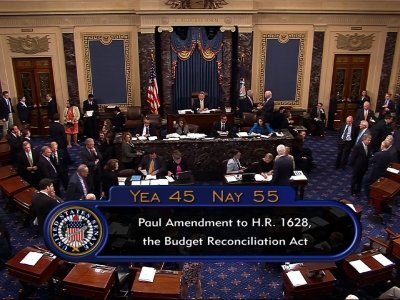
Jockeying on the scaled-back approach came as the Senate rejected a straight repeal of Obamacare in a 45-55 vote Wednesday. The night before, senators turned aside a comprehensive replacement plan that had been crafted by Senate Majority Leader Mitch McConnell. The roll calls were the latest reminders that GOP leaders’ best hope at this point is just to get something — anything — through the chamber with a bare majority and into a conference with the House.
“Sure. There’s plenty we agree on,” said Senate Majority Whip John Cornyn (R-Texas) late Wednesday when asked whether he can get 50 votes. One challenge for GOP leaders is “trying to explain the concept that we need to do it this way, as opposed to solving all the problems in a Senate bill now.”
Cornyn said broader negotiations on Medicaid reforms and other divisive issues would likely re-emerge in bicameral negotiations with the House. But some Republicans are worried that those talks would revive efforts to wind down a Medicaid expansion that’s benefited their states.
Centrist GOP Sens. Rob Portman of Ohio and Shelley Moore Capito of West Virginia were undecided on the so-called skinny repeal Wednesday. Another Republican from an expansion state, Sen. Dean Heller of Nevada indicated he would back it.
“We’ll see at the end of the day what’s in it, but overall I think I’d support it,” Heller said. He said slashing Obamacare’s Medicaid expansion or its growth rate should be a nonstarter.
Conservatives could be another matter.
“I don’t like it,” Sen. David Perdue of Georgia said of the process. “Because I don’t know where we end up. This whole [health care system] holds together or falls apart in totality. We’ve got a system that is collapsing.”
South Carolina Sen. Lindsey Graham on Tuesday called the possibility of a skeletal plan a “political punt,” but it may be able to clear the narrowly divided chamber. Graham said he would vote for the slimmed-down plan only if House and Senate lawmakers use it to go to conference and come up with a fuller replacement.
Sen. Jeff Flake of Arizona also indicated that he could get on board with the skinny option.
“In Arizona, you have 200,000 people who were paying the [Obamacare insurance mandate] fine and can’t afford insurance,” Flake told reporters. “We gotta have relief to those who, one: can’t find affordable insurance so they have to pay the fine; and, two: even those that can afford to pay the premium, generally can’t afford to utilize the coverage because the deductibles are so high.”
Whether Sen. Mike Lee of Utah can back a trimmed-down proposal “depends how skinny it is,” a spokesman said. But Sen. Rand Paul of Kentucky signaled he could live with the minimalist approach.
“I’ve always said I will vote for any permutation of repeal. Obviously, I want as much as I can get, but I’ll vote for whatever the consensus can be. It’s what I’ve been saying for months: Start on what you can agree on,” Paul said in an interview Wednesday. “Starting small and getting bigger is a good strategy.”
That would leave out the divisive issues of cuts to Medicaid spending and efforts to create a new tax credit system for the individual markets. Republicans can afford to lose just two votes to pass whatever they come up with in the end.
Many Republicans are in the dark about the emerging proposal. And aides said senators were still focused on amendment votes, floor tactics and the chaotic atmosphere, making it difficult to tell what can clinch 50 votes.
“I don’t know what would be in the skinny repeal,” said Sen. Susan Collins of Maine. “Until I see what’s in it, I’m not ruling it out because I don’t know what it would be.”
The Senate also rejected on Wednesday an attempt to send their repeal effort to congressional committees for several days.
Republicans need a score on any proposal from the Congressional Budget Office to vote at a 50-vote threshold. They are aiming for a vote on Friday on their final plan after the unlimited amendment process known as vote-a-rama, which is expected to begin sometime Thursday.
In the final bill, Republicans could try to add more elements than repealing the mandates and device tax, but that could complicate efforts to get a quick CBO score.
“Look for victories where we should find them. In my opinion, the victory will always include: individual mandate repeal, employer mandate repeal and [eliminating] the medical device tax,” said South Carolina Sen. Tim Scott. “If we can add to it, we should … as much as you can repeal, let’s get it done.”
The CBO has scored those three pieces of the proposal in the past and could deliver an analysis of the “skinny repeal” more speedily than of a more wide-ranging effort, GOP senators said. Still, Republicans will have to add additional Obamacare provisions to the bill to meet minimum savings requirements required under reconciliation, the budget mechanism that allows for a bare majority instead of 60-vote threshold.
Republicans are likely to cut the Prevention and Public Health Fund, for instance. The goal would be to increase the bill’s scope enough to meet Senate savings targets without losing political support, according to Republican sources. They may be able to do so because slashing the mandates means millions would drop insurance coverage — and the subsidies that come with it.
In the end, Senate leaders would want the House to either take up their bill or go to conference and hammer out a compromise that can pass both chambers.
“I can’t imagine at the end of the process that we haven’t agreed on something,” said Sen. Roy Blunt (R-Mo.). “And all we have to do is agree on something that keeps this going.”
But conservatives are wary of a House-Senate negotiation.
“I would [be in] favor if we have a skinny repeal, just sending it over to the House and seeing if they can pass it rather than going to conference,” Paul said. “Conference committee to me means Big Government Republicans are going to start sticking in those spending proposals.”
http://www.latimes.com/politics/la-na-pol-senate-healthcare-20170726-story.html

nable to agree on a path forward to repealing the Affordable Care Act, SenateRepublicans are reluctantly coalescing around what may be the last idea standing: a dramatically scaled-down bill that would leave most of the 2010 law in place.
The so-called skinny repeal is still a work in progress, but one version being floated would repeal only three Obamacare provisions — a medical device tax and the mandates that individuals buy health insurance and that large employers offer it.
That’s far cry from the years-long GOP promise to gut the law, also known as Obamacare. But the face-saving strategy, which could come to a vote as soon as Thursday, would at least allow senators to say they acted on something.
It could also trigger a conference committee with House lawmakers to reconcile the Senate bill with the more sweeping House repeal legislation, giving lawmakers another shot at reaching agreement.
“I’ve got to think about moving things along to get to conference to hopefully get a good product,” said Sen. Charles E. Grassley (R-Iowa), who viewed the skinny alternative as a step toward something more comprehensive.
On Wednesday, GOP senators spent another frustrating and fruitless day debating and rejecting possible approaches.
After voting down their leaders’ most comprehensive overhaul plan a day earlier, Republicans rejected another long-standing GOP idea on Wednesday: to simply repeal most of Obamacare.
The amendment from Sen. Rand Paul (R-Ky.) mirrored a bill from conservatives that passed in 2015 but was vetoed by President Obama. Paul’s measure would have repealed the Affordable Care Act by 2020, theoretically providing time to devise a replacement law.
President Trump has at various times pushed the repeal-only idea, which was seen as the most straightforward approach amid disagreement within the party.
But Paul’s proposal failed to reach the 50 votes needed for passage, despite Republicans’ 52-seat Senate majority. Seven Republicans joined all Democrats in the 55-45 no vote.
That followed the late Tuesday rejection of GOP leaders’ Better Care Reconciliation Act, which had been bolstered with provisions to attract support from conservatives who want full repeal and centrists who worry about cuts to Medicaid.
Nine Republican senators voted against that idea.
“Clearly it has proven to be quite challenging to get 50 Republicans on board with one solution,” said Sen. John Thune (R-S.D.). “It’s been trying to move pieces around that would get everybody kind of comfortable and find a good landing spot. We just haven’t quite gotten there yet.”
Senators braced for an expected all-night session Thursday to consider about 100 amendments from Republicans and Democrats. None are likely to gain traction.
Even the skinny repeal is no sure thing, and leaders Wednesday were assessing what provisions could be cobbled together to win majority support.
A few GOP senators who have been hardest to satisfy voiced interest Wednesday in the scaled-down plan, including Sens. Rand Paul of Kentucky and Dean Heller of Nevada. Sens. Rob Portman of Ohio and Mike Lee of Utah also said they would review it.
For some, even a limited repeal would provide GOP senators an opportunity to pass a bill, declare victory and move on to other issues like tax reform.
Others hope to continue the fight if the legislation moves to a conference to be reconciled with the House bill.
Several Republican senators seemed open to that route, hoping to adjust the final bill in the negotiations to come. But whatever is agreed to in conference would still have to be approved by both the House and Senate.
Paul took the opposite stand. He said he could consider a limited repeal, but was worried that once negotiations with the House began, the legislation would be changed in ways he would not support.
It is highly possible that the House and Senate will not be able to resolve their differences, since they remain far apart on their approaches.
Rep. Mark Meadows (R-N.C.), chairman of the House Freedom Caucus and a key broker of the House-passed bill, said the skinny version had “zero” chance in that chamber.
Even so, some predict that House Republicans may be pressured to approve whatever skinny version ultimately passes the Senate, even if it is less ambitious than what Republicans once envisioned.
Meanwhile, many outside groups have voiced concerns about elements of the skinny plan, particularly if it repeals the individual mandate.
Though that mandate is unpopular with consumers, removing it could cause chaos in the insurance markets.
Without some kind of penalty, many healthy Americans would not get insurance until they were sick. That would push up health insurance costs, causing what people in the business call a death spiral.
The nonpartisan Congressional Budget Office estimated two years ago that repealing the mandates would increase the ranks of the uninsured by as many as 15 million, mostly people voluntarily dropping their coverage. It also estimated that premiums would increase by 20%.
On Wednesday, the skinny plan drew criticism from several leading healthcare groups, including the American Medical Assn., the nation’s largest physicians’ organization and the Blue Cross Blue Shield Assn., a health insurance trade group.
“A system that allows people to purchase coverage only when they need it drives up costs for everyone,” the insurance group warned in a statement.
They couldn’t pass a repeal of “Obamacare,” or find the votes for a White House-backed replacement. So now Senate Republicans are lowering their sights and trying to unite behind a so-called “skinny repeal” that would merely undo just a few of the most unpopular elements of Barack Obama’s law.
The “skinny bill” is an admittedly lowest-common-denominator approach, and it may not even have the votes to pass, either. But as Republicans search for how to keep their years-long effort to repeal and replace “Obamacare” alive, they’re coming to believe that the “skinny bill” may be the only option left.
“It still keeps it in play,” said Sen. Steve Daines of Montana. “It’s threading a needle at the moment, trying to get 51 in the United States Senate.”
President Donald Trump urged lawmakers on in a tweet Thursday morning: “Come on Republican Senators, you can do it on Healthcare. After 7 years, this is your chance to shine! Don’t let the American people down!”
The Senate strategy emerged after Republicans barely succeeded earlier this week in opening debate on health legislation in the narrowly divided Senate, winning the procedural vote to do so thanks only to Vice President Mike Pence breaking a 50-50 tie.
Hours of debate followed, as well a few amendment votes that starkly revealed Republicans’ divisions. On Tuesday, on a 57-43 vote with nine GOP defections, the Senate rejected a wide-ranging proposal by Majority Leader Mitch McConnell to erase and replace much of the Affordable Care Act. Then on Wednesday, a straightforward repeal measure failed 55-45 with seven Republicans joining Democrats in voting “no,” even though nearly identical legislation had passed Congress two years earlier.
At that time, Obama was in the White House and vetoed the repeal bill. But now, with Trump sitting in the Oval Office and itching to sign it, Republican senators demonstrated they didn’t have the stomach to go through with passing a measure that would end insurance coverage for more than 30 million Americans over a decade, according to the Congressional Budget Office.
In the wake of those two telling votes Republican senators have few options left, and that’s led them to look to the “skinny repeal.” The measure has not been finalized, but senators say it could eliminate Obamacare’s two mandates — for individuals to carry insurance and for employers to offer it — along with an unpopular tax on medical devices, and perhaps contain a few other provisions.
The purpose of passing such legislation would be to get something, anything, out of the Senate, so that talks could begin with House Republicans who passed their own more comprehensive repeal-and-replace bill in early May. The House and Senate bills would need to be reconciled by a “conference committee” into one final piece of legislation that both chambers would have to pass again.
“We’ve got to move it along and get it to conference,” said Sen. Chuck Grassley, R-Iowa.
A few GOP aides suggested that perhaps the House would pass the Senate’s “skinny bill” as-is, which would allow Republicans to claim at least a partial victory and move on to other issues. With tax legislation and other priorities waiting in the wings, Republicans are eager to move along after spending the first six months of Trump’s presidency trying unsuccessfully, so far, to fulfill their years of promises to repeal and replace “Obamacare.”
However the House might be unwilling to agree to the “skinny bill” as-is. Conservatives were already ruling that out.
“There would not be enough votes to pass it and send it to the president,” said Rep. Mark Meadows of North Carolina, head of the conservative Freedom Caucus. “But to use it as a vehicle to continue negotiations is certainly welcomed.”
The behind-the-scenes maneuvering came as the Senate moved through 20 hours of debate on repeal legislation, with Democrats unanimously opposed to the GOP efforts. Under the complex rules governing how the legislation is being considered, the debate will culminate at some point Thursday afternoon or evening in a bizarre exercise called a “vote-a-rama” during which unlimited amendments can be offered by all sides in rapid succession.
The vote-a-rama will likely last into the wee hours of Friday morning, or until “people get tired,” said Sen. John Cornyn, R-Texas.
And by the time it’s over, Republicans hope they will have found something, anything, that can get enough votes to pass.
“I think it is quite likely we will be here much of the night, if not all night,” said Sen. Ted Cruz, R-Texas. “And at the end of it hopefully we’ll have a bill that can bring us together.”
States Have Tried Versions Of ‘Skinny Repeal.’ It Didn’t Go Well.

Betting that thin is in — and might be the only way forward — Senate Republicans are eyeing a “skinny repeal” that rolls back an unpopular portion of the federal health law. But experts warn that the idea has been tried before, and with little success.
Senators are reportedly considering a narrow bill that would eliminate the Affordable Care Act’s “individual mandate,” which assesses a tax on Americans who don’t have insurance, along with penalties for employers with 50 or more workers who fail to offer health coverage.
Details aren’t clear, but it appears that — at least initially — the rest of the 2010 health law would remain, including the rule that says insurers must cover people with preexisting medical problems.
“We need an outcome, and if a so-called skinny repeal is the first step, that’s a good first step,” said Sen. Thom Tillis (R-N.C.).
Based on published reports, several Republican senators, including Dean Heller of Nevada and Jeff Flake of Arizona, appear to back this approach. It is, at least for now, being viewed as a step along the way to Republican health reform.
“I think that most people would understand that what you’re really voting on is trying to keep the conversation alive,” said Sen. Bob Corker, R-Tenn. “It’s not the policy itself … it’s about trying to create a bigger discussion about repeal between the House and Senate.”
But what if, during these strange legislative times, the skinny repeal were passed by the Senate and then became law? States’ experiences with insurance market reforms and rollbacks highlight the possible trouble spots.
Considering The Parallels
By the late 1990s, states such as Washington, Kentucky and Massachusetts felt a backlash from the coverage requirement rules they previously put on the individual market. When some of the rules were repealed, “things went badly,” said Mark Hall, director of the health law and policy program at Wake Forest University.
Premiums rose and insurers fled, leaving consumers who buy their own coverage, because they don’t get it through their jobs, with fewer choices and higher prices.
That’s because — like the Senate plan — the states generally kept popular parts of their laws, including protections for people with preexisting conditions. At the same time, they didn’t include mandates that consumers carry coverage.
That goes to a basic concept about any kind insurance: People who don’t file claims in any given year subsidize those who do. Also, those healthy people are less likely to sign up, insurers said, leaving them with only the more costly policyholders.
Bottomline: Insurers end up “less willing to participate in the market,” said Hall.
It’s not an exact comparison, though, he added, because the current federal health law offers something most states did not: significant subsidies to help some people buy coverage, which could blunt the effect of not having a mandate.
During the debate that led to passage of the federal ACA, insurers flat-out said the plan would fail without an individual mandate. On Wednesday, the Blue Cross Blue Shield Association weighed in again, saying that if there is no longer a coverage requirement, there should be “strong incentives for people to obtain health insurance and keep it year-round.”
About 6.5 million Americans reported owing penalties for not having coverage in 2015.
Polls consistently show, though, that the individual mandate is unpopular with the public. Indeed, when asked about nine provisions in the ACA, registered voters in a recent Politico/Morning Consult poll said they want the Senate to keep eight, rejecting only the individual mandate.
Even though the mandate’s penalty is often criticized as not strong enough, removing it would still affect the individual market.
“Insurers would react conservatively and increase rates substantially to cover their risk,” said insurance industry consultant Robert Laszewski.
That’s what happened after Washington state lawmakers rolled back rules in 1995 legislation. Insurers requested significant rate increases, which were then rejected by the state’s insurance commissioner. By 1998, the state’s largest insurer — Premera Blue Cross — said it was losing so much money that it would stop selling new individual policies, “precipitating a sense of crisis,” according to a study published in 2000 in the Journal of Health Politics, Policy and Law.
“When one pulled out, the others followed,” said current Washington Insurance Commissioner Mike Kreidler, who was then a regional director in the federal department of Health and Human Services.
The state’s individual market was volatile and difficult for years after. Insurers did come back, but won a concession: For a time, the insurance commissioner lost the power to reject rate increases. Kreidler, first elected in 2000, won the authority back.
Predicting the effect of removing the individual mandate is difficult, although he expects the impact would be modest, at least initially. Subsidies that help people purchase insurance coverage — if they remain as they are under current law — could help blunt the impact. But if those subsidies are reduced — or other changes are made that further drive healthy people out of the market — the impact could be greater.
“Few markets can go bad on you as fast as a health insurance market,” said Kreidler.
As for employers, dropping the requirement that those with 50 or more workers offer health insurance or face a financial penalty could mean some workers would lose coverage, but their jobs might be more secure, said Joe Antos, at the American Enterprise Institute.
That’s because the requirement meant that some smaller firms didn’t hire people or give workers more than 30 hours a week — the minimum needed under the ACA to be considered a full-time worker who qualified for health insurance.
The individual mandate, he added, may not be as much of a factor in getting people to enroll in coverage as some think because the Trump administration has indicated it might not enforce it anyway — and the penalty amount is far less than most people would have to pay for health insurance.
However, the individual market could be roiled by other factors, Antos said.
“The real impact would come if feds stopped promoting enrollment and did other things to make the exchanges [— the state and federal markets through which insurance is offered —] work more poorly.”
When High Deductibles Hurt: Even Insured Patients Postpone Care

In November 2015, Tina Heck was in her garage lifting 40-pound bags of wood pellets to fuel her heating stove, when something went very wrong with her back.
“The next day, I could barely walk,” said the 55-year-old who lives on an acre of land in Nevada City, Calif., 60 miles northeast of Sacramento. The cause: a bulging disc in her lower spine, which shoots pain down her leg and makes her back stiff.
The injury wasn’t Heck’s only setback. The initial MRI, cortisone shot and doctor visit cost her $3,000 because her health plan requires her to shell out $5,000 before insurer payments kick in. She doesn’t want to explore other treatment options because of that high deductible. Heck, who makes $68,000 a year in marketing for a nonprofit, is not willing to add more debt on top of her credit-card and mortgage payments.
“I’m in pain every day,” she said, but “it’s not bad enough to go into debt.”
The concept behind high-deductible plans was to lower premiums and reduce overall health costs by ensuring that consumers shared the financial burden of their own health care decisions. But evidence is mounting: High deductibles have actually forced people to delay care that could prevent health emergencies later or improve their quality of life.
Regardless of what happens to the Affordable Care Act, such plans are likely to become more widespread as health care costs continue to rise. Just over half of people with health plans from their employers now have a deductible of $1,000 or more, up from 10% in 2006, according to the Kaiser Family Foundation. (Kaiser Health News, which produces California Healthline, is an editorially independent program of the foundation.)
“People who have medical problems that can be put off tend to do so much more now because of the high deductible,” said Dr. Ted Mazer, a San-Diego based head and neck surgeon who is president-elect of the California Medical Association.
Dr. Mazer blurb: Dr. Ted Mazer, president-elect of the California Medical Association, says some of his patients delay various tests and treatments because of the high deductibles and copays associated with their health plans. (Courtesy of Kurt Kohnen)
Annual deductibles can amount to many thousands of dollars on some plans. Covered California bronze plans, with the lowest premiums available on the exchange, carry deductibles of $6,300 for an individual and $12,600 for a family.
A Kaiser Family Foundation survey released this year showed that 43% of insured people reported having trouble paying their deductible, up from 34% in 2015. (Kaiser Health News, which produces California Healthline, is an editorially independent part of the foundation.)
In one study by the liberal advocacy group Families USA, more than a quarter of people in high-deductible plans delayed some type of medical service such as a doctor visit or diagnostic test. And 44% of adults with high out-of-pocket expenses put off medical care, according to a nonpartisan Commonwealth Fund study.
Another recent study by researchers at the University of California-Berkeley and Harvard University found that people with high-deductible plans spent 42% less on health care before meeting their deductibles, primarily by reducing the amount of health care they received, not by shopping around for a better price.
Jonathan Kolstad, associate professor of economics at UC-Berkeley’s business school and co-author of the study, said patients dropped both needed care, such as diabetes medication, and potentially unnecessary care, such as imaging for headaches.
“Left to their own devices, people [in high-deductible plans] seem ill-equipped to make their own decisions” about what care they need, and what care they don’t, Kolstad said.
Mazer said that, in his practice, people have delayed all kinds of treatment that may not save “life or limb” but involved medical conditions that interfered with breathing or sleeping.
He said he’s had patients who needed a biopsy to determine if an abnormal vocal cord was cancerous, and they put it off because of the cost.
“I have to make the phone call and say, ‘We’re looking at a mass that may be malignant and if you put it off you’re putting yourself at risk,’ ” Mazer said. “And I’ll tell you, we’ve had people take that risk.”
Recent Republican proposals to repeal Obamacare have promoted the use of high-deductible plans by allowing people to put away more tax-free dollars into the health savings accounts that consumers use in conjunction with those plans. And experts said the proposals would also spur the growth of these plans — by cutting the subsidies available through exchanges, inducing customers to look for cheaper plans with higher deductibles.
Conservatives say insurance that promotes personal financial responsibility helps tamp down overall health costs. Hoover Institution analysts, for example, argue that high deductibles encourage patients to “choose wisely.”
But new evidence suggests that putting off care can be dangerous and, eventually, more costly to patients.
A March 2017 Harvard study found that low-income patients with diabetes who had high-deductible plans delayed visits for complications such as skin infections and pneumonia. They wound up getting more expensive care later on.
Patients may try to treat their conditions at home, or hope they go away — but if that approach fails, “they then have to seek care at the emergency department,” said Frank Wharam, a health policy researcher at Harvard Medical School and lead author of the study.
Wharam said the middle-income earners he studied didn’t suffer any adverse effects from health care choices they made in high-deductible plans, adding that more studies are needed on that group.
Sabrina Corlette, from the Georgetown University Center on Health Insurance Reforms, said that until national health policy addresses the “underlying costs of care,” patients in high-deductible plans will likely be stuck with the difficult task of figuring out what medical attention they need or can afford.
Heck said the symptoms from her back injury have changed — the pain is in a different part of the body than it was right after the injury. But she’s not even considering a trip to a nearby clinic for a new assessment. That would require another MRI, she said, which could cost at least $1,500, and it might not even help her. If her deductible weren’t as high, she’d feel “freer” to explore other health care options, she said.
For now, she’s taking a lot of ibuprofen and seeing a chiropractor.
“A lot of people get stuck in this place,” she said.

