

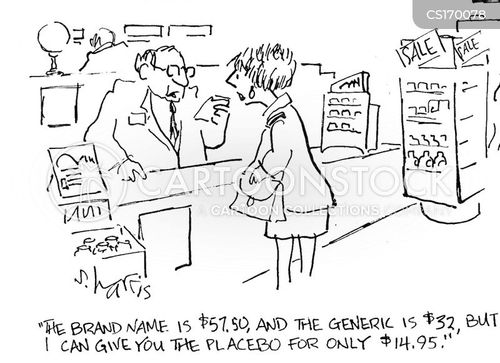
Cartoon – Drug Shopping

Increased prescription drug prices and spending are among the main drivers of health care costs in the U.S. About one-third of the rise in prescription spending from 2010 to 2014 was a result of either price increases for drugs or a shift toward prescribing higher-price products, with patients caught in the middle.
A new issue brief by former Rep. Henry Waxman and his colleagues at Waxman Strategies summarizes major problems behind high U.S. prescription drug prices, while also offering feasible policy actions. For instance, the authors identify the use of patent protection and market exclusivity laws by brand-name drug manufacturers as one driver of high prices.
Among other potential solutions, the authors suggest introducing price competition sooner for such drugs and making government-purchasing arrangements for medications that protect public health

Drug pricing is a national problem. So a nonprofit wants to help hand off some of that burden to the states.
The National Academy for State Health Policy just launched a new center, called the Center for State Rx Drug Pricing, to help state governments navigate the treacherous waters of drug pricing. It just received about a million dollars in funding from the Laura and John Arnold Foundation to help states get drug pricing initiatives underway.
“We believe that pricing is such a difficult, complicated issue at the federal level that states can serve as laboratories of innovation,” said Trish Riley, executive director of NASHP. “It’s an opportunity for states to try all kinds of different approaches to lower drug prices.”
It’s an opportunity, too, to allow states to learn from one another — seeing what works and what does not in lowering pricing, and using the new NASHP center as a conduit of information.
“States are desperate for meaningful efforts to address the ever-increasing burden of drug prices on our budget,” said Dr. Rebekah Gee, secretary of the Louisiana Department of Health. There was initial optimism that President Trump might enforce a new drug price negotiating process — “but that interest seems to have dwindled, so it’s up to states to drive the conversation,” she said.
NASHP, a nonprofit, has long served as a coalition of state health policy wonks. Last year it assembled 11 points of possible policy options for states to lower prices — suggesting reforms in rate regulation, importation, bulk drug ordering, and more.
Some states already have drug cost-containment initiatives underway. Maryland, for instance, now has a law in place that punishes price gouging on generic drugs. And Nevada just passed a strict pricing transparency law that focuses primarily on diabetes drugs.
“Over the last year, 79 bills on transparency, PBMs, and the like have been introduced,” Riley said. “It’s now a very active field.”
But some think that such state-driven measures to lower prices just aren’t enough. The federal government has to be involved.
“Generally it’s difficult for programs such as these to effect real industry-level change without policy-setting power at the national level,” said Scott Hinds, an analyst at Sector & Sovereign Research. Public pressures on pricing have prompted drug makers to voluntarily decrease their inflation rates, he pointed out. And payers are now limiting formularies — lists of medicines with favored insurance coverage — which forces price competition, and could therefore lower rates, he said.
“Absent policy changes that would allow Medicare to negotiate Part D prices, I’m skeptical that there’s much that would have as much of an impact at the aggregate level as these self- or market imposed- changes,” Hinds said.
Rachel Sachs, an associate professor of law at Washington University of St. Louis, agrees that it’s likely not feasible for states to go it alone. While states could embark on a number of initiatives to promote transparency in drug pricing decisions, or tinker with spending, “most of the ambitious proposals states have advanced so far would require the federal government’s cooperation.”
She said that states could, indeed, use their existing Medicaid formularies more aggressively to also force that competition, as evidenced by the work states did around Hepatitis C drugs. However, Sachs said that price cap provisions simply won’t work on their own.
The new drug pricing center will also dole out small grants — taken from the larger Arnold Foundation gift — to a handful of states in order to help fuel their proposals for lowering drug pricing.
“We’re on a fast track to get that money out,” Riley said.
The Arnold Foundation has had a sustained interest in lowering drug pricing. Last year, for instance, it gave Memorial Sloan Kettering Cancer Center a $4.7 million grant to support the Evidence Driven Drug Pricing Project — a three-year study that examines the payment structures of specialty drugs. It also granted $5.2 million to a Boston nonprofit, the Institute for Clinical and Economic Review, to analyze whether new drugs are worth what they cost.

Skyrocketing drug prices are in the news. Overnight price increases have riveted the attention of the public, media, and politicians of all stripes. But one reason for high prices has flown under the radar. When drug companies reformulate their product, switching from one version of a drug to another, the price doesn’t dramatically increase. Instead, it stays at a high level for longer than it otherwise would have without the switch. Although more difficult to discern than a price spike, this practice, when undertaken to prevent generic market entry, can result in the unjustified continuation of monopoly pricing, burdening patients, the government, and the health care system as a whole.
Not all reformulations pose competitive concerns. Empirical studies have shown that more than 80 percent can be explained by improvements that are not temporally connected to impending generic entry. But a dangerous subset of such reformulations is undertaken for one, and only one, reason: to delay generic entry. In such cases, reformulation is called “product hopping.”
When generics enter the market, the price can fall dramatically overnight, by as much as 85 percent. For that reason, brand firms have every incentive to delay this moment of reckoning as long as possible. Sure enough, making trivial changes to their drugs has that effect. Every state has a substitution law that requires or allows pharmacists to offer a generic drug when the patient presents a prescription for a brand drug. But such substitution is thwarted if the drug is not the same—in particular, if it is not bioequivalent (able to be absorbed into the body at the same rate) and therapeutically equivalent (having the same active ingredient, form, dosage, strength, and safety and efficacy profile). A minor change to a drug’s formulation can prevent the pharmacist from substituting the generic.
Product hopping raises nuanced issues arising at the intersection of patent law, antitrust law, the federal Hatch-Waxman Act, and state drug product substitution laws. It is even more complex given the uniquely complicated pharmaceutical market, in which the buyer (patient, insurance company) is different from the decision maker (doctor).
Courts applying US antitrust law have struggled to create a robust and defensible legal framework for separating anticompetitive product hops from competitively benign, legitimate product development. In this post, we propose a framework that would help courts defer to legitimate reformulations while targeting anticompetitive switches.
Drug companies love the Orphan Drug Act. They say it encourages research into breakthrough therapies for people with rare disease. And sometimes that’s true. Lots of the time, though, the companies would’ve pursued the research anyhow. And those same companies have learned to game the Orphan Drug Act in a bunch of different ways, allowing them to jack up their prices for no good reason.
How could we fix the Orphan Drug Act? That’s the topic of this week’s Healthcare Triage.

I help the University of Utah hospital system manage its drug budgets and medication use policies, and in 2015 I got sticker shock. Our annual inpatient pharmacy cost for a single drug skyrocketed from $300,000 to $1.9 million. That’s because the drug maker Valeant suddenly increased the price of isoproterenol from $440 to roughly $2,700 a dose.
Isoproterenol is a heart drug. It helps with heart attacks and shock and works to keep up a patient’s blood pressure. With the sudden price increase, we were forced to remove isoproterenol from our 100 emergency crash carts. Instead, we stocked our pharmacy backup boxes, located on each floor of our hospitals, to have the vital drug on hand if needed. We had to minimize costs without impacting patient care.
This type of arbitrary and unpredictable inflation is not sustainable. And it’s not the way things are supposed to work in the United States. Isoproterenol is a drug that is no longer protected by a patent. Theoretically, any drug company should be able to make a generic version and sell it at a competitive cost. We should have had other options to buy a competitors’ copy for $440 or less. But that’s not happening like it should. The promise of generic medications is getting further from reality each day. As the U.S. Senate considers President Donald Trump’s choice to head the Food and Drug Administration, now is the time refocus efforts on generic drugs.

As President Trump said, health care is “complicated.”
When it comes to health care in America, virtually everyone claims to have the same broad goals: Accessibility to decent care that is affordable and not have it cost businesses and government (read: taxpayers) a fortune.
Good intentions abound, but politically feasible solutions are in short supply, and many bad or simplistic ideas are bandied about by policymakers on both sides of the aisle. A case in point is a Maryland bill that would crack down on “price gouging” by prescription-drug makers. The bill, which passed the House of Delegates on March 20 with an overwhelming, bipartisan margin of 137-4 and will probably be taken up by the Senate in the next few days, seems like a no-brainer. As Maryland Attorney General Brian Frosh said: “We’ve seen in Maryland and all over the country drug prices [are] skyrocketing.
However, the devil is in the details, and devilish it is. The bill, H.B. 631, excludes pricey brand drugs and only targets generic-drug makers, whose medicines save Maryland residents and taxpayers about $3.7 billion a year. If the bill becomes law, the state Attorney General could take generic drug makers to court for price increases that are vaguely described as “unconscionable.” Unconscionable is a legal doctrine used when consumers have no option to purchase an essential product at inflated prices. However, under the proposed Maryland law, it could be invoked when a generic maker increases the price of a pill from 15 cents to 50 cents but not when the manufacturer of a brand drug increases its price from $300 to $500 per pill.
Generics are a proven solution to high drug costs that saved America approximately $227 billion in 2015, including $90 billion for Medicare and Medicaid. Generics account for 89 percent of all prescriptions written, but only 27 percent of U.S. spending on medicines. In short, generics and a new class of off-brand drugs called biosimilars reduce health care costs and get affordable medicines into the hands of patients who need them most.
http://www.healthcaredive.com/news/cvs-health-to-cut-600-corporate-jobs-1/429798/

CVS Health employs more than 240,000 people in the U.S., many of whom work in retail positions or as pharmacists at its 9,600 pharmacies. But with increased competition in the drugstore retail space, CVS Health is starting to let some of those positions go.
Recently, the retailer has been buffeted by the likes of Walgreens, Rite Aid, and Wal-Mart Stores jockeying for sales of medications and health care services. Today’s drugstores compete with doctors and healthcare clinics as well as with retailers like Sephora and Ulta in beauty, and of course, general merchandisers like Target and, increasingly, Amazon, in consumer goods. The retailer may also be wary of the proposed merger between rivals Walgreens and Rite Aid.
An uptick in lower-priced generic pharmacy sales and a decline in store traffic muted CVS Health in its previous quarter. Sales grew 2.1% in Q2, missing analyst expectations for a 2.5% rise and trailing well behind the 4.2% increase that CVS posted in the first quarter of this year. Non-pharmacy same-store sales fell 2.5% in Q2, the company added. The drugstore retailer is due to release its third quarter results next week.
While the Affordable Care Act has expanded some opportunities for drugstore retailers to offer more medical services, the law has also helped lower some healthcare costs, as it was intended to do, which could hit retail sales. CVS also left a lot of money on the table when it ceased sales of tobacco products two years ago.

What would penicillin cost under value-based pricing, a system in which drug makers set prices based on the benefits of their products to consumers and the larger society, rather than drugs’ costs of production? Penicillin has saved millions of lives since its first use in 1942, and it still works for many patients despite growing bacterial resistance to the drug. (Fortunately, many fewer patients get infections with pneumococcus now because we have a good vaccine for it.) Surely, under value-based pricing, penicillin would sell for thousands or tens of thousands of dollars a dose.
http://www.scpr.org/news/2016/07/01/62183/an-inside-look-at-the-world-of-drug-presentations/

Critics say the system is flawed because it’s paid for by drug makers with a financial stake in the outcome.
Presentations sponsored by pharmaceutical companies only focus on one drug and do not include all the options available, including generics, says R. Adams Dudley, Director of the Center for Healthcare Value at the University of California San Francisco.
“They’re going to emphasize the education aspect of it but they wouldn’t pay for it if it did not lead to sales,” he says.
 HENRY KOTULA