Healthcare job growth slows; hospitals add 10.6K jobs in June

https://www.beckershospitalreview.com/workforce/healthcare-job-growth-slows-hospitals-add-10-6k-jobs-in-june.html

Image result for Healthcare job growth


Healthcare added 25,200 jobs in June, with hospitals contributing 10,600 to that total, according to the latest jobs report from the U.S. Bureau of Labor Statistics.

This is down from the 28,900 jobs the industry added in May.

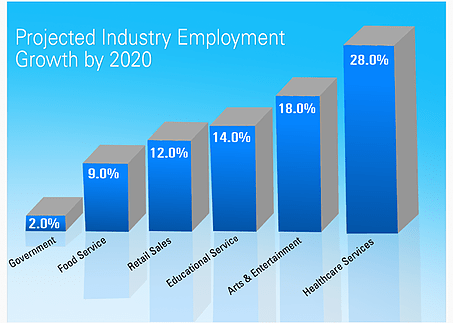
Within healthcare, ambulatory healthcare services continued to show employment growth, adding 13,500 jobs last month. Hospitals added 10,600 jobs in June compared to the 6,200 they added in May. Nursing and residential care facilities gained 1,100 jobs last month.

Overall, healthcare has added 309,000 jobs over the year, according to the BLS.

In total, the U.S. added 213,000 jobs in June.


AHA report: Hospitals spend almost $3 trillion, support more than 16 million jobs

http://www.healthcarefinancenews.com/news/aha-report-hospitals-spend-almost-3-trillion-support-more-16-million-jobs?mkt_tok=eyJpIjoiWkdSaE9UZzRPV0poTW1FeCIsInQiOiJTK1lnZEdEakdOVlZNYWRBSzF5M3o1d3BRWmpQXC8ydVBYN2lFY01mUEQwbnhTVjBIU2NScmdIMWtXcjN3NGpXb1NoSG53clwvXC90TzJ1QWFPRWpoeGFtXC9jSHl4TFwvbDgwMEZYaU1kVmxRa1NCNHloRk9lK0VUZFBkVEVuV1hHTytIIn0%3D

Every dollar a hospital spends yields roughly $2.30 of additional business activity; for every hospital job, another two are supported.

A new report from the American Hospital Association highlights just how much hospitals are driving their local economies, as well the national one, with data showing hospitals directly employ nearly 6 million people and purchase more than $900 billion worth of goods and services from other businesses.

But that’s not all. Enter the ripple effect. The goods and services hospitals buy drive economic vitality throughout their communities, with each hospital job supporting roughly two additional jobs in the community. Every dollar a hospital spends yields roughly $2.30 of additional business activity.

When you incorporate that ripple effects into calculations, the AHA reported hospitals actually support 16.5 million jobs nationwide and almost $3 trillion in economic activity.

“In 2016, America’s hospitals treated 143 million people in their emergency departments, provided 605 million outpatient visits, performed over 27 million surgeries and delivered nearly 4 million babies. Every year, hospitals provide vital health care services like these to hundreds of millions of people in thousands of communities. However, the importance of hospitals to their communities extends far beyond health care,” the AHA said.

When it come to states whose hospitals send the most money into the their economies, it’s no surprise that California is the top spender, with $103 billion in total expenditures. Factor in that ripple effect and the Golden State’s total economic output from its hospitals more than doubles to $230 billion.

New York, Texas, Florida and Pennsylvania rounded out the top five states that are most impacted by hospital expenditures, the report said.

When it comes to a hospitals impact on the state’s labor force, it’s not just about who creates the most. Maine is actually the state most impacted by hospital job creation with total of 38,105 hospital jobs. That hospital workforce makes up a little more than 14 percent of the states overall workforce. Ohio was the second most impacted state, with 298,371 hospital jobs that constitute just almost 13 percent of the state’s workforce.

Minnesota, West Virginia and Massachusetts rounded out the other top five states whose workforce is impacted by hospital jobs. Minnesota’s hospital workforce constitutes a little more than 12 percent of the overall state force, West Virginia’s hospital workforce was nearly 11.7 percent and Massachusetts was almost the same with 11.6 percent.

As both healthcare and economic cornerstones of their communities, the pressure is greater for hospitals leaders to find new ways to add value, maintain financial margins and keep doors open. That is one of the drivers behind the rash of merger and acquisition activity. With ever-increasing regulatory burdens that require more manpower or physician’s time to manage, coupled with the need to make much needed updates in technology, modernize facilities to meet current trends or just maintain appropriate levels of care and accommodation for patients, not to mention staying competitive for hospitals in areas where other systems want to dip into their patient volumes, hospital leaders are eyeing mergers as a means of keeping doors open sot they can continue to support their communities both clinically and economically.


Healthcare spending, price growth slows in 2017 but job growth spikes

http://www.healthcarefinancenews.com/news/healthcare-spending-price-growth-slows-2017-job-growth-spikes?mkt_tok=eyJpIjoiT0RCalpUWTNNbU16TmpJeiIsInQiOiJyUTBEc0s5clMzSUUyRVV4UGJEam9ZOTBVVW5uWmVzQnpMa1hTSjY0clYyK3FGcmtPOFNQelVtd2hRQmZ3aFwvZndPUDNoZk8zOXBBcHNGQzh6U0ErRnhFSmc3RlVzelhoMXp4SjQ5bU02NDQ4K3Badyt4dFhUMzB3ajZ3U0hhNWIifQ%3D%3D

Altarum report finds spending grew by only 4.6 percent in 2016.

Healthcare spending growth slowed in 2016, and the trend appears to be continuing, according to the August 2017 Altarum Institute Center Health Sector Trend report.

According to the report, spending grew by only 4.6 percent in 2016 and estimates based on new data have the downward trend continuing with growth for the first half of 2017 at 4.4 percent. Altarum said the estimates illustrate the impact of expanded coverage, and its subsequent leveling off, on healthcare utilization. Coverage expansion was concentrated in 2014 and 2015, leading to a jump in health services utilization. That peaked at at 5.1 percent in 2015.

“Coverage leveled off in 2016 and, in response, the growth in health services utilization has been trending back toward pre-expanded coverage rates,” Altarum said.

Healthcare price growth has also dropped in 2017, from 2 percent in the first quarter to 1.6 percent in the second quarter.

Though much higher than healthcare services, prescription drug price growth slowed to 3.6 percent in the second quarter 2017. However it is important to note that the impact of rebates are not reflected in these data, and that drug pricing controversies like the one surrounding Mylan’s EpiPen were recently resolved and some generic alternatives have been made available at lower prices.

Finally, health employment grew an average of 21,000 jobs per month during the first 5 months of 2017 then unexpectedly rebounded to 38,000 in June and July. The jump in June and July was a surprise, and was focused mainly in ambulatory settings.

“Growth averaged 32,000 during 2015 and 2016, and the decline in monthly growth during the first 5 months of 2017 was expected due to slower growth in health care utilization driven by the leveling off in expanded coverage,” Altarum said.

The American Hospital Association’s February 2017 Cost of Caring report also illustrated the increased utilization in 2014 and 2015, due to expanded healthcare coverage and more intense utilization of services like chronic disease management.

However, the report mentioned that statistics also suggested that hospitals are trying to hold costs down. For instance, hospital price growth in 2015, as measured by the Hospital Producer Price Index, was .9 percent, a 13-year low and a notable drop from the rate of 4.4 percent in 2006, the report said.

Growth in Medicare spending for all hospital services, both inpatient and outpatient, is at a 17-year low, and inpatient spending dropped 1.9 percent in 2015.

So it is possible that along with a leveling off of coverage and utilization, successful hospital attempts at stabilizing or reducing cost of care could be responsible for the lower spending. The slowing in hospital price growth in the Altarum report is also illustrative of these theories.

However, the hospital industry faces serious challenges that can slow efforts to reduce costs, including drug prices and regulatory compliance, the AHA report said.

Electronic health records have also proven to be big resource absorbers for providers. AHA estimates show that from 2010 to 2014 hospitals spent over $47 billion annually on IT. Increasing regulatory requirements are also fueling increases in administrative expenses and compliance staffing demands, the AHA report said.

Click to access Altarum%20RWJF%20Trend%20Report%20Aug%202017_1.pdf


Hospitals add $2.8 trillion to US economy, AHA report says

http://www.healthcarefinancenews.com/news/hospitals-add-28-trillion-us-economy-aha-report-says

American Hospital Association estimates that each hospital job supports about two additional jobs.

Hospitals support 16 million total jobs, or one in nine jobs in the United States, according to an annual survey from the American Hospital Association. They also support more than $2.8 trillion in economic activity.

Those numbers don’t reflect direct hospital employment, but rather the “ripple effect” the AHA said hospitals exert across the broader economy. Directly, hospitals employ about 5.7 million people. That’s good enough to make them one of the top sources of private sector jobs, according to the AHA.

The group calculated the ripple effect by factoring in the $852 billion that hospitals spend on goods and services from other businesses. The AHA estimates that each hospital job supports about two additional jobs, and every dollar spent by a hospital supports roughly $2.30 of additional business activity.

According to figures from the Bureau of Labor Statistics, healthcare added more than 35,000 jobs per month in 2016. In 2015, hospitals treated 142 million people in their emergency departments, provided 581 million outpatient visits, performed close to 27 million surgeries and delivered nearly 4 million babies, the AHA said.

The healthcare industry added about 18,300 jobs last month.