DIALYSIS GIANT DAVITA DEFENDS ITSELF IN COURT AND AT THE POLLS

https://www.healthleadersmedia.com/finance/dialysis-giant-davita-defends-itself-court-and-polls?utm_source=silverpop&utm_medium=email&utm_campaign=ENL_181029_LDR_BRIEFING_resend%20(1)&spMailingID=14518965&spUserID=MTY3ODg4NTg1MzQ4S0&spJobID=1502250658&spReportId=MTUwMjI1MDY1OAS2

Dialysis, The Courts, and The Polls

Proposition 8 would wipe out DaVita’s earnings in California, according to recent investment firm reports. Passing the initiative ‘would be so devastating,’ to the tune of $450 million a year, that DaVita ‘would likely walk away from the state altogether.’

It’s been a year of playing defense for DaVita Inc., one of the country’s largest dialysis providers.

A federal jury in Colorado this summer awarded $383.5 million to the families of three of its dialysis patients in wrongful death lawsuits. Then this month, the Denver-based company announced it would pay $270 million to settle a whistleblower’s allegation that one of its subsidiaries cheated the government on Medicare payments.

But its biggest financial threat is a ballot initiative in California that one Wall Street firm says could cost DaVita $450 million a year in business if the measure succeeds.

Despite these recent hits, the company continues to rake in profits and receive favorable ratings from stock analysts. Its shares are trading at about $65 a share, only about 19 percent below a 52-week high set in January. That’s largely because DaVita controls about one-third of a growing market, health experts say.

“They don’t really have many rivals, and they perform a necessary, lifesaving service,” said Leemore Dafny, a professor of business administration at Harvard Business School. “If you’re producing something people want to buy and you’re the only one making it, people are going to buy it.”

Patients with chronic kidney failure often need dialysis to filter the impurities from their blood when their kidneys can no longer do that job.

And as Americans live longer and get heavier, more people become diagnosed with kidney disease and possibly need dialysis. In 2015, 124,114 new patients received dialysis, up from 94,702 in 2000, a 31 percent increase, according to the U.S. Renal Data System.

DaVita is one of the largest dialysis providers in the country, operating more than 2,500 clinics nationwide. In California, the company operates 292 clinics, half of all chronic dialysis clinics in the state.

Its parent company, DaVita Inc., reported $10.9 billion in revenue last year and $1.8 billion in profits, almost all of which came from its dialysis business.

This year, company officials project the dialysis group will bring in $1.5 billion to $1.6 billion in profits. It’s a big turnaround for a corporation that could barely make payroll in 1999, when it was under review by the Securities and Exchange Commission for questionable accounting practices. Its success has largely been credited to CEO Kent Thiry, a colorful personality who has dressed up as a Musketeer and ridden a horse into corporate meetings to rally workers.

Now those big profits — generated from treating sick patients — has put a target on the company’s back, as well as that of its biggest competitor, Fresenius Kidney Care.

The Service Employees International Union succeeded this year in placing Proposition 8 on California’s Nov. 6 ballot, which would limit dialysis center commercial revenues to 115 percent of patient care costs. The ballot fight pits a well-funded industry against labor and the California Democratic Party.

DaVita declined to make anyone available for this article, but in a statement said Proposition 8 “will limit patients’ access to life-saving dialysis treatments, jeopardizing their care.”

Last year, roughly two-thirds of DaVita’s dialysis revenue came from government-based programs, such as Medicare and Medicaid. But that isn’t enough to cover its costs, according to the company’s 2017 annual report, which states that DaVita loses money on each Medicare treatment it provides. (Medicare covers dialysis for people 65 and older, and for younger patients after private insurance has provided coverage for 30 months.)

Instead, DaVita generates profits from commercial health plans, which it acknowledges pay “significantly higher” rates than government programs. The ballot measure targets those higher rates, which Dafny describes as “their bread and butter.”

The prospect of the measure passing led DaVita to delay or cancel plans to open new clinics in California despite growing patient demand, Javier Rodriguez, chief executive officer of DaVita Kidney Care, told investors on a call in May, according to the online equity research website Seeking Alpha.

A few months later, Rodriguez declined to provide a dollar amount when asked how the initiative would impact the company. Rather, he warned investors that it would become “unsustainable” for the industry to treat the estimated 66,000 dialysis patients in California, should the measure succeed.

Wall Street analysts agree that Proposition 8 would wipe out DaVita’s earnings in California, according to recent reports issued by investment firms J.P. Morgan and Baird. Passing the initiative “would be so devastating,” to the tune of $450 million a year, that DaVita “would likely walk away from the state altogether,” according to a March Baird report.

DaVita has poured $66.6 million into the opposition campaign as of Oct. 25, and rival Fresenius has contributed $33.6 million. That dwarfs $17.3 million in union contributions in support of the measure, according to campaign records filed with California’s secretary of state office.

Both Wall Street firms conclude that Proposition 8 is likely to fail, citing the industry’s massive spending and the union’s record of failure at the polls on other issues.

The company’s legal troubles don’t worry stock analysts, either; Baird’s October report on DaVita’s financial performance dedicates just two sentences to them. It notes that DaVita “is subject to numerous ongoing government investigations and inquiries, similar to most large-scale, high-profile Medicare providers.”

There are no specific references to the Colorado jury award this summer, which the company is appealing, over the death of three patients who died of cardiac arrest after treatment at DaVita clinics. Nor was there concern about this month’s $270 million settlement over Medicare billing.

That’s because those incidents are seen by investors as the cost of doing business — one-time hits that don’t affect a company’s earnings power in the future, said Matthew Gillmor, a senior research analyst at Baird.

“Almost all companies I follow, at some point, have had to pay a fine to the government,” Gillmor said.

Thiry, DaVita’s CEO, acknowledged that settlements, which aren’t good public relations, are a reality for large corporations, when The Denver Post asked him last year about the company’s previous legal battles.

“If, in a trial, you are found to be wrong on even a small part of the case, it could mean that you are excluded from Medicare, which typically would mean bankruptcy for your company,” Thiry said. “So, you are essentially forced to settle.”


California Assembly Passes Bill Cracking Down on Dialysis Reimbursement

http://www.thefiscaltimes.com/2018/08/30/California-Assembly-Passes-Bill-Cracking-Down-Dialysis-Reimbursement


The California State Assembly on Wednesday passed a landmark bill cracking down on the prices and payment practices of dialysis centers, delivering a win to insurers who backed the bill and potentially threatening the profits of large dialysis chains like DaVita and Fresenius.

The bill places limits on third-party groups like the American Kidney Fund, a not-for-profit organization that subsidizes premiums for dialysis patients with commercial insurance. The bill also caps some commercial dialysis payments at lower Medicare rates.

DaVita and Fresenius are large contributors to the American Kidney Fund, and insurers and labor groups including the Service Employees International Union of California have argued that the charity’s payments are used to game the system and direct patients to insurers that provide higher reimbursement rates — and more profit — for the dialysis companies.

The American Kidney Fund has said that the bill “would cause profound harm” to many dialysis patients. It called the legislation “nothing more than a thinly-veiled attempt by large health insurance companies to kick kidney patients off their insurance plans.”

The state assembly’s vote means the bill now will likely head to the desk of Gov. Jerry Brown, who has until the end of next month to act on it.

Why it matters: “This is a giant win for the SEIU, health insurers and employers and a huge blow to dialysis companies and the American Kidney Fund,” writes Axios’ Caitlin Owens, adding that “there will be a fierce lobbying blitz” by the dialysis companies to get Brown to kill the bill. If the legislation does get signed into law, Modern Healthcare’s Susannah Luthi writes, it could have a major impact on DaVita and Fresenius, which have about 70% of California’s market share of just under 600 dialysis clinics and nearly 70,000 dialysis patients.”


California Unions Secure 12% Raises from Kaiser Permanente, Dignity Health

http://www.healthleadersmedia.com/nurse-leaders/california-unions-secure-12-raises-kaiser-permanente-dignity-health?utm_source=edit&utm_medium=ENL&utm_campaign=HLM-Daily-SilverPop_03202018&spMailingID=13157517&spUserID=MTY3ODg4NTg1MzQ4S0&spJobID=1361851715&spReportId=MTM2MTg1MTcxNQS2

Image result for flexing muscles

Under the terms of separate, five-year contracts, about 34,000 workers in the state expect their wages to rise at least 12%, with lump sum payments added thereafter.

Two labor unions in California announced Monday that they have reached separate contract deals with major providers in the state.

Oakland-based Kaiser Permanente, which operates 21 medical centers and other facilities in central and northern California, agreed to a 12% across-the-board wage increasefor the 19,000 registered nurses and nurse practitioners it employs, according to the California Nurses Association (CNA).

San Francisco-based Dignity Health, which operates throughout California, agreed to a 13% wage increase over five years for the 15,000 union members it employs as healthcare workers, according to SEIU-United Healthcare Workers (UHW) West.


The five-year deal with Kaiser Permanente is pending ratification by CNA members, while SEIU-UHW members already ratified their five-year deal with Dignity Health.

“Our new contract maintains employer-paid family healthcare and provides rising wages, and that security and peace of mind enables us to focus on caring for our patients,” Dennis Anderson, a laboratory assistant who works for Dignity at Mercy Hospital in Folsom, California, said in a statement.

The deal details: Kaiser Permanente

The tentative agreement with Kaiser Permanente will ultimately benefit patients, according to CNA Executive Director Bonnie Castillo.

“Protecting the economic security of our future RNs is essential to defending the health of everyone who will be a patient today and tomorrow,” Castillo said in a statement. “This agreement gives us a strong foundation for health security for Kaiser nurses and patients for the next five years in a turbulent time of health care in our state and nation.”

Key provisions of the contract, according to CNA, include the following:

  • Additional staffing: Kaiser will add 150 RN full-time-equivalents to assist in its migration to a new computer system, with 106 of those positions to be posted within 90 days of the contract’s ratification.
  • One wage scale: Kaiser agreed to withdraw a proposed four-tier wage scale for RN/NP new hires—a proposal the union said would otherwise “promote workplace divisions between current nurses and new RN graduates.”
  • Wage increases: The agreement calls for 12% wage increases for all RNs and NPs, with a 3% lump sum over five years.

The agreement also calls for 600 formerly non-union RN patient care coordinators to be included in the contract with the other RNs and NPs employed by Kaiser.

A spokesperson for Kaiser Permanente could not be immediately reached Tuesday for comment.

The deal details: Dignity Health

The ratified agreement between SEIU-UHW and Dignity Health—which lasts through April 30, 2023—includes the following key provisions, according to the union:

  • Benefits: Union members employed by Dignity will keep their fully paid, employer-provided family healthcare.
  • Wage increases: Workers secured 13% raises over five years, with a 1% bonus in the second year.
  • Funding for training: Dignity also agreed to contribute another $500,000 annually to a joint labor-management training program designed to keep workers on top of the latest changes in healthcare, the union said.

This deal comes as Dignity Health prepares to merge with Catholic Health Initiatives, based in Chicago, which would form one of the largest nonprofits in the country.

A spokesperson for Dignity Health could not be immediately reached Tuesday for comment.

$450K Cap Proposed on Hospital CEO Salaries in California

https://nonprofitquarterly.org/2016/06/14/450k-cap-proposed-on-hospital-ceo-salaries-in-california/

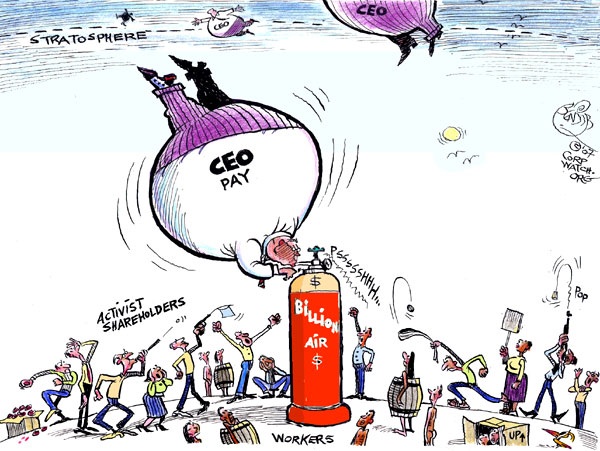
CEOPay

One of America’s largest labor unions is taking a third attempt at capping hospital CEO salaries. The latest proposal by Service Employees International Union (SEIU)-United Healthcare Workers West would give authority to the California attorney general’s office to oversee a salary ceiling equal to the compensation of the President of the United States, or $450,000 a year.


Union demands audit of $29 million loan to Parkview Community Hospital

http://www.healthcarefinancenews.com/news/union-demands-audit-29-million-loan-parkview-community-hospital

Letter to HUD official claims hospital spent thousands on union-busting efforts.

Unions must follow through on ballot initiatives to reform healthcare finances

http://www.fiercehealthfinance.com/story/unions-must-follow-through-ballot-initiatives-reform-healthcare-finances/2016-05-31

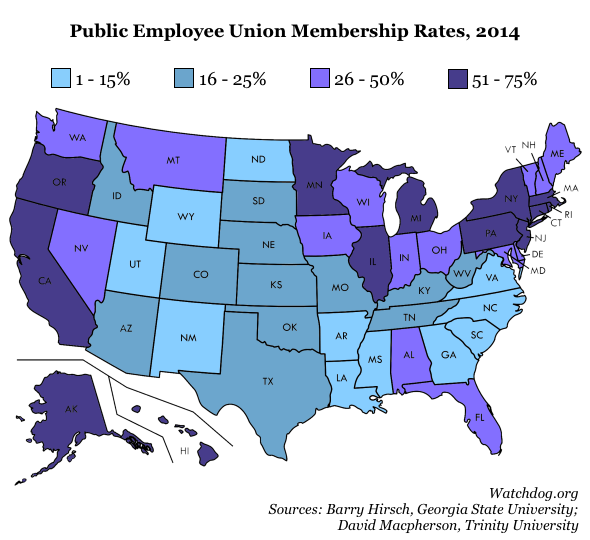
govt-union-membership-by-state

The healthcare industry has been the single most vigorous creator of jobs in the country in recent years. And healthcare has created a range of jobs, from hourly janitorial gigs to middle-class nursing positions to upper-middle class physicians and executives, to CEOs paid millions of dollars a year.

Many of the non-managerial jobs not only pay well, but are unionized. While unions have been slowly worn down and out in the automotive, aerospace and other sectors, they have become quite healthy, if not robust, in healthcare. The California Nurses Association, for example, was key to getting a staffing ratio mandate signed into law and surviving voluminous legal battles about a decade ago. Healthcare labor unions stage walkouts and work slowdowns on an ongoing basis throughout the country these days.

UPMC workers plan Thursday strike, demand $15 an hour, right to unionize

http://www.healthcarefinancenews.com/news/upmc-workers-plan-thursday-strike-demand-15-hour-right-unionize?mkt_tok=eyJpIjoiT0RZMFptTmtNMlJsTUdVMiIsInQiOiJuZjAwWEdTaDd6S0hXT0NjTlwvMXlTZ0oySVBWN3RFUFBcL1JGeDVWMFBSMEp4ekR6cFJXUjRhOEIrUkNVbEZuZFlBanQ0a3FPZ2Nzem1QbnQzZUxITDRKTlFVcjFTazRpc2ZVb0doR0lQTGRBPSJ9

Thursday’s strike in Pittsburgh is also expected to include employees working in other industries such as fast-food, home care and nursing.

‘Massive betrayal’: Leaked memo reveals SEIU’s internal war over health care workers

http://www.bizjournals.com/sanfrancisco/blog/2015/06/seiu-united-healthcare-workers-dave-regan.html?ana=e_du_pub&s=article_du&ed=2015-06-17&u=FAuoHGaGEPdmk4X6khnaiw045b16af&t=1434641409

Dave Regan, president of SEIU's United Healthcare Workers West local, addresses media in  February 2014 press conference.