

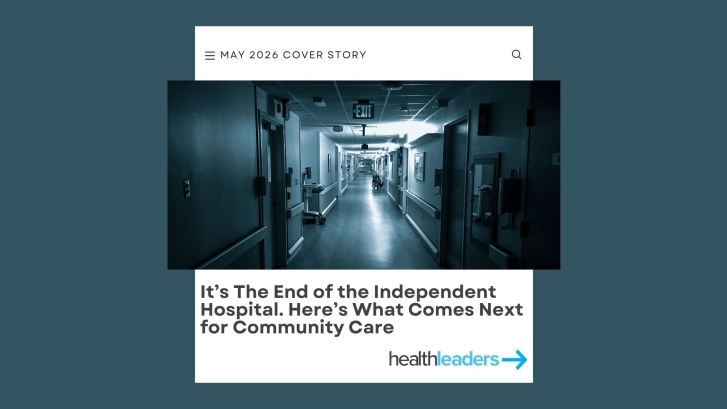
An unforgiving financial climate is forcing many community hospitals to choose between preserving independence and pursuing consolidation. But the path forward doesn’t have to be strictly binary.
KEY TAKEAWAYS
The financial pressure facing community hospitals is driven by widespread underpayment that makes sustaining independence difficult.
Consolidation can provide stability, but it often brings higher costs, workforce disruption, and reduced local control over decision-making.
Hospitals that act early have more strategic options, while delayed action leads to fewer choices and diminished leverage in shaping their future.
Independent hospitals have survived reimbursement cuts, labor shortages, and waves of consolidation before. But according to the executives in this month’s HealthLeaders cover story, this time may be different.
In a sweeping look at the financial and political pressures reshaping healthcare, our CEO editor Jay Asser examines why leaders at independent and regional health systems increasingly believe the traditional hospital business model is reaching its breaking point.
The story features candid conversations with Russ Ranallo, CFO of Owensboro Health; Pat Charmel, President and CEO of Griffin Health; Scott Rathgaber, MD, CEO of Emplify Health; and longtime healthcare executive Peter Wright, all of whom argue that the combination of Medicaid cuts, collapsing public trust, political gridlock, and rising operational costs is forcing hospitals into a new era of survival.
Their message is blunt: the old playbook no longer works.
For decades, hospitals found ways to absorb federal payment reductions through cost-shifting, consolidation, and commercial payer leverage. But as Jay reports, leaders now say those escape valves are closing all at once. Rural and independent systems are confronting impossible math, policymakers are demanding accountability without offering solutions, and communities still expect hospitals to provide care regardless of financial reality.
The story dives into the uncomfortable questions many executives are now asking privately:
- Is fee-for-service finally collapsing under its own weight?
- Have hospitals lost the political and public trust needed to defend themselves?
- And if the current model is no longer sustainable, what replaces it?
Forget reimbursement cuts. Now the conversation centers around whether independent hospitals can survive the next decade at all.
Read the full cover story to see why healthcare leaders say the industry is heading toward a reckoning it can no longer avoid.

