

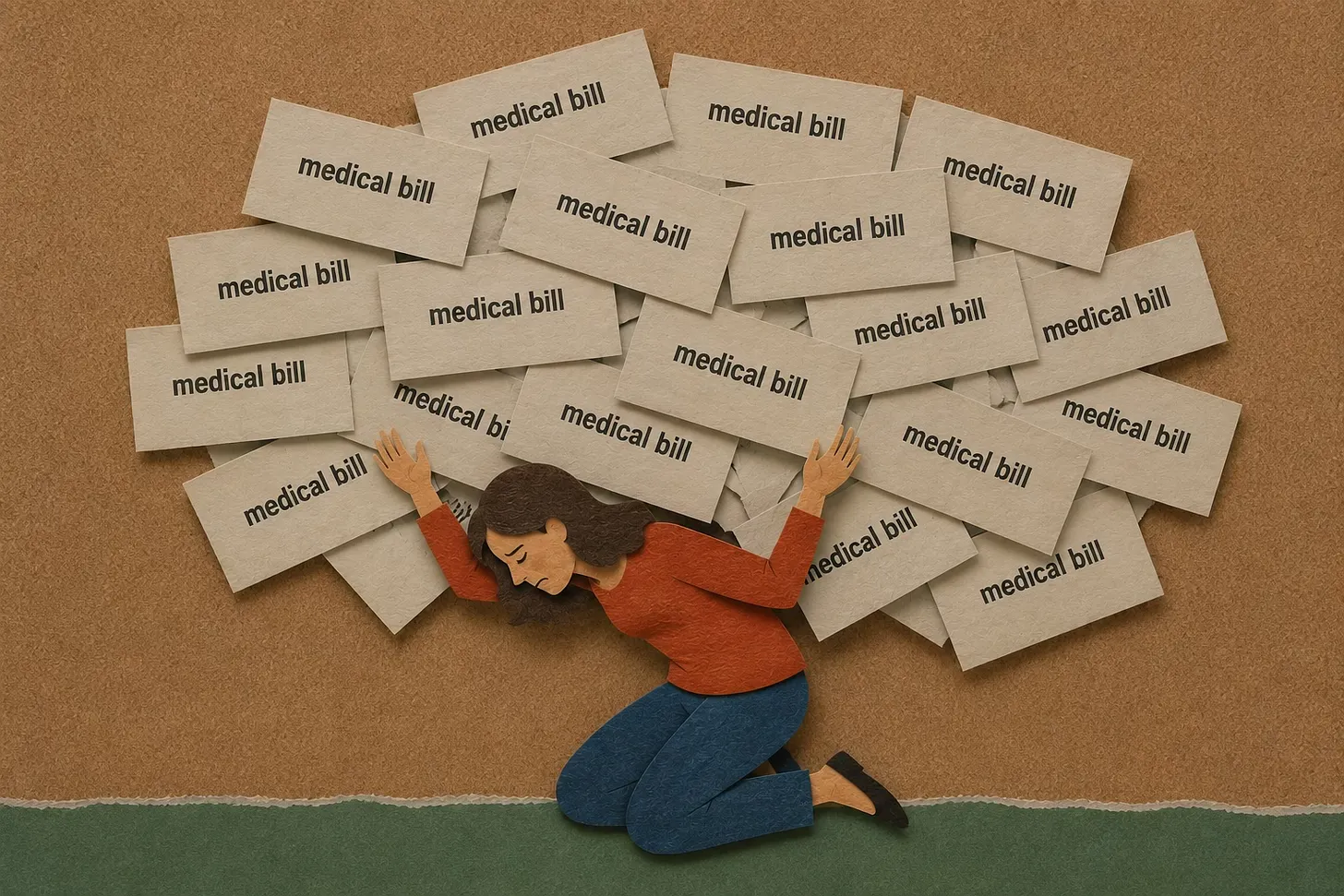
Even with insurance, millions of Americans with serious illnesses are trapped in a cycle of deductibles, debt collectors and annually resetting medical bills.
Jeni Rae Peters was a single mother and mental health counselor in Rapid City, South Dakota, when she was diagnosed with stage 2 breast cancer in 2020. She had health insurance through her employer. She kept working through surgery and chemotherapy because she knew that losing her job meant losing her coverage, and losing her coverage meant losing everything.
As KFF Health News reported in its landmark “Diagnosis: Debt” investigation, the bills came anyway. Her deductible and out-of-pocket limit reset every Jan. 1 — as they do for most health plans. When she switched jobs and her insurance changed, the clock reset again. In 2021 it reset once more, and when she slipped on the ice and broke her wrist — a fracture likely made worse by chemotherapy that had weakened her bones — she was charged thousands more. Surgeries, radiation and chemotherapy left her with at least $30,000 in debt. She couldn’t tell you exactly how much she owed anymore. The bills kept coming.
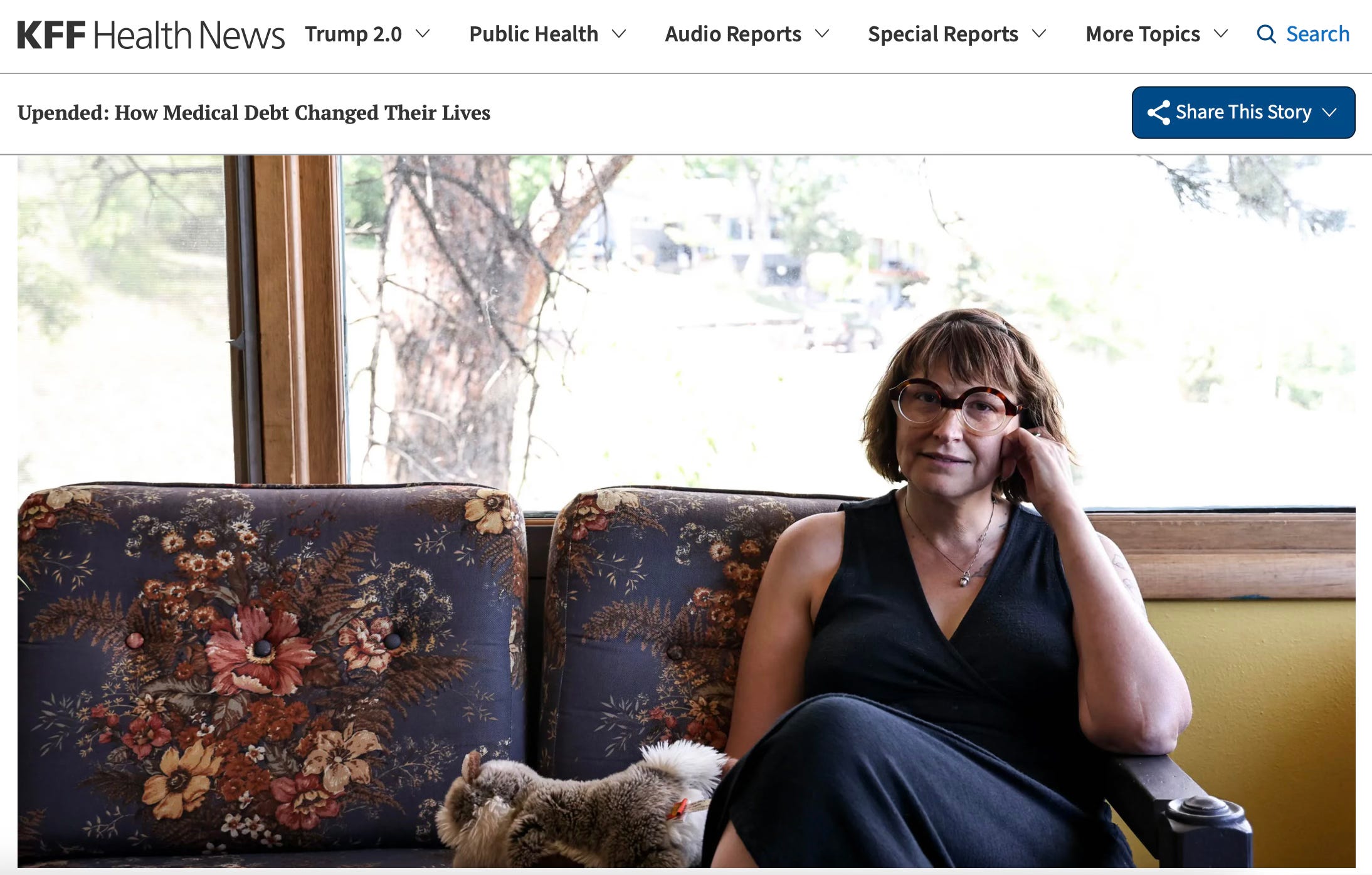
One of the debt collection calls came while she was lying in the recovery room after her double mastectomy. She was still half-delirious from anesthesia. She thought it was her kids calling. It was someone asking her to pay a medical bill.
Jeni Rae Peters’ story is not unusual. In the brutal current version of American health insurance, it is practically routine.
A 2024 survey by the American Cancer Society Cancer Action Network found that nearly half of cancer patients and survivors — 49% — have incurred medical debt to pay for their cancer care, with another 13% expecting to incur debt as they begin or continue treatment. We’re not talking about uninsured Americans here. In fact, nearly all of them — 98% — had health care coverage at the time they accumulated that debt. What they had in common is that most of them were enrolled in a high-deductible health plan.
Having insurance, in other words, did not protect them. In many cases, the insurance plan itself was the mechanism of their financial destruction.
Over the past two decades, the insurance industry — with the quiet approval of employers eager to cut their own costs — systematically shifted financial risk onto patients. The gears of the mechanism are familiar to anyone who has ever tried to read an Explanation of Benefits: deductibles, copayments, coinsurance, out-of-pocket maximums. These instruments were designed, in theory, to discourage unnecessary care. In practice, they have become a second billing system — one that activates precisely when a person is most sick, most frightened and least equipped to fight back.
The numbers have grown staggering. The average deductible for a single worker in employer-sponsored coverage now exceeds $1,700 — and that figure masks the reality for workers at smaller firms or in lower-wage jobs, where deductibles of $3,000, $5,000 or more are common. The Affordable Care Act limits the amount of money Americans with commercial insurance have to pay out of pocket, but the cap was unreasonably high from the start, it increases every year – and it resets every year. This year the out-of-pocket maximum is $10,600 for an individual and $21,200 for a family. For a cancer patient like Jeni Rae Peters, hitting that cap wasn’t a worst-case scenario. It was the first-year scenario. And then the calendar flipped to Jan. 1. And it all reset.
This is the particular cruelty that most Americans don’t fully understand until they get sick: the out-of-pocket maximum isn’t a lifetime protection. It’s an annual one. Every January, the counter goes back to zero. The deductible resets. The coinsurance begins again.
For someone managing cancer — or diabetes, or multiple sclerosis, or heart disease — this isn’t a one-time financial hit. It’s a recurring one, year after year, for as long as the disease persists. Oncologists have a term for it: financial toxicity. The treatment harms the body. The bills harm everything else.
The harm is measurable and well documented. Among cancer patients who accumulate medical debt: 60% are unable to put money into savings; 49% have their credit score damaged; 46% report being harassed by creditors and debt collectors. Eighteen percent consider filing for bankruptcy. Six percent actually do. Eight percent lose their home or are forced to live somewhere they don’t feel safe.
Researchers have also found that cancer patients who go bankrupt are more likely to die than cancer patients who don’t. Financial toxicity is not a metaphor. It is a cause of death.
There is a philosophical argument, still advanced in insurance industry testimony and in certain policy circles, that requiring patients to pay something for care makes them more cost-conscious consumers. I used to help make that argument when I was an insurance industry communications executive. It is one of the things I regret most about that career.
What that argument leaves out is that no one rations chemotherapy because it seems unnecessary. No one decides their insulin isn’t worth the cost because they’re being “judicious.” The cost-sharing model punishes the sick for being sick. It was designed to shift costs, not to improve health. And it has worked spectacularly well for health insurers. Forcing health plan enrollees to pay hundreds and often thousands of dollars out of their own pockets before their coverage kicks in enables insurers to pay far fewer claims today than they did before they began pushing Americans into high-deductible plans two decades ago.
In the coming weeks, I’m going to tell more stories like Jeni Rae Peters’. I’ll be writing about what’s happening to people who buy coverage through the ACA Marketplace and discover that “covered” doesn’t mean what they thought it meant, about how our employers have become the primary architects of most Americans’ financial exposure when they get sick, and what we can do about it.

