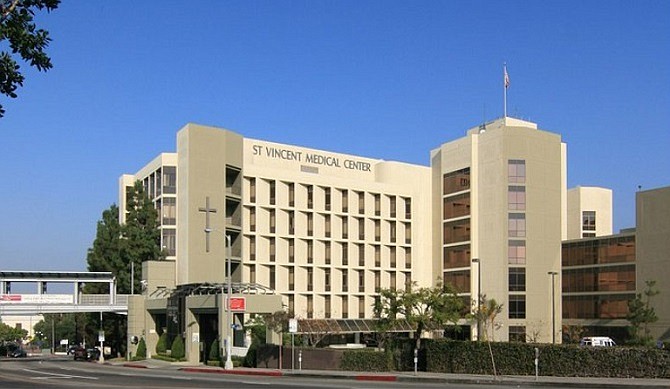
California hospital secures $20M to stave off closure

https://www.beckershospitalreview.com/finance/california-hospital-secures-20m-to-stave-off-closure.html?utm_medium=email

Image result for seton medical center daly city

The San Mateo County (Calif.) Board of Supervisors voted March 10 to allocate $5 million annually over the next four years to keep Seton Medical Center in Daly City, Calif., open, according to Bay City News.

The county supervisors voted 4-1 to give $20 million in funding to the company that buys the hospital from El Segundo, Calif.-based Verity Health. The funding package will come with conditions, including that the purchaser must keep the hospital open and fully functional.

Verity entered Chapter 11 bankruptcy in August 2018. In January, the health system closed St. Vincent Medical Center, a 366-bed hospital in Los Angeles, after a deal to sell four of its hospitals fell through. The system had been planning to close Seton Medical Center as soon as this week, according to the report.

There are currently two companies bidding to purchase the hospital in Daly City and Seton Coastside in Moss Beach, Calif. The funding will help ensure Seton Medical Center, which sees roughly 27,000 patients per year, keeps its doors open.


Trinity Health to end inpatient services at Philadelphia hospital

https://www.beckershospitalreview.com/patient-flow/trinity-health-to-end-inpatient-services-at-philadelphia-hospital.html?utm_medium=email

Image result for Trinity Health to end inpatient services at Philadelphia hospital

Livonia, Mich.-based Trinity Health is shutting down inpatient services at Mercy Philadelphia Hospital in Philadelphia.

“After careful consideration, we have come to the financial realization that our Mercy Philadelphia campus simply cannot continue operating in an acute-care capacity over the long term,” a spokesperson for Trinity Health Mid-Atlantic said Feb. 12, according to The Philadelphia Inquirer.

Officials did not provide a specific timeline for the closure.

“In the coming months, we will begin the slow, deliberate and informed process of transforming our campus away from an inpatient hospital, shifting toward a model that can better and more sustainably serve the West Philadelphia community in the future,” the spokesperson said, according to The Philadelphia Inquirer. “While we do not yet have all the answers, we promise to keep our patients, physicians and colleagues informed throughout every step of this process.”

Mercy Philadelphia Hospital is a 157-bed teaching hospital that was founded in 1918.


Verity to close Los Angeles hospital

https://www.beckershospitalreview.com/finance/verity-to-close-los-angeles-hospital.html?utm_medium=email

Image result for Verity to close Los Angeles hospital

Verity Health System announced Jan. 6 that it plans to close St. Vincent Medical Center, a 366-bed hospital in Los Angeles.

El Segundo, Calif.-based Verity entered Chapter 11 bankruptcy in August 2018 and is seeking bankruptcy court approval to close St. Vincent Medical Center. The nonprofit health system is shutting down St. Vincent after a deal to sell four of its hospitals fell through.

Corona, Calif.-based KPC Group bid $610 million in January 2019 to acquire four hospitals from Verity, and the bankruptcy court approved the asset purchase agreement three months later. In early December, KPC’s Strategic Global Management missed the court-appointed deadline to purchase the hospitals.

In December, SGM appealed the court’s order setting the closing deadline. About one month later, Verity filed a lawsuit against KPC Group and its affiliates, alleging “intentional and misleading conduct” and breach of the asset purchase agreement, according to the Los Angeles Times.

The bankruptcy court will consider Verity’s request to close St. Vincent later this week. The health system said arrangements have already been made to transfer patients and specialty services to nearby facilities.

“We are deeply saddened to announce the planned closure of St. Vincent Medical Center,” Verity Health CEO Rich Adcock said in a news release. “This decision has not been taken lightly and comes only after exhausting every option to keep this hospital open.”

The closure of St. Vincent will not affect Verity’s other three hospitals in California: St. Francis Medical Center in Lynwood, Seton Medical Center in Daly City, and Seton Coastside in Moss Beach.


Trust issues plague the relationship between Ascension St. Joe’s and the community it serves

https://www.jsonline.com/story/news/health/2019/12/16/st-joes-accountability-coalition-seek-commitment-ascension-hospital/3831008002/?utm_source=Sailthru&utm_medium=email&utm_campaign=Issue:%202019-12-17%20Healthcare%20Dive%20%5Bissue:24684%5D&utm_term=Healthcare%20Dive

Image result for ascension st joseph hospital milwaukee

Three empty chairs at a community meeting epitomized the mistrust between the leaders of Ascension Wisconsin and the St. Joe’s Accountability Coalition.

The coalition, composed primarily of community leaders from Milwaukee’s north side, invited Ascension Wisconsin to that Oct. 1 meeting to press the health system to sign a legal contract binding it to a list of commitments. The commitments included keeping Ascension St. Joseph hospital open and providing an urgent care clinic, affordable housing assistance, local hiring, more employee training and living wages for all employees.

Ascension didn’t show.

For one, Ascension Wisconsin officials said they were told they would not be allowed to speak at the event. For another, they said signing a contract was unnecessary because they have promised to keep the hospital open, already hire locally and provide employee training.

The hospital, which employs about 800 people, is one of the neighborhood’s largest employers.

The coalition wants the hospital to sign a community benefits agreement, known as a CBA, which is a contract between community groups and real estate developers or government entities.

Reggie Newson, Ascension Wisconsin’s vice president of government and community services, said the health system is proving its commitment to the community by expanding and adding services to St. Joseph.

For example, two certified nurse-midwives were just hired for the hospital’s new midwifery clinic and a third is being recruited. The hospital is also planning to hire a cardiac nurse practitioner and cardiologist.

But members of the coalition aren’t convinced, because they say there is no legal penalty if Ascension fails to follow through on its promises.

Nate Gilliam, an organizer with the Wisconsin Federation of Nurses & Health Professionals, advisory board member of the University of Wisconsin Population Health Institute and coalition spokesman, said the coalition just wants accountability.

“It’s good that they’re saying all these great things on paper and to the media,” he said. “But if they are going to do that, they shouldn’t have a problem with signing a CBA.”

Future bright despite history of mistrust, Ascension says

The lack of trust between the coalition and Ascension Wisconsin started 18 months ago, when hospital administrators — citing losses of roughly $30 million a year — proposed cutting some of Ascension St. Joseph’s surgical and medical units and other services, such as cardiology support.

The hospital, at 5000 W. Chambers St., serves a majority African American population on the city’s north side, an area facing steep socioeconomic disadvantages. Decades of limited access to health care have contributed to higher rates of chronic disease. Higher rates of poverty means many residents rely on Medicaid for health insurance.

Residents interpreted Ascension’s proposal as a precursor to closing the hospital and — in an area where transportation is scarce — feared they would have to go farther for health care.

The proposal was criticized by Mayor Tom Barrett, several aldermen and community leaders, including George Hinton, CEO of the Social Development Commission and former president of Aurora Sinai Medical Center, who wrote an op-ed in opposition.

Ascension dropped the proposal.

But that was 18 months ago.

Since then, Newson said the hospital surveyed more than 1,000 people by telephone and held five community listening sessions. The information was used to develop priorities for the hospital and corresponding programs, such as the midwifery program and heart and vascular community care center.

Similarly, members of the coalition conducted their own survey, knocking on hundreds of doors and collecting 584 detailed responses.

When surveyed on non-clinical services, over 40% of residents said housing assistance, local hiring and living wages were their top priorities. From the coalition’s survey on clinical services, 61.6% said access to urgent care was most important to them.

Kevin Kluesner, Ascension St. Joseph’s chief administrative officer, said he and others are well aware of the health disparities and disadvantages within the community they serve.

He said Ascension Wisconsin’s push to expand services is proof the hospital isn’t going anywhere.

That commitment is despite the hospital’s having lost roughly $150 million since the 2012 fiscal year. In the 2018 fiscal year, the most recent for which information is available, Ascension St. Joseph lost $31.6 million.

By comparison, Froedtert Hospital reported $134 million in profits for the 2018 fiscal year, according to information filed with the Wisconsin Hospital Association. Aurora St. Luke’s Medical Center reported $166 million in profits in 2018.

Gilliam said that since the hospital is a non-profit venture, lost profits shouldn’t matter. He also said that Ascension Wisconsin has more profitable locations across the state, that can offset the losses at St. Joseph.

Coalition wants accountability

The results from the coalition’s survey mirrored what residents at the Oct. 1 community meeting described.

Charles Hawkins said he likes his primary care physicians, but said they keep leaving.

Another resident who lives blocks away from the hospital, Arkesia Jackson, said when her brother-in-law experienced a flare-up of his COPD, or chronic obstructive pulmonary disease, she was thankful a community hospital was nearby.

“He ran inside the emergency and collapsed, car running,” she said. “He is a patient at St. Joe’s. They had all his records, they knew who he was, they knew what he was suffering from.”

Newson said the goal is to provide consistent, quality care for all patients.

Gilliam acknowledged that details of what the coalition is asking for, such as racially equitable health care and helping with housing assistance, are somewhat vague. However, that’s because its members said they want to sit down with Ascension and hammer out an agreement — as long as Ascension commits to signing one.

Coalition members argue that other hospitals have worked with community groups on similar initiatives.

Robert Silverman, a professor in the Department of Urban and Regional Planning at the University of Buffalo, said there are some rare examples of CBAs being used in the health care field.

For example, Yale University signed a CBA with the Community Organized for Responsible Development group in 2006 regarding the construction of a new cancer center.

It still remains unlikely that Ascension, a national organization, would willingly set such a precedent for its hospitals.

Gilliam said he thinks it’s important for hospitals to be accountable to the community.

“I don’t see why they see a community benefits agreement as adversarial off the top,” Gilliam said. “Whenever they’re ready to come to the table in earnest, we’ll be there. That’s it.”

But with the addition and expansion of several new programs, Kluesner said he’s not sure what else hospital officials can do to prove they are serious about being a reliable anchor institution on the city’s north side.

“We’ve signed 11 new providers. That’s the best proof we could give of our commitment to growing services here at St. Joseph. If people are wondering what are we doing at Ascension St. Joseph, I think that actions speak louder than words,” he said.


UPMC to close hospital in 2020

https://www.beckershospitalreview.com/finance/upmc-to-close-hospital-in-2020.html

Image result for upmc susquehanna sunbury

Pittsburgh-based UPMC will close its hospital in Sunbury, Pa., on March 31, 2020, according to The Daily Item.

The health system cited dwindling patient volume as one of the reasons it is closing UPMC Susquehanna Sunbury.

“This decision was made with careful consideration and analysis of the use of hospital services in the region,”  UPMC Susquehanna President Steven Johnson said, according to The Daily Item. “According to market data, patients are utilizing facilities other than UPMC Susquehanna Sunbury for their care. UPMC must prudently examine opportunities to integrate and consolidate functions balanced against the needs of the community.”

The hospital, previously named Sunbury Community Hospital, has been open for nearly 125 years. Jody Ocker, Sunbury city administrator, said she’s concerned local residents won’t have access to care after the hospital closes.

“I’m very concerned about our residents’ access to care,” she told TV station WNEP. “We have people that are getting around on their electric scooters and their bicycles. They don’t have access to reliable transportation.”

About 150 people will lose their jobs when UPMC Susquehanna Sunbury closes, according to WNEP. UPMC said it will try to relocate employees to other hospitals in the area.


10 latest hospital closures

https://www.beckershospitalreview.com/finance/10-latest-hospital-closures-120219.html

Related image

From reimbursement landscape challenges to dwindling patient volumes, many factors lead hospitals to close.

Here are 10 hospitals that have closed in the past four months, beginning with the most recent:

1. Dallas-based Steward Health Care closed St. Luke’s Medical Center in Phoenix on Nov. 24. Officials said the hospital closed due to dwindling patient volumes. St. Luke’s Medical Center’s occupancy rate remained below 40 percent over the past two years, President James Flinn wrote in a letter to the local community in October.

2. Nix Medical Center, a 208-bed hospital in San Antonio, closed in November. A few months earlier, Los Angeles-based Prospect Medical Holdings said it was closing the hospital because community demand for acute care at Nix Medical Center has declined over the past year.

3. Southcross Hospital in San Antonio closed Oct. 11. The hospital and its operator, San Antonio-based Arete Healthcare, entered Chapter 11 bankruptcy in November.

4. Haskell County Community Hospital in Stigler, Okla., closed Oct. 2, according to the Cecil G. Sheps Center for Health Services Research. Haskell County Community Hospital is one of several hospitals previously owned by Kansas City, Mo.-based EmpowerHMS that filed for bankruptcy protection earlier this year.

5. Brentwood, Tenn.-based Quorum Health closed MetroSouth Medical Center in Blue Island, Ill., on Sept. 30. Quorum announced in June that it filed an application with the Illinois Health Facilities and Services Review Board to close the 314-bed hospital.

6. East Ohio Regional Hospital in Martins Ferry closed Sept. 27. The hospital’s president and CEO cited mounting financial losses as one of the factors that forced the hospital to shut down.

7. Ohio Valley Medical Center in Wheeling, W.Va., closed in September. Hospital officials said the “unwanted, yet unavoidable,” decision was made due to an unsuccessful search for a strategic partner, lack of interest from potential buyers and a more than $37 million operating loss over the last two years.

8. Hahnemann University Hospital in Philadelphia closed in early September. Hahnemann announced in June that it would close Sept. 6. The hospital pushed back the closure date after a bankruptcy judge approved the sale of its residency programs on Sept. 5.

9. Westlake Hospital in Melrose Park, Ill., closed in August, according to the Chicago Sun-Times. Los Angeles-based Pipeline Health revealed plans to close Westlake Hospital in February, a few weeks after acquiring the 230-bed hospital from Dallas-based Tenet Healthcare.

10. North Metro Medical Center in Jacksonville, Ark., closed Aug. 20, leaving local residents without an emergency room. No notice was given before the hospital shut down.


Texas health system closes hospital, lays off 972

https://www.beckershospitalreview.com/finance/texas-health-system-closes-hospital-lays-off-972.html

Image result for nix medical center san antonio

Nix Medical Center, a 208-bed hospital in San Antonio has closed, and its medical equipment will be sold at auction.

Nix Medical Center is part of Nix Health, which is owned by Los Angeles-based Prospect Medical Holdings. In September, Prospect Medical Holdings said it planned to close the hospital because community demand for acute care at Nix Medical Center has declined over the past year.

Nix Medical Center closed this month, and its medical equipment will be sold at an online auction Dec. 11. Centurian Service Group will conduct the auction.

Nix Health also closed its home health division and other facilities, including its specialty health and behavioral center. The combined closures are expected to result in 972 layoffs, according to a Worker Adjustment and Retraining Notification Act notice filed Nov. 6, which states workers will be laid off Jan. 4.

Nix is part of the South Texas Crisis Collaborative, a group of facilities that offer mental health services. Other hospitals in the group are preparing to absorb an influx of patients due to the Nix closures, according to TV station KSAT.