


Cartoon – What it takes to be a Great Leader
https://mailchi.mp/66ebbc365116/the-weekly-gist-june-11-2021?e=d1e747d2d8
A physician leader asked recently whether we saw many health system executive teams work remotely throughout the pandemic. At her system, nearly every non-clinical leader worked mostly from home. “It seemed like two of our executives spent most of last year at their vacation homes,” she shared. “I know that we were being socially distant, but when our CEO held a virtual town hall from his beach house, it felt really tone deaf to our doctors and nurses.” In our experience, we saw most leaders spending many days in the office, even if some meetings were on Zoom. One
CEO mentioned he felt compelled to come to his office, even if it meant working alone: “If the people working on the front lines came in, I felt I needed to come in. And in the rare case someone needed to connect in person, they knew I was there.” There is power in just being visible to caregivers.
One recently retired CEO shared that he knew colleagues who rarely stepped into a hospital during the pandemic, missing a critical leadership opportunity. “No one expects the CEO to be hanging out in the COVID unit,” he shared.
“But being in our facilities, not just in the office, to hear directly from frontline workers and express gratitude, was so important—and caregivers remember that.” Now fully vaccinated, most health system leadership teams are back in the office. To remain competitive, health systems will likely need to create models that allow some non-clinical associates to work virtually—which will require evolution of cultures long centered around in-person collaboration.
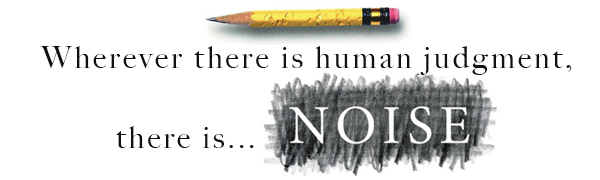
“Noise” is unwanted variability in judgments that should be identical, and most senior executives underestimate just how loud it is within their organizations.
The term comes from three prominent professors: Nobel Prize-winning psychologist Daniel Kahneman, PhD, with Princeton University; Olivier Sibony, PhD, with HEC Paris and Oxford’s Saïd Business School; and Cass Sunstein, founder and director of the Program on Behavioral Economics and Public Policy at Harvard Law School. The premise is the thesis of their new 400-page book aptly titled, Noise: A Flaw in Human Judgment.
One example of noise the authors put forth is turning to three different physicians for consults and receiving three different opinions.
“So your three physicians made judgments about the same case, and we would expect them to give identical answers. The fact that they’re variable is an indication that something is wrong with the system,” Dr. Kahneman told WBUR.
Noise differs from bias. Dr. Sibony illustrates bias with an analogy of stepping on the scale each morning to receive a weight that is one pound lighter than you actually are, on average, every day. Noise is stepping on scale three times in rapid succession and receiving a different number each time — random variability of something that should be the same.
Ironically, noise is usually quiet and undetected in systems. When the professorial trio asked 828 senior executives in a variety of industries how much variation they expected to find in expert judgments, the median answer was 10 percent. In reality, the variation in expert judgments can be four to five times that.
The reason noise is easy to underestimate? We don’t anticipate people seeing the world differently from how we do.
“And therefore we can’t imagine that there is as much noise as there is,” Dr. Sibony told WBUR.
Furthermore, noise can only be identified in statistics, making it more difficult to think about and more likely to go undiscussed, Dr. Kahneman told nonprofit media outlet network, The Conversation.
Physicians and medicine are hardly the only profession with risk for noise. A noise audit for an insurance company found the median difference in the pricing determined by its underwriters for identical policies was 55 percent. The median difference in the payouts determined by its claims adjusters for identical claims was 43 percent. A senior executive estimated that the annual cost of this unwanted variability totaled hundreds of millions of dollars, according to strategy+business magazine. Noise exists in criminal sentencing, job interviewing, fingerprint examinations and employee performance reviews, among other fields and functions.
Human complexity and our cognitive flaws mean there is no straightforward way to eliminate noise, although the authors offer advice for curbing it in decision-making. Their recommendations include conducting noise audits to better understand the level of noise within organizations and practice decision-making hygiene in singular decisions, which involves sequencing information, resisting “premature intuition” (the feeling you “know” something even if you are not sure why) and dividing complex judgments into more digestible components.
Find the book here.


 HENRY KOTULA