
How the Trump administration accidentally insured over 200,000 through Obamacare

https://theconversation.com/how-the-trump-administration-accidentally-insured-over-200-000-through-obamacare-132312?utm_medium=email&utm_campaign=Latest%20from%20The%20Conversation%20for%20April%2030%202020%20-%201608715418&utm_content=Latest%20from%20The%20Conversation%20for%20April%2030%202020%20-%201608715418+Version+A+CID_88784a86a2c2fddb8969eaf6f2cd84b8&utm_source=campaign_monitor_us&utm_term=How%20the%20Trump%20administration%20accidentally%20insured%20over%20200000%20through%20Obamacare

Silver-Loading Means 28% Uninsured Can Get $0 Premium Bronze Plan

With an eye on replacing the Affordable Care Act, the Trump administration took one particularly critical action in October 2017. It discontinued cost-sharing reduction subsidy payments to health insurers participating in the ACA marketplaces.

But the response to those cuts was likely not what President Trump expected. State insurance commissioners and insurers used them to make marketplace health plans more affordable.

Premium decreases were large – so large that 4.2 million potential enrollees had the option to purchase a marketplace plan for free in 2019.

These changes made us wonder: Did President Trump’s effort to sabotage the Affordable Care Act backfire? I’m a health economist at the University of Pittsburgh. Along with my colleague David Anderson, a policy expert on the Affordable Care Act, we tried to answer that question shortly after the payment cuts. We discovered that more than 200,000 people, using the Healthcare.gov platform in 2019, gained insurance in 37 states due to the Trump administration’s actions. This finding may even be more important now as massive unemployment from the coronavirus pandemic leads to huge losses of employer-based insurance coverage – and ultimately more people enrolling in the marketplaces.

Subsidies and silver loading

People who sign up for a plan in the Health Insurance Marketplaces may qualify for two types of subsidies. The first type is the advanced premium tax credit, which reduces the premium paid by the enrollee; lower-income enrollees receive larger premium tax credits. The second type is the cost-sharing reduction subsidy, which decrease deductibles and co-pays.

Premium tax credits may be applied to any marketplace plan, though they’re based on silver plan premiums, which cover 70% of an average enrollee’s health care expenses. Cost-sharing reduction subsidies can only be applied to silver plans; that means qualifying enrollees in less generous bronze plans and more generous gold plans don’t benefit from reduced deductibles and co-pays provided by these subsidies.

When Trump ended those payments, marketplace insurers were suddenly in a bind. They are legally required to provide cost-sharing reduction subsidies to enrollees whether or not the federal government was paying. The expectation: marketplace insurers, forced to make up the lost revenue, would either increase premiums or exit the marketplaces altogether. And Obamacare would implode.

But that’s not what happened. Why did the plans become more affordable? Insurers increased only the premiums of their silver plans. That approach – known as silver loading – did two things. First, the cost of silver plan premiums rose drastically. Second, premium tax credits increased along with premiums. So those enrollees receiving premium tax credits saw no increase in the premiums of their silver plans.

At the same time, non-silver plans became cheaper. Many bronze plans, already costing less, became so cheap they were free after applying premium tax credit subsidies. Lower-income enrollees benefited the most.

The silver lining in silver loading

In 2019, 4.2 million enrollees could enter the marketplace for free through a zero-dollar bronze plan, largely due to silver loading. Without those zero-premium plans, our analysis showed more than 200,000 lower-income marketplace enrollees would have gone uninsured.

Another 60,000 would have gained insurance had California and New Jersey eliminated regulations that prohibited zero premium plans — and if Indiana, Mississippi and West Virginia had adopted silver loading. Many more likely got coverage in states not included in our study.

All this is clearly not what the Trump administration had in mind when it cut subsidy payments. Other changes to the marketplaces probably masked some coverage gains that occurred. Notably, cuts in the public outreach for Healthcare.gov, along with the elimination of the individual mandate, decreased enrollment. But the popularity of zero premium plans resulting from silver loading likely stopped much of the damage – and Trump’s attempt to destabilize the marketplaces.

Increasing health coverage post-2020

Now states can take advantage of the attractiveness of zero premium plans to increase health coverage through the marketplaces. One way: States requiring marketplace insurers to provide extra benefits – again, like California and New Jersey – can pick up the small tab for those extras. For example, California enrollees pay for abortion coverage through a one-dollar monthly premium surcharge. This is not covered by premium tax credits. By shifting premiums from even one dollar to zero dollars, our estimates indicate enrollment would increase by approximately 13% among those with lower incomes.

Another way: States without silver loading should adopt it. This is not a partisan issue. Conservative states – or at least, GOP-controlled states like Alabama, Wyoming and Florida – have silver-loaded. State governments pay nothing, revenue for insurers is increased, and most critically, lower-income Americans are provided with affordable health insurance. Put simply, there’s no downside for states.

The Trump administration is prevented from restricting silver loading through 2021. However, a forthcoming Supreme Court case, Texas v. Azar, may yet repeal the entire ACA. If the court’s conservative majority rules in favor of the GOP plaintiffs, they will put affordable health insurance out of reach for the 11.4 million Americans that purchased health insurance in the marketplaces. They will also eliminate Medicaid coverage for an additional 16.9 million Americans.

If the case succeeds, the uninsured rate could easily surpass levels not seen since the height of the Great Recession. And for millions of Americans, access to health insurance – desperately needed, particularly during the COVID-19 pandemic – will be eliminated.


Heads Up: A Ruling On The Latest Challenge To The Affordable Care Act Is Coming

https://www.npr.org/sections/health-shots/2019/10/12/769038397/heads-up-a-ruling-on-the-latest-challenge-to-the-affordable-care-act-is-coming?fbclid=IwAR3g7_yZtBbywVWukbTC0PmcInHcioxPcF9Y5LsWYLpEH5Gs-3ZgBGgINVM

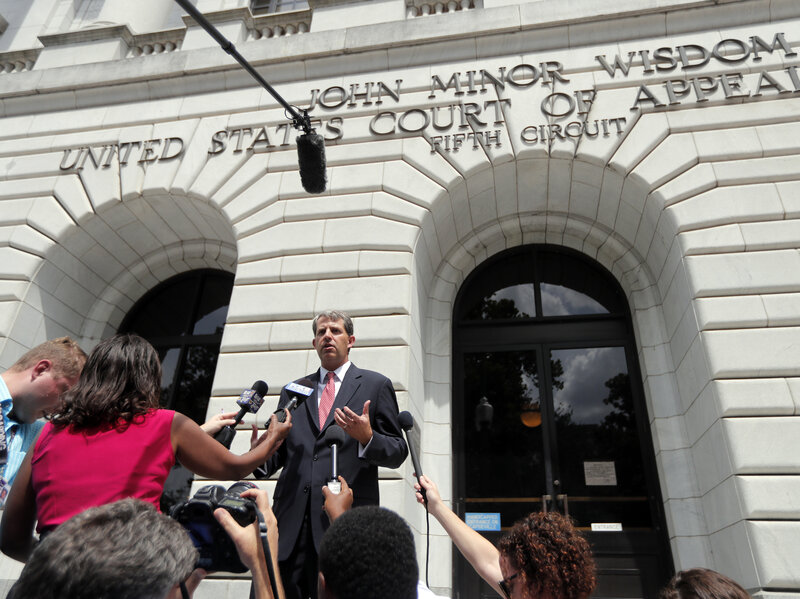
A decision in the latest court case to threaten the future of the Affordable Care Act could come as soon as this month. The ruling will come from the panel of judges in the 5th Circuit Court of Appeals, which heard oral arguments in the Texas v. Azar lawsuit.

An estimated 24 million people get their health coverage through programs created under the law, which has faced countless court challenges since it passed.

In court in July, only two of the three judges — both appointed by Republican presidents — asked questions. “Oral argument in front of the circuit went about as badly for the defenders of the Affordable Care Act as it could have gone,” says Nicholas Bagley, a professor of law at the University of Michigan. “To the extent that oral argument offers an insight into how judges are thinking about the case, I think we should be prepared for the worst — the invalidation of all or a significant part of the Affordable Care Act.”

Important caveat: Regardless of this ruling, the Affordable Care Act is still the law of the land. Whatever the 5th Circuit rules, it will be a long time before anything actually changes. Still, the timing of the ruling matters, says Sabrina Corlette, director of the Center on Health Insurance Reforms at Georgetown University.

“If that decision comes out before or during open enrollment, it could lead to a lot of consumer confusion about the security of their coverage and may actually discourage people from enrolling, which I think would be a bad thing,” she says.

Don’t be confused. Open enrollment begins Nov. 1 and runs at least through Dec. 15, and the insurance marketplaces set up by the law aren’t going anywhere anytime soon.

That’s not to underplay the stakes here. Down the line, sometime next year, if the Supreme Court ends up taking the case and ruling the ACA unconstitutional, “the chaos that would ensue is almost possible impossible to wrap your brain around,” Corlette says. “The marketplaces would just simply disappear and millions of people would become uninsured overnight, probably leaving hospitals and doctors with millions and millions of dollars in unpaid medical bills. Medicaid expansion would disappear overnight.

I don’t see any sector of our health care economy being untouched or unaffected,” she adds.

So what is this case that — yet again — threatens the Affordable Care Act’s very existence?

A quick refresher: When the Republican-led Congress passed the Tax Cuts and Jobs Act in 2017, it zeroed out the Affordable Care Act’s penalty for people who did not have health insurance. That penalty was a key part of the Supreme Court’s decision to uphold the law in 2012, so after the change to the penalty, the ACA’s opponents decided to challenge it anew.

Significantly, the Trump administration decided in June not to defend the ACA in this case. “It’s extremely rare for an administration not to defend the constitutionality of an existing law,” says Abbe Gluck, a law professor and the director of the Solomon Center for Health Law and Policy at Yale University. “The administration is not defending any of it — that’s a really big deal.”

The basic argument made by the state of Texas and the other plaintiffs? The zero dollar fine now outlined in the ACA is a “naked, penalty-free command to buy insurance,” says Bagley.

Here’s how the argument goes, as Bagley explains it: “We know from the Supreme Court’s first decision on the individual mandate case that Congress doesn’t have the power to adopt a freestanding mandate, it just has the power to impose a tax.” So therefore, the argument is that “the naked mandate that remains in the Affordable Care Act must be unconstitutional.”

The case made by the plaintiffs goes further, asserting that because the individual mandate was described by the Congress that enacted it as essential to the functioning of the law, this unconstitutional command cannot be cut off from the rest of the law. If the zero dollar penalty is unconstitutional, the whole law must fall.

Last December, a federal judge in Texas agreed with that entire argument. His judgement was appealed to the panel of judges in the 5th Circuit. Even if those judges agree that the whole law is unconstitutional, that would not be the end of the story — the case will almost certainly end up before the Supreme Court. It would be the third case to challenge the Affordable Care Act in the nation’s highest court.

So if the ruling will be appealed anyway, does it matter? “It matters for at least two reasons,” Bagley says. “First of all, if the 5th Circuit rejects the lower court holding and decides that the whole law is, in fact, perfectly constitutional, I think there’s a good chance the Supreme Court would sit this one out.”

On the other hand, if the 5th Circuit invalidates the law, it almost certainly will go the Supreme Court, “which will take a fresh look at the legal question,” he says. Even if the Supreme Court ultimately decides whether the ACA stands, “you never want to discount the role that lower court decisions can play over the lifespan of a case,” Bagley says.

The law has been dogged by legal challenges and repeal attempts from the very beginning, and experts have warned many times about the dire consequences of the law suddenly going away. Nine years in, “the Affordable Care Act is now part of the plumbing of our nation’s health care system,” Bagley says. “Ripping it out would cause untold damage and would create a whole lot of uncertainty.”