


Cartoon – We’ve Run Every Test We Could Think Of
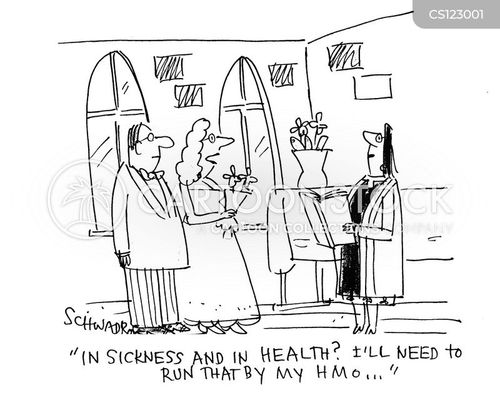



In a series of recent decisions, the Trump Administration is taking steps that will sharply raise insurance premiums for people aged 50 to 64, just before they become eligible for Medicare. While these steps are likely to make coverage less expensive for young, healthy consumers, they will inevitably raise costs for middle-aged people with chronic conditions. For many, insurance will become unaffordable. And that lack of coverage will eventually result in higher costs for Medicare.
Trump is taking three major steps that will affect the availability of Affordable Care Act health insurance for middle-aged consumers.
Repealing but not replacing
First, at the urging of the Trump Administration, Congress last year repealed the tax penalty that has to be paid by those without health insurance, effective for tax year 2019. The penalty is the ACA’s mechanism to push people to buy insurance. The logic: By broadening the pool of those with ACA insurance to include those less likely to incur significant medical costs, the individual mandate would keep premiums relatively low for everyone.
Then, early this month, the Trump Administration refused to defend the remaining provisions of the ACA in federal court. In the case Texas v. the federal Department of Health and Human Services, 20 red states argued that, absent the now-repealed individual mandate, the rest of the ACA will be unconstitutional. Thus, all its other provisions, including several important to those older consumers, also would be thrown out. They include premium limits for those 50-64, minimum benefit requirements, and the ban on insurance companies rejecting potential purchasers due to pre-existing conditions.
Pre-existing conditions
Prior to the ACA, in a practice known as age-rating, 60-year-olds could pay premiums that were 11 times higher than younger buyers. The ACA capped that ratio at 3:1. AARP estimates that bumping it up to 5:1 would raise annual premiums for a 60-year-old by more than $3,000, or 22%.
Similarly, allowing carriers to underwrite for pre-existing conditions would make insurance widely unavailable for people aged 50 to 64. AARP estimates that 25 million people, or 40% of those 50 to 64, have a condition that could disqualify them from non-group insurance.
The Urban Institute’s Health Policy Center estimates that tossing out the remaining provisions of the ACA would result in 17 million people losing commercial insurance and another 15 million losing Medicaid and children’s health care under the CHIP program.
By Urban colleagues project that even those remaining in the private individual insurance market “would likely have policies that cover fewer benefits and require more out-of-pocket spending for services.”
Rare agreement
The Texas lawsuit, and the Administration’s refusal to defend the law in court, has generated an outpouring of opposition. It created a rare moment when consumer groups, hospitals, and doctors agreed on a health policy issue.
But the story doesn’t end there. This week, the Trump Administration took one more step towards dismantling the ACA in a way that will likely harm pre-Medicare consumers: The Department of Labor adopted new rules opening the door to low cost, low-benefit health plans. These will now be widely available to small businesses and, importantly, self-employed individuals.
The Congressional Budget Office estimates that 4 million people will buy these policies, sold by association health plans (AHPs). The consulting firm Avalere Health estimates that individual AHP premiums will be an average of $9,700 cheaper than ACA coverage, and that 1 million people will shift from marketplace plans to AHP policies. But it predicts premiums will rise by 3.5 percent for more comprehensive ACA insurance, largely because the remaining consumers will be older and sicker than AHP buyers.
President Trump promotes these plans as a less costly alternative to ACA coverage. This week he told the National Federation of Independent Business, “You’re going to save massive amounts of money and have much better health care. You’re going to save a fortune and you’re going to be able to give yourselves and your employees tremendous health care.”
Low cost, few benefits
But the plans do not include any minimum benefit requirements. Thus, they can exclude coverage for pregnancies, mental health issues, or drugs or hospital care. Carriers won’t be able to exclude buyers on the basis of pre-existing conditions but can adjust premiums based on age or sex. And, because they often exclude benefits important to those with chronic conditions, such as medications, they don’t need to underwrite: Those consumers simply won’t buy these policies.
Priced out of ACA coverage and uninterested in limited insurance that won’t cover their needs, it is easy to imagine many of those in their early 60s simply going without coverage (and care) until they become eligible for Medicare at age 65. That will not only put their health at risk, it will raise Medicare costs. Medicare spends about one-third more on medical care for those who join the program without having had insurance in the year before enrolling.
The result of all this: Trump is creating two separate individual health insurance markets, one for young and healthy people, and one for older and sick people. Some young people may buy low-cost policies that will serve them well—until they get sick. Many older people won’t buy insurance at all, risking their health and, very likely, raising costs to government.
http://money.cnn.com/2018/06/21/news/economy/health-care-worker-shortage-ohio/index.html

In the three years since, she’s worked as a janitor at a local college, then as a quality manager at an auto supplier. But she wanted a position that offered a lot more job security – and better pay than those jobs.
When she heard about the growing demand for health care workers, she started looking around and found Mercy College of Ohio about 10 minutes away.
The school, which is based in Toledo, specializes in health sciences and offers 16 programs that train students for a variety of medical professions, including certificate programs that can be completed in as little as one semester to master’s degrees.
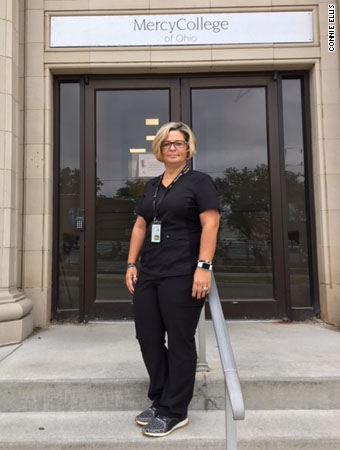
In January, Ellis enrolled to get a certificate in polysomnographic technology, which will qualify her to conduct sleep studies for patients suffering from disorders such as sleep apnea. To her, it was a perfect fit: not only could she complete the program in just 12 months, she was already accustomed to working late shifts.
“I worked nights a lot at CSX. And most sleep studies are also done at night,” she said, noting that her classmates include a former mechanic, a musician and someone who worked for a delivery company.
At job fairs and community events, Mercy College’s recruiters are seeking out students from a variety of fields, but especially the manufacturing and retail sectors — which have been hit by layoffs after big companies like General Motors, DHL and Toys R Us left scores of people looking for work.
That could prove to be a real boon for the area’s health care system, said Jason Theadore, vice president of ambulatory services and business development with Mercy Health, which partners with the college and operates 23 hospitals and 500 health care centers throughout the state.
Manufacturing workers, he said, come with the experience of working long shifts and odd hours And former retail workers can help put a different spin on customer care in a health care setting.
“People from diverse career backgrounds are helping us think differently about how we deliver care,” said Theadore.
The health care industry also desperately needs the workers. Consulting firm Mercer estimates the United States will need to hire 2.3 million new health care workers by 2025 to adequately take care of the country’s aging population.
“Right now, the labor supply just isn’t there,” said Matt Stevenson, a partner at Mercer.
With unemployment near record lows, the workers that are available often aren’t armed with the right skills.
That’s where programs like Mercy College’s comes in.
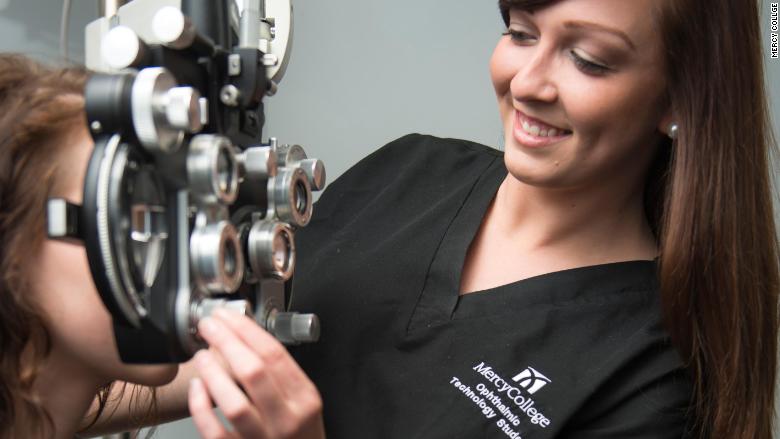
Each year, the school graduates roughly 400 students. Among its most popular short-term programs are the ophthalmic technology (training to assist ophthalmologists), community health worker, EMT/paramedic and the sleep technology certificates.
Many of the grads end up working for the Mercy Health System, which operates 23 hospitals and 500 health care centers throughout Ohio.
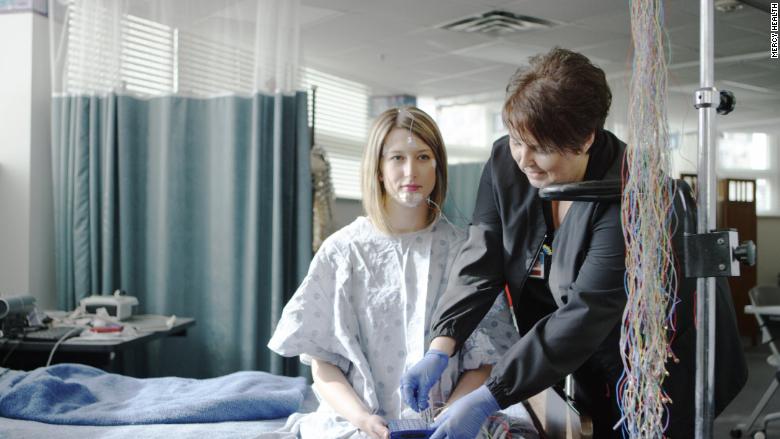
Kathy Damshroder has been teaching polysomnographic technology at Mercy College since last year.
“Everyone with this skill who wants a job has gotten one,” said Damshroder, 55, who also works as a sleep technologist at Mercy Health hospital in Toledo.
According to Mercy College, nearly all the school’s certificate graduates have been employed in their specialty.
Damshroder graduated from Mercy in 2010. Before that, she ran her own hair salon for 25 years in the nearby town of Elmore, Ohio.
“I still own it,” she said.
Like Ellis, the long-term job security of working in the health care industry appeals to her.
“And there’s bang for the buck,” she said. “Entry level pay is about $22 an hour and goes up. The other huge draws are benefits and retirement plans, which I didn’t have as an entrepreneur.”
https://www.healthleadersmedia.com/finance/healogics-pay-225m-false-claims-settlement

Healogics, Inc. will pay up to $22.51 million to settle whistleblower allegations that billed Medicare for medically unnecessary and unreasonable hyperbaric oxygen therapy, the Department of Justice said.
Jacksonville, FL-based Healogics manages nearly 700 hospital-based wound care centers across the nation.
The settlement resolves allegations that from 2010 through 2015, Healogics knowingly submitted false claims to Medicare for medically unnecessary or unreasonable HBO therapy, DOJ said.
Healogics will pay $17.5 million, plus an additional $5 million if certain financial contingencies occur within the next five years, for a total potential payment of up to $22.51 million. The company has also has entered into a five-year Corporate Integrity Agreement with the Department of Health and Human Services Office of Inspector General.
“When greed is the primary factor in performing medically unnecessary health care procedures on Medicare beneficiaries, both patient well-being and taxpayer funds are compromised,” said HHS OIG Special Agent in Charge Shimon R. Richmond.
The settlement came as the result of whistleblower lawsuits filed by a former executive at Healogics, and a separate suit filed by two doctors and a former program director who worked at Healogics-affiliated wound care centers. The four whistleblowers are expected to share $4.2 million of the settlement.

Philadelphia-based Temple University’s board of trustees announced June 20 the institution will hire a chief restructuring officer for its affiliated health system, and is considering the potential sale of two of its hospital assets, according to The Inquirer.
Temple University President Richard Englert and Temple University Health System CEO Larry Kaiser, MD, said in a joint statement to the community TUHS “faces significant operational and financial challenges. More must be done to maintain a viable and sustainable healthcare enterprise in a highly competitive and volatile market,” according to the report.
Officials also said the health system is considering the sale of Jeanes Hospital and the Fox Chase Cancer Center, both in Philadelphia.
The Inquirer reports Temple University Health System incurred a net loss of $31.1 million in the nine months ended March 31, compared to the system’s $19.9 million loss the year prior.
https://www.americanprogress.org/issues/women/news/2018/06/21/452643/moving-backward/

The Affordable Care Act (ACA) prohibits discriminatory insurance practices in pricing and coverage in the individual market. Before the law was enacted, women routinely were denied coverage or charged more for insurance based on so-called pre-existing conditions. For example, in the individual insurance market, a woman could be denied coverage or charged a higher premium if she had been diagnosed with or experienced HIV or AIDS; diabetes; lupus; an eating disorder; or pregnancy or a previous cesarean birth, just to name a few. The ACA provided women with protections for pre-existing conditions and access to comprehensive, affordable, and fair health services.
But recent efforts to eliminate key ACA protections, discussed below, would put millions of women and girls once again at risk of being charged more or denied coverage for individual insurance.
Recently, the U.S. Department of Justice refused to uphold the law in Texas v. United States, when it argued that the community rating and guaranteed issue provisions of the ACA are unconstitutional. Without guaranteed issue, women could be denied coverage based on their medical history, their age, and their occupation, among other factors. Without community rating, women could be charged more, or priced out of the insurance market altogether, based on their health status or other factors. Insurance companies could also try to reinstate gender rating, a common pre-ACA practice in which insurance companies charged women higher premiums than they did men, even though other parts of the ACA protect women from discrimination in the health care system.
Now, think tanks and conservative opponents of the ACA are introducing proposals to repeal the ACA yet again. If implemented, these proposals would similarly put women at risk of being denied coverage or charged more because of their health status.
The authors estimate that more than half of women and girls nationwide—more than 67 million—have pre-existing conditions. There are also nearly 6 million pregnancies each year, a commonly cited reason for denying women coverage on the individual market before the ACA. The two tables available for download below provide state-level detail for the number of women and girls with pre-existing conditions and the number of pregnancies.
A large share of women have coverage through an employer or Medicaid and would, therefore, not face discriminatory practices such as medical underwriting or denials based on health conditions. But the data make clear that allowing insurers to return to pre-ACA practices could lead to millions of women and girls being denied coverage or charged more based on their health status if they ever sought coverage in the individual market.


