‘Outrageous giveaway to Big Pharma’: A political ‘bomb’ over drug prices may threaten NAFTA 2.0

https://www.japantimes.co.jp/news/2019/02/13/business/outrageous-giveaway-big-pharma-political-bomb-drug-prices-may-threaten-nafta-2-0/#.XGR6YlVKi1s

Image result for big pharma

The clash over free trade in North America has long been fought over familiar issues: low-paid Mexican workers. U.S. factories that move jobs south of the border. Canada’s high taxes on imported milk and cheese.

But as Democrats in Congress consider whether to back a revamped regional trade pact being pushed by President Donald Trump, they’re zeroing in on a new point of conflict: drug prices. They contend that the new pact would force Americans to pay more for prescription drugs, and their argument has dimmed the outlook for one of Trump’s signature causes.

The president’s proposed replacement for the 25-year-old North American Free Trade Agreement is meant to win over Democrats by incentivizing factories to hire and expand in the United States. Yet the pact would also give pharmaceutical companies 10 years’ protection from cheaper competition in a category of ultra-expensive drugs called biologics, which are made from living cells.

Shielded from competition, critics warn, the drug companies could charge exorbitant prices for biologics.

“This is an outrageous giveaway to Big Pharma,” Rep. Rosa DeLauro, a Connecticut Democrat, said in an interview. “The government guarantees at least 10 years of market exclusivity for biologic medicine. It’s a monopoly. It’s bad policy.”

The objections of DeLauro and other Democrats suddenly carry greater potency. The need to curb high drug prices has become a rallying cry for voters of all political stripes. Trump himself has joined the outcry. The revamped North America trade deal must be approved by both chambers of Congress, and Democrats have just regained control of the House.

Rep. Earl Blumenauer of Oregon, the new chairman of the House Ways and Means subcommittee on trade, told The Associated Press that “I don’t think candidly that it passes out of my trade subcommittee” with the biologics provision intact.

“The biologics are some of the most expensive drugs on the planet,” Blumenauer said.

Still, the politics of NAFTA 2.0 are tricky for Democrats and not necessarily a sure-fire winner for them.

The original NAFTA, which took effect in 1994, tore down most trade barriers separating the United States, Canada and Mexico. Like Trump, many Democrats blamed NAFTA for encouraging American factories to abandon the United States to capitalize on lower-wage Mexican labor and then to ship goods back into the U.S., duty-free.

Having long vilified NAFTA, Trump demanded a new deal — one far more favorable to the United States and its workers. For more than a year, his top negotiator, Robert Lighthizer, held talks with Canada and Mexico. Lighthizer managed to insert into the new pact provisions designed to appeal to Democrats and their allies in organized labor. For example, 40 percent of cars would eventually have to be made in countries that pay autoworkers at least $16 an hour — that is, in the United States and Canada and not in Mexico — to qualify for duty-free treatment.

The new deal also requires Mexico to encourage independent unions that will bargain for higher wages and better working conditions.

Late last year, the three countries signed their revamped deal, the U.S.-Mexico-Canada Agreement. But it wouldn’t take effect until their three legislatures all approved it. In the meantime, the old NAFTA remains in place.

The question now is: Are Democrats prepared to support a deal that addresses some of their key objections to NAFTA and thereby hand Trump a political victory? Some Democrats have praised the new provisions that address auto wages, though many say they must be strengthened before they’d vote for the USMCA.

Protection for drug companies is another matter. Many Democrats had protested even when the Obama administration negotiated eight years of protection for biologics— from cheap-copycat competitors called “biosimilars” — in a 12-country Pacific Rim trade pact called the Trans-Pacific Partnership, or TPP.

Trump abandoned the TPP in his first week in office. But the pharmaceutical industry is a potent lobby in Washington, and Trump’s negotiators pressed for protection for U.S. biologics in the new North American free trade deal. They ended up granting the drug companies two additional years of protection in the pact.

Top biologics include the anti-inflammatory drug Humira, the cancer fighter Rituxan and Enbrel, which is used to treat rheumatoid arthritis.

The administration and drug companies argue that makers of biologics need time to profit from their creations before biosimilars sweep in, unburdened by the cost of researching and developing the drugs. Otherwise, they contend, the brand-name drug companies would have little incentive to invest in developing new medicines.

They note that a 2015 law authorizing presidents to negotiate trade deals requires American officials to push other countries toward U.S.-level protections for intellectual property such as biologic drugs. (The same law, somewhat contradictorily, directs U.S. negotiators to “promote access to medicines.”)

Supporters also note that existing U.S. law gives makers of biologics 12 years’ protection. So the new pact wouldn’t change the status quo in the United States, though it would force Mexico to expand biologics’ monopoly from five years and Canada from eight years. In fact, supporters of the biologics monopoly argue that the pact might cut prices in the United States because drug companies would no longer face pressure to charge Americans more to compensate for lower prices in Canada and Mexico.

But critics say that expanding biologics’ monopoly in a trade treaty would prevent the United States from ever scaling back the duration to, say, the seven years the Obama administration once proposed.

“By including 10 years in a treaty, we are locking ourselves in to a higher level of monopoly protection for drugs that are already taking in billions of dollars a year,” said Jeffrey Francer, general counsel for the Association for Accessible Medicines, which represents generic drug companies. “The only way for Congress to change it is to back out of the treaty. … Does the United States want to be in violation of its own treaty?”

For Democrats, higher drug prices are shaping up as a powerful political argument against approving the president’s new North American trade deal. In December, Stanley Greenberg, a leading Democratic pollster and strategist, conducted focus groups in Michigan and Wisconsin with Trump voters who weren’t affiliated with the Republican Party. Some had previously voted for Barack Obama. Others called themselves political independents. They’re the kinds of voters Democrats hope to attract in 2020.

Greenberg said he was “shocked” by the intensity of their hostility to drug companies — and to the idea that a trade pact would shield those companies from competition.

“It was like throwing a bomb into the focus group,” said Greenberg, who is married to DeLauro. He said the voters’ consensus view was essentially: “The president was supposed to go and renegotiate (NAFTA) so that it worked for American workers. But it must be that these lobbyists are working behind the scenes” to sneak in special-interest provisions.

That perception gives Democrats reason to reject the new pact as the 2020 election approaches.

“Democrats have no incentive to do this,” said Philip Levy, a senior fellow at the Chicago Council on Global Affairs and a White House economist under President George W. Bush. “Before you know it, the presidential election season is going to be upon us.”

U.S. trade rules are designed to force Congress to give trade agreements an up-or-down vote — no nitpicking allowed. Still, there are ways to bypass those restrictions. Congressional Democrats could, for example, push the administration to negotiate so-called side letters with Canada and Mexico to address their concerns. President Bill Clinton did this with the original NAFTA.

“Lighthizer and his team are very creative,” said Blumenauer, chair of the House trade subcommittee. “This is something that can be handled.”


Medicare for All Emerges as Early Policy Test for 2020 Democrats

Related image

Senator Elizabeth Warren spoke at length this week about her vision for improving the American health care system, like strengthening the Affordable Care Act and making prescription drugs more affordable. Twice, though, she ignored a question posed to her: Would she support eliminating private health insurance in favor of a single-payer system?

“Affordable health care for every American” is her goal, Ms. Warren said on Bloomberg Television, and there are “different ways we can get there.”

To put it another way: I am not walking into that political trap.

Ms. Warren of Massachusetts and three other liberal presidential candidates support a Medicare for All bill, which would create a single-payer health plan run by the government and increase federal spending by at least $2.5 trillion a year, according to several estimates. But Ms. Warren’s determination to sidestep an essential but deeply controversial issue at the heart of the single-payer model — would people lose the choices offered by private insurance? — illustrated one of the thorniest dilemmas for several Democrats as the 2020 primary gets underway.

Their activist base, inspired by Senator Bernie Sanders of Vermont, believes that the party should unabashedly pursue universal health care, ending private insurance entirely. But polls indicate that the broader electorate, particularly the moderate- and high-income voters who propelled the party’s sweeping suburban gains in the midterms, is uneasy about this “Medicare for all” approach in which many would lose their current insurance options and pay higher taxes.

Senator Kamala Harris of California drew immediate attacks from Republicans this week by taking on the issue that Ms. Warren dodged. Ms. Harris breezily acknowledged in a CNN town hall forum that she would “eliminate all of that,” referring to ending private insurance in a country where almost 60 percent of the population receives coverage through an employer.

Her remark triggered an intraparty debate about an issue that until now had been largely theoretical: A decade after Democrats pushed through the most significant expansion of health care since the Great Society, should they build incrementally on the Affordable Care Act or scrap the insurance sector entirely and create a European-style public program?

Four Democratic presidential candidates — Ms. Harris, Ms. Warren, Senator Kirsten Gillibrand of New York and Senator Cory Booker of New Jersey — are among the co-sponsors of Mr. Sanders’s Medicare for All bill, which would replace the Affordable Care Act with a single government health plan for all Americans. Medicare is the federal program providing health coverage to people 65 and older.

The concept of Medicare for all has become popular with Democrats: 81 percent support it, according to a recent Kaiser poll. Yet voter opposition to surrendering the insurance they are used to led to a backlash over President Barack Obama’s repeated promise that “if you like your plan, you can keep your plan” after it proved false for several million people under his health law. Many Democrats are keenly aware of that backlash, and the 2020 presidential race will be the first where many of the party’s leading candidates will have to explain and defend the meaning of Medicare for all.

For now, as Ms. Warren demonstrated, many candidates do not want to wrestle publicly with the details. After Ms. Harris’s comment, her aides hastened to add that she would also support less sweeping changes to health care; like most other candidates, Ms. Harris declined an interview request. And by Friday, Mr. Booker, hours after announcing his presidential bid, sought to curtail the matter by offering a brisk “no” when asked if he supported eliminating private coverage.

Yet there is one likely 2020 contender who is thrilled to discuss Medicare for all.

Mr. Sanders, in an interview, did not mince words: The only role for private insurance in the system he envisioned would be “cosmetic surgery, you want to get your nose fixed.”

“Every candidate will make his or her own decisions,” Mr. Sanders said, but “if I look at polling and 70 percent of the people support Medicare for All, if a very significant percentage of people think the rich, the very rich, should start paying their fair share of taxes, I think I’d be pretty dumb not to develop policies that capture what the American people want.”

But Michael R. Bloomberg, the former New York City mayor who is considering a 2020 bid on a centrist Democratic platform, said it would be folly to even consider a single-payer system. “To replace the entire private system where companies provide health care for their employees would bankrupt us for a very long time,” Mr. Bloomberg told reporters in New Hampshire on Tuesday.

The Congressional Budget Office has not scored Mr. Sanders’s Medicare for All bill, but a study last year by the Mercatus Center of George Mason University predicted it would increase federal spending by at least $32.6 trillion over the first decade. The cost could be even greater, the study says, if the bill overestimated the projected savings on administrative and drug costs, as well as payments to health care providers.

The divide between Mr. Sanders, a democratic socialist, and Mr. Bloomberg, a Republican-turned-independent-turned-Democrat, reflects the large chasm in a party that has been reshaped by President Trump.

The president’s hard-line nationalism has simultaneously nudged Democrats to the left, emboldening them to pursue unambiguously liberal policies, and drawn independents and moderate Republicans to the party because they cannot abide his incendiary conduct and demagogy on race. These dueling forces have created a growing but ungainly coalition that shares contempt for Mr. Trump but is less unified on policy matters like health care.

And these divisions extend to what is wisest politically.

Liberals argue that the only way to drive up turnout among unlikely voters or win back some of the voters uneasy with Hillary Clinton’s ties to corporate interests is to pursue a bold agenda and elevate issues like Medicare for all.

“Those who run on incremental changes are not the ones who are going to get people excited and get people to turn out,” said Representative Pramila Jayapal of Washington, the co-chair of the Congressional Progressive Caucus.

And by preserving their options, Democrats risk alienating liberal primary voters, some of whom consider support for Medicare for all a litmus test.

“The center is not a good place to be on these policies anymore,” said Mary O’Connor, 61, a substitute teacher and horse farmer in Middleburg, Va., who wants a single-payer system. “I’ll be watching extremely closely, and I will most likely jump on board and volunteer for whoever it is that’s going to be the most forceful for this.”

But moderates believe that most Democratic primary voters are more fixated on defeating Mr. Trump than applying litmus tests — and that terminating employer-sponsored insurance would only frighten the sort of general election voters who are eager to cast out Mr. Trump but do not want to wholly remake the country’s health care system.

“Most of the freshmen who helped take back the House got elected on: ‘We’re going to protect your health insurance even if you have a pre-existing condition,’ not ‘We’re going to take this whole system and throw it out the window,’” said Kenneth Baer, a Democratic strategist.

While polling does show that Medicare for all — a buzz phrase that has lately been applied to everything from single-payer health care to programs that would allow some or all Americans to buy into Medicare or Medicaid — has broad public support, attitudes swing significantly depending on not just the details, but respondents’ age and income.

On the House side, a bill similar in scope to Mr. Sanders’s is under revision and will soon be reintroduced with Ms. Jayapal as the main sponsor. Other Democrats have introduced less expansive “Medicare buy-in” bills, which would preserve the current system but would give certain Americans under 65 the option of paying for Medicare or a new “public option” plan. Another bill would give every state the option of letting residents buy into Medicaid, the government health program for poor Americans.

The buy-in programs would generally cover between 60 and 80 percent of people’s medical costs and would require much less federal spending because enrollees would still pay premiums and not everyone would be eligible. Some proponents, like Senator Jeff Merkley, Democrat of Oregon, have described them as a steppingstone on the way to a full single-payer system; some of the Democrats running for president are co-sponsoring these “Medicare for more” bills as well as Mr. Sanders’s.

Mr. Sanders has suggested options to raise the money needed for his plan, such as a new 7.5 percent payroll tax and a wealth tax on the top 0.1 percent of earners. He has also predicted several trillion dollars in savings over 10 years from eliminating the tax exclusion that employers get on what they pay toward their workers’ insurance premiums, and other tax breaks.

But Robert Blendon, a health policy professor at Harvard who studies public opinion, said it would be wise not to delve into financing details for now.

“The reason it failed in Vermont and Colorado was taxes,” Professor Blendon said, referring to recent efforts to move to a near-universal health care system in those states, which flopped resoundingly because they would have required major tax increases. “But Democratic primary voters will not go deep into asking how these plans will work. What they will say is, ‘Show me you have a principle that health care is a human right.’”

The general election will be a different story, Professor Blendon added. If Ms. Harris were to become the Democratic nominee and keep embracing the idea of ending private coverage, he argued, “she’s going to have terrible problems.”

The difficulty for Democrats, added Ezekiel Emanuel, a former Obama health care adviser, is that many voters look at the health care system the same way they view politics. “They say Congress is terrible but I like my congressman,” as Mr. Emanuel put it.

According to the Gallup poll, 70 percent of Americans with private insurance rate their coverage as “excellent” or “good;” 85 percent say the same about the medical care they receive. The Kaiser poll found that the percentage of Americans who support a national health plan drops by 19 percentage points when people hear that it would eliminate insurance companies or that it would require Americans to pay more in taxes.

Among those who make over $90,000 a year — the sort of voters in the House districts that several Democrats captured in the midterms — those surveyed in the Kaiser poll were particularly wary of an all-government system: 64 percent in this income group said they would oppose a Medicare for all plan that terminated private insurance.

“My constituents are tired of bumper sticker debates about complex issues,” said Representative Lizzie Pannill Fletcher of Texas, a freshman from an affluent Houston district. “We don’t want ideologues in charge.”

In Vermont, where former Gov. Peter Shumlin shelved his ambitious plan for a single-payer system in 2014 after conceding it would require “enormous” new taxes, advocates for universal health care are now resigned to a more incremental approach.

Dr. Deb Richter, a primary care doctor who helped lead the state’s single-payer movement, said that while the Democratic field is “going to have to face the T word,” being upfront about the required tax increases, she now thinks phasing in a government-run system is a better approach.

“There’s ways of doing this that don’t have to happen all at once,” she said, pointing to a push in Vermont to start with universal government coverage for primary care only. “But you need to talk about the end goal: We are aiming for Medicare for all, and this is a way of getting it done.”


KFF Health Tracking Poll – January 2019: The Public On Next Steps For The ACA And Proposals To Expand Coverage

KFF Health Tracking Poll – January 2019: The Public On Next Steps For The ACA And Proposals To Expand Coverage

Key Findings:

  • Half of the public disapproves of the recent decision in Texas v. United States, in which a federal judge ruled that the 2010 Affordable Care Act (ACA) is unconstitutional and should not be in effect. While the judge’s ruling is broader than eliminating the ACA’s protections for people with pre-existing conditions, this particular issue continues to resonate with the public. Continuing the ACA’s protections for people with pre-existing conditions ranks among the public’s top health care priorities for the new Congress, along with lowering prescription drug costs.
  • This month’s KFF Health Tracking Poll continues to find majority support (driven by Democrats and independents) for the federal government doing more to help provide health insurance for more Americans. One way for lawmakers to expand coverage is by broadening the role of public programs. Nearly six in ten (56 percent) favor a national Medicare-for-all plan, but overall net favorability towards such a plan ranges as high as +45 and as low as -44 after people hear common arguments about this proposal.

    Poll: Majorities favor a range of proposed options to expand public health coverage, including Medicare buy-in and #MedicareForAll 

  • Larger majorities of the public favor more incremental changes to the health care system such as a Medicare buy-in plan for adults between the ages of 50 and 64 (77 percent), a Medicaid buy-in plan for individuals who don’t receive health coverage through their employer (75 percent), and an optional program similar to Medicare for those who want it (74 percent). Both the Medicare buy-in plan and Medicaid buy-in plan also garner majority support from Republicans (69 percent and 64 percent­).


Figure 1: Most Americans Are Unaware Of Federal Judge’s Ruling That ACA Is No Longer Valid

Texas v. United States: The Future of the Affordable Care Act

On December 14, 2018, a federal district court judge in Texas issued a ruling challenging the future of the 2010 Affordable Care Act (ACA).The judge sided with Republican state attorneys general and ruled that, since the 2017 tax bill passed by Congress zeroed out the penalty for not having health insurance, the ACA is invalid. Democrat attorneys general have already taken actions to appeal the judge’s ruling in the case and, due to the government shutdown, the 5th Circuit Court of Appeals has paused the case. Currently, the ACA remains the law of the land. If this ruling is upheld, the consequences will be far-reaching.1 Less than half of the public (44 percent) are aware of the judge’s ruling that the ACA is unconstitutional and most (55 percent) either incorrectly say that the judge ruled in favor of the ACA (20 percent) or are unsure (35 percent).

Overall, a larger share of the public disapprove (51 percent) than approve (41 percent) of the judge’s ruling that the ACA is not constitutional. This is largely divided by party identification with a majority of Republicans (81 percent) approving of the decision while a majority of Democrats disapproving (84 percent). Independents are closely divided (49 percent disapprove v. 44 percent approve).

Figure 2: Partisans Divided On Whether They Approve Or Disapprove Of Federal Judge’s Ruling That The ACA Is No Longer Valid

The Trump administration had originally announced that as part of Texas v. United States, it would no longer defend the ACA’s protections for people with pre-existing medical conditions. While the judge’s ruling was broader than just the ACA’s pre-existing condition protections, KFF polling finds attitudes can shift when the public hears that these protections may no longer exist. Among those who originally approve of the federal judge’s ruling, about three in ten (13 percent of the public overall) change their mind after hearing that this means that people with pre-existing conditions may have to pay more for coverage or could be denied coverage, bringing the share who disapprove of the judge’s ruling to nearly two-thirds (64 percent) of the public.2

Fewer – but still about one-fifth (8 percent of total) – change their minds after hearing that as a result of this decision, young adults would no longer be able to stay on their parents’ insurance until the age of 26, bringing the total share who disapprove of the judge’s ruling to 60 percent.

Figure 3: Majorities Disapprove Of Judge’s Ruling After Hearing How It Impacts Protections For Pre-Existing Conditions And Young Adults

Overall, a slight majority of the public hold a favorable view of the ACA (51 percent) while four in ten continue to hold unfavorable views. (INTERACTIVE)

Public’s Views of Democratic Health Care Agenda

With the new Democratic majority in the U.S. House of Representatives, this month’s KFF Health Tracking Poll examines the public’s view of Congressional health care priorities including a national health plan.

Proposals to Expand Health Care Coverage

Most of the public favor the federal government doing more to help provide health insurance for more Americans and one way for lawmakers to expand coverage is by broadening the role of public programs, such as Medicare or Medicaid. The Kaiser Family Foundation has been tracking public opinion on the idea of a national health plan since 1998 (see slideshow). More than twenty years ago, about four in ten Americans (42 percent) favored a national health plan in which all Americans would get their insurance from a single government plan. In the decades that followed, there has been a modest increase in support – especially since the 2016 presidential election and Bernie Sanders’ rallying cry for “Medicare-for-all.” The most recent KFF Health Tracking Poll finds 56 percent of the public favor “a national health plan, sometimes called Medicare-for-all, where all Americans would get their insurance from a single government plan” with four in ten (42 percent) opposing such a plan.

Figure 5: Majorities Across Partisans Favor Medicare Buy-In And Medicaid Buy-In

MALLEABILITY IN ATTITUDES TOWARDS NATIONAL HEALTH PLAN AND LINGERING CONFUSION ABOUT POSSIBLE IMPACTS

This month’s KFF Health Tracking Poll finds the net favorability of attitudes towards a national Medicare-for-all plan can swing significantly, depending on what arguments the public hears.

Depending on what arguments people hear, the public’s views of #MedicareForAll can swing from 71% in favor to 70% opposed highlighting the importance of any future legislative debate 

Net favorability towards a national Medicare-for-all plan (measured as the share in favor minus the share opposed) starts at +14 percentage points and ranges as high as +45 percentage points when people hear the argument that this type of plan would guarantee health insurance as a right for all Americans. Net favorability is also high (+37 percentage points) when people hear that this type of plan would eliminate all premiums and reduce out-of-pocket costs. Yet, on the other side of the debate, net favorability drops as low as -44 percentage points when people hear the argument that this would lead to delays in some people getting some medical tests and treatments. Net favorability is also negative if people hear it would threaten the current Medicare program (-28 percentage points), require most Americans to pay more in taxes (-23 percentage points), or eliminate private health insurance companies (-21 percentage points).

Figure 8: Four In Ten Say Medicare-For-All Plan Would Not Have Much Impact On People Like Them

MEDICARE-FOR-ALL AND SENIORS

On October 10th, 2018, President Trump wrote an op-ed in USA Today arguing that a Medicare-for-all plan would “end Medicare as we know it and take away benefits they have paid for their entire lives.”3 One-fourth of adults 65 and older (26 percent) say seniors who currently get their insurance through Medicare would be “worse off” if a national Medicare-for-all plan was put into place. Four in ten Republicans, ages 65 and older, say seniors who currently get health coverage through Medicare would be “worse off” under a national Medicare-for-all plan. Overall, a larger share of the public say a Medicare-for-all plan will “not have much impact” on seniors (39 percent) or say that they would be “better off” (33 percent) than say seniors would be “worse off” (21 percent).

Figure 10: Democrats Want House Democrats To Focus On Improving And Protecting The ACA Rather Than Passing Medicare-For-All

PARTISANS HAVE DIFFERENT HEALTH PRIORITIES FOR CONGRESS, EXCEPT FOR PRESCRIPTION DRUG PRICES

A majority of the public say it is either “extremely important” or “very important” that Congress work on lowering prescription drug costs for as many Americans as possible (82 percent), making sure the ACA’s protections for people with pre-existing health conditions continue (73 percent), and protecting people with health insurance from surprise high out-of-network medical bills (70 percent). Fewer – about four in ten – say repealing and replacing the ACA (43 percent) and implementing a national Medicare-for-all plan (40 percent) are an “extremely important” or “very important” priority. When forced to choose the top Congressional health care priorities, the public chooses continuing the ACA’s pre-existing condition protections (21 percent) and lowering prescription drug cost (20 percent) as the most important priorities for Congress to work on. Smaller shares choose implementing a national Medicare-for-all plan (11 percent), repealing and replacing the ACA (11 percent), or protecting people from surprise medical bills (9 percent) as a top priority. One-fourth said none of these health care issues was their top priority for Congress to work on.

Figure 11: Continuing ACA Pre-Existing Conditions Protections And Prescription Drug Costs Top Public’s Priorities For Congress

Continuing the ACA’s pre-existing condition protections is the top priority for Democrats (31 percent) and ranks among the top priorities for independents (24 percent) along with lowering prescription drug costs, but ranks lower among Republicans (11 percent). Similar to previous KFF Tracking Polls, repealing and replacing the ACA remains one of the top priority for Republicans (27 percent) along with prescription drug costs (20 percent).

Table 1: Pre-Existing Condition Protections and Prescription Drug Costs Top Public’s Health Care Priorities for Congress; Republicans Still Focused on ACA Repeal
Percent who say the following is the top priority for Congress to work on: Total Democrats Independents Republicans
Making sure the ACA’s pre-existing condition protections continue 21% 31% 24% 11%
Lowering prescription drug costs for as many Americans as possible 20 20 20 20
Implementing a national Medicare-for-all plan 11 20 8 3
Repealing and replacing the ACA 11 3 7 27
Protecting people from surprise high out-of-network medical bills 9 4 10 8
Note: If more than one priority was chosen as “extremely important,” respondent was forced to choose which priority was the “most important.”

The Role of Independents in the Democratic Health Care Debate

One of the major narratives coming out of the 2018 midterm elections was the role that health care was playing in giving Democratic candidates the advantage in close Congressional races. Consistently throughout the election cycle, KFF polling found health care as the top campaign issue for both Democratic and independent voters. While a majority of Democrats want the new Democratic majority in the U.S. House of Representatives to focus on improving and protecting the ACA, Democratic-leaning independents have more divided opinions of the future of 2010 health care law. These individuals – who tend to be younger and male – would rather Democrats in Congress focus efforts on passing a national Medicare-for-all plan (54 percent) than improving the ACA (39 percent) – which is counter to what Democrats overall report. In addition, when asked whether House Democrats owe it to their voters to begin debating proposals aimed at passing a national health plan or work on health care legislation that can be passed with a divided Congress and a Republican President, Democrats are divided (49 percent v. 44 percent) while Democratic-leaning independents prioritize House Democrats working on bipartisan health care legislation (53 percent) over debating national health plan proposals (39 percent).


In health care, it’s still about the prices

https://www.axios.com/jp-morgan-health-care-industry-prices-1111d185-faad-4c2b-a281-d762031db433.html?utm_source=newsletter&utm_medium=email&utm_campaign=newsletter_axiosvitals&stream=top

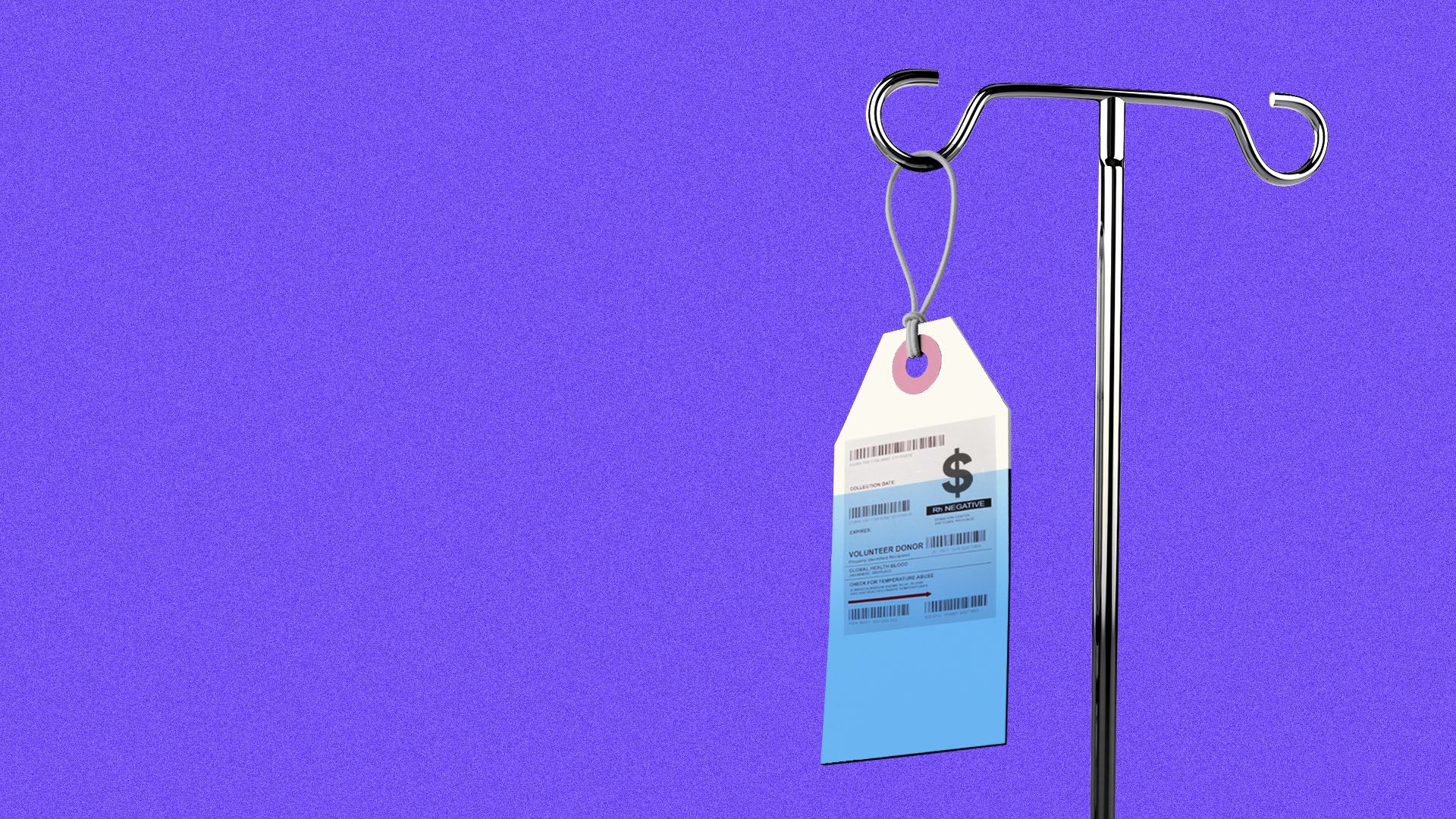
Illustration of a price tag as an IV bag.

Health care executives gave no indication to bankers and investors at this year’s J.P. Morgan Healthcare Conference that their pricing practices would change any time soon.

Why it matters: That sentiment comes the same week when three of the original authors of an influential 2003 article — which studied why health care is so expensive in the U.S.— published an update. Their conclusion was the same: “It’s still the prices, stupid.”

The big picture: The U.S. spends far more than other industrialized countries on health care. But Americans, on a per-person basis, don’t go to the doctor or hospital more than people in other wealthy nations. There are also fewer doctors, nurses and hospital beds, per capita, in the U.S.

  • That means the U.S. spends more because hospitals, doctors, pharmaceutical companies, device manufacturers and others charge higher prices, and health insurers aren’t negotiating good enough deals.
  • “Lowering prices in the U.S. will need to start with private insurers and self-insured corporations,” the authors wrote in this week’s update, published in the journal Health Affairs.

Reality check: Health care companies, even not-for-profits like hospitals that don’t have typical investors, have prioritized meeting revenue and profitability goals, and that short-term thinking compromises reform, according to interviews with people who attended the J.P. Morgan event.

  • Many executives continue to tout different ways of getting paid, like “value-based” pricing, but there’s no evidence those models will save money.
  • Drug companies are still focused on raising prices or buying lucrative biotechs, while providers find more ways to maximize what they get paid from insurers. As a result, insurers and employers raise premiums or deductibles for taxpayers and employees, which affects everyone’s paychecks.
  • One example: Dennis Dahlen, the chief financial officer of Mayo Clinic, told attendees how his academic medical center is building its own “five-star” hotel and is expanding proton beam therapy, even though that expensive treatment has limited or no clinical benefit.
  • “This is about money and [investors] getting a return,” said Stephen Buck, founder of cancer tech app Courage Health.

Yes, but: Some in the industry realize they need to act.

  • Marc Harrison, CEO of Intermountain Healthcare, said in an interview his hospital system has lowered the “cash price” of some services, like normal vaginal childbirth, to help people who have high deductibles — although services like childbirth often cost a lot more than the deductible.
  • Intermountain also has negotiated with insurers, with the exception of one unnamed company, to hold patients harmless if they get a surprise out-of-network bill, Harrison said.
  • Stephen Ubl, CEO of the Pharmaceutical Research and Manufacturers of America, acknowledged in an interview that “the status quo is not acceptable. We understand the system needs to change.”
  • However, he continued to argue for changes in what people pay out of pocket, instead of changing the patent system or how companies price their products. Ubl described the Trump administration’s proposal to index the prices of some Medicare drugs to lower rates in other countries as “fruit of the poisonous tree of government price-setting.”

What to watch: Democrats are using “Medicare for All” and price-setting as a litmus test for 2020 candidates, and Democrats in Congress are proposing Medicare negotiation for drugs — an idea that Trump supported in the past. Regulatory or legislative changes to pricing are not completely out of the question if the industry fails to act.


ACA lawsuit puts GOP in an awkward position

https://www.axios.com/affordable-care-act-lawsuit-republicans-2c0aff0e-e870-49af-a15e-554d34d3ad62.html

Image result for aca lawsuit

A lawsuit that threatens to kill the entire Affordable Care Act could be a political disaster for the GOP, but most Republicans aren’t trying to stop it — and some openly want it to succeed.

Between the lines: The GOP just lost the House to Democrats who campaigned heavily on health care, particularly protecting people with pre-existing conditions, but the party’s base still isn’t ready to accept the ACA as the law of the land.

The big picture: A district judge ruled last month that the ACA’s individual mandate is unconstitutional and that the whole law must fall along with it. That decision is being appealed.

  • A victory for the Republican attorneys general who filed the lawsuit — or for the Trump administration’s position — would likely cause millions of people with pre-existing conditions to lose their coverage or see their costs skyrocket.

Some Republicans want the lawsuit to go away.

  • Rep. Greg Walden, ranking member of the Energy and Commerce Committee, supports fully repealing the ACA’s individual mandate, which the 2017 tax law nullified. That’s what sparked this lawsuit, and formal repeal would likely put the legal challenge to rest.
  • Sen. Susan Collins laughed when I asked her whether she hopes the plaintiffs win the case. “No. What a question,” she said.

But other Republicans say they see an opportunity.

  • If the lawsuit prevails, “it means that we could rebuild and make sure that we have a health care system that is going to ensure that individuals are in charge of their health care,” Rep. Cathy McMorris Rodgers said.
  • Sen. David Perdue said that “of course” he wants the challengers to win, which would “give us an opportunity to get at the real problem, and that is the cost side of health care.”
  • Sen. Shelley Moore Capito said she views the lawsuit “as an opportunity for us to assure pre-existing conditions and make sure that we fix some of the broken problems,” but that she doesn’t know if it’d be good if the plaintiffs win.

The bottom line: “The longer we’re talking about preexisting conditions, the longer we’re losing. We need to focus on a message that can win us voters in 2020. The debate of preexisting conditions was a stone-cold loser for us in 2018,” said Matt Gorman, the communications director for House Republicans’ campaign arm during the 2018 cycle.