Expanding role of hospitalist PAs achieves similar outcomes at lower cost, study finds

http://www.healthcarefinancenews.com/news/expanding-role-hospitalist-pas-achieves-similar-outcomes-lower-cost-study-finds?mkt_tok=eyJpIjoiWlRkaE16VTBPRGhrTmpWbSIsInQiOiIxRk44S3JKdEd3Mzl5czNscEJZNjI1N210RWE0b0RxNWd3RHhoZUg2TXJCM3U2QnZJWm1VcFhMS2daQ1pmRzEyTG5DU2E0cWFCdGtWQlJKS0N0NE51Y2FubWdZbWptcTRhVHRZaTZJNDM1VT0ifQ%3D%3D

Though more medical centers are relying on hospitalists — hospital-based internal medicine specialists who coordinate the complex care of inpatients — a new study suggests that hospitals can safely lower the cost of hospitalist programs without sacrificing quality of care

The 18-month study published in the Journal of Clinical Outcomes Management compared two hospitalist groups — one with a high physician assistant-to-physician ratio (“expanded PA”) and one with a low PA-to-physician ratio (“conventional”) — and found no significant differences in the important clinical outcomes achieved by both groups.

The study saw little difference in patient mortality, hospital readmissions within 30 days, lengths of stay or specialty consultant use among patients treated by the expanded PA group and those treated by the conventional group.

From January 2012 to June 2013, the researchers implemented an expanded PA staffing model to see larger numbers of adult patients alongside physicians. The expanded PA group consisted of three physicians and three PAs, with PAs caring for 14 patients each day. At the same time, a conventional hospitalist group composed of nine physicians and two PAs had PAs caring for nine patients each day. Physicians in both groups cared for approximately 13 patients a day.

The Life-Changing Magic of Choosing the Right Hospital

There’s an exceedingly simple way to get better health care: Choose a better hospital. A recent study shows that many patients have already done so, driving up the market shares of higher-quality hospitals.

A great deal of the decrease in deaths from heart attacks over the past two decades can be attributed to specific medical technologies like stents and drugs that break open arterial blood clots. But a study by health economists at Harvard, M.I.T., Columbia and the University of Chicago showed that heart attack survival gains from patients selecting better hospitals were significant, about half as large as those from breakthrough technologies.

That’s a big improvement for nothing more than driving a bit farther to a higher-quality hospital.


Discussion on issues in adaptive design for clinical trials with Dr. Deepak L. Bhatt and Dr. Cyrus Mehta


Drug Regulation and Pricing — Can Regulators Influence Affordability?

http://www.nejm.org/doi/full/10.1056/NEJMp1601294?utm_campaign=KHN%3A+Daily+Health+Policy+Report&utm_source=hs_email&utm_medium=email&utm_content=29514168&_hsenc=p2ANqtz-_mhuZY8I1CwE2JaU7KXf7klesY9p7YngvovjjsHKAbNVfnE2nViv1V8f1h8S0PR5h41XLpae3XGq5fFQ5NnvEuAJ0UEw&_hsmi=29514168&

High Drug Costs

Public debate in the 1990s over drugs’ clinical toxicity has given way to concerns about their financial toxicity. Although drug regulators aren’t supposed to be concerned with pricing, they’ve been drawn into an acrimonious debate over the cost of medicines.

Pay for performance worked this time, right? No?

Pay for performance worked this time, right? No?

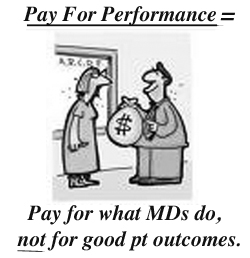
Pay for Performance