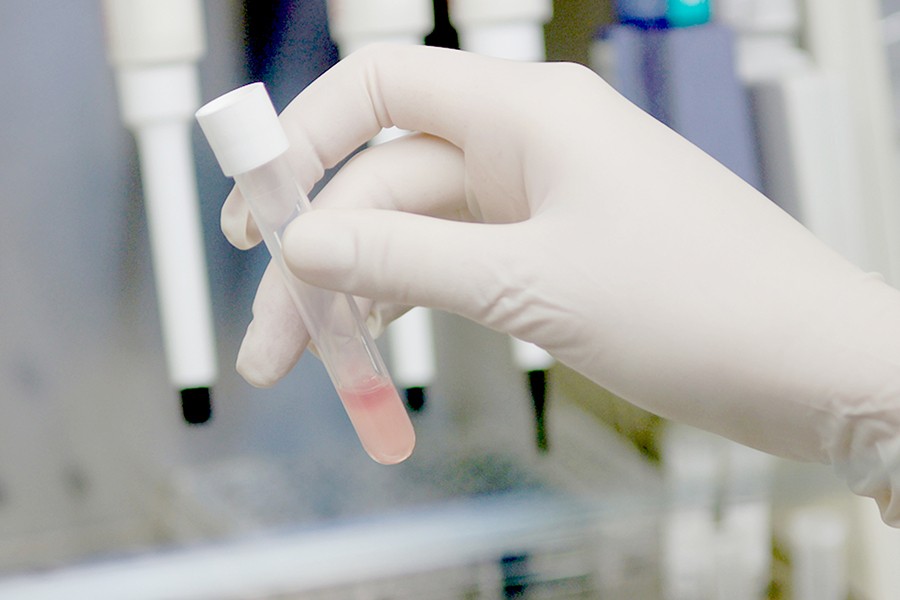
Scientists develop blood test that spots tumor-derived DNA in people with early stage cancers

https://hub.jhu.edu/2017/08/16/cancer-tumor-dna-blood-test/?utm_source=Hub+subscribers&utm_campaign=7a294dde15-EMAIL_CAMPAIGN_2017_08_17&utm_medium=email&utm_term=0_d8bf41c16e-7a294dde15-63587717


Promising screening test could cut down on over-testing for populations most at risk for certain cancers.

In a bid to detect cancers early and in a noninvasive way, scientists at the Johns Hopkins Kimmel Cancer Center report they have developed a test that spots tiny amounts of cancer-specific DNA in blood and have used it to accurately identify more than half of 138 people with relatively early stage colorectal, breast, lung, and ovarian cancers.

The test, the scientists say, is novel in that it can distinguish between DNA shed from tumors and other altered DNA that can be mistaken for cancer biomarkers.

OVERALL, THE SCIENTISTS WERE ABLE TO DETECT 62 PERCENT OF STAGE I AND II CANCERS.

A report on the research, performed on blood and tumor tissue samples from 200 people with all stages of cancer in the United States, Denmark, and the Netherlands, appears today in the journal Science Translational Medicine.

“This study shows that identifying cancer early using DNA changes in the blood is feasible and that our high accuracy sequencing method is a promising approach to achieve this goal,” says Victor Velculescu, professor of oncology at the Kimmel Cancer Center.

Blood tests for cancer are a growing part of clinical oncology, but they remain in the early stages of development. To find small bits of cancer-derived DNA in the blood of cancer patients, scientists have frequently relied on DNA alterations found in patients’ biopsied tumor samples as guideposts for the genetic mistakes they should be looking for among the masses of DNA circulating in those patients’ blood samples. To develop a cancer screening test that could be used to screen seemingly healthy people, scientists had to find novel ways to spot DNA alterations that could be lurking in a person’s blood but had not been previously identified.

“The challenge was to develop a blood test that could predict the probable presence of cancer without knowing the genetic mutations present in a person’s tumor,” says Velculescu.

The goal, adds Jillian Phallen, a graduate student at the Johns Hopkins Kimmel Cancer Center who was involved in the research, was to develop a screening test that is highly specific for cancer and accurate enough to detect the cancer when present, while reducing the risk of “false positive” results that often lead to unnecessary over-testing and over-treatment.

To develop the new test, Velculescu, Phallen and their colleagues obtained blood samples from 200 patients with breast, lung, ovarian, and colorectal cancer. The scientists’ blood test screened the patients’ blood samples for mutations within 58 genes widely linked to various cancers.

Among 42 people with colorectal cancer, the test correctly predicted cancer in 50 percent of patients with stage I, 89 percent of patients with stage II, 90 percent of patients with stage III, and 93 percent of patients with stage IV disease. For patients with lung cancer, the test correctly identified cancer among 45 percent of patients with stage I disease, 72 percent with stage II disease, 75 percent with stage III, and 83 percent with stage IV cancer. For 42 patients with ovarian cancer, the test identified 67 percent with stage I, 75 percent with stage II, 75 percent with stage III, and 83 percent with stage IV disease. Among 45 breast cancer patients, the test spotted cancer-derived mutations in 67 percent of patients with stage I disease, 59 percent with stage II, and 46 percent with stage III cancers.

Overall, the scientists were able to detect 86 of 138—62 percent—stage I and II cancers, and found none of the cancer-derived mutations among blood samples of 44 healthy individuals.

Despite these initial promising results for early detection, the blood test needs to be validated in studies of much larger numbers of people, say the scientists.

Velculescu and his team also performed independent genomic sequencing on available tumors removed from 100 of the 200 patients with cancer and found that 82 percent had mutations in their tumors that correlated with the genetic alterations found in the blood.

He says the populations that could benefit most from such a DNA-based blood test include those at high risk for cancer, including smokers, for whom standard computed tomography scans for identifying lung cancer often lead to false positives, and women with hereditary mutations for breast and ovarian cancer within BRCA1 and BRCA2 genes.

Gene Editing Spurs Hope for Transplanting Pig Organs Into Humans

Image result for Gene Editing Spurs Hope for Transplanting Pig Organs Into Humans

In a striking advance that helps open the door to organ transplants from animals, researchers have created gene-edited piglets cleansed of viruses that might cause disease in humans.

The experiments, reported on Thursday in the journal Science, may make it possible one day to transplant livers, hearts and other organs from pigs into humans, a hope that experts had all but given up.

If pig organs were shown to be safe and effective, “they could be a real game changer,” said Dr. David Klassen, chief medical officer at the United Network for Organ Sharing, a private, nonprofit organization that manages the nation’s transplant system.

There were 33,600 organ transplants last year, and 116,800 patients on waiting lists, according to Dr. Klassen, who was not involved in the new study. “There’s a big gap between organ supply and organ demand,” he said.

Dr. George Church, a geneticist at Harvard who led the experiments, said the first pig-to-human transplants could occur within two years.

The new research combines two great achievements in recent years — gene editing and cloning — and is unfolding quickly. But the work is novel and its course unpredictable, Dr. Klassen noted.

It may be years before enough is known about the safety of pig organ transplants to allow them to be used widely.

The idea of using pigs as organ factories has tantalized investigators for decades. Porcine organs can be the right size for human transplantation, and in theory, similar enough to function in patients.

But the prospect also raises thorny questions about animal exploitation and welfare. Already an estimated 100 million pigs are killed in the United States each year for food.

Scientists pursuing this goal argue that the few thousand pigs grown for their organs would represent just a small fraction of that total, and that they would be used to save human lives. The animals would be anesthetized and killed humanely.

Major religious groups have already weighed in, generally concluding that pig organs are acceptable for lifesaving transplants, noted Dr. Jay Fishman, co-director of the transplant program at Massachusetts General Hospital. Pig heart valves already are routinely transplanted into patients.

(Some leaders in the Jewish and Muslim communities, though, do not endorse pig kidneys for transplant, reasoning that patients with kidney failure can survive with dialysis.)

Scientists began pursuing the idea of pig organs for transplant in the 1990s. But in 1998, Dr. Fishman and his colleagues discovered that hidden in pig DNA were genes for viruses that resembled those causing leukemia in monkeys.

When researchers grew pig cells next to human embryonic kidney cells in the laboratory, these viruses — known as retroviruses — spread to the human cells. Once infected, the human cells were able to infect other human cells.

Fears that pig organs would infect humans with bizarre retroviruses brought the research to a halt. But it was never clear how great this threat really was, and as years have gone by, many experts, including Dr. Fishman, have become less concerned.

Some patients with diabetes have received pig pancreas cells, hidden in a sort of sheath so the immune system will not reject them. And burn patients sometimes get grafts made of pig skin. The pig skin is eventually rejected by the body, but it was never meant to be permanent anyway.

There is no evidence that any of these patients were infected with porcine retroviruses. In any event, said Dr. A. Joseph Tector, a transplant surgeon at the University of Alabama at Birmingham, pig retroviruses are very sensitive to the drugs used to treat H.I.V.

“We don’t know that if we transplant pig organs with the viruses that they will transmit infections, and we don’t know that the infections are dangerous,” Dr. Fishman said. “I think the risk to society is very low.”

Dr. Church and his colleagues thought the retrovirus question could be resolved with Crispr, the new gene-editing technology. They took cells from pigs and snipped the viral DNA from their genomes. Then the scientists cloned the edited cells.

Each pig cell was brought back to its earliest developmental stage and then slipped into an egg, giving it the genetic material to allow the egg to develop into an embryo. The embryos were implanted in sows and grew into piglets that were genetically identical to the pig that supplied the initial cell.

Cloning often fails; most of the embryos and fetuses died before birth, and some piglets died soon after they were born. But Dr. Church and his colleagues ended up with 15 living piglets, the oldest now 4 months old. None have the retroviruses.

Dr. Church founded a company, eGenesis, in hopes of selling the genetically altered pig organs. Eventually, Dr. Church says, the company wants to engineer pigs with organs so compatible with humans that patients will not need to take anti-rejection drugs.

Dr. David Sachs, a professor of surgery at Columbia University, was skeptical that it would be straightforward to make pigs with such compatible organs.

“I am afraid that he may find these goals more difficult to achieve than he expects, but I would be happy to be mistaken,” said Dr. Sachs, who is also studying ways to create pigs suitable for organ donation.

Part of the organ rejection problem is already being solved with gene editing and cloning. It is an issue that emerged in the early 1980s when surgeons put a pig heart into a baboon. To their shock, the baboon died in minutes.

Researchers soon discovered that pig organs are covered with carbohydrate molecules that mark the organs for immediate destruction by human antibodies.

Dr. David Cooper, at the University of Alabama at Birmingham, and his colleagues, including Dr. Tector, have used gene editing and cloning to make pigs without the carbohydrates on the surfaces of their organs.

They successfully transplanted hearts and kidneys from those pigs into monkeys and baboons. So far, the animals have lived more than a year with no problems, Dr. Tector said.

They also gave insulin-producing islet cells from a pig to diabetic monkeys, and the monkeys lived for a year without requiring insulin. In partnership with United Therapeutics, the group has already built a farm for gene-edited pigs.

Dr. Church says he, too, is making pigs whose organs lack the carbohydrates, and he wants to combine the two advances so the organs also do not have retroviruses. The Alabama group, though, does not think pig retroviruses are a major concern.

Surgeons are used to evaluating the risks of infection from transplanted organs, Dr. Tector said. The advantage of the transplant to the desperately ill recipient often outweighs that risk.

To some, the idea of growing pigs to create organs is distasteful. Many patients may prefer a human organ, Dr. Cooper acknowledged, but that is not always possible.

“About 22 people a day die waiting for a transplant,” he said. “If you could help them with a pig organ, wouldn’t that be wonderful?”

Trump budget proposal cuts billions and would ‘devastate’ healthcare programs

http://www.fiercehealthcare.com/healthcare/trump-budget-proposal-cuts-billions-and-would-devastate-healthcare-programs?utm_medium=nl&utm_source=internal&mrkid=959610&mkt_tok=eyJpIjoiT0RGaE9USTFOR1F4T0dGbSIsInQiOiJsMHdQVHhVK1pcL0c4S0JpV21SZXJxaVFNU3M5TWFHWWRJSU1XWnp1Szl0VkJlT29xdkFzNWJqdE9YMURvUTJYVjl4NVB3RHlBcVpZMEJVUEVVMVZNakFnUUVPNWV4SzU5amdCeGNWTURDdllzYzhrQWwxdFJHdHlxMDZidnlYN3MifQ%3D%3D

Despite criticism over his initial proposal in March that included huge cuts to the Department of Health and Human Services, National Institutes of Health and Centers for Disease Control and Prevention, President Trump’s fleshed-out 2018 budget will slash billions from those health programs in order to spend more on the military and cover planned tax cuts.

The full budget plan is due to be released this morning at 11 a.m., but the White House administration inadvertently posted the section (PDF) that dealt with cuts to the HHS late Monday before it quickly took it offline.

In addition to a proposal to eliminate $800 billion from Medicaid, the Trump administration wants to make deep cuts to other health programs, including:

  • $5.8 billion from the overall NIH budget, including $1 billion from the National Cancer Institute, $838 million from the National Institute of Allergy and Infectious Diseases and $575 million from the National Heart, Lung and Blood Institute
  • $1.2 billion from the CDC
  • $403 million from health workforce programs, including diversity training, mental and behavioral programs, and select nursing and physician training programs
  • $22 million from the Office of the National Coordinator for Health IT.

Discovery enables ‘mass produced blood’

http://www.bbc.com/news/health-39354627

Blood

Scientists say they have made a significant leap towards mass-producing red blood cells suitable for donation.

Red blood cells can already be made in the lab, but the problem is scale.

A team at the University of Bristol and NHS Blood and Transplant have developed a method to produce an unlimited supply.

The artificial blood will be far more expensive than conventional donation. So it is likely to be used for people with very rare blood types.

The old technique involved taking a type of stem cell that manufactures red blood cells in the body and coaxing it to do so in the lab.

However, each cell eventually burns out and produces no more than 50,000 red blood cells.

The trick developed by the Bristol team was to trap the stem cells at an early stage where they grow in number indefinitely.

It is known as making them immortal.

Once the researchers have this group of cells, they can just trigger them to become red blood cells.

Dr Jan Frayne, one of the researchers, said: “We have demonstrated a feasible way to sustainably manufacture red cells for clinical use.

“We’ve grown litres of it.”

Healthcare Triage: How to Give Better Medical Advice

Healthcare Triage: How to Give Better Medical Advice

Image result for Healthcare Triage: How to Give Better Medical Advice

Medical scientists and academics must publish their research to advance. Medical organizations must release health recommendations to remain relevant. News organizations feel they must report on research and recommendations as they are released. But sometimes it’s hard to separate what’s truly a medical certainty from what is merely solid scientific conjecture.

That’s the topic of this week’s Healthcare Triage.


21st Century Cures Act: 4 health industry impacts summarized

http://www.healthcaredive.com/news/21st-century-cures-act-explained/431491/

On Wednesday, the Senate voted 94-5 to pass the long-awaited 21st Century Cures Bill. As it has backing from the current White House administration, President Barack Obama is expected to sign the legislation into law.

The law has been called the “most important bill of the year” by Senator Lamar Alexander (R-TN), as Politico Pulse reported Tuesday. The bill, while bipartisan, is not without controversy. While the House version of the legislation passed swimmingly with a vote of 392-26, the bill did have its share of opponents in the Senate– including Sen. Elizabeth Warren (D-MA) and Sen. Bernie Sanders (I-VT) – who think the bill is too favorable to pharmaceutical companies. Both Sanders and Warren were among the five Senators to vote against the measure.

And as Modern Healthcare’s Merrill Goozner notes in an editorial, it’s likely the true impact of the bill won’t be known right away but will be realized as the years pass. “The final details of the 996-page legislation…weren’t known until five days before it passed,” Goozner wrote.

About three years of work and efforts from 1,400 lobbyists for 400 companies went into the making of this $6.3 billion package. It seeks to deliberately speed medical research and treatments. Because seemingly no healthcare legislation can be a reasonable length (it’s about 90 pages longer than the ACA) and because nothing in healthcare is simple, we’ve summarized some of the notable implications of the bill in four buckets: Health IT, mental health, FDA reform and research and care funding.

House OKs 21st Century Cures bill; Senate votes next week

http://www.fiercehealthcare.com/healthcare/house-passes-landmark-medical-cures-bill-senate-to-vote-next-week?utm_medium=nl&utm_source=internal&mkt_tok=eyJpIjoiTmpNMk1tUmxOekV3TnpZMCIsInQiOiJtUTFHVmlSWVByUWJLZ1JDRjgxaklCNXlaM2hcLzRKRXBpYlE4MFwvV1BydTgyTVJvZjAxUGF5dlFUVVVVSGF6YzdETkNyUGVtY0M1eVV0OXFESWlUNEQ1dFJGeE5hamxLWTFzb1RVRVVGZ1NFPSJ9

congress

Not everyone was on board, however. Rep. Lloyd Doggett (D-Texas) voted against the measure because he said that though the bill attempts to address the need for research funding, it doesn’t guarantee the money: “There may be bipartisan agreement, but there is not a bipartisan advancement.”

He also said the revised version of the bill grants all of big pharma’s “wish lists” and doesn’t tackle rising drug costs. Indeed, Doggett said it was appropriate that the medical cures bill is packed into a larger measure called the Tsunami Warning Bill because people who rely on lifesaving drugs and want to fill a prescription have been “buried in one wave, after another wave, after a giant wave of pharmaceutical price gouging. Whether it’s an EpiPen for a child who is going to have an allergic reaction, whether it’s for insulin for someone who is diabetic and relies on that insulin, whether it’s an oncology drug that costs over $100,000, it is wave after wave of a tsunami of price gouging.”


Lab Chat: Watch how a brain injury wreaks havoc on neurons

A NEURON DIES AFTER UNDERGOING A TRAUMATIC INJURY. (COURTESY CHRISTIAN FRANCK)

A traumatic brain injury can cause neurons to shrivel up and die, but scientists are hopeful there’s a small window of time where treatment might be able to save some of those cells. Researchers examined neurons in petri dishes to see what exactly happens after a blow to the head. Here’s what lead researcher Christian Franck of Brown University told me about the work, published this morning in Scientific Reports.

What were you studying?

We wanted to understand, from a trauma perspective, how much is too much for these cells to take. When is their breaking point? And once they reach it, how long does it take for them to degenerate and die? The timeline from that initial trauma to cellular shut down is important to understand how much time one has to intervene therapeutically [after a brain injury].

How long did it take?

After six hours, you have biological events that’ve taken place that are irreversible. Cells shut down and cell death can’t be avoided. You know that you’ll have less time than that to do anything about it. There’s nothing you can do but hope the brain helps resolve itself.

Does that differ from one patient to the next?

The model we built is very simple. We only looked at neurons, but the brain has thousands of millions of cells involved. We didn’t look at that interplay. It’s important to note that what we built in the dish is not the brain.

23andMe data points to genes affecting depression risk

23andMe data points to genes affecting depression risk

In a key advance for the study of depression, a comprehensive scan of human DNA has turned up the apparent hiding places of more than a dozen genes linked to the disorder.

“This is a jumping-off point” for further work to reveal the biological underpinnings of depression, which in turn can guide development of new drugs, said Ashley Winslow, an author of a paper on the work.

Experts said the result is important not only for its specific findings, but also for its demonstration that the study’s approach can help uncover clues to the biology of depression, which is largely a mystery.

Intermountain, Stanford forge clinical genomics and precision medicine partnership

http://www.healthcareitnews.com/news/intermountain-stanford-forge-clinical-genomics-and-precision-medicine-partnership

Researchers aim to develop new technologies to solve pressing issues in healthcare.