Last Friday, I had the honor of meeting with Fellows in the Milbank Memorial Fund program where top state health department and elected leaders discuss policy issues facing their states. Their issues are mounting and complicated. Their role and the scope of their responsibilities are expanding. Per the National Association of State Budget Officers, health programs accounted for 31% of the average state’s budget in FY2025 though what’s included and how it’s spent varies widely by state.
Most are compensated below their private sector peers. All work long days. All share similar challenges:
State legislatures are asking for simple answers to complex problems about costs, coverage and services.
Governors are asking for solutions to politically-sensitive problems that don’t disturb voter confidence.
Program leads in state health agencies want increased funding and less administrative oversight.
Healthcare trade associations are amping-up their advocacy machinery to protect their interests and fend off election-year losses.
And federal policies, rules and guidelines from HHS, CMS, VA, CDC, DOD, FDA, DOA et al are changing almost daily prompting court actions and regulatory chaos. In tandem. funding cuts via the One Big Beautiful Bill, uncertainty about programs like Rural Health Transformation and vaccine policy, and endless directives paralyze state health leader effectiveness.
The federal government played a back seat to states until the modern era. That changed as Medicare and Medicaid became the primary banks for healthcare. By design, states oversaw the delivery and financing of healthcare services within their borders, often experimenting with innovations in coverage to address growing access issues in underserved populations.
Today, states have a full plate: control licensing and scope of practice, insurer solvency and coverage requirements, retail pharmacies, public health programs, competition, price transparency, facility adequacy and safety (hospitals, nursing homes et al) and many much more. Since the conservative leaning Supreme Court’s decision in Dobbs v. Jackson Women’s Health Organization (2022), tricky issues like abortion rights and others have defaulted to states to adjudicate further taxing the state’s healthcare leadership and resources.
The road ahead for state healthcare regulators will be harder regardless of the state’s population, partisan leaning and resources. Spending levels are not sustainable, dissatisfaction with the health system is at an all-time high and neither political party has advanced solutions that achieve the triple aim: better care, lower cost and universal access. Reality:
The healthcare industry changes faster than its laws and regs. As a result, policy changes are primarily focus on corrections to known flaws rather than systemic reforms that enable sustainability long-term.
Short-term opportunities for healthcare investors benefit from the dysfunction. Winners in the industry leverage regs and rules that favor specialty care, consolidation, cost+ business models and profit maximization. Non-profit status protects favorable tax treatment at local, state and federal levels while day to day operations is indistinguishable from investor-owned competitors.
In 2009 in preparation for the White House Office of Health Reform Affordable Care Act deliberations with industry groups, I examined the structures, financing and clinical results of health systems in developed economies (OECD) of the world. Each was unique, but all operated at lower cost than the U.S. and all produced population-based clinical results that rivaled the U.S. Of the 12 I studied closest, the U.S, ranked in the bottom 3 on almost every measure except one: cost.
No two countries are alike like no two states are alike, but three structural elements were apparent in every system that outperformed the U.S.:
Primary and Preventive Health Gatekeeping: Developed systems integrate public health (social determinants) with physical and mental health, nutrition, prophylactic dentistry and restrictive formularies. They enable primary care for all, and facilitate access to specialty services through gatekeeping for the substantial majority of citizens.
Clinical standardization based on evidence: Every system of the world that outperforms the U.S. operates an independent NGO whose purpose is to monitor science and align diagnostics and therapeutics with what is proven to work. As AI-enabled clinical directives become mainstream tools in the U.S. system, adherence to what works best in what order (step therapies) will enable reduction in unnecessary care and engagement of individuals in self-care.
Global budgets: Remarkably, countries that out-perform the U.S. set national budgets for their healthcare programs and ration care toward system-wide priorities. They spend 8-12% of the country’s total GDP (vs. 18% in the U.S.) and appropriate more resources to primary and public health and less to acute services proportionately.
The conundrum for Milbank Fellows is the obvious: big, structural changes like these require federal involvement. They’re common sense. They’re not about bad people; they’re about structural flaws in the status quo that need fixing.
It will require a thoughtful, national plan to transform the U.S. system. States can be the stimulus for change, especially through interstate initiatives and knowledge-sharing akin to the Milbank Fellows Program.
Ultimately, it will require a federal Manhattan Project that subordinates the proprietary wishes of the industry special interests and political gamesmanship by partisans to achieve a system that’s sustainable, effective, efficient and operates with and for the people served.
States are the frontline for system reform in U.S. healthcare.
Funding from the Rural Health Transformation Program is beginning to flow to the states. The purpose is larger, but some say its success should be measured by whether it preserves access to care at rural hospitals.
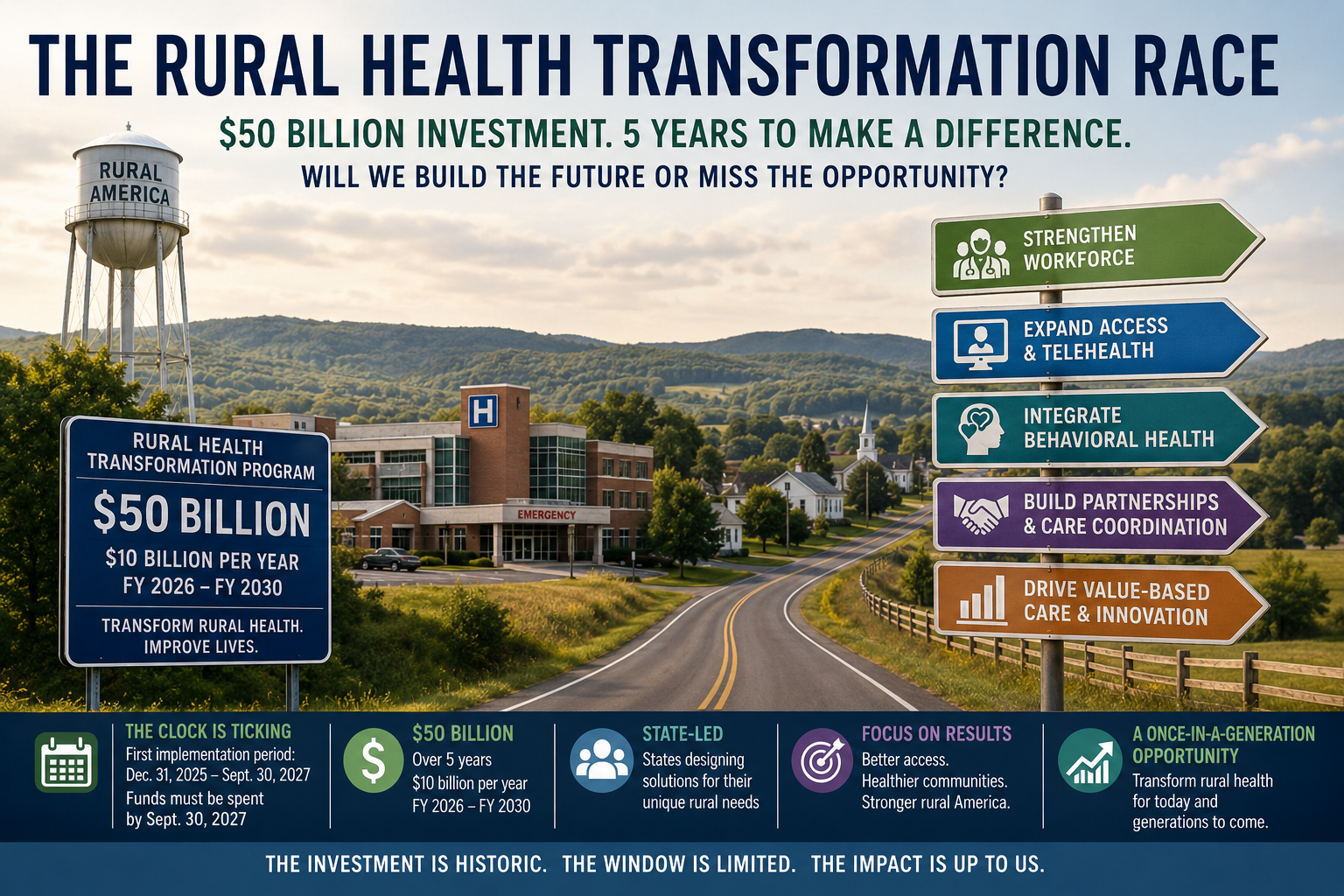
The Rural Health Transformation Program represents one of the largest federal investments ever made in rural healthcare, with $50 billion authorized over five years to help states improve access, strengthen the workforce, and modernize care delivery in rural areas. Still, as states move from planning to implementation, the program faces an immediate test: Can it deliver meaningful transformation while rural hospitals continue to face mounting financial and operational pressures?
The answer is not so cut-and-dried.
Some rural health advocates view the program as an unprecedented opportunity to rethink how care is delivered in underserved communities. Others caution that although the funding can accelerate innovation, it was never designed to replace revenue that providers could lose because of Medicaid policy changes, such as work requirements.
Alan Morgan is CEO of the National Rural Health Association.
“It’s apples and oranges,” says Alan Morgan, M.P.A., CEO of the National Rural Health Association. “The Rural Health Transformation Program was created to invest in long-term innovation, not to replace Medicaid funding. Comparing the two misses the intent of the legislation.”
At the same time, Morgan acknowledged that rural providers remain deeply concerned about what lies ahead.
“The math just doesn’t work,” he said. “Nearly one-half of rural hospitals already operate at a loss, and hundreds remain at risk of closure if financial pressures continue to mount.”
Innovation versus stabilization
Congress created the Rural Health Transformation Program as part of the One Big Beautiful Bill Act that President Donald Trump signed into law on July 4, 2025. It was added in part to offset the federal Medicaid cuts in the bill, which the Congressional Budget Office estimated will total $911 billion over a 10-year period. The program provides $10 billion annually through 2030 to help states invest in new care models, workforce development, technology and other initiatives intended to improve healthcare delivery in rural areas.
Ryan Cohn is chief strategy officer at Sachs Media.
Ryan Cohn, chief strategy officer at Sachs Media, who has advised multiple states, health systems and healthcare organizations on Rural Health Transformation Program applications, says that the funding is not sufficient to offset the broader financial challenges facing rural healthcare, noting that the fund was created after lawmakers expressed concern that the Medicaid cuts could disproportionately affect rural providers, especially rural hospitals. And once CMS implemented the program, its focus shifted toward transforming healthcare delivery rather than serving as a financial backstop for struggling hospitals.
“The real question isn’t whether $50 billion is enough money,” Cohn comments. “It’s whether we can stand up a new care model fast enough to replace a hospital that may close in the next few years.”
Harold D. Miller, M.S., president and CEO of the Center for Healthcare Quality and Payment Reform, says he believes the program has the potential to preserve services in rural communities, but only if states have enough flexibility to direct funding where it is needed most.
“The $10 billion per year in new funds under RHTP [Rural Health Transformation Program] could go a long way to preventing the loss of services in rural areas if the money could be directed to the hospitals that are currently being underpaid,” Miller observes.
Instead, he adds, CMS has limited the amount states can use for direct provider payments while encouraging investment in new initiatives and technology.
“Although those investments may ultimately prove valuable, technology alone cannot replace essential healthcare services,” he says. “A phone app can’t deliver a baby, draw blood, stitch a wound or do a CT scan.”
Implementation
After months spent developing applications, states are now beginning the nuts-and-bolts work of turning proposals into operational programs.
According to Cohn, five priorities appear consistently across state plans: workforce development; telehealth and data infrastructure; prevention; new payment and delivery models; and bringing care closer to patients through mobile clinics and regional care networks.
Joe Ganley, J.D., vice president of government and regulatory affairs for athenahealth, says rural practices already operate with no room to spare. “The margin for error has essentially disappeared,” Ganley said.
Among those priorities, workforce development stands out as the dominant theme, he says. Many states are investing in residency programs, loan repayment initiatives and “grow your own” workforce strategies that encourage students from rural communities to pursue healthcare careers locally in hopes they will eventually remain there.
Technology investments also extend well beyond telehealth. Cohn says states are focusing on improving interoperability so rural hospitals, clinics and emergency medical services can share patient information more effectively. Others are proposing artificial intelligence for population health, drone delivery of medications and laboratory tests, and technology-enabled transportation programs designed to improve access to care.
Even so, implementation presents significant challenges. “This money was built to move fast,” Cohn says. Some states first had to establish entirely new administrative structures before funding could reach providers. Others continue to develop procurement processes while preparing to demonstrate measurable outcomes that will influence future funding allocations.
Sustainability also remains an open question. “A new residency slot or telehealth program only counts if it outlives the initial RHTP funding,” Cohn says. “Not every plan has a fully formed answer for what happens in year six.”
Financial pressures
Although much of the discussion surrounding the Rural Health Transformation Program focuses on future transformation, many providers continue grappling with immediate financial realities.
Joe Ganley, J.D., vice president of government and regulatory affairs for athenahealth, says rural practices already operate with no room to spare. “The margin for error has essentially disappeared,” Ganley said.
When patients delay appointments, ration medications or postpone treatment because of cost, practices experience more than declining revenue. Patients often arrive later with more complex medical needs, increasing clinical and operational burdens. “Providers feel it immediately — in no-shows, in collections and in the clinical complexity of patients who arrive later and sicker,” Ganley says.
Beyond those financial pressures, Ganley notes that rural physician practices also continue to struggle with workforce shortages and limited interoperability.
“Many rural practices operate with one to two months of reserves,” Ganley said. “That’s not a buffer — it’s a cliff. Any disruption to payment flows, whether from coverage losses, billing delays or reimbursement changes, can threaten the viability of organizations that communities depend on as their only access point for primary care.”
He adds that recruiting and retaining clinicians remains difficult, while limited interoperability makes it harder for rural providers to coordinate care and participate in value-based payment models.
Measuring success
Even as the rural health program dollars begin reaching states, many believe it is far too early to determine whether the $50 billion fund will live up to its name and change rural healthcare for the better. “I think it’s too early to determine, and that’s the honest truth,” says Morgan. Many states are only beginning to release requests for proposals and identify where funding will be directed. Although states must obligate the funds within required timelines, many providers are still waiting to learn whether they will receive support and how they will be permitted to use it. “Our members are concerned,” Morgan adds. “Are we going to receive any of the money? How are we going to be able to use the funds? There’s just a lot yet unknown.”
Miller notes the program’s success should not be measured by the number of grants awarded or technology projects launched. He says he believes there is a relatively simple way to take stock of the program.
“If hospitals continue to close and eliminate services in 2026 and 2027, even with $10 billion in new funds available each year, the Rural Health Transformation Program should be viewed as a failure,” Miller says.
In his opinion, preserving essential healthcare services — including obstetrics, emergency care and primary care — must remain the priority. Even if federal Medicaid policy changes were reversed tomorrow, many small rural hospitals would continue struggling because reimbursement from Medicare Advantage, commercial insurers and other payers often fails to cover the cost of providing care in sparsely populated communities.
The No. 1
Morgan said workforce issues remain the No. 1 concern among rural hospitals, followed closely by financial stability. He’s particularly optimistic about states using the rural health funds to create “grow your own” workforce initiatives that recruit students from rural communities, train them locally and encourage them to practice close to home after graduation.
“I think that’s going to be interesting,” Morgan says, noting that locally trained clinicians are far more likely to remain in rural communities over the long term. Cohn heard similar priorities while working with states on their applications. “Workforce development is in most states’ plans because providers everywhere are facing significant staffing shortages,” he says.
Some states are investing in rural residency programs, loan repayment initiatives and accelerated licensing efforts. Others are combining workforce initiatives with telehealth and regional partnerships designed to extend scarce clinical expertise across larger geographic areas.
Ganley notes that technology can help relieve administrative burdens, but only if it simplifies clinicians’ work rather than adding complexity.
“The practices that will sustain access are the ones that can operate efficiently under financial constraints, reduce administrative burden without growing their administrative head count and connect their patients to the right level of care regardless of where that care is delivered,” he says.
Behavioral health providers are experiencing many of the same pressures. Shannon Werb, CEO of Array Behavioral Care, says that disruptions in Medicaid coverage often interrupt outpatient behavioral healthcare, causing patients to delay treatment until they require crisis care.
“When patients lose coverage or face affordability challenges, they often delay care until their condition reaches a crisis point,” says Werb. “At that stage, the emergency room becomes the default access point for treatment.” The result, he said, is longer behavioral health boarding times, increased uncompensated care and additional strain on hospitals.
The long haul
The biggest question about the infusion of federal funds into rural healthcare is whether the investment will continue paying dividends after federal funding expires. For a problem that has been decades in the making, five years is not that much time, and $50 billion is not that much money.
Because the program is scheduled to end after five years, healthcare leaders repeatedly emphasized the importance of building sustainable systems rather than launching short-lived projects.
“The real measure isn’t dollars spent or programs announced,” Cohn says. “It’s whether a rural patient can access care in 2028 that they couldn’t get in 2025.”
Morgan agrees that outcomes, not spending, will determine whether the initiative succeeds. The first warning sign, he says, would be an increase in rural hospital and rural health clinic closures. He says life expectancy is the ultimate yardstick. “We continue to see a decline in the overall life expectancies of rural communities versus urban. At the end of the day, that’s the measure that really matters.”
Hospital and health system executives at the HealthLeaders CEO Exchange prioritized growth and governance for a changing healthcare landscape.
KEY TAKEAWAYS
Hospital CEOs are investing in ambulatory care through integrated access points and strategic partnerships that expand services outside the hospital campus.
Leaders are standardizing enterprise functions where it creates value while preserving local decision-making so hospitals can respond to the needs of their communities.
Leadership continuity and succession planning are vital as organizations prepare for a future that looks considerably different than the past.
The HealthLeaders CEO Exchange offered a window into how hospital and health system leaders are viewing strategy during a time of unavoidable industry transformation.
Across two days of roundtable discussions in Avon, Colorado, executives shared approaches for remolding their organizations around care models that emphasize access, leadership structures that give local teams room to execute, and partnerships that create value for patients and communities.
Here’s a look at the conversations that took place and what they mean for the immediate future of hospital decision-making.
Growth follows the patient
Ambulatory care strategy has become imperative for providers wanting to grow in the current environment in which care isn’t bound by the hospital’s four walls.
Several CEOs spoke about creating integrated care sites that combine primary care with behavioral health, dental services, rehabilitation, and optometry. Others discussed hybrid emergency department and urgent care facilities that simplify access for patients who are unsure where to seek treatment. Mobile care services and virtual specialty were also highlighted as organizations look for ways to expand access across urban and rural markets.
One executive described an approach that challenged years of competition between neighboring organizations.
“Historically, the CEOs hated each other,” the executive said. “When she and I both became CEOs, within six months of each other, we were like, ‘Let’s start a different path.'”
The relationship led to a shared walk-in clinic that has since become a wider ambulatory strategy across the region. The model increased access, generated revenue for both organizations, and strengthened relationships with community leaders, according to the executive.
Another participant described their organization’s philosophy as “no wrong door,” with patients entering the system through whichever service best fits their needs while gaining access to additional care during the same visit.
The discussion reflected how executives are focusing on bringing care closer to patients through flexible access points that improve convenience and support long-term financial performance.
Balancing scale and local leadership
As health systems continue to grow, CEOs are rethinking ways to preserve decision-making close to the communities they serve.
Executives at the Exchange described centralizing functions such as marketing and revenue cycle while allowing local leaders to shape implementation based on market conditions. Several attendees said enterprise standards provide direction, though each hospital requires flexibility to address its workforce and patient population.
One executive summarized their philosophy in three words: “Implementation is local.”
That perspective echoed an earlier discussion on systemness, where leaders debated which functions benefit from standardization and which remain stronger when managed locally. Participants acknowledged that scale can improve efficiency, though additional layers of governance can also slow decisions and weaken ties to the community.
Accountability starts with setting clear expectations for local leaders and sharing what works across the organization.
Leadership evolves with the organization
Roundtables at the Exchange also revealed how leadership expectations continue to change.
Executives spoke about building stronger relationships across finance, operations, and clinical teams through greater transparency and more frequent collaboration. Several described spending time with frontline employees and creating environments where staff feel comfortable raising concerns. Those efforts, participants said, strengthen trust and improve execution.
Leadership continuity also emerged as an important advantage. Executives said longer CEO tenures help strengthen relationships with physicians, employees, community organizations, and elected officials while giving strategic initiatives time to mature.
When change does happen, internal succession planning can mitigate organizational turbulence, with leadership development serving as an investment in long-term organizational stability.
Ultimately, one message became clear by the end of the Exchange: Hospital leaders are looking well past incremental improvements.
“The hospital models are dead,” a rural hospital executive said. “Everybody’s trying to do CPR on the old model versus thinking about what’s the new model.”
Whether it’s ambulatory expansion, virtual care, partnerships, leadership structures, or organizational design, CEOs are strategizing through the lens of what comes next.
Yes, I’m still talking about it: Last week at our CEO Exchange in Avon, Colorado, even more became very clear: if you’re still thinking of a hospital as a destination, you’re already behind.
I’ve been watching health system strategy evolve, but the conversations I heard in the Rockies felt like a definitive pivot. The “four walls” of the hospital are officially a thing of the past. CEOs are now designing systems around an ambulatory-first, “no wrong door” philosophy.
We heard about integrated care sites that mash together primary care, behavioral health, dental, and even optometry under one roof. One of my favorite moments was hearing two CEOs who, historically, were supposed to spend their careers hating each other, decided instead to build a shared walk-in clinic.
It turns out that when leaders stop protecting their turf and start looking at what the community actually needs, everyone—including the bottom line—wins.
But how do you scale that without losing your soul? That’s the part that always gives the C-suite a headache. The consensus in the room was pretty straightforward: centralize the “boring” stuff like revenue cycle and marketing (hey, I didn’t say it!!), but keep decision-making local. As one executive put it, “Implementation is local.“ If the people on the front lines feel like they’re just taking orders from a corporate office three states away, your strategy is dead on arrival.
Also today, a reality check on the relationship between nursing and HR.
Jennifer Spinelli, director of system talent acquisition at Beebe Healthcare, joins us on HL Shorts to discuss a disconnect I’ve seen play out in a hundred different ways. You have nurse leaders who are feeling the immediate, visceral burn of a staffing gap on the floor, and TA leaders who are trying to balance that urgency with the cold reality of the labor market.
How do you bridge that gap without someone ending up frustrated? It comes back to transparency and shared data. When everyone is looking at the same map, it’s a lot easier to agree on the destination.
Both stories point to a new era of healthcare leadership that values partnership over competition and operational alignment over corporate mandates. Whether you’re building a new clinic or a new workforce pipeline, the most successful leaders are the ones willing to tear down the silos they spent years building.
For more than half a century, physicians ranked among the most trusted professionals in America. Even before modern medicine, when treatments usually failed, patients admired their doctors’ knowledge, dedication and compassion. Today, that trust has eroded, with profound implications for the future of U.S. healthcare.
Gallup polling shows just 44% of Americans rate the quality of care they receive as “good” or “excellent,” the weakest showing since Gallup began asking the question in 2001. Meanwhile, trust in doctors’ honesty and ethics has dropped 14 points since 2021, falling to its lowest point this century.
At first glance, you might assume that this decline resulted from recent developments: COVID-19, political polarization and rising vaccine skepticism. Instead, today’s drop in confidence is the predictable result of decisions set in motion some 20 years ago.
How the arc bent
To understand why patients now rate their doctors so poorly, we need to trace the full arc of modern medicine: how trust was built, how it peaked and why it declined.
The arc began with the arrival of antibiotics in the 1920s and ‘30s. Before then, doctors more often offered patients hope and compassion rather than cures. But with the availability of sulfa drugs and, later, penicillin, a doctor’s visit was more likely to prolong a life than shorten it.
The second half of the 20th century became medicine’s golden era. In this next section of the arc, breakthroughs in surgery, transplantation, chemotherapy and vaccines were paired with broader access through employer-sponsored insurance and the creation of Medicare and Medicaid. Life expectancy climbed year after year, and public confidence in doctors soared.
But every arc bends. By the 1990s, the daily demands of clinical practice had shifted. Acute problems like pneumonia or broken bones — conditions that often could be treated in a single encounter — gave way to chronic illnesses such as diabetes, heart failure and hypertension. These conditions demand lifelong management: frequent monitoring, medication adjustments and repeated follow-ups.
As chronic disease became more common, and as patients and patients struggled to manage these ever-present conditions, the result was an epidemic of heart attacks, strokes, cancers and kidney failures. Costs soared while clinical outcomes stagnated.
Insurers, caught between surging costs and payer resistance, had only one lever to pull: rationing. They rolled out high-deductible plans, imposed prior authorization requirements and denied more claims. Doctors, meanwhile, reassured by high patient satisfaction scores, resisted transformation. Most kept practicing in small, siloed offices under fee-for-service, a payment model that rewards volume over outcomes. Many who sought stability and greater reimbursement sold their practices to hospitals or private equity firms. Few found the relief they hoped for.
Why patients feel differently now, why doctors denied it
As the gap between patient needs and physician capacity widened, access to care steadily eroded. Appointments that once took days to schedule began stretching into weeks or even months, both in primary and specialty care. And when patients finally got through the door, visits felt hurried. With doctors averaging just 17 minutes per encounter, there was little time to listen fully, explain thoroughly or follow up afterward.
The consequences were predictable. Delayed appointments allowed medical problems to worsen. Rushed exams led to misdiagnoses. And for patients left waiting, worrying or returning with complications, the logical conclusion was that their doctors didn’t care.
Even as patients noticed the increasingly compromised quality, most medical professionals clung to the belief that small fixes could repair the system and restore the doctor-patient bond. They lobbied for a few more dollars from Medicare, a little less billing paperwork and fewer insurer-imposed prior authorizations. But with less than half of Americans now confident in the quality of care they receive — and premiums projected to rise nearly 9% next year — physicians can see that major healthcare reform is required. The era of denial is ending.
Patient confidence has now collapsed. A minority of Americans rate their care as excellent, and the data back them up. Life expectancy remains the same in the United States today as it was in 2010. And healthcare now consumes nearly one-fifth of the nation’s GDP, with half of Americans struggling to afford their medical bills. The question clinicians are asking is what can we do? Other industries provide answers.
Lessons from business turnarounds
Clay Christensen observed that companies and their leaders resist transformation until it is too late, and disaster strikes. Intel’s recent struggles illustrate how even once-great companies can go from the world’s best to an “also ran.” The lesson for the medical profession: that recognize the crisis early enough and embrace bold strategies are the ones that survive.
Their approach and ultimate success fall into two categories:
They maximize operational excellence to close the gap between demand and capacity. In the 1970s, for example, Southwest couldn’t match the major carriers on brand reputation, so it had to become cost effective. It chose to maximize collaboration. Pilots, flight attendants and ground crews operated as a tightly integrated team, following consistent steps at every airport. Planes turned around in 10 minutes, not 30. That efficiency allowed Southwest to schedule six flights a day (one more than the competition) without purchasing more planes or adding staff.
They embrace new technologies that can increase quality and lower cost. Take Netflix as an example. What began as a DVD-by-mail service pivoted early to streaming. Even before broadband was widespread, Netflix bet on the future. The model slashed costs, improved accessibility and delivered higher-quality viewing. Subscriptions stayed affordable, households remained loyal, and the company reshaped an entire industry.
Healthcare can learn from this. In this scenario, doctors would join together to achieve economies of scale, collaborate across specialties to avoid duplication of services and minimize resource waste through clinical care coordination. Moreover, they would apply the principle of specialization to create high-volume centers of excellence capable of providing consistently high quality with far greater efficiency and significantly lower costs.
Medicine could emulate this approach. Physicians would embrace generative AI, take financial risk under a capitated model, find ways to better control chronic disease and empower patients to take on more of their own care. This would decrease demand on doctors, free-up time for their most complex patients and reduce burnout. But this scenario won’t happen if the payment methodology remains “pay-for-volume,” or if new technologies are relegated to administrative tasks rather than applied to improve clinical effectiveness and efficiency.
Of course, there is a third possibility: doctors cling to denial.In this scenario, they keep running faster and faster on the treadmill, cutting more corners each year and hoping small fixes will make a difference.
If this is the path medicine follows, annual costs will outpace inflation, quality will continue to decline, and the gap between healthcare prices and what patients can afford will widen. To fill in the void, entrepreneurs will seize the opportunity and develop generative AI tools that replace (rather than complement) physicians. When that day comes, doctors will regret not acting while they still could.
Try making a doctor’s appointment at your primary care provider’s office or an urgent care clinic, and often, it won’t be with an MD or DO. As more people need more care—and as more types of preventative care are available—offices are increasingly relying on nurse practitioners (NPs) and physician assistants (PAs) to see patients and save costs.
That’s not necessarily a bad thing; though they don’t have as extensive training as an MD or DO, both nurse practitioners and physician assistants can deal with many of the complaints someone would have at their primary care office.
“An experienced PA or NP can do most of what a primary care physician does,” says Perri Morgan, a professor in family medicine and community health at Duke University School of Medicine who focuses on PAs and NPs in the health care work force. “And many practices find them to be a welcome addition to the bottom line” because they cost less to employ than physicians.
Nurse practitioners and physician assistants are paid less than doctors are, but in some states they can generate nearly as much income for practices because they can bill at the same rate as doctors, says Dr. David Chan, a professor at the University of California, Berkeley who studies health economics. Doctors make, on average, $239,200 a year, according to the Bureau of Labor Statistics—nearly double what physician assistants and nurse practitioners make.
In 2023, the most recent year for which data are available, there were 340,319 primary care physicians in the U.S., according to the National Center for Health Workforce Analysis. By contrast, there were an estimated 374,970 nurse practitioners and 29,433 physician assistants working in primary care in 2024.
Estimates suggest that in a decade, there will be many more NPs and PAs than MDs and DOs across medicine. While the number of physicians in the U.S. is projected to grow by just 3% between 2024 and 2034, according to the Bureau of Labor Statistics, the number of physician assistants is expected to grow by 20%, and the number of nurse anesthetists, nurse midwives, and nurse practitioners is expected to grow by 35% over that time.
In some states, nurse practitioners and physician assistants must be supervised by a physician to practice. But groups that represent the interests of NPs and PAs are advocating for more independence. They have persuaded many states to pass legislation that allows them to operate without a supervising physician. The American Medical Association, however, has worked to defeat such bills, calling the practice “scope creep” and arguing that it makes patients less safe.
Here’s what patients should know about PAs, NPs, and what you might get from one type of provider vs. another.
What is a nurse practitioner (NP)?
The technical name for a nurse practitioner is an advanced practice registered nurse, or APRN. There are four main types of APRNs: nurse practitioners, certified registered nurse anesthetists, certified nurse-midwives, and clinical nurse specialists.
Nurse practitioners can diagnose and treat illnesses, prescribe medications, manage chronic conditions, order and interpret diagnostic tests, and provide preventative care, says Valerie J. Fuller, president of the American Association of Nurse Practitioners (AANP). Fuller says NPs are unique because they are trained in nursing and so are extremely patient-centered. “I think patients who choose a nurse practitioner are really looking for a clinician who can diagnose, treat, manage their health needs, but who also takes the time to listen,” she says.
To become a nurse practitioner, you need an undergraduate nursing degree and a registered nurse license. Then you must go back to school to pursue a graduate degree: either a master of science in nursing or a doctor of nursing practice. After your graduate degree, you must pass a national certifying exam; only then can you receive an APRN license. (Not all states issue a specific APRN license; some issue similar authorization but call it a certification or registry.)
Nurse practitioners have what’s called full practice authority in 27 states, meaning they can practice without being supervised by a physician. That’s up from just 14 states in 2010. And although some states have passed legislation that requires visits with nurse practitioners to be compensated at the same rate as physicians, that’s not the case in all states. Medicare reimburses nurse practitioners at 85% of what they reimburse for physicians, Fuller says.
Fuller argues that allowing NPs to practice without a physician’s supervision encourages them to open up practices, helping close gaps in care. When Arizona allowed full practice authority, she says, the nurse-practitioner workforce grew by more than 50%. Millions of Americans don’t have access to basic primary care services, she says, and nurse practitioners can step up to help if they’re allowed.
What is a physician assistant (PA)?
Physician assistants came about in the wake of the Vietnam War, when thousands of medics were returning from overseas and looking for a place to fit in the medical field, says Morgan, of Duke. Today, to recognize their independence, the American Academy of Physician Associates (AAPA) is advocating for PAs to be referred to as “physician associates” rather than “physician assistants.”
PAs help fill gaps in medical care, just like NPs do. “They are trained as core generalists,” says Chantell Taylor, head of advocacy at AAPA. “They’re attractive to employers looking to lower wait times and increase patient access, particularly in rural and underserved areas.”
To start a PA program, students must have a bachelor’s degree, complete prerequisite coursework, and enter PA school with more than 3,000 hours of patient-contact experience, Taylor says. PA programs usually last three academic years that include more than 2,000 hours of clinical experience.
That clinical experience includes rotations in family medicine, emergency medicine, surgery, pediatrics, and other specialties, and prepares graduates to evaluate, diagnose, and treat patients across a broad range of medical specialties and practice settings. PAs graduate with a master’s degree—usually a Master of Science in physician assistant studies or a Master of Clinical Health Services—and then must pass the physician assistant certifying exam to receive national certification and obtain a state license.
Some PAs practice in primary care, but others specialize in surgery, oncology, and other areas, assisting doctors and making them more productive, says Morgan. A PA could prep patients for surgery and close a patient up after surgery, for instance, allowing the surgeon to see more patients, she says. “PAs in specialties add at least as much value as ones in primary care,” she says.
The AAPA is advocating for states to lift the requirement that PAs be supervised by a physician; so far, nine states have done so. Five states have passed legislation to change the title of PA from physician assistant to physician associate.
Are NPs and PAs as effective as MDs and DOs?
Patients may be hesitant to see a NP or PA because they have less education and medical training than a doctor. There have been recent reports of poorly trained NPs missing key indicators of illness, most notably in a Bloomberg series about the rising numbers of nurse practitioners.
Both AAPA and AANP say that PAs and NPs are essential to provide care in rural and underserved areas with physician shortages, and that having more non-physicians providing care helps increase access for all Americans. The American Medical Association, on the other hand, says that while it supports the role of non-physicians, “they are not a substitute for physicians,” and that numerous studies show that patients want care led by physicians.
The training differences are stark. Physicians complete four years of medical school plus a three-to-seven year residency program, which can include 12,000 to 16,000 hours of clinical training. Nurse practitioners do not have a residency requirement and have about 500-720 hours of clinical training, and PAs are required to have about 2,000 hours of supervised clinical practice.
“The country is facing a health care workforce shortage, including shortages of both physicians and nurses,” the American Medical Association said in a statement provided to TIME. “One way to alleviate this shortage is by supporting physician-led care teams that leverage the skills of non-physician practitioners while ensuring that all members of the care team work together, under the direction of a physician, toward optimal care for patients.”
What does the research show about the effectiveness of each type of provider? It depends on the study, says Chan of UC Berkeley, who has examined the difference between NPs and physicians in an emergency-room setting. In one study, Chan looked at what happened in emergency rooms when the Veterans Health Administration began allowing nurse practitioners to practice without physician supervision in 2016. His work suggested that NPs ordered more external tests than did physicians, had more patients returning to the ER with infections than did physicians, and were more likely than physicians to prescribe antibiotics. But “the evidence is still kind of limited,” Chan says. Some doctors will have better patient outcomes than some nurse practitioners, but the reverse is true, too.
Other research suggests that both NPs and PAs can be as effective as doctors at taking care of chronic conditions in medically complex patients—and that they can help save money. One study of patients with diabetes seen at the VA found no clinically significant differences in diabetes outcomes of patients seen by a NP, PA, or physician.
Another study of VA patients with diabetes found that the health care costs were about 7% lower for NP and PA patients than patients who saw a physician, because patients who saw a doctor were more likely to use the emergency room and inpatient services. Morgan of Duke, the lead author of that study, speculates that this is because it might be easier for patients to reach their PA or NP than their physician, allowing their provider to help them address concerns or adjust medications quickly without having to go to the emergency room.
What’s most important, experts say, is that NPs and PAs work together with physicians to help fill care gaps and treat patients. Exactly how that team works together is still up for debate. Taylor, of the AAPA, calls the physician-led model “outdated” and argues that it “doesn’t fully leverage all provider types.” The AMA, on the other hand, argues that physician-led, team-based care is higher quality and more cost effective. And both have a number of studies to point to that prove their point.
“Increasingly, health care is about teams,” Chan says. “So the next question is: How do we best organize teams with NPs and doctors and others?”
Presbyterian Healthcare Services’ decision to exit most Medicare Advantage plans and eliminate 150 positions underscores a growing reality for provider-sponsored health plans.
KEY TAKEAWAYS
Rising utilization, reimbursement pressure and regulatory scrutiny are forcing organizations to reassess participation in Medicare Advantage.
Presbyterian’s move reflects a decision to prioritize care delivery and long-term financial stability over maintaining an unprofitable business line.
Financial flexibility and access to capital increasingly depend on demonstrating disciplined balance-sheet management.
Albuquerque-based Presbyterian Healthcare Services has announced it will discontinue most of its Medicare Advantage (MA) offerings beginning in 2027, affecting roughly 30,000 members, while laying off approximately 150 health plan and administrative employees. The system will continue operating its Dual Plus Special Needs Plan serving Medicare-Medicaid beneficiaries. According to Presbyterian, remaining in the broader MA market would limit its ability to invest in care delivery, workforce development and access initiatives across New Mexico. The move is another indication that provider-sponsored health plans are facing mounting pressure as MA margins tighten nationwide.
Many health systems entered Medicare Advantage to create integrated delivery models, diversify revenue streams and capture greater value from population health initiatives. However, elevated medical utilization, changing reimbursement dynamics and increased regulatory oversight have altered the financial equation. Presbyterian’s decision suggests leadership determined that the returns no longer justified the capital and operational resources required to compete effectively in the market.
The regional implications are significant. Presbyterian is one of New Mexico’s largest healthcare organizations, operating hospitals, clinics, physician practices and a health plan across the state. While the layoffs are concentrated in health plan and administrative roles, the exit removes a major local MA option and will require thousands of seniors to seek alternative coverage. At the same time, Presbyterian argues the move will allow it to redirect resources toward direct patient care and workforce investments, potentially strengthening healthcare delivery capacity over the long term.
There’s a larger lesson centered on strategic focus. Organizations often face pressure to maintain market presence across multiple business lines, even when margins deteriorate. Presbyterian’s action demonstrates the importance of regularly evaluating whether each service line advances the system’s long-term mission and financial objectives. Exiting a business can be difficult, but preserving capital for higher-value investments may ultimately create greater organizational resilience.
The decision also highlights why credit ratings deserve ongoing executive attention. Strong ratings are not simply a borrowing metric; they influence an organization’s ability to finance facilities, technology modernization, workforce initiatives and strategic growth. Rating agencies increasingly scrutinize operating performance, liquidity, leverage, governance and management’s willingness to make difficult strategic decisions when market conditions change. Fitch continues to maintain coverage on Presbyterian Healthcare Services, underscoring the importance of external evaluation of health system financial strength.
Healthcare organizations that delay corrective action risk eroding margins, weakening liquidity and increasing borrowing costs. Conversely, systems that demonstrate disciplined portfolio management often preserve stronger credit profiles and maintain greater access to capital during periods of industry disruption.
Presbyterian’s Medicare Advantage could signal a move towards strategic capital allocation, a growing priority in today’s environment. As reimbursement uncertainty and utilization pressures continue across healthcare, CFOs should view the announcement as a reminder that financial sustainability sometimes requires difficult choices today to preserve organizational strength tomorrow.
Policy momentum continues to shift toward prevention, affordability, and population health, which is increasing the value of physician alignment and care management capabilities.
The biggest risk in price transparency isn’t fines—it’s how increased visibility into payer contracts and pricing structures could affect margins, negotiations, and market position.
One healthcare organization’s restructuring highlights a broader industry shift toward rewarding sustainable cash flow, liquidity, and financial flexibility over leveraged growth models.
Headline: Free primary care for all: Democratic think tank pushes the party on new health policy
Democratic strategists are promoting free primary care for all Americans as a more politically viable alternative to Medicare for All, aiming to address healthcare affordability and access ahead of the 2026 elections.
Why it matters: I do not think this proposal will become federal policy in the near future. However, it reflects a shift in healthcare reform politics. Instead of focusing on comprehensive insurance redesign, policymakers are increasingly exploring targeted affordability initiatives that can be more easily communicated to voters and potentially implemented incrementally. I have little doubt that primary care access, preventive services, and healthcare affordability are likely to remain prominent policy themes heading into the midterm election cycle.
The CFO Takeaway: This headline underscores the idea that primary care is becoming a strategic asset. If policymakers continue moving toward subsidized or universally accessible primary care models, health systems with strong employed physician networks, value-based care capabilities, and population health infrastructure could be positioned to benefit.
On the other hand, organizations that remain heavily dependent on downstream specialty and procedural volumes may feel the heat as policymakers and payers redirect resources toward prevention and early intervention. I say look at this as another signal that future reimbursement models may reward access, chronic disease management, and longitudinal patient engagement rather than episodic acute care. The question is not whether free primary care becomes law, but whether an organization’s capital allocation, physician alignment strategy, and care delivery model are prepared for a healthcare economy that places greater financial value on keeping patients healthy rather than treating them after they become sick.
Headline: Trump administration warns more than 500 hospitals to provide more price information or face fines
The Trump administration has intensified enforcement of hospital price transparency rules, warning more than 500 hospitals over alleged noncompliance. Hospitals that fail to disclose required pricing data could face penalties of up to $2 million annually, with officials signaling that additional enforcement actions are likely as the administration intensifies oversight of transparency requirements originally established during President Trump’s first term.
The CFO Takeaway: While hospitals have been required to publish machine-readable files and consumer-friendly pricing information for years, compliance has been uneven across the industry. Many CFOs have spoken to me about the difficulty in publishing usable pricing information; standardizing the masses of varying data is often just too complex and time consuming. This move is the administration’s latest shift from rulemaking toward active enforcement in this category. CFOs should focus on strengthening pricing governance, contract management, and payer negotiation strategies. The bigger risk is whether increased transparency exposes pricing weaknesses that could undermine future reimbursement, market position, and margins.
Industry POV: This headline is not fundamentally about fines, it’s about margin visibility and negotiating leverage. Price transparency is becoming a strategic financial issue. As payer rates and pricing differences become more visible, hospitals will face greater scrutiny from employers, insurers, competitors, and regulators.
Headline: GoHealth files for Chapter 11 to strengthen its position ahead of AEP 2026
GoHealth has filed a prepackaged Chapter 11 bankruptcy to reduce debt and strengthen its finances. The restructuring has strong backing from lenders and major stakeholders, allowing the company to continue normal operations, pay vendors, and maintain customer and payer relationships while emerging with a healthier balance sheet and lender-led ownership structure. The company expects to continue normal operations throughout the process, pay vendors in full, preserve relationships with health plans and consumers, and emerge from bankruptcy before the critical Medicare enrollment season begins.
Why it matters: While the announcement is framed as a restructuring, it is really the culmination of Medicare Advantage pressures. GoHealth has faced declining revenues, significant debt obligations, higher interest costs, and a challenging MA market with health plans increasingly focused on profitability, member retention, and tighter distribution economics.
The CFO Takeaway: This headline is ultimately unsurprising in today’s market. GoHealth’s restructuring shows how quickly leverage that seemed manageable during periods of growth can become a strategic constraint when industry economics shift.
GoHealth’s restructuring may ultimately be successful, but it highlights that healthcare organizations are increasingly being judged not just on revenue growth, but on their ability to generate sustainable cash flow and withstand prolonged reimbursement pressure. CFOs, is that shift influencing capital allocation decisions today?
In a 2015 commencement address at George Washington University, Apple CEO Tim Cook told graduates that their values should serve as their “North Star.” Work, he said, takes on new meaning when people feel pointed in the right direction. Otherwise, “it’s just a job, and life is too short for that.”
For generations, American medicine was built on a similar idea: that being a doctor was not just a job, but a calling rooted in service.
Doesn’t seem so long ago that most physicians practiced in small, independent offices, deciding for themselves which patients to see, how long to spend with each and how care would be delivered. Their identity and purpose were clear. They were doctors, trained through years of sacrifice to keep people healthy, relieve suffering and save lives.
That era of medicine has been replaced by one in which physicians increasingly struggle to balance mission and financial stability. In that tradeoff, most have chosen stability.
All but 38% of physicians have left or sold their practices. The majority now work for hospital systems, private equity firms or insurers in return for greater negotiating clout, administrative support and economic security. Among those who remain independent, a growing number have embraced concierge medicine, a model in which patients pay an annual fee (typically several thousand dollars, with some practices charging $20,000 or more) for enhanced access and personalized care. For physicians, the appeal is clear: fewer patients, more time per visit and higher income.
These choices are rational. For most doctors, they feel like the only way to protect their families, preserve their careers and survive inside an increasingly unforgiving system.
CFOs often say there can be no mission without margin. They are right. Financial stability matters in medicine, as it does in every profession. But the reverse is also true: without mission, medicine risks becoming, in Tim Cook’s words, “just a job.”
That is the danger many physicians may not fully recognize when they trade independence, access or autonomy for financial security. The gain is visible immediately. The loss only becomes clear only over time.
Cook’s recent retirement, and the debate over his legacy, offers a powerful case study in what happens when institutional optimization and personal values collide. His story helps illuminate the choices now facing medicine, and the consequences that follow when mission and margin move in opposite directions.
The tradeoffs behind Tim Cook’s success
By almost every measurable business standard, Tim Cook’s tenure as Apple CEO was a historic success. After succeeding Steve Jobs in 2011, he transformed Apple from a beloved consumer tech company into one of the most valuable corporations in history.
In the years that followed, Apple’s market capitalization rose from roughly $350 billion to nearly $4 trillion. Annual profits more than quadrupled. Products like the Apple Watch and AirPods became major revenue drivers, while Apple’s services business fundamentally reshaped the company’s economics.
Through this financial lens, Cook’s leadership received near-universal praise. But those metrics do not capture the personal compromises he made to achieve that level of performance or the price those choices likely carried. Cook’s public persona rested on discipline, restraint and values-based leadership. He framed privacy as a “fundamental human right” and argued that technology should be built around trust, accessibility and respect for users.
But his actions told a different story. And when the values people expound and the actions that they take deviate from one another, psychologists describe the result as cognitive dissonance: an uncomfortable internal conflict.
News articles and podcast retrospectives have questioned Cook’s $1 million donation to Trump’s 2025 inauguration, the custom glass plaque mounted on a 24-karat gold base he gave the president and his attendance at a private White House screening ofMelania. There is nothing intrinsically wrong with cultivating a president’s favor, but it is hard to reconcile these actions with Cook’s public image and stated values.
From a financial and shareholder-value perspective, the strategy appears to have worked. As Trump ratcheted up tariffs on imports from India in 2025, the president exempted smartphones and semiconductors, sparing Apple significant costs.
A similar conflict between values and margin appears in Cook’s dealings with China. Over 15 years, he built one of the most sophisticated global supply chains in history, giving Apple a massive competitive advantage. But doing so tied the company to a government known for censorship, human rights violations and a manufacturing system long criticized for its working conditions. To critics, Cook’s willingness to accept those tradeoffs once again ran contrary to his public commitments to privacy, dignity and human-centered technology.
The leaders of publicly traded companies may view such compromises as essential to business success. But what happens when financial optimization pulls clinicians away from their “North Star”?
How financial incentives reshaped medical practice
In 1970, economist Milton Friedman famously argued that the social responsibility of business was to increase profits for shareholders, so long as companies followed the rules of the game. That idea helped define modern American capitalism and the expectations placed on corporate executives.
But medicine is not just another business. Here, the question is what happens to mission-driven doctors when they pursue a finance-first approach, either for their own financial benefit or for the benefit of the hospital, private equity firm or insurer that owns their practice?
Most physicians will never again have the combined autonomy and financial security of previous generations. Industry consolidation has shifted negotiating power away from doctors and toward large hospital systems, insurer-owned medical groups and private equity-backed organizations. These entities have the scale to negotiate higher reimbursement rates, spread administrative costs and operate more efficiently than smaller, independent practices.
Moreover, physician reimbursements from Medicare and Medicaid aren’t keeping pace with inflation. Prior authorization requirements alone force physicians and their staff to spend an average of 13 hours each week navigating approvals, time that could otherwise be spent caring for patients. Furthermore, these financial pressures come on top of the rising cost of staffing, technology, compliance and malpractice coverage.
It is no wonder more than 60% of U.S. physicians are now employed by hospitals, health systems or corporate entities, a dramatic shift from about 40% just a decade ago. Physicians know that joining one of these hospital systems can increase reimbursement rates by 8% to 10% on average, creating a level of financial stability they could not achieve on their own.
Private equity investment has accelerated as well, with roughly 8% of physicians now practicing in PE-backed groups, nearly doubling since 2022. Doctors hope that by selling their practice to private equity, they will receive operational support and long-term financial gain.
In parallel, concierge and direct primary care practices have expanded greatly in recent years. According to Health Affairs, the number of physicians practicing in these models more than doubled between 2018 and 2023, with continued growth since.
What is rarely discussed outside policy circles are the consequences of these financial choices on patient care.
Join a hospital system, and physicians may earn more, but healthcare becomes more unaffordable for both patients and small business owners. Sell a practice to private equity, and studies show the transition is followed by staffing reductions, higher utilization and declines in multiple measures of care quality. Become a concierge doctor, and a physician may earn more caring for 500 patients than previously earned with a panel of 2,000. But that decision also means telling the other 1,500 patients who cannot afford a multi-thousand-dollar annual fee to find another doctor.
The hidden cost of rational decisions
Just as Cook’s financial choices likely caused him cognitive dissonance, physicians who entered medicine with a mission to heal will experience a similar discomfort when their professional choices move them further from their purpose.
Although medical school applications continue to rise, fulfillment among practicing physicians is low. Nearly half of all U.S. physicians report feelings of burnout. Many prefer the term “moral injury” to describe their experience. The phrase, first introduced by psychiatrist Jonathan Shay in the context of war, gained traction in healthcare after physicians Simon Talbot and Wendy Dean argued in 2018 that doctors were not simply burned out, but constrained from delivering the care they knew was right.
However, moral injury implies a lack of agency. It suggests that clinicians are simply victims of forces beyond their control. But it often is applied in ways that obscure the consequences of the choices physicians make when they join a hospital system controlled by a non-clinical administrator, sell to a private equity firm or move into concierge medicine.
This analysis is not a condemnation of those choices. It is an acknowledgment of what has become standard in American medicine and a warning for future generations of physicians. Tim Cook’s story teaches that financial tradeoffs frequently come at personal cost. Legacy is not only about economic results or what others say about us in retrospect. It is built by the choices and decisions we make in real time.
The financial upsides of corporate medicine are clear, but the psychological consequences are rarely discussed. When doctors sell their practices to these entities, part of the quid pro quo is that they will abide by the incentives, constraints and values of the purchasers. And that comes at a steep price.
In the United States, laws that define how our health system operates have evolved over our 250-year history. They’re built on allopathic medical pedagogy borrowed from our European roots and evolve around clinical innovations and technologies that improve outcomes and extend life.
Historically, federal agencies oversaw its evolution: the Departments of Health and Human Services (providers, insurers, drugs) Justice (antitrust), Federal Trade Commission i(interstate commerce, marketing practices) were primary actors with Agriculture (food supply) and Interior (natural resources) playing support roles. And the federal court system adjudicates challenges. But that’s changing: states are playing a bigger role. State attorneys general and Supreme Courts are pulled in more frequently.
Since the Supreme Court’s 2022 ruling in Dobbs v. Jackson Women’s Health Organization that overturned Roe v. Wade, healthcare issues have become more prominent in state lawmaking. That decision essentially delegated abortion rights to states to handle. And, in HR1 (One Big Beautiful Bill Act 2025), Congress cut federal Medicaid funding by almost $900 billion over 10 years essentially forcing states to find different ways to manage it. Today, Medicaid is 30.7% of the average state’s expenditures with half sourced from state general funds. OB3 will add fiscal pressure to every state.
In Campaign 2026, healthcare referenda will appear alongside candidates match-ups on many state ballots. Candidates in the 36 Gubernatorial/Territorial races and every Congressional race face questions about how they’ll “fix” healthcare. The combination of the public’s discontent with Congress and its dissatisfaction with the health system will prompt states to address a widening range of healthcare issues of consequence to their citizens. For some issues, Governors will issue Executive Orders, for others, referenda will appear on voter ballots and in others, legislation will be approved by their legislatures. The list is long…
Expansion of price transparency (PT) requirements for hospitals, insurers and (likely) physician services: Increased stipulations to increase awareness and use of pricing tools beyond current regulations.
Limitations on private equity ownership: States may require disclosures of private equity investments and many will seek modification of carried interest, clinical autonomy and governance structures.
Scope of practice expansion: States are expanding clinical responsibilities for advanced practice nurses, pharmacists and others to enable access to primary and preventive health services.
Prior authorization and payment integrity: States will require insurers to adopt business practices that reduce enrollee and provider challenges, financial shortfalls and disputes. In tandem, states will expand payment integrity alignment with evidence-based practices that reduce unnecessary care.
Implementation of site neutral payment policies: Despite federal pushback, states will align with employers and insurers to expand site neutral payment policies opposed by hospitals.
Re-calculation of community benefits and limitations on tax exemptions: Large, NFP systems will face state and federal regulatory pressure to forego/limit tax exemptions.
Price controls on prescription drugs (above and beyond most favored nation stipulations): States will enact legislation creating Drug Price Control Commissions to limit drug price escalation. In some, importation and restrictive formulary strategies will be enacted/expanded.
State constraints on PBM and GPO activity: States will advance business practice restrictions on PBMs and GPOs geared to consumer protections, greater transparency and increased competition.
Relief of Stark, Physician Self-Referral Limitations: Some states will expand physician ownership arrangements and enable physicians to compete with hospitals and other providers.
Integration of social services with local delivery systems: States will facilitate delivery systems in which public health and provider services are fully integrated and population health management improvement is optimized.
The bottom line:
Total state spending on for healthcare services increased 5.7% to $3.2 trillion in 2025 slightly more than the 38-year average of 5.6%. In fiscal 2025 federal funds to states rose 5.5% following three consecutive years of decreases from fiscal 2022 to fiscal 2024. Thus, states were forced to provide more funding for their healthcare programs even as the U.S. economy sputtered and, most recently, as affordability issues mounted for voters.
Healthcare’s future in the U.S. will continue to be framed by federal policies and the political system from which its laws originate, but its transformational changes will increasingly originate in states where affordability, funding and system effectiveness issues are tackled head-on.