Last Friday, I had the honor of meeting with Fellows in the Milbank Memorial Fund program where top state health department and elected leaders discuss policy issues facing their states. Their issues are mounting and complicated. Their role and the scope of their responsibilities are expanding. Per the National Association of State Budget Officers, health programs accounted for 31% of the average state’s budget in FY2025 though what’s included and how it’s spent varies widely by state.
Most are compensated below their private sector peers. All work long days. All share similar challenges:
State legislatures are asking for simple answers to complex problems about costs, coverage and services.
Governors are asking for solutions to politically-sensitive problems that don’t disturb voter confidence.
Program leads in state health agencies want increased funding and less administrative oversight.
Healthcare trade associations are amping-up their advocacy machinery to protect their interests and fend off election-year losses.
And federal policies, rules and guidelines from HHS, CMS, VA, CDC, DOD, FDA, DOA et al are changing almost daily prompting court actions and regulatory chaos. In tandem. funding cuts via the One Big Beautiful Bill, uncertainty about programs like Rural Health Transformation and vaccine policy, and endless directives paralyze state health leader effectiveness.
The federal government played a back seat to states until the modern era. That changed as Medicare and Medicaid became the primary banks for healthcare. By design, states oversaw the delivery and financing of healthcare services within their borders, often experimenting with innovations in coverage to address growing access issues in underserved populations.
Today, states have a full plate: control licensing and scope of practice, insurer solvency and coverage requirements, retail pharmacies, public health programs, competition, price transparency, facility adequacy and safety (hospitals, nursing homes et al) and many much more. Since the conservative leaning Supreme Court’s decision in Dobbs v. Jackson Women’s Health Organization (2022), tricky issues like abortion rights and others have defaulted to states to adjudicate further taxing the state’s healthcare leadership and resources.
The road ahead for state healthcare regulators will be harder regardless of the state’s population, partisan leaning and resources. Spending levels are not sustainable, dissatisfaction with the health system is at an all-time high and neither political party has advanced solutions that achieve the triple aim: better care, lower cost and universal access. Reality:
The healthcare industry changes faster than its laws and regs. As a result, policy changes are primarily focus on corrections to known flaws rather than systemic reforms that enable sustainability long-term.
Short-term opportunities for healthcare investors benefit from the dysfunction. Winners in the industry leverage regs and rules that favor specialty care, consolidation, cost+ business models and profit maximization. Non-profit status protects favorable tax treatment at local, state and federal levels while day to day operations is indistinguishable from investor-owned competitors.
In 2009 in preparation for the White House Office of Health Reform Affordable Care Act deliberations with industry groups, I examined the structures, financing and clinical results of health systems in developed economies (OECD) of the world. Each was unique, but all operated at lower cost than the U.S. and all produced population-based clinical results that rivaled the U.S. Of the 12 I studied closest, the U.S, ranked in the bottom 3 on almost every measure except one: cost.
No two countries are alike like no two states are alike, but three structural elements were apparent in every system that outperformed the U.S.:
Primary and Preventive Health Gatekeeping: Developed systems integrate public health (social determinants) with physical and mental health, nutrition, prophylactic dentistry and restrictive formularies. They enable primary care for all, and facilitate access to specialty services through gatekeeping for the substantial majority of citizens.
Clinical standardization based on evidence: Every system of the world that outperforms the U.S. operates an independent NGO whose purpose is to monitor science and align diagnostics and therapeutics with what is proven to work. As AI-enabled clinical directives become mainstream tools in the U.S. system, adherence to what works best in what order (step therapies) will enable reduction in unnecessary care and engagement of individuals in self-care.
Global budgets: Remarkably, countries that out-perform the U.S. set national budgets for their healthcare programs and ration care toward system-wide priorities. They spend 8-12% of the country’s total GDP (vs. 18% in the U.S.) and appropriate more resources to primary and public health and less to acute services proportionately.
The conundrum for Milbank Fellows is the obvious: big, structural changes like these require federal involvement. They’re common sense. They’re not about bad people; they’re about structural flaws in the status quo that need fixing.
It will require a thoughtful, national plan to transform the U.S. system. States can be the stimulus for change, especially through interstate initiatives and knowledge-sharing akin to the Milbank Fellows Program.
Ultimately, it will require a federal Manhattan Project that subordinates the proprietary wishes of the industry special interests and political gamesmanship by partisans to achieve a system that’s sustainable, effective, efficient and operates with and for the people served.
States are the frontline for system reform in U.S. healthcare.
Last week was business as usual for the U.S. health system as other events grabbed the lion’s share of media attention:
Healthcare affordability and fraud were frequent mentions as GOP candidates railed against socialized medicine and industry’s lack of competition at the 2-day ‘Trumpalooza’ event in Dallas.
An apocalyptic prediction released on X by Evan Hubinger, a former Anthropic alignment lead, that ‘there’s a 10% chance that RSI (recursive self-improvement) AI could kill all humans in the next decade’ prompted social media frenzy and calls for AI regulation.
Wars in Iran and Ukraine continued.
The Jewish High Holy Days began with celebrations of Rosh Hashanah Friday just after 9-11 commemorations concluded across the land.
And the August CPI report from the Bureau of Labor Statistics showed prices elevated as the Iran war’s energy shock spiked an inflation and prompted concern the Fed might raise interest rates at its meeting this week.
With the exception of continued commentary about the Lindsay Clancy’s mistrial and post-partum psychosis defense, the healthcare system was virtually unscathed last week. For many in healthcare, ‘out of sight, out of mind’ is OK. It allows the system to operate without distraction from unwelcome criticism—disdain for media coverage has long been the preferred modus operandi in healthcare, preferring instead its own PR, ads and behind the scenes advocacy to keep things in order to its liking. It isn’t working.
Reality:The U.S. healthcare industry is not the crown jewel of our national pride. At the opening ceremony of the 2012 Olympic Games in London, the Danny Boyle-produced tribute to the National Health Service opened the games. A similar sentiment about the U.S. system is unimaginable. In its place, a dark cloud hovers above U.S. healthcare today. It is the industry’s biggest threat. The eminent cloud burst will wrack havoc on every provider, every investor, every user and every taxpayer in the U.S. unless preparedness is taken seriously.
It did not form overnight: it’s been building for 30 years but it darker and more threatening today than ever before. Here’s why:
Systemic arrogance: For decades, Americans have been told our health system is the envy of the world. We’ve embraced the industry hubris—the best doctors, the best hospitals. the newest drugs, the latest technology and most modern facilities and so on. But through these decades, costs have soared while population health and longevity have declined. Better ways to diagnose, treat, and deliver services are confined to privately-funded organizers whose shareholders see financial upside, while the less lucrative needs are left to public programs and do-gooders to bootstrap. Benign neglect for educating the U.S. population about how the health system works, how it’s organized and financed, how to use it is is the system’s original sin. It was designed so that dependence on the system via doctors, insurance, hospitals and drug companies was its foundational presumption. Evidence shows done right; it works. But it hasn’t. It declares its exceptionalism while hiding its business practices to avoid scrutiny. It rejects self-care deeming it only applicable to simple problems and presumes its concept of value always keeps ‘high quality’ distant from ‘low price’ in the public psyche. And it reinforces politics and policies that keep primary care, preventive health and social services for lower income and older populations subordinate to specialty services. Ironically, its workforce—25 million strong—that’s been warning of the cloud burst loudest. They think compensation for health executives is excessive, un-deserved and contributing to the storm.
Corporatization-driven wealth: The industry’s business practices have created massive wealth for some. 45 of the Fortune 500 companies is an investor-owned healthcare corporation. The industry’s executive class is among the highest paid compared to peers in other industries and the differential between the industry’s working class and its senior managers is the highest of all industries. Physicians have protected the profession’s distinction as the U.S. highest paid career even after accounting for the three-fold median gap between primary care and some surgical specialties. Polls show the majority of voters aren’t sure what ‘not-for-profit’ means or if it matters. Investing in healthcare is a safe bet, especially when overall market conditions are less welcoming. That’s the secret sauce that let’s the industry maintain prominence in wealth creation for risk takers, high compensation for its managers, executives and surgeons and carry grow in the aggregate faster than GDP and household wages. It’s a business, not a calling, for its management ranks, their advisors and private funders, because corporatization produces sizeable wealth for some.
Blame and Shame Advocacy: The major trade associations in healthcare have contributed to the cloud’s growing intensity. Protection of their members’ interests has takes precedent over the overall sustainability of the health system. That’s understandable: their Boards expect no less from their CEOs and teams. Thus, blame and shame advocacy is a priority over coalition building for systemic reform. But voters, employers and lawmakers increasingly recognize the obvious, no trade group in healthcare effectively represents the system as a whole. Short-term wins on proposed regulations, spending authorizations and policy shifts threatening to a specific tribe are their domain. It’s for others to fix the system even as the cloud gets darker.
Political campaigns obscure facts and oversimplify solutions to complex challenges like fixing the health system. Protecting the status quo in healthcare is what its insiders want and it’s why they’re on defense.
Paul
PS On 9/11/01, I was in Harry Jacobson’s conference room at Vanderbilt Medical Center discussing plans for our new Center for Integrative Health. The pictures of planes crashing into the World Trade Center, souls jumping to their deaths, fire-fighters running toward danger and dusty New Yorkers in zombi-like bewilderment are etched forever in my memory. It makes faith and family more meaningful and industry issues less. But in those days and after, our country seemed, if only for short while, united for a purpose. That spirit is needed for transformational change to the health system. It’s collapsing like the twin towers.
Congress wants employers and unions to finally see where their health care dollars go. A last-minute change could let insurers and PBMs keep some of the most important receipts hidden.
For years, employers and other plan sponsors, such as unions, have been fighting to get the one thing they need to better control their own health care spending: the claims data their insurers/third-party administrators and pharmacy benefit managers generate on their behalf but routinely refuse to hand over. A bill working its way through Congress –the Patients Deserve Price Tags Act (PDPTA) – would finally force that data into the open. The bill is also a real test case for a simple idea: that transparency itself can help drive down unnecessary spending, lower overall health care costs, benefit patients, and strip middlemen of the leverage they use to pocket money they were never entitled to.
The fiscal case backs this up. A recent independent analysis by economists Daniel Arnold and Christopher Whaley estimates the bill would generate roughly $122 billion in additional federal revenue over 2026–2035, with a plausible range of $25 billion to $270 billion, by driving down employer plan spending in ways that eventually show up as higher taxable wages. That’s the standard logic the Congressional Budget Office uses for scoring changes in employer-sponsored insurance. Even at the low end of that wide range, it’s a meaningful number.
First, because this is an area where there is a lot of confusion, here’s some information and context. A plan sponsor, as noted above, is typically an employer or union that offers subsidized health benefits to workers and their families. In that role, the employers and unions are the actual “insurers.” They hire companies we typically call insurers (like Cigna, Aetna, UnitedHealthcare or a Blue Cross plan) to administer those health benefits. In that role, those companies are third-party administrators (TPAs) who use the employers’ and unions’ – and workers’ – money to pay claims, create provider networks, serve as gatekeepers to care and handle other administrative responsibilities, like approving and denying coverage for care (called utilization management or prior authorization). Employers and unions pay those TPAs huge fees to do that work.
So huge, in fact, that at Cigna, where I used to work, approximately 80% or more of revenues from the company’s U.S. commercial health insurance operations came from administrative-services-only arrangements. Even though workers have insurance cards in their wallets with the logo of a company like Cigna or Aetna, which we think of as an insurer, the workers’ employer or union is, in fact, the insurer.
Section 7 of the bill gives employer and union health plans the right to access their own complete claims data — from the insurers, third-party administrators (TPAs), and pharmacy benefit managers (PBMs) that plan sponsors hire to handle those administrative duties, and the plan sponsors give the TPAs access to the money in the bank accounts the plan sponsors set up to cover the cost of their workers’ health care benefits. Those TPAs and PBMs (which are typically owned by the TPAs) are the middlemen that are involved in every dollar a plan sponsor spends. They set network prices, retain rebates from pharmaceutical companies (kickbacks, in plainer, more precise language) and generally control the only detailed record of where a plan sponsor’s money actually went. When employers and unions can’t see that record – and in today’s world they usually do not, even though we’re talking about their own money – they can’t audit it, and audits are the only way plan sponsors ever catch things like phantom billing, upcoding, duplicate charges or the disparities in denials and prior-authorization patterns that Congress has spent years scrutinizing.
Section 7’s whole purpose is to let the people paying the bills finally be able to trace where their money goes.
The new language in the Senate bill just before it was voted out of the HELP Committee says that, “A covered service provider would not have to disclose data that could ‘reasonably identify’ a participant or beneficiary, as defined under HIPAA’s individually identifiable health information standard.”
On its face, that sounds like ordinary patient-privacy boilerplate, but it is much more than that. HIPAA already has a detailed, well-established process for exactly this situation — dealing with a health plan’s right to receive identifiable claims data for plan administration. That process encompasses two well-defined de-identification methods – the 18-identifier “Safe Harbor” standard, and “expert determination” – for when identifiability genuinely needs to be limited.
The newly inserted language doesn’t invoke either of those. To the delight of my former employers in the health insurance business, it creates a new, undefined standard — “could reasonably identify” — with no cross-reference to how HIPAA actually determines that, and no appeals process if a plan sponsor disagrees. And it hands the decision to the very parties Section 7 exists to hold accountable. If that language stays in the bill, the insurer, TPA, or PBM would get to decide, on its own, what counts as identifiable enough to withhold from plan sponsors. Keep in mind that the TPAs and PBMs, which are constantly trying to maximize their revenues, by their very nature have access to identifiable data on every insured American.
De-identification of that data before it is shared with plan sponsors doesn’t just strip names and Social Security numbers. Done under a vague, self-certified standard, it can also strip exact service dates, zip codes, and the member-level identifiers that let an employer or union sponsored health plan connect one claim to another. Those are precisely the fields that let a plan sponsor piece together a pattern.
Here’s a hypothetical example of how PDPTA would enable employers to get a better handle on how their TPAs/PBMs are using their money to pay claims – and how the inserted language would stymie their ability to do so:
Suppose an employer plan noticed it had been billed for six services in a single week for one patient from one provider. Because it could see the clustered service dates, the plan could investigate, discover the services had never been performed, report the provider for false billing, and recover the money. But strip out exact dates — which the new language would allow — and that same claim would just look like six services spread out over time. The fraud would likely go uncaught, and the health plan (which means, ultimately, workers’ wages and other compensation) would eat the loss.
The same missing fields also hide denial-rate disparities and turnaround-time patterns — the exact behavior lawmakers keep asking about in prior-authorization hearings. And they would block plan sponsors from recovering overcharges they can no longer prove occurred.
Here’s something else to keep in mind: PBMs and insurers already sell claims-level data to drug manufacturers, data brokers, and analytics firms for their own commercial gain. The inserted language would let them keep doing that while blocking the employer or union that actually paid for the data from ever seeing it themselves.
Some of the lawmakers who care most about getting this right have raised a concern that deserves to be taken seriously, hence the newly added language. They don’t want employers gaining routine access to their own employees’ identifiable medical records. That’s not a paranoid fear. An employer that can see an employee receiving mental health treatment, fertility care or substance-use treatment has information that, mishandled, could influence a promotion, a layoff list or a manager’s private judgment about someone, even where no law technically permits that use.
That concern is exactly why HIPAA built a specific structure for it, back when Congress first grappled with this same problem in the 1990s. Think of it as a locked door inside an employer’s own building. When a company sponsors a health plan for its workers, HIPAA doesn’t let that identifiable medical data just flow into the regular HR filing system where a manager could stumble across it. Instead, the law requires the employer to designate a small, specific group of people – usually benefits staff, auditors or a third party working on the plan’s behalf – who are allowed through that locked door to see identifiable claims data, but only to do plan-administration work like trying to ensure that claims are paid correctly by TPAs and PBMs and checking for fraud. Everyone else at the company – HR generalists, supervisors, anyone who could use the information in a hiring, firing or promotion decision – stays on the other side of the door. The employer has to sign a formal certification promising to keep that separation in place, and using the data for an employment decision is exactly the kind of violation HIPAA’s firewall exists to catch. And violating HIPAA can be very costly: fines of $50-$250,000 per offense and up to 10 years in jail. That is a very real disincentive to mishandle the data.
That’s the tool already built for the harm some lawmakers say they have concerns about. It doesn’t block identifiable data from ever reaching the plan; it controls who inside the plan gets to see it and what they’re allowed to do with it.
The Section 7 carve-out language inserted in the bill doesn’t touch that door at all. It does something completely different: It lets the TPA, PBM or insurer decide, on its own, that a given piece of data simply won’t go through the door in the first place – not to the walled-off auditors – not to anyone – no matter how carefully separated they are from HR. That’s not tightening the firewall that some lawmakers are worried about breaching. It’s blocking the room entirely, including the auditors it was built to let in.
Here’s what should trouble anyone who takes the privacy concern seriously: The same companies that would get to make that call are, separately, in the business of selling similar claims data to outside parties, including data brokers, drug manufacturers and marketing analytics firms, under HIPAA’s “de-identified” label. Privacy researchers have spent years documenting how easily that kind of de-identified data can be re-identified, especially once it’s cross-matched against other data sets a broker already holds. In other words, the industry treats “identifiable enough to protect from a plan’s own fiduciary auditors” as an easy bar to clear, while treating “de-identified enough to sell for profit” as an even easier one. That’s not privacy protection with a consistent standard. That’s a standard that moves depending on who’s asking and who profits.
If the goal is protecting employees from having their sensitive health information misused – and it should be – the fix is to reinforce the locked-door system Congress already built: stronger certification requirements, even more severe penalties if an employer ever uses plan data in an employment decision, and access limited strictly to the walled-off audit function. That protects workers without stripping Section 7 of its ability to catch fraud. A vague, vendor-administered “reasonably identify” standard doesn’t strengthen that door. It just lets the vendor decide who never gets a key.
The good news is that PDPTA is moving through Congress. On the Senate side, the HELP Committee approved it on a bipartisan basis in late July. The lead sponsors – Roger Marshall (R-Kansas) and John Hickenlooper (D-Colorado) – were joined by Senators Chuck Grassley and Joni Ernst of Iowa and Cynthia Lummis of Wyoming, all Republicans, and Democrats Tammy Baldwin of Wisconsin, Cory Booker of New Jersey, Elizabeth Warren of Massachusetts and John Fetterman of Pennsylvania. That’s the kind of bipartisan coalition that rarely comes together on health care and even more rarely survives a full committee markup intact.
House versions of the Senate bill also have strong bipartisan support and are working their way through three committees (Energy and Commerce, Education and Workforce, and Ways and Means) — reflecting how many parts of federal law it touches.
With a bill this far along, this close to bipartisan agreement, and this close to the end of the current Congress, the pressure to move fast is real. That’s exactly why the Section 7 carve-out needs fixing now, while it’s still open for amendment, rather than after passage when it would take an entirely new bill to undo it. That clearly is not the intention of the bill’s many sponsors.
The transparency goal of the bill is sound, the projected fiscal upside is real even under conservative assumptions, and Section 7’s data-access right is exactly the kind of tool plan sponsors need.
Companies like the ones I used to work for undoubtedly were happy to see the new language inserted in the bill, and I’m hearing evidence that they’re working behind the scenes to keep it in the bill by creating the false narrative that employers and unions want this data primarily to learn more about their workers’ health. That simply doesn’t hold up. For one thing, as I’ve explained, HIPAA is clear on how employers can use the data and what happens if they violate existing law. But it is important to keep in mind that federal law also now makes it abundantly clear that plan sponsors are fiduciaries of workers’ money. They can be sued – and some are being sued – for not fulfilling their fiduciary responsibility under the law. And plan sponsors need data they all too often cannot get from their TPAs and PBMs to meet the law’s requirements.
I’ve written before about how often plan sponsors that sue their own TPAs and PBMs to get the data they need in order to have any assurance that they are not being double billed or defrauded in other ways get bogged down for the simple reason that they can’t get at their own claims data in a form they can actually audit. Section 7, done right, is a legislative fix for that problem. But “done right” requires closing this loophole before the bill moves further. At minimum, that means:
Cross-referencing HIPAA’s existing Safe Harbor or expert-determination standards instead of inventing a new, undefined one;
Requiring the covered entity to justify any withheld field against that established standard, rather than self-certifying; and
Giving plans a way to challenge a withholding decision, instead of leaving the provider as sole judge.
One sentence, fixed, would let PDPTA keep its promise. Left as recently changed, it lets the middlemen write themselves an exemption from the very oversight the bill is meant to create.
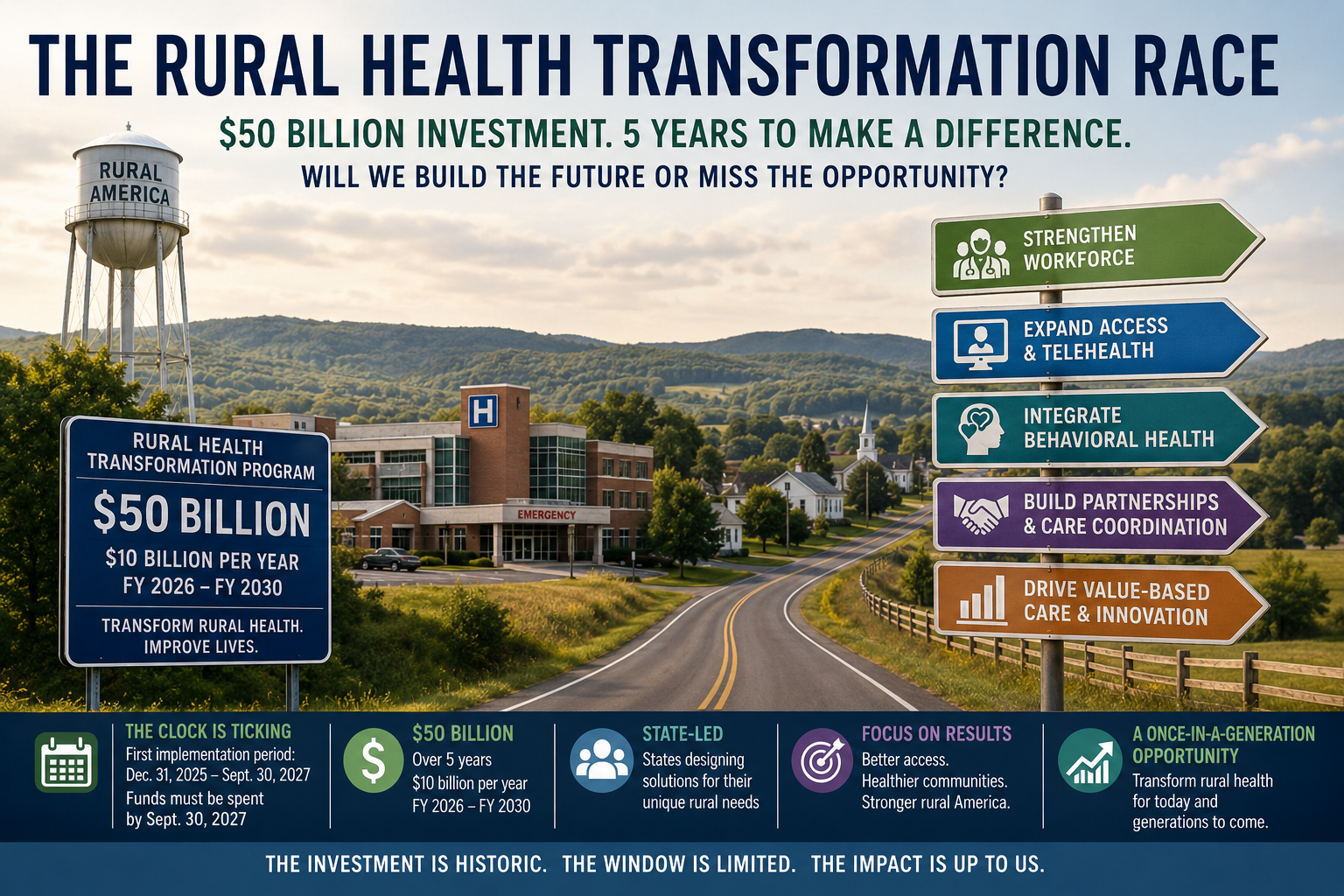
Funding from the Rural Health Transformation Program is beginning to flow to the states. The purpose is larger, but some say its success should be measured by whether it preserves access to care at rural hospitals.
The Rural Health Transformation Program represents one of the largest federal investments ever made in rural healthcare, with $50 billion authorized over five years to help states improve access, strengthen the workforce, and modernize care delivery in rural areas. Still, as states move from planning to implementation, the program faces an immediate test: Can it deliver meaningful transformation while rural hospitals continue to face mounting financial and operational pressures?
The answer is not so cut-and-dried.
Some rural health advocates view the program as an unprecedented opportunity to rethink how care is delivered in underserved communities. Others caution that although the funding can accelerate innovation, it was never designed to replace revenue that providers could lose because of Medicaid policy changes, such as work requirements.
Alan Morgan is CEO of the National Rural Health Association.
“It’s apples and oranges,” says Alan Morgan, M.P.A., CEO of the National Rural Health Association. “The Rural Health Transformation Program was created to invest in long-term innovation, not to replace Medicaid funding. Comparing the two misses the intent of the legislation.”
At the same time, Morgan acknowledged that rural providers remain deeply concerned about what lies ahead.
“The math just doesn’t work,” he said. “Nearly one-half of rural hospitals already operate at a loss, and hundreds remain at risk of closure if financial pressures continue to mount.”
Innovation versus stabilization
Congress created the Rural Health Transformation Program as part of the One Big Beautiful Bill Act that President Donald Trump signed into law on July 4, 2025. It was added in part to offset the federal Medicaid cuts in the bill, which the Congressional Budget Office estimated will total $911 billion over a 10-year period. The program provides $10 billion annually through 2030 to help states invest in new care models, workforce development, technology and other initiatives intended to improve healthcare delivery in rural areas.
Ryan Cohn is chief strategy officer at Sachs Media.
Ryan Cohn, chief strategy officer at Sachs Media, who has advised multiple states, health systems and healthcare organizations on Rural Health Transformation Program applications, says that the funding is not sufficient to offset the broader financial challenges facing rural healthcare, noting that the fund was created after lawmakers expressed concern that the Medicaid cuts could disproportionately affect rural providers, especially rural hospitals. And once CMS implemented the program, its focus shifted toward transforming healthcare delivery rather than serving as a financial backstop for struggling hospitals.
“The real question isn’t whether $50 billion is enough money,” Cohn comments. “It’s whether we can stand up a new care model fast enough to replace a hospital that may close in the next few years.”
Harold D. Miller, M.S., president and CEO of the Center for Healthcare Quality and Payment Reform, says he believes the program has the potential to preserve services in rural communities, but only if states have enough flexibility to direct funding where it is needed most.
“The $10 billion per year in new funds under RHTP [Rural Health Transformation Program] could go a long way to preventing the loss of services in rural areas if the money could be directed to the hospitals that are currently being underpaid,” Miller observes.
Instead, he adds, CMS has limited the amount states can use for direct provider payments while encouraging investment in new initiatives and technology.
“Although those investments may ultimately prove valuable, technology alone cannot replace essential healthcare services,” he says. “A phone app can’t deliver a baby, draw blood, stitch a wound or do a CT scan.”
Implementation
After months spent developing applications, states are now beginning the nuts-and-bolts work of turning proposals into operational programs.
According to Cohn, five priorities appear consistently across state plans: workforce development; telehealth and data infrastructure; prevention; new payment and delivery models; and bringing care closer to patients through mobile clinics and regional care networks.
Joe Ganley, J.D., vice president of government and regulatory affairs for athenahealth, says rural practices already operate with no room to spare. “The margin for error has essentially disappeared,” Ganley said.
Among those priorities, workforce development stands out as the dominant theme, he says. Many states are investing in residency programs, loan repayment initiatives and “grow your own” workforce strategies that encourage students from rural communities to pursue healthcare careers locally in hopes they will eventually remain there.
Technology investments also extend well beyond telehealth. Cohn says states are focusing on improving interoperability so rural hospitals, clinics and emergency medical services can share patient information more effectively. Others are proposing artificial intelligence for population health, drone delivery of medications and laboratory tests, and technology-enabled transportation programs designed to improve access to care.
Even so, implementation presents significant challenges. “This money was built to move fast,” Cohn says. Some states first had to establish entirely new administrative structures before funding could reach providers. Others continue to develop procurement processes while preparing to demonstrate measurable outcomes that will influence future funding allocations.
Sustainability also remains an open question. “A new residency slot or telehealth program only counts if it outlives the initial RHTP funding,” Cohn says. “Not every plan has a fully formed answer for what happens in year six.”
Financial pressures
Although much of the discussion surrounding the Rural Health Transformation Program focuses on future transformation, many providers continue grappling with immediate financial realities.
Joe Ganley, J.D., vice president of government and regulatory affairs for athenahealth, says rural practices already operate with no room to spare. “The margin for error has essentially disappeared,” Ganley said.
When patients delay appointments, ration medications or postpone treatment because of cost, practices experience more than declining revenue. Patients often arrive later with more complex medical needs, increasing clinical and operational burdens. “Providers feel it immediately — in no-shows, in collections and in the clinical complexity of patients who arrive later and sicker,” Ganley says.
Beyond those financial pressures, Ganley notes that rural physician practices also continue to struggle with workforce shortages and limited interoperability.
“Many rural practices operate with one to two months of reserves,” Ganley said. “That’s not a buffer — it’s a cliff. Any disruption to payment flows, whether from coverage losses, billing delays or reimbursement changes, can threaten the viability of organizations that communities depend on as their only access point for primary care.”
He adds that recruiting and retaining clinicians remains difficult, while limited interoperability makes it harder for rural providers to coordinate care and participate in value-based payment models.
Measuring success
Even as the rural health program dollars begin reaching states, many believe it is far too early to determine whether the $50 billion fund will live up to its name and change rural healthcare for the better. “I think it’s too early to determine, and that’s the honest truth,” says Morgan. Many states are only beginning to release requests for proposals and identify where funding will be directed. Although states must obligate the funds within required timelines, many providers are still waiting to learn whether they will receive support and how they will be permitted to use it. “Our members are concerned,” Morgan adds. “Are we going to receive any of the money? How are we going to be able to use the funds? There’s just a lot yet unknown.”
Miller notes the program’s success should not be measured by the number of grants awarded or technology projects launched. He says he believes there is a relatively simple way to take stock of the program.
“If hospitals continue to close and eliminate services in 2026 and 2027, even with $10 billion in new funds available each year, the Rural Health Transformation Program should be viewed as a failure,” Miller says.
In his opinion, preserving essential healthcare services — including obstetrics, emergency care and primary care — must remain the priority. Even if federal Medicaid policy changes were reversed tomorrow, many small rural hospitals would continue struggling because reimbursement from Medicare Advantage, commercial insurers and other payers often fails to cover the cost of providing care in sparsely populated communities.
The No. 1
Morgan said workforce issues remain the No. 1 concern among rural hospitals, followed closely by financial stability. He’s particularly optimistic about states using the rural health funds to create “grow your own” workforce initiatives that recruit students from rural communities, train them locally and encourage them to practice close to home after graduation.
“I think that’s going to be interesting,” Morgan says, noting that locally trained clinicians are far more likely to remain in rural communities over the long term. Cohn heard similar priorities while working with states on their applications. “Workforce development is in most states’ plans because providers everywhere are facing significant staffing shortages,” he says.
Some states are investing in rural residency programs, loan repayment initiatives and accelerated licensing efforts. Others are combining workforce initiatives with telehealth and regional partnerships designed to extend scarce clinical expertise across larger geographic areas.
Ganley notes that technology can help relieve administrative burdens, but only if it simplifies clinicians’ work rather than adding complexity.
“The practices that will sustain access are the ones that can operate efficiently under financial constraints, reduce administrative burden without growing their administrative head count and connect their patients to the right level of care regardless of where that care is delivered,” he says.
Behavioral health providers are experiencing many of the same pressures. Shannon Werb, CEO of Array Behavioral Care, says that disruptions in Medicaid coverage often interrupt outpatient behavioral healthcare, causing patients to delay treatment until they require crisis care.
“When patients lose coverage or face affordability challenges, they often delay care until their condition reaches a crisis point,” says Werb. “At that stage, the emergency room becomes the default access point for treatment.” The result, he said, is longer behavioral health boarding times, increased uncompensated care and additional strain on hospitals.
The long haul
The biggest question about the infusion of federal funds into rural healthcare is whether the investment will continue paying dividends after federal funding expires. For a problem that has been decades in the making, five years is not that much time, and $50 billion is not that much money.
Because the program is scheduled to end after five years, healthcare leaders repeatedly emphasized the importance of building sustainable systems rather than launching short-lived projects.
“The real measure isn’t dollars spent or programs announced,” Cohn says. “It’s whether a rural patient can access care in 2028 that they couldn’t get in 2025.”
Morgan agrees that outcomes, not spending, will determine whether the initiative succeeds. The first warning sign, he says, would be an increase in rural hospital and rural health clinic closures. He says life expectancy is the ultimate yardstick. “We continue to see a decline in the overall life expectancies of rural communities versus urban. At the end of the day, that’s the measure that really matters.”
A 9.5% 2027 increase would mark the fourth consecutive year of near–double-digit employer medical trend, based on data from 1,100+ employers covering 7.9 million employees.
Utilization growth, chronic-condition burden, and increased high-cost claim incidence are central contributors to accelerating plan spend across employer-sponsored coverage.
GLP-1 costs are rising as use extends beyond diabetes/obesity into cardiovascular disease, sleep apnea, and CKD, with oral options expanding eligibility and limiting employer cost-containment.
Employers funded ~82% of total plan costs in 2026, yet employees still paid $5,297 on average, driven by a 10.2% out-of-pocket increase and leaner plan designs.
Industry variation is material, with 2025–2026 employer cost growth ranging from 6.5% (health care) to 9.8% (finance/insurance), echoing KFF and Mercer trend warnings.
Aon projects a fourth straight year of near double-digit health cost growth for U.S. employers, with 2027 costs set to top $19,000 per worker.
Employer health care costs in the United States may rise 9.5% in 2027, extending a fourth consecutive year of near double-digit increases the longest such stretch since 2007, according to a recent analysis by Aon.
Employer healthcare costs could rise 9.5% in 2027, pushing the average per-employee price tag past $19,000, according to a recent analysis by the consulting firm Aon. If this happens, it will be the fourth year running that cost growth has approached double digits, a run Aon says is unmatched in its trend data since 2007. The company currently has data from more than 1,100 U.S. employers representing 7.9 million employees.
Behind the projected growth is a familiar mix of pressures, including climbing utilization of medical services, a growing share of members with chronic conditions, and more high-cost claims moving through employer plans. Specialty and GLP-1 drug spending adds another layer, which is growing as GLP-1s move beyond diabetes and weight management into cardiovascular disease, sleep apnea and chronic kidney disease. New oral formulations are widening the pool of patients who can access the drugs, which cuts against employers’ efforts to hold the line on pharmacy spend. Aon also flagged providers’ use of AI tools for clinical documentation and coding, which the firm says is contributing to higher billed charges in some cases.
“The organizations best positioned for the future will be those that can proactively identify emerging risks and take targeted action before costs escalate,” Debbie Ashford, North America Chief Actuary, Health Solutions for Aon, also said in the news release. “Health care costs are becoming increasingly difficult to manage through traditional approaches alone. Employers will need better data and deeper insights to understand where costs are rising and how they can make more informed decisions about their health care investments.”
Who absorbs the increase?
Employer health plans don’t pass every dollar of that growth on to workers. Aon’s data shows employers picked up approximately 82% of total plan costs in 2026, a share that’s held roughly steady even as the underlying cost trend accelerated. Employer costs more than doubled from 2022 to 2026: climbing from 3.7% to 8.8% in 2026, respectively.
Employees still felt it. The average worker paid $5,297 toward health care in 2026, split between $3,130 in payroll premium contributions and $2,167 in out-of-pocket spending, up from $4,909 the year before. The out-of-pocket piece grew faster than premiums, up 10.2%, which Aon attributes to both higher utilization and a shift toward leaner plan designs with more member cost-sharing built in.
The picture isn’t uniform across sectors. Aon’s industry breakdown shows a wide spread in how much employer costs grew from 2025 to 2026:
Finance and Insurance: 9.8%
Technology and Communications: 9.1%
Public Sector: 8.8%
Professional Services: 8.7%
Retail and Wholesale Trade: 7.7%
Manufacturing: 7.5%
Health Care: 6.5%
How this compares across the industry
Aon’s numbers land alongside other recent industry data pointing the same direction. KFF’s benchmark survey of employer health benefits found family premiums rose 6% in 2025 to reach nearly $27,000, a jump the group said outpaced general inflation by a wide margin. KFF has separately flagged early signals that 2026 cost trends would run even higher. Mercer and the International Foundation of Employee Benefit Plans have published similar warnings over the past year, with some industry surveys describing the coming increase as among the largest employers have faced in over a decade.
“Employers have now experienced several consecutive years of health care cost increases that are approaching double digits,” Mike Pasterick, North America Health Solutions Leader for Aon, said in the news release. “At this level, rising health care costs become much more than a budgeting challenge and influence organizational decisions from benefits strategy and employee affordability to broader workforce and financial planning priorities.”
Last week, during the U.S. Senate and House recess and back-to-school rush, media attention to healthcare was negligible. Healthcare trade media noted impressive earnings for Moderna and Bon Secours and the WSJ Journal announced a Medicare Advantage partnership between Costco and SCAN. No major Executive Orders from the White House or CMS rule changes. No major clinical breakthroughs, vaccine policy changes or lawsuits. But a couple of new reports frame the existential risk facing the industry: spending.
AON forecast for employer health spending: AON forecasts employers will see a 9.5% increase in 2027–the same as this year after increases of 9% in 2025 and 8.5% in 2024.
U.S. National Debt: The national debt officially passed the $40 trillion mark Wednesday, which includes $2 trillion this year. Note: Healthcare spending is a major contributor representing 27% of total federal spending.
The common theme in both is the steady growth of healthcare spending—faster than wages, higher than inflation and GDP growth and increasingly the result of higher prices for drugs, specialty services, facility modernization, technology and administrative overhead.
The industry’s aversion to transparency, protection of its business-to-business economics and dependence on private investment perpetuate four myths that justify its proclivity for uncontested spending:
Myth One: Healthcare utilization is the result of verifiable (true) demand despite evidence that induced demand from financial incentives is significant and unnecessary care widespread.
Myth Two: Healthcare spending above overall economic growth is necessary because demand is increasing though unit price increases for drugs, specialty care and hospital outpatient services exceed demand routinely.
Myth Three: Healthcare spending growth is unavoidable as the population ages, medical problems become more complex and clinical breakthroughs (like GLP-1 obesity drugs) are integrated in the system though the industry enjoys legal protections to insiders that limit competition.
Myth Four: Healthcare spending in the U.S. system is necessary to our performance as the world’s global leader for quality though at least 15 other systems outperform the U.S. in key measures of mortality, morbidity, life expectancy and satisfaction while spending 30-50% less per capita on healthcare.
As the midterm election November 3 nears, affordability and costs of living will be prominent in campaign rhetoric. Polling indicates healthcare costs, especially insurance premiums, prescription drug costs and hospital care, factor heavily in how voters assess promises on the campaign trail. Both parties espouse the need for systemic change in healthcare citing affordability for their reasoning. Three general solutions have found their way into this election cycle:
Price controls imposed selectively by state/federal government applied to hospitals, insurance premiums, physician services and prescription drugs.
Increased competition enacted through mandatory price transparency, constraints on consolidation and incentives based on value (price + outcome) instead of volume.
Government control of healthcare payments (single payer) to providers to align spending with budgets while lowering administrative costs for participation.
The reality is none of these is without risk, and voters are wildly misinformed about all. But there’s no doubt they’ll be on the table as a majority consensus forms around a better system. They’re sick of the status quo. They see little difference between not-for-profit and for-profit operators and want something better. They see healthcare spending increases as the product of an industry that cares about its profit first and everything else second.
Healthcare spending—contributing factors and mitigation– is a topic every organization in healthcare must address candidly and holistically. There should be no delusion that interest will subside anytime soon. Just as consumers are rewarding organizations in financial services, retail, higher education and organized religion that offer “newer, better” alternatives, the healthcare landscape will be re-defined by those that do more than opine about affordability and conduct business as usual.
I was in the 10th grade at Tyner High School in Chattanooga when Medicaid passed as Title XIX of the Medicare and Medicaid Act of 1965. It was the cornerstone of President Johnson’s War on Poverty providing federal funding to states to facilitate access to the health system Americans along with dependent children, seniors, blind, and disabled individuals with insufficient income.
Medicaid, then as now, was the understudy to Medicare. It was understandable: per capita costs for caring for seniors were three times those in Medicaid, and aging was the tsunami health officials saw. In the 60-years since, Medicare has become the arbiter for federal reimbursement in every setting where seniors received services. It has enabled hospitals and specialty care to expand and limited preventive and primary care to the bare minimum. And its version of managed care, Medicare Advantage plans, now enroll over half its 70 million enrollees. It’s ridden on the back of federal policy, while states have been left to fend for themselves in Medicaid. But that’s changing.
While Medicare has gotten the majority of attention from hospitals, physicians, insurers and drug companies historically, it is Medicaid that’s taking center stage in the U.S. health system. Here’s why:
Scale: When Medicaid was enacted in 1966, it enrolled, 4 million, or 2% of the entire population. Today, it enrolls 74 million, or 21%. Enrollment has grown as a result of three factors: changes in eligibility that states control, slower wage growth and shrinking health benefits in working class populations, and the Affordable Care Act’s federal inducement for Medicaid expansion that passed referenda in 40 states. It’s a huge program.
Clinical focus: Medicaid forces attention to mental health in communities, schools and workplaces. It is ground zero for the historic lack of integration of public health programs (i.e. housing, food security, financial insecurity) with local health services. It is an unwelcoming front door to the health system for 40% of America’s children where maternal and child health, behavioral health and essential services are unavailable. And it’s the nation’s lab for ageism, loneliness and anxiety. Notably, private Medicaid Managed Care Organizations (MCOs) are firmly seated at the steering wheel of care coordination in state Medicaid programs covering 72% of enrollees already. Long before Medicare Advantage, community-based and private MCOs were prominent in Medicaid because they’re inclined to focus on whole-person care, not just doctors and hospitals.
Structure: Medicaid forces states to prioritize investments in healthcare vs. education, homeland security, roads and parks. Medicaid forces state legislatures to regulate private managed care operators who contract to coordinate care for enrollees to assure care is evidence-based, accessible and appropriately priced and delivered. And the federal government’s financial participation enables its control of Medicaid funds to states that do not appropriate resources as it deems necessary. The collaboration or dissonance between states and federal health policies is pronounced in Medicaid.
Politics: Medicaid allows partisans in Red and Blue states to defend their positions. Democrats, for example, promote income inequality as the root cause of the health system’s lack of affordability necessitating Medicaid as an imperfect but necessary solution. They see work requirements as a GOP mechanism to reduce enrollment. Republicans, by contrast, associate Medicaid with welfare that’s beset with fraud, waste and abuse and think it a money-pit for dubious operators. And leaders in both camps acknowledge bureaucratic flaws in Medicaid but fall short in fixing them.
Much of this can be traced to deep-seeded beliefs about Medicaid that span generations. In my focus groups with working age adults, the majority believe the U.S, economic system is more challenging for lower-income, uneducated and non-white populations. A significant number associate Medicaid with ‘welfare’ and believe waste and fraud prevalent though the intensity of these views varies widely.
In my surveys, Medicaid enrollees are slightly more likely to agree the health system is broken and favor government intervention than other groups. And the majority in every insurance, age, household income and region agree the system’s unnecessarily expensive and significantly more focused on profits than patient care. They see Medicaid as part of a complex system that’s unfair, unaffordable and unnavigable.
My take:
The public’s views about Medicaid are complicated: the majority believe everyone regardless of income or insurance status should have access to the system, and there’s consensus the system in its current form will not survive. The majority of voters regardless of party label believes Medicaid needs to be fixed but no consensus on how or by whom.
Results from Medicare’s cost containment efforts—accountable care organizations, alternative-payment models, value-based purchasing, price transparency et al—have been mixed. By contrast, Medicaid initiatives in states ranging from payment integrity programs to changes in state directed payment policies have produced significant savings necessary to surviving the $1 trillion, 10-year cut to federal Medicaid funding in the Big Beautiful Bill.
Medicaid is the health system’s most important platform for applying evidence to care cost-effectively from cradle to grave.
New STAT reporting reveals the IRS is seeking back taxes from UnitedHealth Group over foreign subsidiary transactions — adding to the conglomerate’s growing list of federal headaches.
According to STAT, the IRS is “seeking to significantly increase taxable income” reported by the company during those four years, and the dispute could extend to tax years after 2020. UnitedHealth disclosed in a recent regulatory filing that it received notices from the IRS in March.
The piece notes that this is not a routine tax audit. Investigations like this (involving what is known as “intercompany transfer pricing”) are exceedingly rare and typically examine how large multinational corporations allocate profits and expenses among subsidiaries in different countries. Which could lead one to assume there is a significant amount of money involved.
UnitedHealth disputes the IRS’ findings and says it intends to “vigorously contest” the proposed adjustments. It is not yet known which of the company’s many foreign subsidiaries is involved.
Herman also got an unusual glimpse behind the curtain: STAT was copied on internal emails about how UnitedHealth should respond to his questions, including one in which spokesperson Tyler Mason said he left out an explanation for withholding IRS documents because it “sounded too defensive.”
A bit about UnitedHealth Group’s international operations
Last year, the Center for Health & Democracy released the Sunlight Report on UnitedHealth Group which documented – for the first time – 2,694 subsidiaries and affiliated entities tied to the health care titan. That vast corporate structure shows that UnitedHealth has become so much more than the insurance company folks recognize from a card in their wallet. These days, through its subsidiaries UnitedHealthcare and Optum, this giant corporation’s reach stretches far beyond traditional health insurance. It has branched into physician practices, pharmacies, pharmacy benefit management, data analytics and numerous other corners of the health care system – and the world – with more than 150 international entities in the Sunlight Report’s tally.
And many of UnitedHealth’s international entities, as of late, have become thorns in the company’s side.
Last summer, HEALTH CARE un-covered wrote about the company’s desire to unload its subsidiary Banmédica (a Latin American health insurer and health care provider that operates hospitals and medical centers) after it racked up more than $8 billion in losses and pressures at home mounted. By November 2025, UnitedHealth had struck a roughly $1 billion deal to sell Banmédica to a Brazilian private equity firm.
UnitedHealth Group, the behemoth health insurer that has steadily transformed itself into a global health care conglomerate, is now looking to offload part of that empire to appease shareholders.
While that deal has continued moving toward completion, the latest we know is that the agreement is still awaiting final regulatory approval. There is no indication that Banmédica is the foreign subsidiary at the center of the IRS investigation but the two stories underscore the sheer complexity of UnitedHealth’s corporate structure and global reach.
IRS scrutiny, under this context
Financially, at least, the company appears to have regained its footing after one of the most turbulent stretches in its history. It wowed Wall Street when it announced that its profits increased a whopping 55% during the second quarter of 2026, from $5.2 billion at the end of 2Q 2025 to $8 billion in 2Q 2026. That puts the company on track to post profits for the year north of $30 billion.
But quarterly success is not the full picture. Make no mistake, UnitedHealth already had some very real problems behind the scenes — and that’s before this latest IRS situation:
OptumRx and Optum doctors Bloomberg reported last year that the Justice Department’s criminal investigation had broadened to examine business practices at OptumRx,the company’s massive pharmacy benefit manager, as well as how the company reimburses physicians employed by its own Optum businesses.
Insulin prices OptumRx is also facing a separate challenge from the Federal Trade Commission, which accused it and the country’s other two dominant pharmacy benefit managers of using rebate practices that artificially inflated insulin list prices. That case appears to be nearing a resolution: the FTC withdrew the case against Optum from adjudication in June to consider a proposed consent agreement. OptumRx is still without a finalized deal.
None of these investigations or allegations establishes that UnitedHealth broke the law, and the company has disputed allegations of wrongdoing.
But taken together, they make for quite a contrast. UnitedHealth and its web of subsidiaries just reported another multibillion-dollar quarter at the same time that federal authorities are essentially digging through its trash — from its Medicare Advantage business and pharmacy benefit operations to, now, how it may have moved money through a foreign subsidiary for tax purposes.
P.S. — UnitedHealth Group and baseball
Last Saturday, while watching the Phillies take on the Minnesota Twins (Phillies won 9–1. Go Phils!) I (Joey) couldn’t help but notice the UnitedHealthcare-branded cushions lining the seats behind home plate. UnitedHealthcare, for those keeping track of the corporate family tree, is the health insurance subsidiary of UnitedHealth Group. UnitedHealthcare is commonly abbreviated as UHC (that’s what was on the seat cushions), while its parent company, UnitedHealth Group, is often shortened to UNH, its stock ticker.
And the joke I’m trying to make here is pretty simple: There’s no escaping UnitedHealth’s reach… not even at a baseball game!🥁
The game was at Target Field in Minneapolis, and Minnesota-based UnitedHealth Group, through its UnitedHealthcare subsidiary, has a longstanding partnership with the Twins. So while the Phillies were busy routing Minnesota on the field, UnitedHealth Group was getting plenty of airtime behind their hometown home plate. (Our premium dollars at work!)
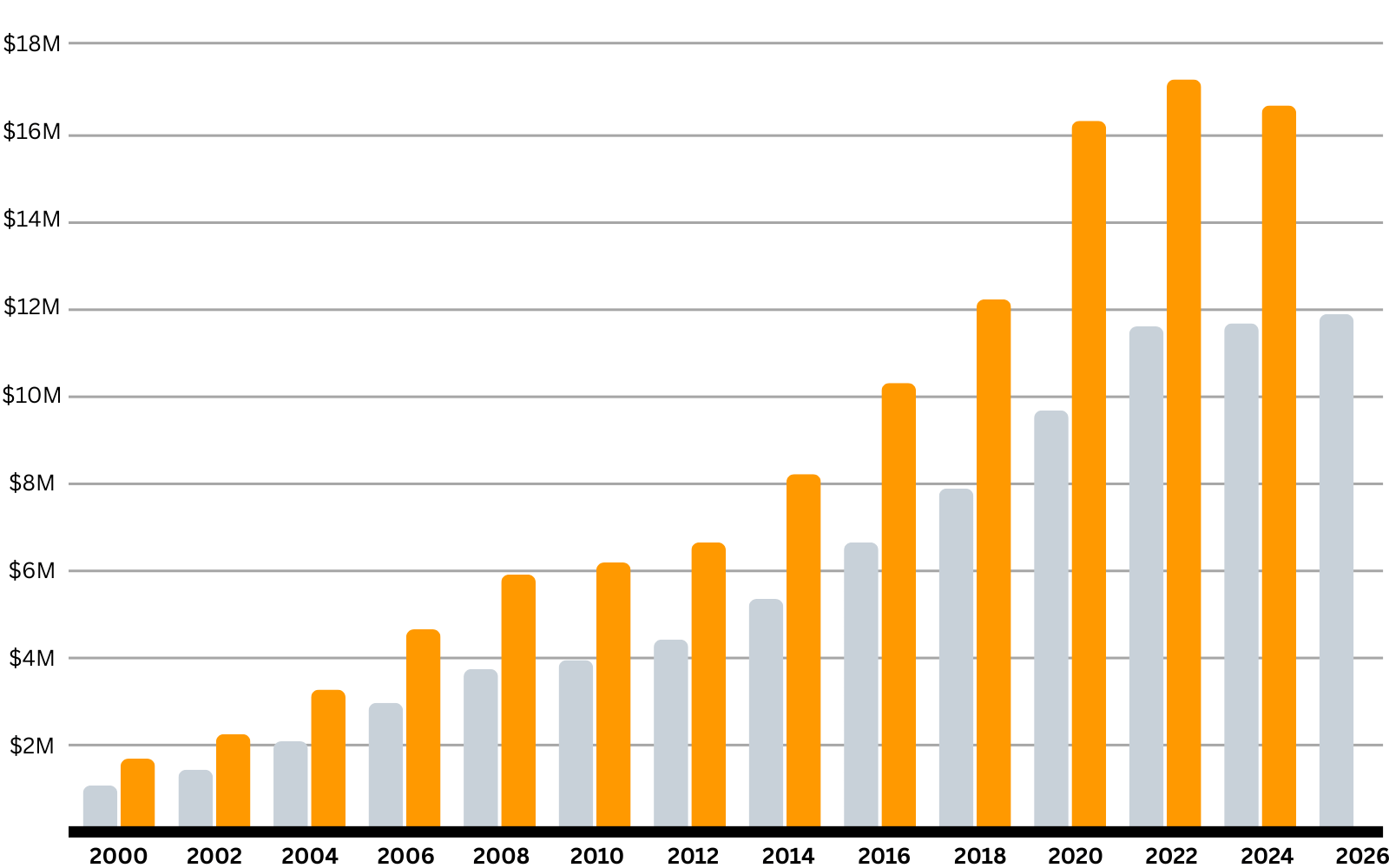
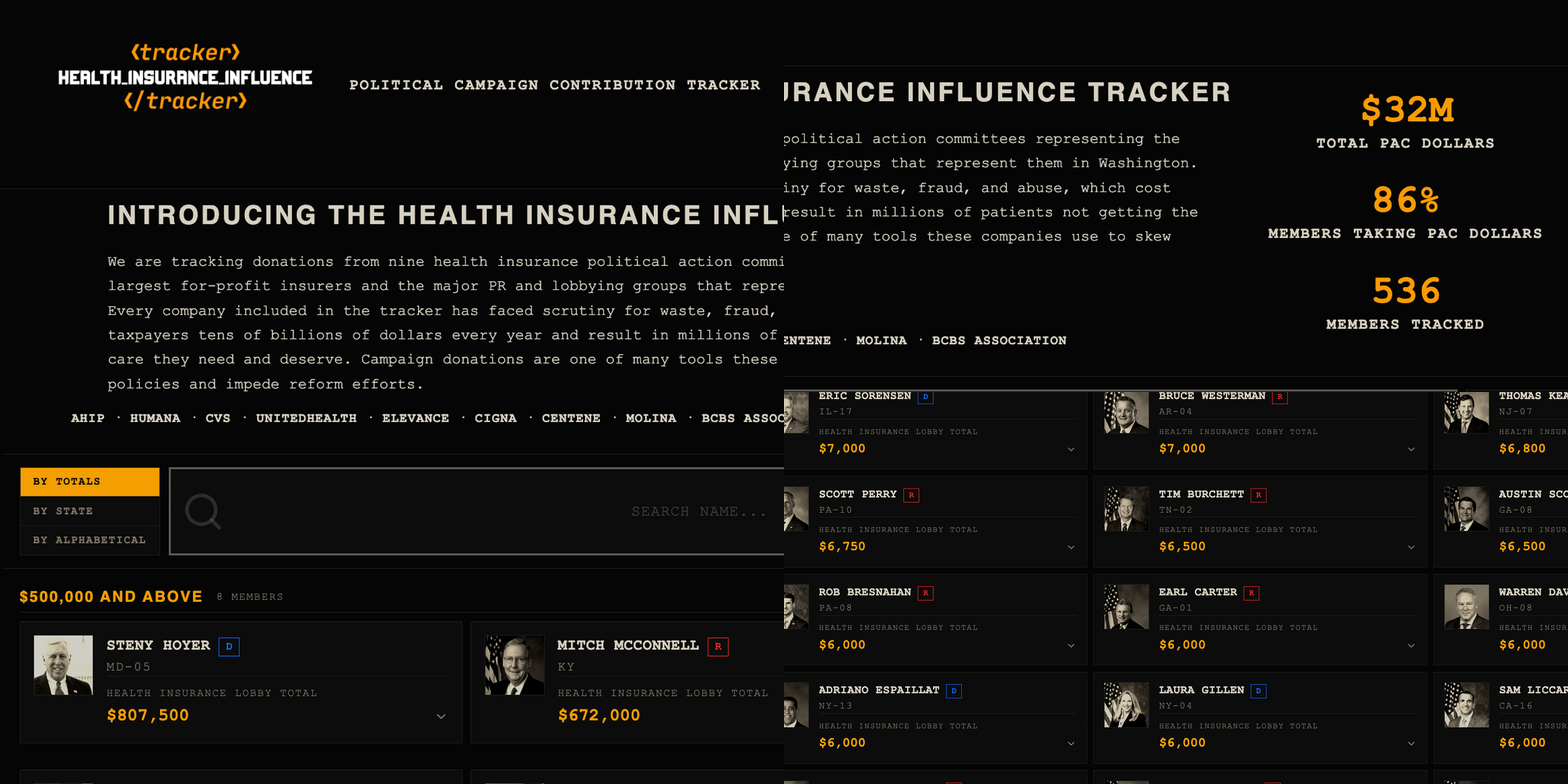
Today, the Center for Health and Democracy updated the Health Insurance Influence Tracker, a publicly available tool examining how the health insurance industry uses political contributions to build power in D.C. Since 1999, the companies captured in the tracker, representing vertically-integrated for-profit corporations like UnitedHealth Group, CVS/Aetna, Cigna, and Elevance and several of the trade associations representing them, have donated more than $100 million to campaigns, including $34.9 million to current members of Congress.
So far in the 2026 cycle, big insurers and their largest PR and lobbying groups – AHIP, the Blue Cross Blue Shield Association (BCBSA) and the Pharmaceutical Care Management Association (PCMA), which represents insurers’ pharmacy benefit managers – have donated more than $11 million toward campaigns and campaign committees, putting them on track to exceed recent election cycle totals of $15-$17 million. What we found is that the insurance industry is donating strategically to almost every ideological group: bipartisan giving dedicated to strengthening the corporate-friendly branches of each party. With health care shaping up to be one of the biggest issues in the midterms, the industry’s involvement shows the tactics they’re using to stop reform momentum before it can take hold in a new Congress.
Total Contributions by the Health Insurance Lobby by Cycle
Grey columns are contributions through May 31 of election year. Orange columns are full-cycle contribution total.
The 2026 Cycle: What We’re Tracking So Far
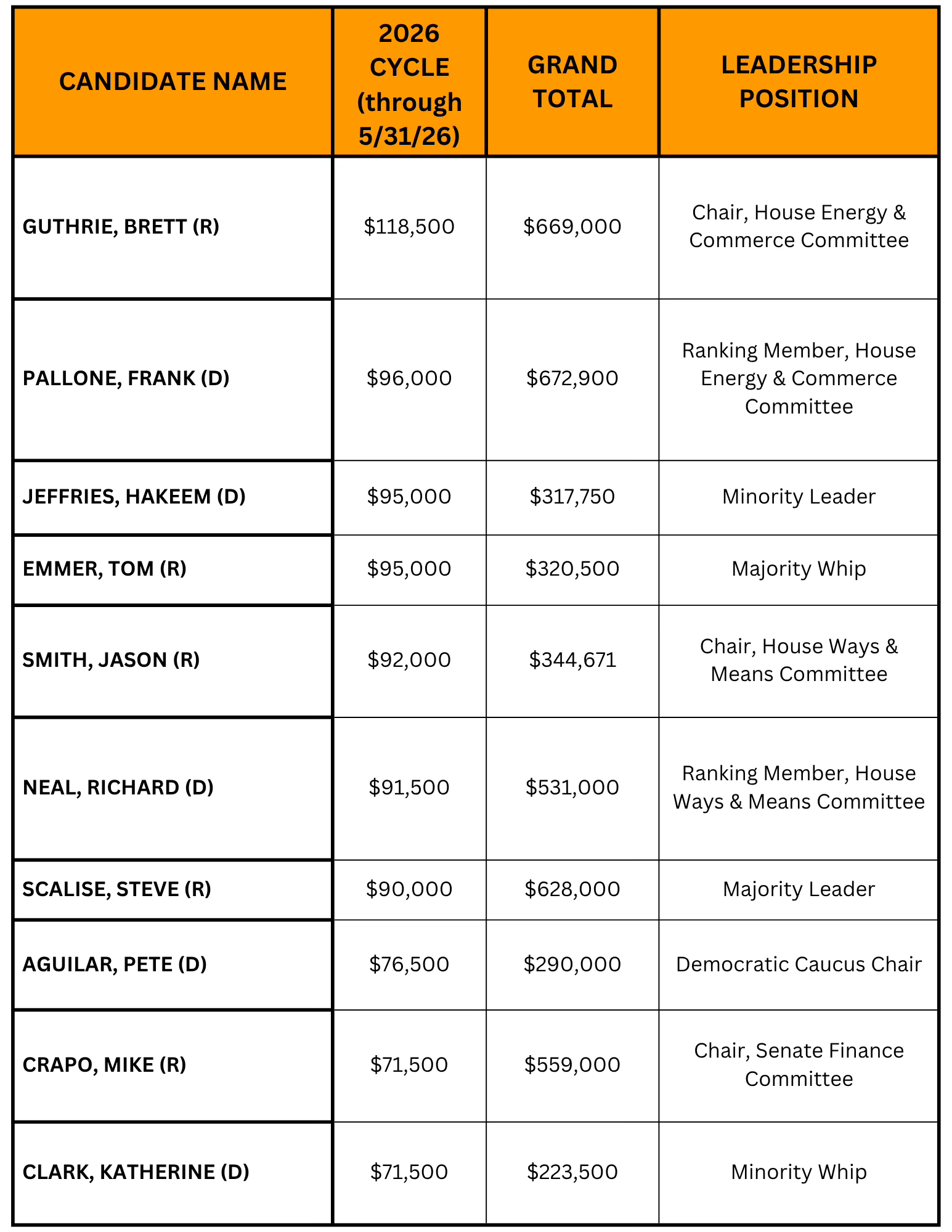
Corporate health insurers have been busy in the 2026 cycle, donating $11.91 million so far, of which $5.73 million went directly to sitting members of Congress. Many of the same patterns from past cycles are repeated here; so far since the 2024 election, ten members have received more than $70,000 from the health insurance companies, all members of Congressional or party leadership.
Similarly, we can see how insurers are making strategic bets on potential future leaders or swing votes. Senators like Maggie Hassan, currently the ranking member on the Senate Finance Committee’s Subcommittee on Health, and Brian Schatz, widely reported to be seeking a higher position in Senate leadership, have seen thousands in donations this cycle, despite not being up for re-election for another two years.
Intra-Party Influence
Insurers donated heavily to incumbents in battleground races, but have also quietly poured money into primaries, wading into several intra-party fights this cycle.* Donations to more moderate candidates, like Democrats Haley Stevens in Michigan and Angie Craig in Minnesota, and Republicans John Cornyn in Texas and Kevin Hern in Oklahoma, fit with the overall party giving: moderate party groups, the New Democrat Coalition, Blue Dogs, Republican Main Street, and Tuesday Group are continuing to see disproportionate generosity from these companies.
However, even in primaries with multiple progressives, health insurers are staking out a side, which illustrates an important difference between paying lip service to progressive health policies like Medicare for All and truly fighting for them. In Colorado’s first congressional district, incumbent Representative Diana DeGette, the ranking member of the House Energy & Commerce Committee’s Subcommittee on Health, and her opponent, Melat Kiros, both say they support Medicare for All, with Representative DeGette being a longtime cosponsor of the bill. Theoretically, support of the Medicare for All Act, a bill that would prohibit private insurance from duplicating the medical and prescription coverage offered by Medicare, is an existential threat to the health insurance industry and the candidates would not garner financial or other support from their PACs. Yet in this race, as in many others, the incumbent continued to receive significant donations from insurance PACs, suggesting that the PACs see the incumbent, although they put their name on the Medicare for All bill, as someone they would be able to count on if the legislation were to gain traction. DeGette was ultimately defeated by Melat Kiros, who made rejecting all corporate PAC money a centerpiece of her campaign.
The Center for Health & Democracy Education Fund has released the first campaign contribution tracker covering the health insurance lobby.
Voters in Missouri’s first district faced a similar choice last week. In 2024, when Wesley Bell challenged Cori Bush for the seat, the insurance industry stayed out of the primary altogether, and only two PACs donated a joint $5,000 to Bell’s general campaign in September of that year, standard for a new member without relevant committee assignments. During this cycle, the health insurance lobby poured $31,000 from six different PACs into his campaign (former Representative Bush does not accept any corporate PAC money), a clear signal of which of the two, both co-sponsors of the Medicare for All legislation, insurers believe will least harm their bottom lines. Bell won the primary with 59% of the vote.
The Health Insurance Influence Tracker only includes incumbent members of the 119th Congress. Any analysis of challengers was conducted using Schedule B data sourced from fec.gov
New data finds rapidly declining satisfaction and trust among Medicare Advantage enrollees, particularly around costs and coverage.
Americans enrolled in Medicare Advantage plans are becoming increasingly less satisfied with their coverage (and increasingly skeptical that their insurers are looking out for them) according to the new 2026 U.S. Medicare Advantage Study from JD Power.
The study found that overall satisfaction with Medicare Advantage plans fell for the second year in a row (dropping 12 points) and has dropped 41 points since 2024. On JD Power’s 1,000-point scale, the average Medicare Advantage plan now scores 611.
JD Power surveyed 14,559 Medicare Advantage health plan enrollees across 12 major markets between January and June. Researchers evaluated insurers on eight parts of the enrollees’ experience, including trust, access to health services, whether plans save them time and money, whether coverage meets their needs, customer service and how well complaints are resolved.
Satisfaction with plans’ ability to help enrollees save time and money fell 51 points. Their level of trust fell 49 points, while satisfaction with whether a plan’s coverage actually met their needs dropped 47 points.
And fewer than half — just 43% — of people enrolled in Medicare Advantage plans strongly agreed that their insurer was a “trusted partner” in their health and wellness.
One of the clearest differences between higher- and lower-performing plans came down to something relatively basic: helping people understand the insurance they just bought.
So, which plans came out on top?
JD Power did not produce one nationwide ranking of every Medicare Advantage insurer. Instead, it compared plans within 12 individual markets. Below the simple version of which insurer scored highest in each:
California: Kaiser Permanente — 665
Florida: UnitedHealthcare — 621
Georgia: UnitedHealthcare — 656
Illinois: Blue Cross Blue Shield of Illinois — 638
Kentucky: Humana — 625
Michigan: Blue Cross Blue Shield of Michigan — 676
New York: Excellus BlueCross BlueShield — 618
North Carolina: UnitedHealthcare — 645
Ohio: Aetna Medicare — 639
Pennsylvania: UPMC For Life — 689
Tennessee: Blue Cross Blue Shield of Tennessee — 690
Texas: Humana — 641
Tennessee’s Blue Cross Blue Shield plan received the highest score of any market winner, at 690, narrowly ahead of Pennsylvania’s UPMC For Life at 689. The results have also been summarized by Becker’s, which published both the highest-rated plans and lowest-rated plans in each market.
The rankings also show how much people’s experiences with national insurance companies can vary from state to state. UnitedHealthcare, for example, finished first in Florida, Georgia and North Carolina and second in Illinois, Kentucky, Texas and some other markets included in the study. Yet its Michigan plan received a score of just 571, making it the lowest-rated plan JD Power measured in that market.
Humana showed an even wider divide. It finished first in Kentucky and Texas, but its New York plan received a score of 554 — the lowest score reported across all 12 markets.
The federal government has also changed how Medicare Advantage plans are evaluated. Earlier this year, the Centers for Medicare & Medicaid Services (CMS) finalized a significant overhaul of its Star Ratings system, which is supposed to measure the quality and performance of Medicare Advantage and Part D plans. Insurers watch the measures closely because they affect bonus payments they receive. CMS claims the changes will simplify the ratings and focus them more heavily on clinical care, health outcomes and patient experience. The changes include eliminating 11 measures — several related to complaints, appeals and call-center performance — and abandoning a planned Health Equity Index reward intended to incentivize better performance for certain enrollees, including people who are low-income, disabled or dually eligible for Medicare and Medicaid. Instead, CMS will retain its older reward system for plans that perform consistently well across measures.
CMS argues that some of the measures being eliminated are administrative, duplicative or do little to distinguish one plan from another, and that trimming them will make Star Ratings more useful to beneficiaries. But the changes have drawn criticism from Democratic lawmakers and Medicare consumer advocates, who argue that CMS is removing some of the very measures that can help hold insurers accountable for how they treat patients.
In an April letter to CMS Administrator Mehmet Oz, Sen. Elizabeth Warren and seven other Democratic senators specifically objected to the removal of administrative measures that track complaints involving the timeliness or accuracy of prior authorization decisions. The senators argued that weakening those measures is particularly concerning at a time when Medicare Advantage insurers are facing scrutiny over care denials and billions of dollars in estimated overpayments from the federal government.
The letter also pointed out that Oz has publicly acknowledged that prior authorization can significantly delay care and erode trust in the health care system, yet CMS is removing some Star Ratings measures related to prior authorization while the administration is simultaneously testing A.I-powered prior authorization in traditional Medicare via the Wasteful and Inappropriate Service Reduction (WISeR) program.
The Medicare Rights Center, an advocacy organization representing Medicare beneficiaries, has criticized CMS’s decision to scrap the Health Equity Index before it ever took effect and return to the previous reward factor. The group also objected to CMS eliminating a requirement that plans notify members midway through the year about supplemental benefits they are eligible for but have not used.
And the rollback extends beyond the Star Ratings themselves. The final rule eliminates requirements for Medicare Advantage utilization-management committees to include a health-equity expert, analyze how their policies affect certain populations and publicly report those analyses.
The Alliance of Community Health Plans, which represents nonprofit regional health insurers, praised CMS for eliminating the Health Equity Index and said the broader Star Ratings changes would shift the program away from “documentation and paperwork” and toward patient experience and health outcomes.
For insurers, there is a lot of money riding on those Star ratings. CMS estimates that Medicare Advantage plans will receivemore than $13 billion in additional federal payments next year — even as the government adjusts how plans are scored (and paid) and results like JD Power’s get released. That is in addition to the $76 billion in overpayments that MedPAC, an independent organization that advises Congress on Medicare issues, says the government is paying Medicare Advantage insurers this year alone.
The JD Power results, however, offer another way of looking at the program: not simply whether insurers are meeting government quality metrics, but whether the people enrolled in their plans actually feel that the coverage is working for them. And by that measure, satisfaction is moving fast in the wrong direction.