Hospital CEO turnover remained above last year’s pace through the first half of 2026 even as departures across industries decreased, continuing a trend that emerged earlier this year.
KEY TAKEAWAYS
While CEO departures across U.S. companies fell 26% during the first half of 2026, hospitals recorded an 8% increase, making healthcare one of the few sectors still experiencing elevated leadership turnover.
Increased hospital CEO exits during the first quarter carried into the first half of 2026, suggesting the rise in turnover has become more sustained.
As leadership changes continue at a higher rate than in most industries, hospital boards face greater pressure to strengthen executive pipelines and preserve continuity.
The wave of CEO departures that hit corporate America over the past two years has largely stabilized. Hospitals, however, continue to move in the other direction.
A report from Challenger, Gray & Christmas found U.S. companies announced 920 CEO exits during the first half of 2026, down 26% from 1,235 departures during the same period last year, while hospitals recorded 74 CEO exits through June, compared to 68 during the first half of 2025, for an increase of more than 8%.
The contrast suggests the spike in hospital leadership turnover that emerged during the first quarter has extended into a larger trend.
For June, hospitals announced 10 CEO departures, down from 17 during the same month last year. Earlier months produced increased activity, with 16 exits in March, 16 in April, and 14 in May.
Most other sectors, conversely, have experienced significant year-over-year declines in CEO turnover. Government/not-profit, which has announced the most exits over the past two years, saw departures drop from 256 through the first half of 2025 to 247 through June 2026.
The industries that also dealt with an uptick in year-to-date turnover were aerospace/defense (13 in 2026, eight in 2025), insurance (20, 17), media (15, 12), and pharmaceutical (22, 17), with none of those sectors coming close to the volume seen with hospitals.
The data reveals how much of an outlier hospital CEO turnover has been and the effect that financial pressures, workforce challenges, and policy changes have had on executive leadership.
For hospital boards, persistent and elevated turnover increases the importance of succession planning as a priority rather than a contingency.
Now and going forward, boards may place greater emphasis on developing internal leadership pipelines and maintaining continuity during executive changes.
“Boards continue to hold onto the leaders they have rather than reaching for change, and the first-half pace now sits a full quarter below last year,” Andy Challenger, labor expert and chief revenue officer for Challenger, Gray & Christmas, said in a statement. “After two years of elevated turnover, companies are prioritizing stability.”
As hospitals and health systems flatten their organizational structures to control costs, they risk weakening the pipeline that develops future leaders.
KEY TAKEAWAYS
Leadership development has become a recurring priority in conversations with hospital CEOs as workforce challenges evolve beyond staffing shortages.
Administrative restructurings are reducing middle management roles, creating fewer opportunities for emerging leaders to gain operational experience.
Hospitals need to treat leadership development as a workforce strategy and invest more intentionally in preparing the next generation of decision-makers.
One topic that has been part of nearly every conversation I’ve had with hospital and health system CEOs over the years has been the clinician workforce shortage. But as we’ve moved further into the post-COVID-19 era and workforces have somewhat stabilized, I’ve noticed another workforce challenge emerging that is eliciting real long-term concern among organizations: the lack of a leadership pipeline.
Hospitals are being forced to reckon with the next workforce question. After recruiting and retaining clinicians through a period of unprecedented disruption, who will prepare the next generation of leaders?
I’m not talking about leadership capacity at the highest levels, although elevated hospital CEO turnover and overall C-suite churn are major threats to organizational stability in their own regard. That’s a conversation for another day. The potential leadership gap that I’m referring to resides more in the middle of organizations, where positions are increasingly being hollowed out and deemphasized, lessening opportunities for future leaders while removing layers of on-the-ground contact with frontline workers.
During my interviews with hospital CEOs, leadership development has continuously surfaced as a priority. Organizations are thinking about how to develop managers, strengthen clinician leadership, and create pathways for emerging leaders to take on greater responsibility.
At the same time, hospitals are making tough calls around their administrative structures to mitigate financial pressures, with labor costs often the biggest driver of rising expenses. Over the past year or so, I’ve covered restructuring after restructuring. The details change, but the pattern that remains fairly consistent is that the positions being eliminated often sit between frontline caregivers and the executive suite.
It’s understood why those positions are the ones on the chopping block. Having leaner organizations where the talent is concentrated on the front lines and at topmost levels makes sense when resources are limited. But while the balance sheet may benefit in the short term, the consequences of “The Great Flattening” are likely to be felt when today’s emerging leaders have fewer opportunities to become tomorrow’s executives.
“On the people side, we’re such a labor-intensive business, the temptation is always if you have economic issues, you look at what levers you can pull,” Hereford said. “You start to say, ‘Okay, well people, that’s a huge expense.’ It is, but if you put people in a bad system and then you blame the people, that’s not an equation for success. So we concentrate a lot more on the system.”
“That’s the that’s the danger, right, is you make too many cuts on the people side and then you actually damage your ability to do the things you’re there to do. And we’re trying to be very careful about making sure that we don’t make those kinds of changes.”
The Need for Intentional Leadership Development
That tension—between hospitals pursuing restructurings and the downstream costs on leadership—is not exclusive to healthcare, of course. This is happening across corporate America.
I’ve also wondered if the flattening of workplace hierarchies accelerates leadership development by placing more power and responsibility on all employees, not just managers.
However, the stakes in healthcare differ wildly from other industries. There’s a fine line between honing the leadership skills of a working clinician and overburdening someone who is already prone to burnout. Without specific opportunities for clinicians to willingly take on leadership duties, development can become more fragmented and random.
If flatter organizations are here to stay, there has to be more intentionality with leadership development. Without those management layers, it’s incumbent on CEOs and C-suites to more directly invest in emerging leaders. Succession planning shouldn’t be limited to the top of the organizational chart.
It also means recognizing that leadership capacity is a workforce issue. A hospital can address staffing challenges and still be on the back foot if it doesn’t have enough leaders prepared to guide employees through change.
Healthcare has spent years focused on having enough people to provide care. Going forward, I’m convinced it requires equal attention on preparing the people who will lead those teams.
One of the most impactful leadership tools isn’t a new technology, consulting framework, or operational initiative. It’s being human.
Hospital and health system leaders spend countless hours reviewing financial dashboards, quality metrics, staffing ratios, and strategic plans. Yet one of the most impactful leadership tools is much more simple: lunch.
Yes, as in food and conversation. Specifically in this case, a simple practice called “Check-ins with Charles.”
At our June 2026 HealthLeaders CEO Exchange in Avon, Colorado, some of healthcare’s top executives gathered for an honest conversation about leadership, culture, financial performance, and the future of the industry.
Yet one of the most compelling ideas shared that afternoon (and that had all the other CEOs rapidly engaging) had nothing to do with technology, reimbursement models, or operational restructuring. It was Williams’ leadership initiative “Check-ins with Charles.”
The concept is remarkably simple. On a regular basis, Williams invites a randomly selected group of employees—from nurses and environmental services staff to finance professionals and administrative team members—to an informal Chick-fil-A lunch. There is no PowerPoint presentation. There are no scripted talking points. There is no formal agenda. The purpose is simply to listen.
As Williams explained during the discussion, the impact has gone far beyond an hour spent sharing a meal.
“When that email goes out,” he told the group, “it’s not that guy, it’s Charles.”
That distinction may sound small, but in today’s healthcare environment, it represents something much larger: trust.
Healthcare executives spend enormous amounts of time analyzing financial statements, reviewing quality metrics, discussing workforce shortages, and developing strategic plans. Those activities are essential. But as the CEO Exchange conversation repeatedly demonstrated, strategy only succeeds when people believe in the leaders asking them to execute it.
Trust Before Strategy
Healthcare leaders often focus on execution. We talk about operating margins, revenue cycle performance, patient experience scores, physician productivity, employee retention, and quality outcomes.
Those metrics matter, but execution doesn’t begin with dashboards. It begins with trust.
One of the recurring themes throughout the CEO Exchange was that organizations often fail to communicate proactively because leaders and employees simply don’t know one another well enough. Everyone is busy. Calendars are full. Meetings dominate the day. Yet when leaders become disconnected from the frontline, small problems stay hidden until they become expensive crises.
Williams described how “Check-ins with Charles” has become one way to eliminate that disconnect.
The informal lunches allow employees to speak openly in a setting where titles disappear. Clinical and non-clinical staff have an opportunity to ask questions, offer suggestions, and discuss concerns directly with the CEO.
He complements those lunches with another simple communication strategy: a monthly three-minute video message. Sometimes the videos are intentionally lighthearted—wearing a Valentine’s shirt covered in hearts or joking with employees—to demonstrate vulnerability and approachability.
The objective isn’t entertainment, it’s accessibility, and employees stop seeing “the president” and begin seeing a person.
That shift has produced measurable results.
Williams shared that following these consistent communication efforts, his organization achieved the highest employee engagement survey participation rate in its history.
Participation itself isn’t the end goal, but it is an important indicator. Employees generally do not take time to provide honest feedback unless they believe leadership is genuinely listening and prepared to act on what they hear.
Communication Is Operational Strategy
Several executives around the table reinforced the same lesson with their own experiences.
One CEO of a health system in Connecticut described taking over responsibility for revenue cycle despite coming from a nursing background. Rather than pretending to understand every technical aspect of billing and coding, she gathered everyone into one room and admitted what she didn’t know.
Many of those employees had worked in the same building for years but had never truly collaborated.
Together, they established shared expectations, defined key performance indicators, and began meeting regularly.
The results were dramatic.
Claim denials declined significantly. Departments that previously blamed one another started solving problems together. Frontline registration staff, physicians, coding teams, and revenue cycle leaders finally understood how each person’s work affected the others.
The improvement didn’t begin with a new software platform. It began with communication.
Another executive discussed regularly spending half a day shadowing frontline employees. Dressed in scrubs, he works alongside environmental services, nurses, and other team members—not as a symbolic exercise, but as a learning opportunity.
Those interactions consistently reveal operational problems that never surface in executive conference rooms.
Employees become comfortable sharing frustrations, identifying inefficiencies, and suggesting improvements because the hierarchy has temporarily disappeared.
Another participant emphasized that finance leaders should spend time in clinical environments, while clinicians should gain greater appreciation for financial decision-making. When each group understands the other’s daily challenges, collaboration replaces conflict.
As one executive noted, communication is often the bridge between operational excellence and financial performance.
The Hidden ROI of Listening
Communication is frequently categorized as a ‘soft skill,’ and honestly my boss always told me to stay away from these soft stories, but the executives at the CEO Exchange argued exactly the opposite.
Strong communication produces measurable business outcomes.
Stronger patient experiences driven by more engaged caregivers
These observations align with broader workforce research. The firm Gallup has consistently foundthat highly engaged business units outperform less engaged teams across profitability, productivity, turnover, safety, absenteeism, and customer satisfaction. While healthcare has its own unique challenges, the underlying principle remains the same: Engaged employees produce stronger organizational performance.
The roundtable offered numerous examples.
Finance leaders make better decisions after seeing clinical operations firsthand.
Clinicians become more thoughtful stewards of organizational resources when they understand how financial performance affects future investments.
CEO Turnover Comes at a Cost
The conversation eventually shifted to another challenge facing healthcare organizations: executive turnover.
The executives argued that frequent leadership turnover carries enormous organizational costs.
Every leadership transition requires employees to learn a new leadership style, interpret new priorities, and adapt to another strategic vision.
One executive described the experience as traumatic for organizations.
Instead of concentrating on executing strategy, employees spend valuable time trying to understand the expectations of the incoming CEO.
Another participant observed that boards are often searching for a “silver bullet” during difficult financial periods, replacing leaders before long-term strategies have time to mature.
The result can be an endless cycle of organizational resets.
Several executives pointed to health systems where senior leaders have remained in place for more than a decade as examples of how leadership stability creates a competitive advantage.
Williams discussed Baylor Scott & White’s intentional focus on developing internal leadership pipelines. Potential future presidents and chief operating officers are paired with experienced mentors well before succession becomes necessary, ensuring continuity and preserving organizational culture rather than forcing each new leader to reinvent it.
Culture Isn’t Built in the Boardroom
Perhaps the most memorable story shared during the discussion came from another longtime hospital CEO.
While ordering lunch in the cafeteria, he asked for a very small salad.
The cafeteria employee smiled, placed a single piece of lettuce into the bowl, and asked, “Is that small enough for you?”
Rather than feeling disrespected, he viewed it as one of the proudest moments of his career.
The interaction demonstrated that an employee felt comfortable enough to joke with the CEO.
There was no fear, there was trust.
That, the group agreed, is what culture looks like.
Not mission statements.
Not values posters hanging in hallways.
Not speeches from the executive suite.
Culture is built through everyday interactions that convince employees they are seen, heard, respected, and safe enough to speak honestly.
Leadership That Listens
Healthcare continues to face unprecedented pressure—from workforce shortages and financial uncertainty to AI, rising consumer expectations, and increasing regulatory complexity.
No CEO can personally solve every challenge facing a modern health system.
Every CEO, however, can create an environment where employees feel comfortable identifying problems early, collaborating across departments, and contributing ideas before issues become crises.
That is the real lesson behind “Check-ins with Charles.”
It isn’t really about Chick-fil-A or even about lunch. It is about replacing hierarchy with humanity.
The conversations in Avon made one thing abundantly clear: Organizations that invest time in authentic communication build trust. Trust strengthens culture. Strong cultures execute strategy more effectively. And better execution ultimately produces stronger financial performance.
For healthcare leaders searching for a competitive advantage in an increasingly complex industry, one of the highest-return investments may not be found in the next technology platform or consulting engagement.
It may simply be sitting down at a table, sharing a meal, and asking one question:
Hospital and health system executives at the HealthLeaders CEO Exchange prioritized growth and governance for a changing healthcare landscape.
KEY TAKEAWAYS
Hospital CEOs are investing in ambulatory care through integrated access points and strategic partnerships that expand services outside the hospital campus.
Leaders are standardizing enterprise functions where it creates value while preserving local decision-making so hospitals can respond to the needs of their communities.
Leadership continuity and succession planning are vital as organizations prepare for a future that looks considerably different than the past.
The HealthLeaders CEO Exchange offered a window into how hospital and health system leaders are viewing strategy during a time of unavoidable industry transformation.
Across two days of roundtable discussions in Avon, Colorado, executives shared approaches for remolding their organizations around care models that emphasize access, leadership structures that give local teams room to execute, and partnerships that create value for patients and communities.
Here’s a look at the conversations that took place and what they mean for the immediate future of hospital decision-making.
Growth follows the patient
Ambulatory care strategy has become imperative for providers wanting to grow in the current environment in which care isn’t bound by the hospital’s four walls.
Several CEOs spoke about creating integrated care sites that combine primary care with behavioral health, dental services, rehabilitation, and optometry. Others discussed hybrid emergency department and urgent care facilities that simplify access for patients who are unsure where to seek treatment. Mobile care services and virtual specialty were also highlighted as organizations look for ways to expand access across urban and rural markets.
One executive described an approach that challenged years of competition between neighboring organizations.
“Historically, the CEOs hated each other,” the executive said. “When she and I both became CEOs, within six months of each other, we were like, ‘Let’s start a different path.'”
The relationship led to a shared walk-in clinic that has since become a wider ambulatory strategy across the region. The model increased access, generated revenue for both organizations, and strengthened relationships with community leaders, according to the executive.
Another participant described their organization’s philosophy as “no wrong door,” with patients entering the system through whichever service best fits their needs while gaining access to additional care during the same visit.
The discussion reflected how executives are focusing on bringing care closer to patients through flexible access points that improve convenience and support long-term financial performance.
Balancing scale and local leadership
As health systems continue to grow, CEOs are rethinking ways to preserve decision-making close to the communities they serve.
Executives at the Exchange described centralizing functions such as marketing and revenue cycle while allowing local leaders to shape implementation based on market conditions. Several attendees said enterprise standards provide direction, though each hospital requires flexibility to address its workforce and patient population.
One executive summarized their philosophy in three words: “Implementation is local.”
That perspective echoed an earlier discussion on systemness, where leaders debated which functions benefit from standardization and which remain stronger when managed locally. Participants acknowledged that scale can improve efficiency, though additional layers of governance can also slow decisions and weaken ties to the community.
Accountability starts with setting clear expectations for local leaders and sharing what works across the organization.
Leadership evolves with the organization
Roundtables at the Exchange also revealed how leadership expectations continue to change.
Executives spoke about building stronger relationships across finance, operations, and clinical teams through greater transparency and more frequent collaboration. Several described spending time with frontline employees and creating environments where staff feel comfortable raising concerns. Those efforts, participants said, strengthen trust and improve execution.
Leadership continuity also emerged as an important advantage. Executives said longer CEO tenures help strengthen relationships with physicians, employees, community organizations, and elected officials while giving strategic initiatives time to mature.
When change does happen, internal succession planning can mitigate organizational turbulence, with leadership development serving as an investment in long-term organizational stability.
Ultimately, one message became clear by the end of the Exchange: Hospital leaders are looking well past incremental improvements.
“The hospital models are dead,” a rural hospital executive said. “Everybody’s trying to do CPR on the old model versus thinking about what’s the new model.”
Whether it’s ambulatory expansion, virtual care, partnerships, leadership structures, or organizational design, CEOs are strategizing through the lens of what comes next.
Health insurers love to talk about profit margins. But return on equity — the metric investors actually use—reveals an industry generating outsized returns.
When UnitedHealth Group reported its first-quarter 2026 results, it disclosed something that didn’t make many headlines: an annualized return on equity of 26.2%.
That number — not the profit or operating margin — is what Wall Street uses to evaluate whether a business is making good use of the money investors have put into it. And by that measure, UnitedHealth wasn’t just profitable, it was posting returns that outpace the broader S&P 500, dwarf most of its sector peers, and rival industries that Americans actually regard as highly lucrative.
So why do we keep hearing about margins?
Because margins are the health insurance industry’s favorite misdirection. And understanding the difference between the two figures is essential to understanding why the health insurance business is far more profitable — and far more extractive — than its lobbyists want you to know.
What Margin Actually Measures
Profit margin measures how many cents of profit a company keeps for every dollar of revenue that flows through it. For a health insurer, revenue is primarily premiums and fees — the massive river of money that employers, individuals, and government programs pour in every month to pay for coverage.
That river is enormous. In 2025, UnitedHealth took in $447.6 billion in revenue — nearly half a trillion dollars. A 5% margin on $447.6 billion is still a lot of profit. But when industry defenders cite the 5% figure, they’re counting on you to hear “five cents on the dollar” and think health insurers are not all that profitable.
(Note: In its first quarter 2026 earnings press release, the company reported that in the first quarter of 2026, its insurance division, UnitedHealthcare, had an operating margin of 6.6% and that Optum, the division that operates a huge PBM and hundreds of physician practices and other clinical operations across the country, had an operating margin of 5.1%. The press release didn’t even mention return on equity. You have to look at the company’s 10Q filing with the SEC to find the 26.2% ROE disclosure.)
I know this tactic well because I used it myself. During my nearly sixteen years at Cigna, where I was vice president of corporate communications, one of my standard moves was to cite the most recent margin figure when talking to journalists or writing talking points for our Washington lobbyists to use with members of Congress and their staff. It was technically accurate yet deeply misleading — exactly the combination that makes for effective spin. The goal was to create the impression that Cigna was a low-profit business barely keeping the lights on, when the return on equity told an entirely different story. I never brought up ROE and can’t recall a reporter asking about it.
What Return on Equity Actually Measures
Return on equity — ROE — measures how much profit a company generates relative to the money its shareholders have invested. It is essentially a report card on management’s ability to turn the money shareholders have invested into earnings. Investors and analysts use it to evaluate whether a business is creating or destroying value.
By this measure, UnitedHealth’s performance is striking:
Q1 2026: 26.2% annualized ROE
Full-year 2023: 27.0% ROE
Full-year 2022: 27.2% ROE
Even in 2025 — the year the Medicare Advantage cost crisis hammered earnings across the industry — UnitedHealth’s full-year ROE came in at 12.8%, which is still above the median for health care support services companies (roughly 9.9%, per the Stern NYU January 2026 sector database).
To put 26–27% in context: the S&P 500 long-run average ROE runs in the 14–18% range. The general and broader insurance sector average is around 19%. The health care support services sector average — the category that most directly captures managed care companies — sits at just under 10%. UnitedHealth, in its normal operating years, is generating returns nearly three times that sector median, making it one of the most capital-efficient, high-return enterprises in American corporate life.
How a Relatively Small Margin Becomes a Massive Return
Health insurers operate with enormous revenue bases relative to their equity. When a company takes in close to half a trillion dollars in revenue but only has around $100 billion in shareholders’ equity on its balance sheet, even a modest net margin generates a big return on the invested capital.
In the insurer’s case, the “borrowed” capital isn’t debt in the traditional sense — it’s the float. Premiums come in at the beginning of the month. Claims go out throughout the month and into the next. That gap — the time between collection and payment — allows insurers to invest billions in securities, real estate and other holdings, earning investment income on money that technically belongs to the people whose claims haven’t been paid yet. UnitedHealth consistently earns more than $1 billion in investment income every quarter. It made $1.1 billion on its investments in the first quarter of this year and $1.0 billion in the same quarter last year. In 2024, when the company made $34.4 billion in earnings from its operations, its investment income totaled $5.2 billion.
This means that the company’s business model compounds the ROE advantage at every level: high premium volume, leveraged equity base, investment float.
UnitedHealth’s ROE advantage is even clearer when you look across the sector. Humana — which has been savaged by Medicare Advantage losses and is now posting a last-twelve-months ROE of roughly 6.8% — shows what happens when the underlying business goes wrong. Elevance and Cigna, facing similar MA cost pressure through 2024 and 2025, have also seen their returns compress. (In a move that likely will boost ROE, Cigna last year sold all of its Medicare Advantage business.)
But here’s what’s important to understand about those compressed numbers: Not a single major insurer posted an actual loss for the full year 2024. As one observer noted, the investor panic of 2025 was triggered not by losses but by smaller profits than expected. Elevance’s stock dropped 20% in two days when the company announced it expected to earn $5.4 billion instead of $6.4 billion. In any other industry, $5.4 billion in annual profit would not be considered a crisis.
UnitedHealth’s annualized 2026 ROE of 26.2% — reported even as the company is under federal criminal investigation — suggests the underlying earnings machine remains intact beneath the turbulence.
What the Sector Data Actually Shows
The NYU Stern sector database, updated as of January 2026 using data across thousands of U.S. companies, puts the managed care picture in relief:
UnitedHealth’s historical 27% ROE places it at or near the top of all of these categories — not just its own sector, but across the American corporate economy (with the exception of some of the biggest tech companies, whose ROEs are consistently at the very top). The company that processes your prior authorization denial is generating returns that rival the most profitable financial services firms in the country and even has a greater return than most pharmaceutical companies.
A December 2025 analysis by Milliman, an actuarial firm, made explicit what the ROE data implies. Examining the spread between for-profit and nonprofit health insurers, the analysts found that for-profit companies hold less capital and surplus relative to their premium volume — and that this “additional leverage leads to an even higher return on equity than their nonprofit and not-for-profit counterparts.”
What that means is that for-profit insurers have engineered their balance sheets to maximize the return on every dollar of equity, using premium float and leverage, in ways that nonprofit plans structurally cannot replicate.
Why This Matters for Policymakers
The margin talking point is not merely misleading — it is strategically deployed to block reform.
When Congress considers capping insurer profits, or lowering Medicare Advantage overpayments, or modifying and strengthening the Affordable Care Act’s medical loss ratio requirements, the industry’s first move is to present itself as a low-margin business operating on thin ice.
The margin talking point says: don’t look at us, we’re barely getting by. The ROE data gives the lie to this. A company earning 26% on equity is not on thin ice. It is extracting premium value from the health care system at a rate that most American industries can only envy — and doing so while denying claims, managing risk scores, and fighting every form of regulatory oversight.
A wave of coordinated lawsuits is transforming the No Surprises Act’s arbitration system into a battlefield where insurers seek to intimidate physicians, rewrite the law and consolidate control.
As I have written, Congress passed the No Surprises Act (NSA) to safeguard patients from unforeseen medical expenses and establish a neutral, independent dispute resolution (IDR) process for payment conflicts between insurers and out-of-network providers. That design was meant to replace brinkmanship with an independent referee. What Congress designed as a neutral arbitration system is now being challenged by Big Insurance through coordinated litigation designed to narrow, intimidate, and ultimately reshape the law.
Major insurance conglomerates — including UnitedHealthcare entities, Elevance/Anthem affiliates and Blue Cross Blue Shield plans — have launched a coordinated series of federal lawsuits against providers, hospitals, and revenue-cycle vendors who have used IDR at scale. Employing nearly identical language, legal arguments, and allegations, these lawsuits are not isolated ordinary litigation. It is lawfare.
Narratively, these suits recast lawful engagement in the NSA’s IDR process as “abuse,” but functionally they are designed to intimidate physicians from seeking NSA protection. A Pennsylvania suit from UnitedHealthcare against NorthStar Anesthesia presents the most urgent and perilous threat to independent physicians. If Unitedhealthcare prevails, insurers will be able to obtain judgments of fraud against physicians who incorrectly file NSA disputes. The effects of this will be catastrophic for independent physician practices, who cannot afford to litigate against billion dollar behemoths that have armies of lawyers on staff and retainer.
If successful in these efforts, the insurers will further weaken physician practices and make them ripe for acquisitions, continuing the dangerous path of vertically integrated insurance corporations – and the further decimation of independent physician practices.
The “Flooding” Myth
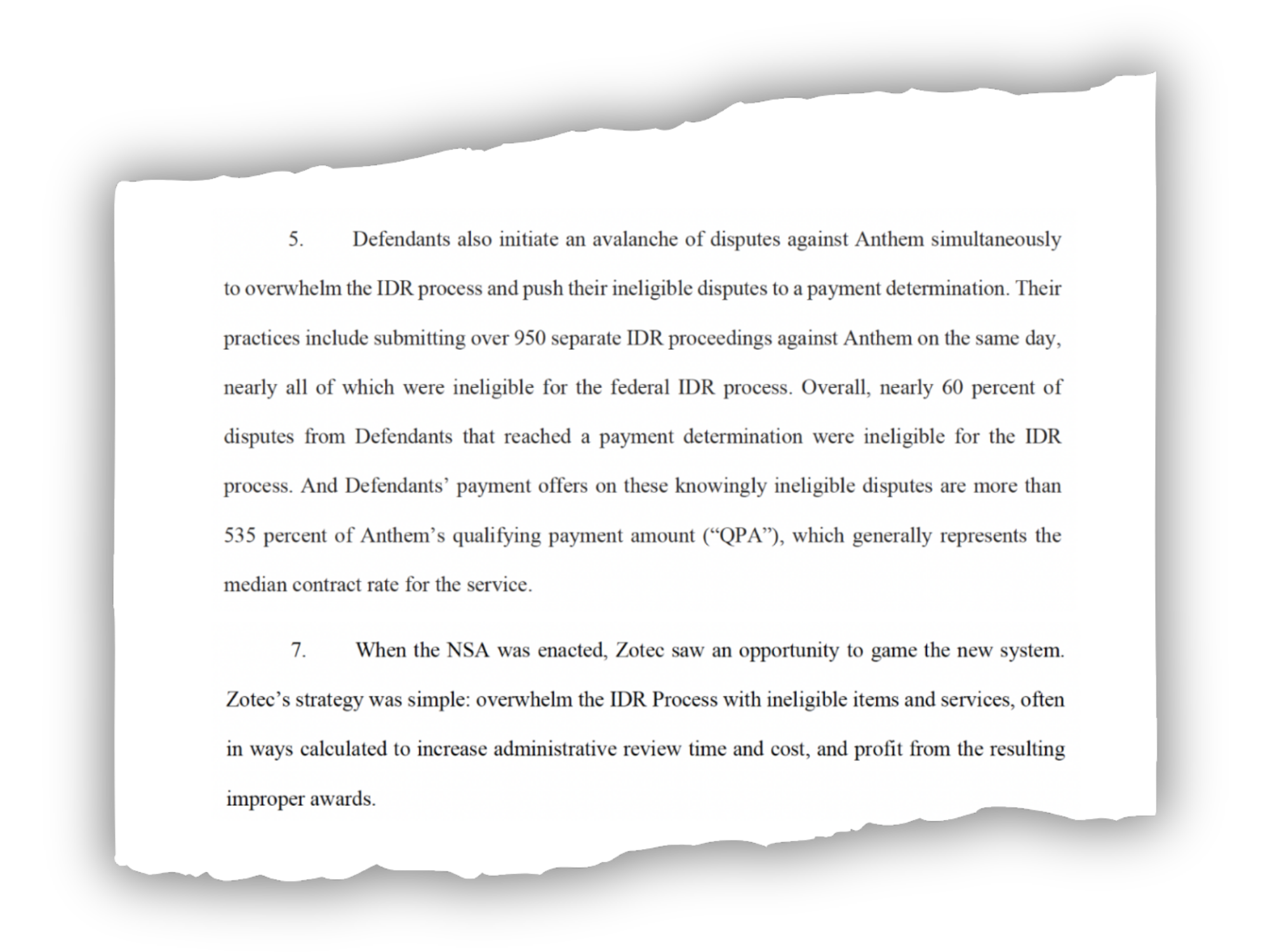
The lawsuits all start in a similar fashion. Each one claims that the defendant “abused” federal legislation “designed to protect patients from unexpected medical bills” and asserts that “the IDR process has not functioned as intended.” This wording appears verbatim in cases filed months apart, across different jurisdictions, against completely different defendants. Insurers adopt the same basic allegation: providers or billing companies “flooded,” “overwhelmed,” or unleashed an “avalanche” of IDR disputes that insurers assert were ineligible.
Those characterizations are based on bad data. Before the NSA went into effect, the Departments of Health and Human Services, Labor, and Treasury projected that the independent dispute resolution (IDR) process would see roughly 17,000 disputes annually. In reality, the system received nearly hundreds of thousands of disputes in its first year. That mismatch didn’t happen by accident. The departments based their projections on New York’s experience with a state arbitration system, scaling the state’s dispute numbers nationally. But New York’s law relied on an independent benchmark called FAIR Health that sharply reduced disputes. This is a structural feature the federal law does not have.
A more realistic comparison was available at the time: Texas. Unlike New York, Texas operated an arbitration system without an external benchmark making it a better comparison for the federal No Surprises Act. In its first year, the Texas system received nearly 49,000 arbitration requests for a population of just under six million people. That experience should have been a clear signal that arbitration volume would be far higher than federal projections suggested. Insurers have used this modeling error to their rhetorical advantage in their litigation.
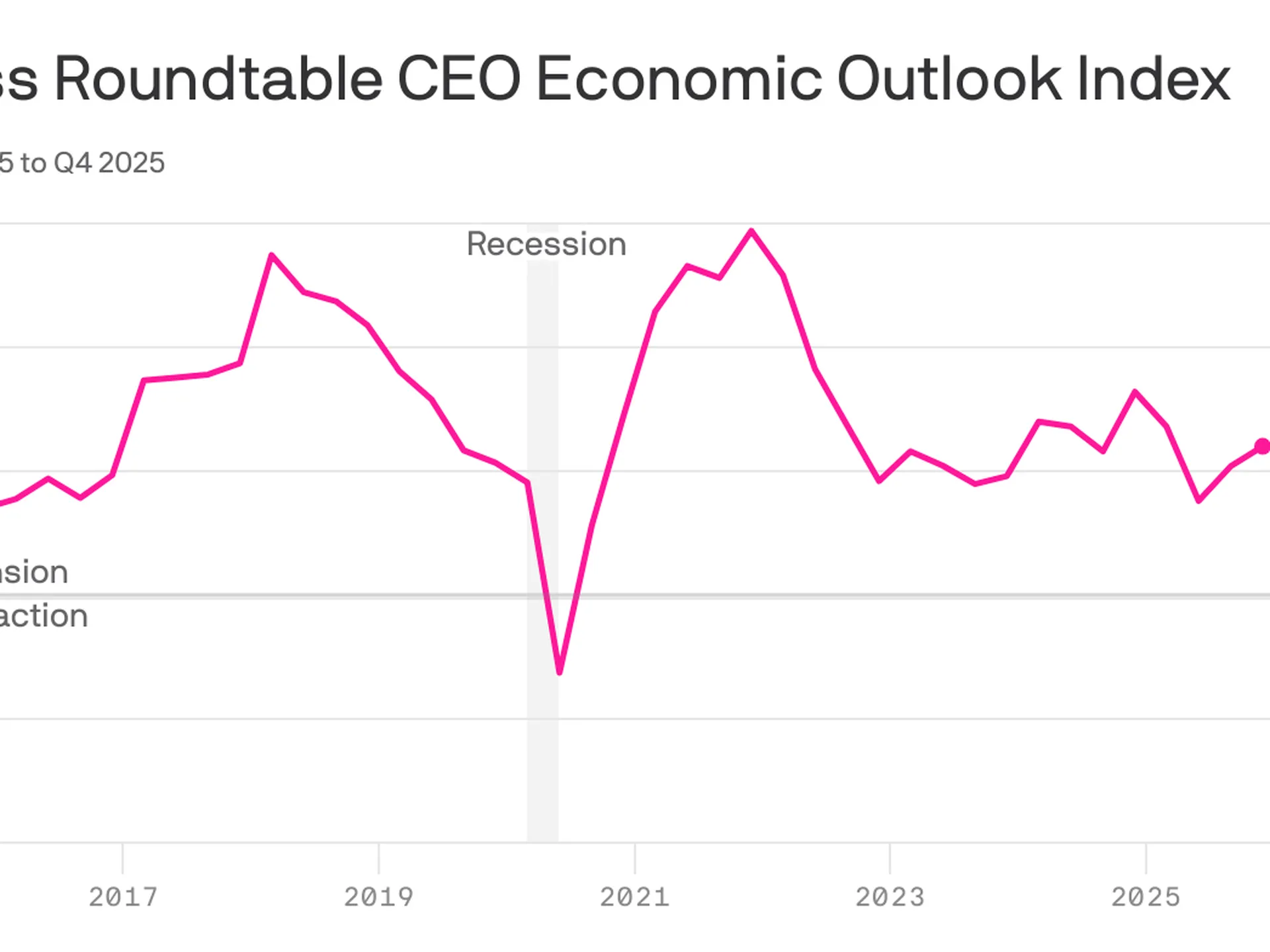
CEO sentiment increasedfor the third consecutive quarter, even as America’s most prominent executives expect underlying job market conditions to remain weak.
Why it matters:
The economic outlook among CEOs has steadily improved since plunging in the aftermath of President Trump’s initiation of the global trade war.
Under the hood, however, there is evidence that structural economic changes — including the proliferation of AI — are weighing on hiring intentions, a warning sign for the labor market.
By the numbers:
The Business Roundtable’s CEO Economic Outlook Index rose by 4 points in its fourth-quarter survey, which was fielded from the final weeks of November through earlier this month.
The index is still shy of the highest level of the Trump 2.0 era and slightly below the historical average of 83.
Zoom in:
The increase reflects a more upbeat view of company revenue in the next six months: Expectations for sales rose 6 points, though the survey does not ask respondents to adjust for the prospect of higher prices.
Plans for capital expenditures — investments in equipment, buildings or software — ticked up 2 points, following a 10-point surge in the previous quarter.
Hiring plans also improved relative to last quarter — up 4 points — though it is the survey’s lone indicator below the level that signals growth.
What they’re saying:
“Notably this quarter, more CEOs plan to reduce employment than increase it for the third quarter in a row – the lowest three-quarter average since the Great Recession,” Business Roundtable CEO Joshua Bolten said in a statement.
About one-quarter of CEOs say they will increase hiring, while 35% say employment will shrink at their respective firms. The remaining 40% plan to keep hiring steady.
A smaller share of CEOs plan to slash workers relative to last quarter, but the figures still show a notable shift among top executives.
Consider the results from this time last year: A similar share of CEOs expected no change in employment levels, but just 21% said they anticipated cutting jobs, while 38% planned to increase hiring.
“CEOs’ softening hiring plans reflect an uncertain economic environment in which AI is driving sizeable [capital expenditures] growth and productivity gains while tariff volatility is increasing costs, particularly for tariff-exposed companies, including small businesses,” Bolten said today.
The big picture:
The in-the-dumps hiring plans signaled by big firm CEOs — alongside a string of layoff announcements in recent months — signal a possible shift for the steady-state labor market that has persisted in recent years.
Powell raised the possibility that the labor market might be even weaker than government data suggests.
The economy has added a monthly average of 40,000 payroll jobs since April. But “we think there’s an overstatement in these numbers, by about 60,000, so that would be negative 20,000 per month,” Powell said at yesterday’s press conference.
“The labor market has continued to cool gradually, maybe just a touch more gradually than we thought,” he added.
The bottom line:
CEOs feel more optimistic, though that confidence boost is not expected to translate into more hiring — an unusual dynamic for the economy.
“Although the results signal that CEOs are approaching the first half of 2026 with some caution, they are starting to see opportunities for growth,” Cisco CEO Chuck Robbins, who chairs the Business Roundtable, said in a statement.
“With the Index near its average, it reflects the resilience of the U.S. economy,” he added, citing pro-growth tax policies and fewer regulations.
The economic fortunes of mom-and-pop businesses are diverging from those of their larger counterparts — a pre-existing gap that now appears to be getting bigger, faster.
Why it matters:
The evidence is in the private-sector labor market, that in recent months, has been propped up by large companies as smaller firms — typically responsible for 40% of U.S. employment — shed workers.
The big picture:
Larger businesses have been able to adapt to a tough economic backdrop — historic tariffs, high interest rates and a more cautious consumer — in ways far more challenging for small companies with fewer resources.
“It’s evident that medium and large firms are better positioned to weather what’s going on,” said ADP chief economist Nela Richardson.
“They can set prices, they can change suppliers. They can hire contractors instead of permanent employees in a more sophisticated way. They can hire globally, not just in their local region. They have more tools in the toolbox,” Richardson said.
By the numbers:
The hiring gap between small and big businesses is getting worse, a fresh sign that small business firings are holding down jobs growth across the economy.
As we mentioned yesterday, the private sector shed 32,000 jobs in November, according to payroll processor ADP. Small firms — those with fewer than 50 employees — accounted for all of the losses.
Those businesses reported a net loss of 120,000 jobs, the most small businesses have cut since the pandemic’s onset. Larger businesses grew, but not enough to offset the cuts elsewhere.
“Small business hiring reallystarted to slow in April and I attribute some of this to tariffs and the higher cost of doing business that small companies are much less able to absorb,” Peter Boockvar, chief investment officer at One Point BFG Wealth Partners, wrote in a note.
“The natural reaction is to cut costs elsewhere and we know that labor is their biggest cost,” Boockvar added.
The intrigue:
Bloomberg recently reported that there are more small businesses filing for bankruptcy under a special federal program this year than at any point in the program’s six-year history.
Subchapter V filings, which allow firms to shed debt faster and cheaper, are up 8% from last year, according to data from Epiq Bankruptcy Analytics.
Chapter 11 filings — a process used by larger businesses — are up roughly 1% over the same time frame.
Threat level:
Main Street is bearing the brunt of an economic slowdown in ways that might make it even harder for small shops to compete with larger companies.
One bright spot: Despite that pain, applications to start new businesses — ones likely to employ other people — remain notably higher than in pre-pandemic times, according to the latest data available from the Census Bureau.
What to watch:
The Trump administration shrugged off the ADP data that indicated a hiring bust. Commerce Secretary Howard Lutnick told CNBC that the cuts were due to factors unrelated to tariffs, like immigration crackdowns.
That hints at a debate among monetary policymakers, who are trying to gauge how much weak jobs growth is a byproduct of fewer available workers.
But ADP had earlier told reporters that small businesses generally had less demand for workers — not that staff weren’t available for hire.
For an economy that’s rapidly expanding, the usual drivers of job creation sure aren’t carrying their weight.
Why it matters:
Anemic job growth in key sectors is a sign that there is more underlying weakness in worker demand than the low unemployment rate might suggest.
It makes for a weaker starting point, as companies see new opportunities around the corner to use AI to automate their work.
It’s not a new trend: These sectors showed weak job creation or outright job losses for the last couple of years of the Biden administration.
But it is striking that a GDP surge fueled by data center and AI investment hasn’t been enough to generate more robust hiring.
By the numbers:
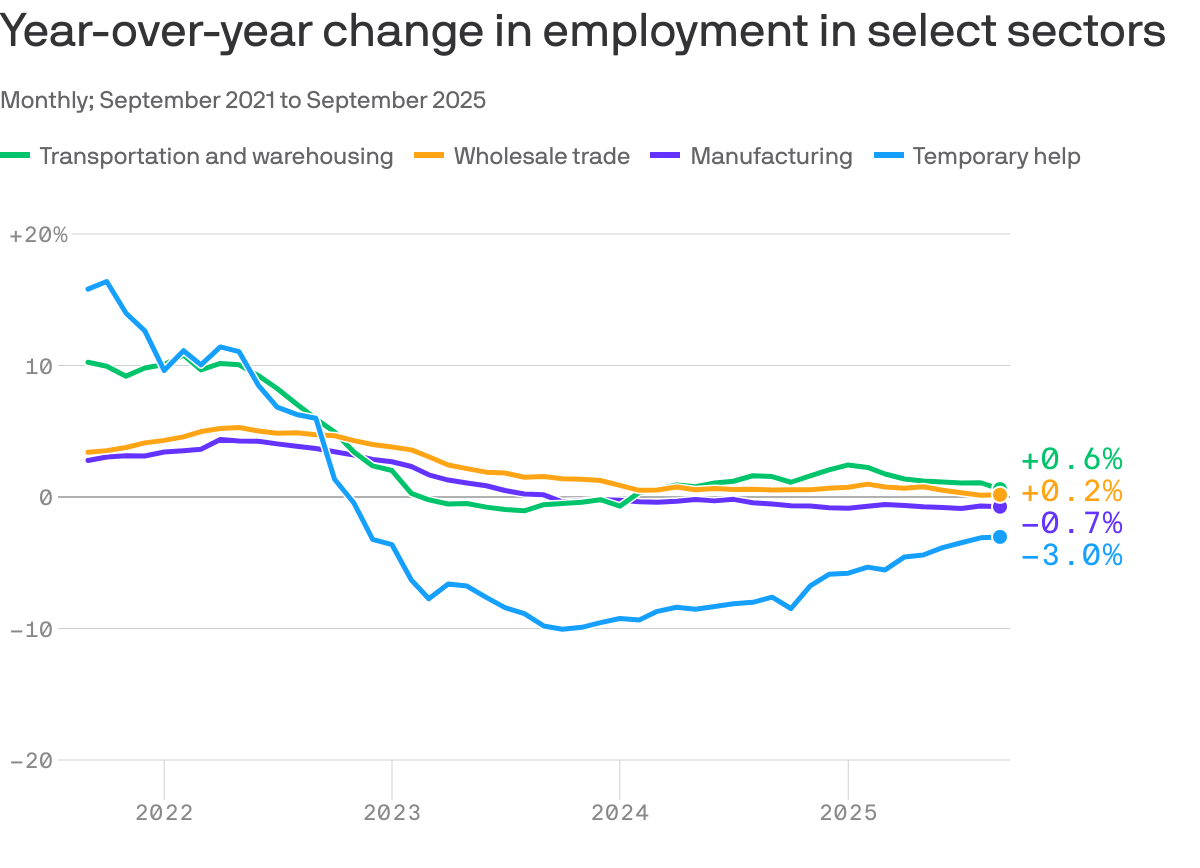
Overall employment is up 0.8% over the 12 months ended in September, but the hiring has been driven in significant part by health care, state and local government, and other less cyclical sectors.
Manufacturing employment is down 0.7% over the last 12 months. Tariffs are weighing on the sector, but its job losses long predate the Trump trade wars, with year-over-year job losses for more than two years.
Temporary help employment, which tends to be a volatile indicator underlying growth trends, is down 3%. It has been losing jobs for three consecutive years.
Two other sectors that tend to correlate with overall economic momentum, transportation and warehousing and wholesale trade, are also adding jobs at rates below that of overall job growth (0.6% and 0.2%, respectively).
Stunning stat:
As Bloomberg flagged, two sectors — health care and social assistance, and leisure and hospitality — accounted for more than 100% of net job gains so far in 2025.
Excluding those sectors, employment dropped by 6,000 jobs in the first nine months of the year.
Zoom out:
There’s not much reason to think these numbers are driven by AI-related opportunities for companies to increase productivity and rely on fewer human workers, particularly given that the phenomenon isn’t new.
But it is more plausible that seeing such opportunities on the horizon has made companies more reluctant to hire in the absence of overwhelming need.
BlackRock chief investment officer for global fixed income Rick Rieder wrote in a note after last week’s jobs report that “what we think we are seeing now is … essentially a hiring pause in anticipation of AI.”
Of note:
A report out this morning from the McKinsey Global Institute finds that AI and robotics technologies could, in theory, automate 57% of U.S. work hours.
“AI will not make most human skills obsolete, but it will change how they are used,” the authors find. “As AI takes on common tasks, people will apply their skills in new contexts,” they write, such as less time researching and preparing documents and more time framing questions and interpreting results.
The bottom line:
Beneath the headline numbers, there is some good reason that attitudes toward the job market are glum.