


Tag Archives: Clinical Research
NDM-1 (New Delhi metallo-beta-lactamase)
http://www.medicinenet.com/ndm-1/article.htm

NDM-1 stands for New Delhi metallo-beta-lactamase, which is an enzyme produced by certain strains of bacteria that have recently acquired the genetic ability to make this compound. The enzyme is active against other compounds that contain a chemical structure known as a beta-lactam ring. Unfortunately, many antibiotics contain this ring, including the penicillins, cephalosporins, and the carbapenems.
Emergence of Klebsiella pneumoniae Carbapenemase (KPC)-Producing Bacteria
http://www.ncbi.nlm.nih.gov/pmc/articles/PMC3075864/
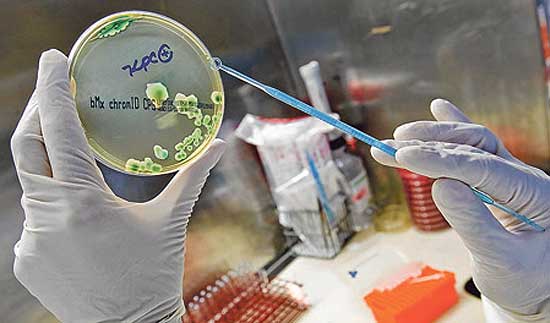
Klebsiella pneumoniae carbapenemase (KPC)-producing bacteria are a group of emerging highly drug-resistant Gram-negative bacilli causing infections associated with significant morbidity and mortality. Once confined to outbreaks in the northeastern United States (US), they have spread throughout the US and most of the world. KPCs are an important mechanism of resistance for an increasingly wide range of Gram-negative bacteria and are no longer limited to K pneumoniae.
PBS Frontline: Hunting the Nightmare Bacteria

The NIH, in pursuit of Precision Medicine, tries to avoid ghosts of its past
The NIH, in pursuit of precision medicine, tries to avoid ghosts of its past

NIH Director Francis Collins, seen here with President Obama, says the Precision Medicine Initiative will have to be implemented quickly.
Healthcare Triage: What is Zika? What Should You Do About It?
Healthcare Triage: What is Zika? What Should You Do About It?

Contemplating health care with a focus on research, an eye on reform.
Oracle rolls out Healthcare Precision Medicine platform as providers target breakthrough treatments

The new software aims to help researchers, molecular pathologists and clinicians work together more easily to improve care.
Restoring vision with gene therapy: RetroSense gets $6M

Juno CEO: ‘Can our own T-cells eat a solid tumor? The answer is yes’

Juno CEO Hans Bishop went on CNBC Friday morning to talk about how immunotherapy works at a cellular level, and made it sound even more surreal. “If you ask the question, ‘Can our own T-cells eat a solid tumor?’ the answer is yes,” Bishop said.

 HENRY KOTULA