


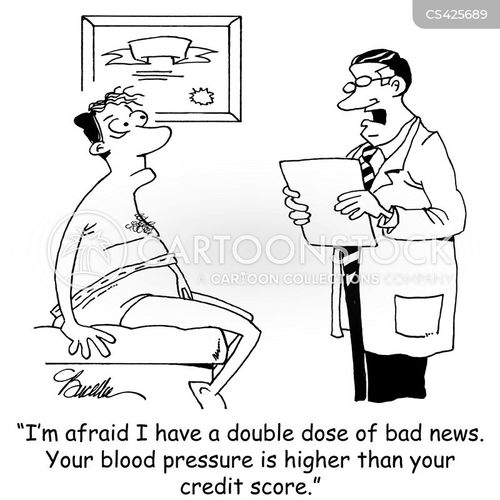
Cartoon – My Job is giving me

Heart disease is the most common killer of men in the United States, and high blood pressure is one of the greatest risk factors for heart disease. Despite knowing this for some time, we have had a hard time getting patients to comply with recommendations and medications.
A recent study shows that the means of communication may be as important as the message itself, maybe even more so. Also, it suggests that health care need not take place in a doctor’s office — or be provided by a physician — to be effective.
It might, as in this study, take place in a barbershop, an institution that has long played a significant social, economic and cultural role in African-American life. A setting that fosters both confidentiality and camaraderie seems like a good place to try reaching men to talk about hypertension.
Years ago, researchers ran an experiment in which they trained barbers to check blood pressure and refer people with high levels to physicians. One group received this intervention; a control group received pamphlets handed out by barbers. Blood pressure values were only minimally improved in the intervention group. This was thought to be because even when patients were referred to primary care physicians, those doctors rarely treated their condition appropriately.
The more recent study went further, removing physicians almost entirely from the process. The control group consisted of barbers who encouraged lifestyle modification or referred customers with high blood pressure to physicians. In the intervention group, barbers screened patients, then handed them off to pharmacists who met with customers in the barbershops. They treated patients with medications and lifestyle changes according to set protocols, then updated physicians on what they had done.
The results were impressive. Six months into the trial, systolic blood pressure (the higher of the two blood pressure measures) in the control group had dropped about 9 mm Hg (millimeters of mercury) to 145.4, which is still high.
In the intervention group, though, blood pressure had dropped 27 mm Hg to 125.8, which is close to “normal.” If we define the goal of blood pressure management to be less than 130/80, more than 63 percent of the intervention group achieved it, compared with less than 12 percent of the control group.
It gets better. The rate of cohort retention — measuring how many of the patients remained plugged into the study and care throughout the entire process — was 95 percent.
The barbershop customers were part of a population that is traditionally hard to reach. More than half of participants lived in households earning less than $50,000 a year, and more than 40 percent in households earning less than $25,000. On average, they were overweight or obese, about a third smoked, and more than a fifth had diabetes. Yet the improvement in blood pressure was more than three times that of the average of previous pharmacist-based interventions seeking to improve blood pressure, and many of those had focused on populations easier to reach.
One reason this trial succeeded where others failed is that it adapted its intervention to overcome barriers. When barbers weren’t consistently screening customers by measuring their blood pressure, pharmacists stepped in to do that. When labs slowed things down, pharmacists brought measuring tests to the barbershops.
The larger implications of this study shouldn’t be ignored. Getting barbers involved meant health messages came from trusted members of the community. Locating the intervention in barbershops meant patients could receive care without inconvenience, with peer support. Using pharmacists meant that care could be delivered more efficiently.
Of course, this study is limited by the usual sorts of questions. Who will pay for this in the real world? Who would do the training necessary to scale it up? Who would be responsible?
But those concerns reflect the shortcomings of our current health care system, not those of the study. Health care reimbursement in the United States usually focuses on the clinical encounter, at a physician office or hospital. This reflects a belief that care is best offered there, even when evidence says otherwise. Coverage and payment focus on the individual patient, not on the community, even when research shows that the latter is more effective. Care often requires the participation of a physician, even when studies prove that it can be delivered well in many cases by midlevel practitioners.
It’s important to remember that we have the health care system we do because of history and economics, not because of studies that show it’s optimally designed. Changes are most often made within the current framework; those that buck the system are usually met with more resistance.
Retail clinics may provide better access, but many professional organizations oppose them. Lifestyle changes may do more to improve health than drugs. But getting the system to recognize that diet and exercise might prevent diabetes, for example — and to pay for that intervention — requires huge efforts and decades of time.
If we really want to improve health on a large scale, especially with populations distrustful of the health care system, it seems we need to go to where they are; to use people they trust to deliver messages; and to allow care to occur without much of the infrastructure usually demanded for billing. Such efforts may not be traditional, but they may deliver much better results.

Last month, healthcare startup Omada Health secured a $50 million C round led by major insurer Cigna, which brings the 5-year-old company’s total funding to over $127 million. That kind of nine-figure investment isn’t unusual for a company with the next blockbuster drug or game changing medical device, but Omada’s core product is a diabetes-preventing mobile app! Omada is a leader in one of the hottest new sectors of the app economy: Digital Therapeutics.
Digital therapeutics are a new category of apps that help treat diseases by modifying patient behavior and providing remote monitoring to improve long-term health outcomes. Depending on the disease, they can encourage patients to stick to diet and exercise programs or help them adhere to drug intake regimes. Wait a minute, doesn’t that sound a lot like wellness apps? There are already hundreds of apps that help us manage our workouts or meditate more effectively!
The key difference is that digital therapeutics implement treatment programs tailored to specific ailments, especially major chronic diseases like diabetes, heart disease, high blood pressure, and pulmonary diseases like COPD. Because patient behavior is so crucial in preventing and limiting the severity of these life-threatening illnesses, the early evidence is that these digital health programs, often combined with human coaching/interaction, can make a significant difference in health outcomes.
To provide hard data of their efficacy (and differentiate themselves from wellness apps), newcomers like Omada have taken a page from the pharma industry and have performed clinical trials with major healthcare networks like Humana. In recently published research, prediabetic patients that participated in a year-long Omada-based program lost 7.5% of their initial body weight and showed improved glucose control and decreased cholesterol.
These results are one reason why health insurance firms are among the big investors in the leading startups. Mobile app-based digital treatment programs can be delivered at massive scale and low cost, and by helping to prevent disease progression, can potentially save insurers billions of dollars. On the other side of the equation, the prospect of health insurance covered recurring subscription revenues has VC’s salivating. Omada proved early validation of this prospect when last year it got Medicare to agree to reimburse the cost of its digital diabetes prevention program.
Another reason the insurers are excited about the potential of mobile-delivered health programs is data. Once clinical trials are complete, most pharmaceutical companies don’t track real-world results for their drugs. With precise regimes and daily monitoring, digital therapeutics can offer mountains of data that can potentially provide doctors unprecedented insights into patient behavior and create feedback/optimization loops for individual patients. Enabling patients to take greater control over managing their chronic illnesses and preventing disease progression could yield huge cost savings throughout the entire healthcare system.
Some digital therapeutics is meant to entirely replace medication with behavioral-based treatment, such as apps that use visualization exercises to help insomnia sufferers as an alternative to sleeping pills like Ambien. Others are designed to work in conjunction with medications by helping patients better manage their treatment regimes. A company that has taken this approach is Propeller Health, which makes a sensor that attaches to inhalers used by people who suffer from chronic asthma and COPD. The sensor monitors inhaler usage and provides feedback via a mobile app. Propeller has partnered with GlaxoSmithKline to create a digital therapy platform to guide patients in using its asthma medications.
Another innovative digital drug adherence platform is the one created by startup Proteus Digital Health. Proteus has built an ingestible radio tag the size of a grain of sand. It can be put inside a pill and can send data to a wearable patch on the patient’s torso. For elder patients managing multiple chronic conditions with an array of daily medications, Proteus’ sensors and the app can send alerts to patients as well as family and primary care providers when a key dose has been missed. Trials have shown that Proteus’ system has shown reductions in blood pressure among patients taking medication for hypertension.
From these examples, it becomes clearer to see how digital health programs, which can be tailored and optimized for individual patients and delivered at scale via mobile, represent a transformational development in healthcare. As Andreessen Horowitz partner Vijay Pande calls it, digital therapeutics, by enabling the kind of behavioral meditation which is the only effective way of managing chronic illness, represent a true “third phase” of medicine, after small-molecule drugs and protein biologics. I predict that someday, apps that help people manage illness and prevent long-term disease will no longer have a special name. They will just be another form of software on our phones. More than anything else, the rise of digital therapeutics demonstrates once again the power of mobile computing as the most transformational technology platform the world has ever seen.


“The high and increasing worldwide burden of hypertension is a major global health challenge because it increases morbidity and mortality from cardiovascular and kidney diseases and financial costs to society,” the authors concluded. “Implementation of innovative, cost-effective, and sustainable programs for hypertension prevention and control should be a public health priority for these [low- and middle-income] countries.”

 HENRY KOTULA