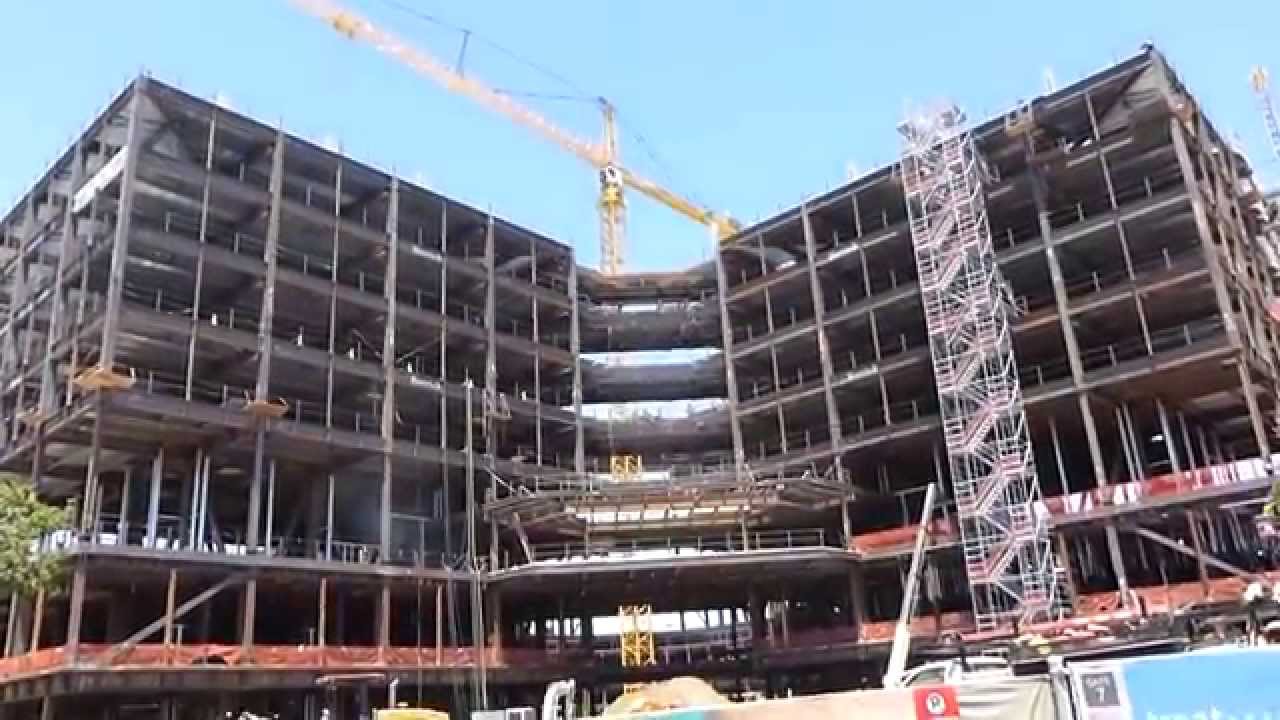
7 hospital construction projects costing $300M or more

https://www.beckershospitalreview.com/facilities-management/7-hospital-construction-projects-costing-300m-or-more.html?origin=cfoe&utm_source=cfoe

Image result for hospital construction

Below are seven hospitals or health systems that recently announced, started or completed construction projects worth more than $300 million in the last two months, reported by Becker’s Hospital Review.

1. MetroHealth breaks ground on 264-bed Cleveland hospital
MetroHealth System in Cleveland broke ground April 15 on an 11-story, 264-bed hospital, part of a $946 million revamp.

2. Mount Carmel to open $361M hospital April 28
Mount Carmel Health System in Columbus, Ohio, will open its $361 million, 210-bed replacement hospital April 28.

3. McLaren Health to close 2 hospitals, consolidate services at new $450M facility
McLaren Greater Lansing (Mich.) will shutter two hospitals in South Lansing when its new consolidated $450 million campus near Michigan State University opens.

4. UPMC starts constructing $400M rehab, vision facility
Pittsburgh-based UPMC Mercy broke ground March 14 on a nine-story rehabilitation and vision tower. It is expected to cost $400 million.

5. New York hospital plans $2B campus revamp
Northwell Health’s Lenox Hill Hospital in New York City is preparing a $2 billion revitalization that will include upgraded clinical areas and residential apartments.

6. Sutter opens 274-bed hospital in San Francisco
California Pacific Medical Center Van Ness Campus, an 11-story, 274-bed hospital owned by Sacramento, Calif.-based Sutter Health, opened in San Francisco March 2. The hospital project cost about $2.1 billion.

7. Penn Medicine alters design of $1.5B pavilion
The design team responsible for Philadelphia-based Hospital of the University of Pennsylvania’s $1.5 billion pavilion has changed its plans for the layout and shape of the building. It is expected to open in 2021.


Beth Israel Deaconess Medical Center will file certificate of need on new $534 million inpatient building

http://www.healthcarefinancenews.com/news/beth-israel-deaconess-medical-center-will-file-certificate-need-new-534-million-inpatient?mkt_tok=eyJpIjoiTURSaU5UWXhOV1EzTlRNeiIsInQiOiJvU3NYQXBoQkwzMXBteUNzVVNpXC9abldIM3RMZXkrc05LNUNXdXd1TzUrUmJwTFZYTDBFZmRYNmFvVnloTEE2K0dtZXhEbWYyRjFWTmpRT29Zb3I0ZFdLRW92bGFrQUJnYyt2N0JyV1dVSE5IR1RJRmczYnZJUlo1d1pYZzR1UkIifQ%3D%3D

Credit: Beth Israel Deaconess Medical Center


The new building, which will house 345,000 square feet of space, is their first new building in 20 years, the system says.

Beth Israel Deaconess Medical Center will spend $534 million to build a new inpatient tower at their Longwood Medical Center Campus, the system announced.

The new 10-story, 345,000 square foot building will be BIDMC’s first in 20 years and will be located on their West Campus.

It will house single-bedd, family-friendly patient rooms, including up to 128 medical-surgical patient rooms, some of which will replace double-bedded rooms elsewhere on BIDMC’s West Campus. It will also hold 30 intensive care unit rooms ideal for privacy and complex medical care.

Large surgical suites and diagnostic and procedural suites to handle acute care patients as well as a medical helicopter landing pad to support the level 1 trauma center will also be part of the new building.

To benefit patients, caregivers and families and continue environmental stewardship efforts, an accessible rooftop green space and healing garden will be available as well.

The announcement that the system will file a certificate of need this month comes as BIDMC’s parent company CareGroup moves ahead with a major merger that will yield a new system that also includes Lahey Health facilities and a stand-alone hospital in Newburyport. The system would be the second largest in the region following Partners Healthcare.

Last month, the Massachusetts Department of Health officially greenlighted the proposed merger, with the Public Health Council voting unanimously in favor of the deal. The Health Policy Commission and leaders in the proposed new system are working on a cost and market impact report, which would gauge the impact of the merger. That report is expected in mid-June.


Geisinger, St. Luke’s University Health partner to construct 80-bed hospital

https://www.beckershospitalreview.com/facilities-management/geisinger-st-luke-s-university-health-partner-to-construct-80-bed-hospital.html

Image result for geisinger st lukes new hospital

Danville, Pa.-based Geisinger and Bethlehem, Pa.-based St. Luke’s University Health Network will build a new 80-bed acute care hospital in Orwigsburg, Pa. — marking the first time in Pennsylvania’s history two healthcare systems agreed to build and co-own a hospital.

The three-story, 120,000-square-foot facility will house an emergency department and offer a wide array of specialties and services. Construction on the facility will begin in spring 2018, wrapping up late next year.

Under the terms of the partnership, the hospital will operate under both parties as a joint venture, with funding and governance shared equally. St. Luke’s will build and manage the hospital, while both parties will contribute physicians, support staff and expertise.

“The new hospital in Orwigsburg will emphasize the strengths of St. Luke’s and Geisinger, extending the best value in healthcare  that is, the highest quality at the lowest cost — to more residents of Schuylkill County and surrounding areas,” St. Luke’s President and CEO Rick Anderson said.


Banner Health secures $550M bond to finance construction of two hospitals

http://www.beckershospitalreview.com/facilities-management/banner-health-secures-550m-bond-to-finance-construction-of-two-hospitals.html

Image result for hospital construction

Phoenix-based Banner Health secured a $550 million revenue bond issue to finance the construction of two new teaching hospitals in Tucson, Ariz., and Phoenix, according to Az Central.  

The bonds will be used to help finance $325 million of a new 16-story patient tower currently under construction at Banner University Medical Center in Phoenix, and another $225 million will finance the construction of a nine-story tower at Banner University Medical Center in Tucson.

When the construction is completed in Phoenix, the tower will house 256 inpatient beds, an emergency department, trauma center, operating rooms and lab space. The 16-story tower is expected to be completed by October 2018.

The new hospital tower in Tucson will replace the current hospital, include 200 patient rooms and provide new laboratories, operating rooms and diagnostic centers, according to The Daily Wildcat.

The Maricopa County Board of Supervisors approved the bond issue Sept. 6. Banner Health is obligated to pay off the bonds, under the agreement.

12 US cities ranked by cost per square foot to build a hospital

http://www.beckershospitalreview.com/facilities-management/12-us-cities-ranked-by-cost-per-square-foot-to-build-a-hospital.html?utm_source=Sailthru&utm_medium=email&utm_campaign=Issue:%202017-07-25%20Healthcare%20Dive%20%5Bissue:11297%5D&utm_term=Healthcare%20Dive

Image result for hospital construction

The most expensive U.S. city to build a hospital in is Honolulu, according to a report by Rider Levett Bucknall. In fact, the cost per square foot to build a hospital in Honolulu is about 60 percent higher than in Las Vegas, which has the lowest per square foot hospital construction costs of any city on the list.

For the report, values were based on hard construction costs per square foot of gross floor area.

Here is the range of costs to build a hospital per square foot in 12 large U.S. cities, ranked from most to least expensive.

Please note that some of the costs are equal so there are more than 11 cities listed.

1. Honolulu: $475 to $760 per square foot
2. New York City: $475 to $700
3. Los Angeles: $470 to $700
4. San Francisco: $450 to $650
5. Boston: $400 to $650
5. Washington. D.C.: $400 to $650
6. Chicago: $360 to $630
7. Portland, Ore.: $380 to $525
8. Seattle: $385 to $530
9. Phoenix: $350 to $500
10. Denver: $370 to $455
11. Las Vegas: $285 to $455

A Bygone Era: When Bipartisanship Led To Health Care Transformation

http://www.npr.org/sections/health-shots/2016/10/02/495775518/a-bygone-era-when-bipartisanship-led-to-health-care-transformation?utm_campaign=KHN%3A+First+Edition&utm_source=hs_email&utm_medium=email&utm_content=35220326&_hsenc=p2ANqtz-_Y4ev2QTsrH6TWQlVimlZP-SvZi73CIdcG5_Qc0FFbgg3uhW_LaYUI4SJlbWsfEbgZ1DvEpMbHHzNXkdzYm9iAtzxUOA&_hsmi=35220326

Image result for hill burton act

People might be forgiven for thinking that the Affordable Care Act is the federal government’s boldest intrusion into the private business of health care.

But few know about a 70-year-old law that is responsible for the construction of much of our health system’s infrastructure. The law’s latest anniversary came and went without much notice in August.

The Hill-Burton Act was signed into law by President Harry S. Truman on August 13, 1946 — and its effect on health care in the U.S. was nothing short of monumental. Perhaps more importantly, it stands as an example, warts and all, of how a bipartisan Congress can forge compromises to bolster American infrastructure and boost the well-being of our people.

Known formally as the Hospital Survey and Construction Act, Hill-Burton started as a Truman initiative. In November 1945, only two months after the official end of World War II, he gave a speech to Congress outlining five goals to improve the nation’s health. The first and least controversial of these called for constructing hospitals and clinics to serve a growing and rapidly demilitarizing population.

Hill-Burton provided construction grants and loans to communities that could demonstrate viability — based on their population and per capita income — in the building of health care facilities. The idea was to build hospitals where they were needed and where they would be sustainable once their doors were open.

Over the subsequent decades, new facilities sprang up all around the country, including many in the 40 percent of U.S. counties that lacked hospitals in 1945.

By 1975, Hill-Burton had been responsible for construction of nearly one-third of U.S. hospitals. That year Hill-Burton was rolled into bigger legislation known as the Public Health Service Act. By the turn of the century, about 6,800 facilities in 4,000 communities had in some part been financed by the law. These included not only hospitals and clinics, but also rehabilitation centers and long-term care facilities.

In 1997, this type of direct, community-based federal health care construction financing came to an end. However, numerous Hill-Burton clinics and hospitals still exist around the country, specifically financed by a part of law to provide care to those unable to afford it.

A month after enactment of the law, Truman, a Democrat, appointed Republican Sen. Burton to the Supreme Court in a bipartisan gesture that doesn’t seem imaginable in today’s polarized political landscape. And consider this: Burton was unanimously approved by the entire Senate the same day he was appointed. With no committee hearings! He joined the court the very next day.

“Hill-Burton speaks to an earlier time in our history when the American people and those who represented them had confidence that government could do good things,” Markel said. “And that makes it all the more phenomenal to me.”

Top healthcare construction projects of 2015; Building surges as demand picks up, Revista says

http://www.healthcarefinancenews.com/news/top-healthcare-construction-projects-2015-buidling-surges-demand-picks-revista-says?mkt_tok=3RkMMJWWfF9wsRovvavJZKXonjHpfsX57u4rUa6zlMI%2F0ER3fOvrPUfGjI4ATMZmN6%2BTFAwTG5toziV8R7nHLs161sIQWRjg

Hospital Construction

Washington Hospital begins construction of $339 million project

http://www.bizjournals.com/sanfrancisco/blog/real-estate/2015/02/washington-hospital-fremont-critical-care-pavilion.html?page=all

Washington Hospital's Morris Hyman Critical Care Pavilion