Essentia to continue mandatory flu shot policy

https://www.beckershospitalreview.com/human-capital-and-risk/essentia-to-continue-mandatory-flu-shot-policy.html?origin=bhre&utm_source=bhre

Related image

Duluth, Minn.-based Essentia Health rolled out a mandatory flu shot policy last year, and the health system will continue the program this year.

Under the program, employees had until Nov. 20, 2017, to receive a flu shot, obtain a medical/religious exemption or face termination. Essentia reported more than 99.5 percent compliance with the program.

For 2018, Essentia will continue its mandatory flu shot program, which also applies to students who train and vendors who operate at the health system’s facilities, as well as people who volunteer through Essentia programs.

To ensure there is plenty of time to review medical/religious exemptions before this year’s Nov. 20 compliance deadline, Essentia moved up the deadline to submit exemption requests.

“The first year [is] the most difficult because everyone [is] doing first-time medical and religious exemption requests,” said Rajesh Prabhu, MD, infectious disease and chief patient quality and safety officer for the system. “Those granted medical exemptions last year still [have their medical exemptions] in place. For religious exemptions, they just have to confirm their belief hasn’t changed from last year.”

He expects compliance to increase this year since fewer people need to request medical exemptions for the first time. Essentia now has 14,700 employees and began its flu shot campaign Oct. 2.

Dr. Prabhu encouraged other systems or hospitals considering a mandatory flu shot program to focus on the reasoning behind beginning the program.

“It’s not just a technical change. You have to get everyone to feel why this is important for not only our employees but [also] the patients we serve. We focus a lot of efforts on that end,” he said.

Dr. Prabhu said support from leadership helped make the first year of Essentia’s mandatory flu shot program a success.

“We had support from our CEO and everyone in leadership,” he said. “[They had] direct, in-person communication with some of those hesitant to get vaccinated because sometimes it’s good to talk to people to understand their concerns and barriers.”

Lessons learned

Essentia announced its mandatory flu shot program in September 2017 and some employees felt they didn’t get enough notice to comply. However, Dr. Prabhu said he believes some employees would not have complied with the program even if they were given more time.

“No matter how much lead time you give, I don’t think it will change the minds of people who are resistant to get the influenza vaccine,” he said.

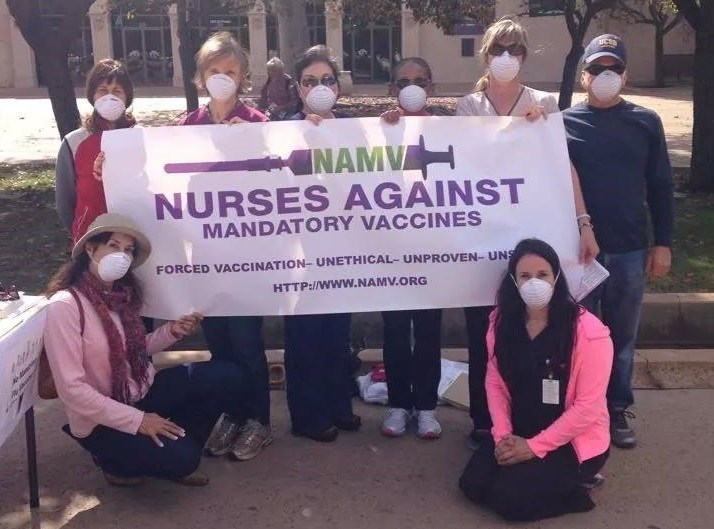
Essentia’s flu shot policy encountered opposition from unions as well. The Minnesota Nurses Association and some other labor groups that represent Essentia employees continue to challenge the flu shot policy. In July, an arbitrator sided with Essentia over the United Steelworkers Union regarding the policy.

Despite the opposition and a few challenges in the initial rollout, Dr. Prabhu said Essentia needed the policy. He said the system was not going to get to where it wanted to be with its previous voluntary policy, which had 82 percent compliance. And, after evaluating the first year, Essentia decided it was necessary to continue the policy into the 2018-19 flu season.

2018-19 flu season

For this flu season, the CDC recommends everyone 6 months and older receive a flu vaccine by the end of October. Nasal spray FluMist was not recommended last season, but it is recommended for 2018-19 as an option for flu vaccination of nonpregnant individuals age 2 to 49.

It’s unclear how severe the 2018-19 flu season will be. Last year’s flu season was particularly severe, with about 900,000 people hospitalized and about 80,000 people dead due to the virus.

Dr. Prabhu said the flu season hasn’t hit the Duluth area yet, but Essentia is trying to do everything possible to prevent the spread of the virus among patients and staff.


7 latest healthcare industry lawsuits, settlements

https://www.beckershospitalreview.com/legal-regulatory-issues/7-latest-healthcare-industry-lawsuits-settlements-100518.html?origin=cfoe&utm_source=cfoe

Related image

From the U.S. Equal Employment Opportunity Commission suing a Tennessee health system over its flu shot policy to a Montana health system paying $24 million to settle a whistle-blower lawsuit, here are the latest healthcare industry lawsuits and settlements making headlines.

1. EEOC sues Saint Thomas Health over mandatory flu shot policy
The U.S. Equal Employment Opportunity Commission filed a lawsuit against Nashville, Tenn.-based Saint Thomas Health Sept. 28, alleging Murfreesboro, Tenn.-based Saint Thomas Rutherford Hospital violated federal law by ordering an employee to receive a flu shot despite his religious belief

2. Montana hospital pays $24M to settle ex-CFO’s whistle-blower suit
Kalispell (Mont.) Regional Healthcare System and six subsidiaries and related entities agreed to pay the federal government $24 million to resolve allegations they violated the False Claims Act, Stark Law and the Anti-Kickback Statute.

3. DaVita resolves false claims, whistle-blower allegations for $270M
HealthCare Partners Holdings, which does business as DaVita Medical Holdings, will pay $270 million to settle False Claims Act violations and a whistle-blower lawsuit.

4. AmerisourceBergen to pay $625M to settle civil fraud charges linked to repackaging scandal
Drug wholesaler AmerisourceBergen will pay $625 million to resolve allegations that the company improperly distributed tampered and repackaged drugs.

5. Kansas physician awarded $29M in wrongful termination suit
A jury awarded a Kansas emergency physician $29 million for his lawsuit claiming he was wrongfully terminated by the emergency room staffing company he worked for after voicing concerns about the organization’s business practic

6. Disability advocacy firm sues Arizona hospital over access to patients
The Arizona Center for Disability Law filed a lawsuit Sept. 12 against Phoenix-based Arizona State Hospital, claiming hospital officials violated federal law by refusing to provide the center with access to the facility, patients and their records.

7. Louisiana health system stuck in antitrust suit brought by ex-hospital operator, health plan
BRF, a hospital operator in Shreveport, La., and the regional Vantage Health Plan are surging forward with an antitrust lawsuit against Shreveport-based Willis-Knighton Health System, even though BRF left the hospital business Oct. 1.


50 Essentia Health workers fired for refusing flu vaccine

https://www.hrdive.com/news/50-essentia-health-workers-fired-for-refusing-flu-vaccine/511593/

Dive Brief:

  • Essentia Health terminated 50 employees for refusing to get the flu vaccination, reports the Star Tribune. Hundreds of other workers agreed to be vaccinated after the Duluth, Minnesota-based healthcare system threatened to fire them if they refused.
  • The new policy requires all employees to get vaccinated to protect patients, Dr. Rajesh Prabhu, Essentia’s chief patient safety officer and an infectious disease specialist, told the Tribune. He said severely ill patients are more susceptible to complications and death from the flu, which is why the need to vaccinate employees is greater.
  • The Tribune says three unions oppose the new policy, which covers 15 hospitals in the system and 75 clinics. The United Steelworkers, which represents some employees, failed to get a court injunction to block the terminations.

The American Hospital Association​ (AHA), along with the National Business Group on Health and the American Academy of Family Physicians, strongly supports vaccinations to prevent the spread of the flu. The AHA backs mandatory patient safety policies that require workers to get flu vaccinations or wear hygienic masks when coming in contact with patients during the flu season.

Statistics from the Centers for Disease Control (CDC) show that less than 45.6% of Americans got flu shots during the 2015 to 2016 flu season. According to the CDC, some people don’t think the flu vaccination is effective, while others don’t think they’ll come down with the flu or think the side effects will be worse than the disease. Other workers might be eligible for a medical or religious exemption.

Employees routinely come to work ill, spreading infections to coworkers. Some 80% of employees came to work sick last year based on findings from Staple Business Advantage’s cold and flu survey. The cost of the flu alone is  $10.4 billion in medical expenses and, for employees, $16.3 billion in lost earnings each year.

Healthcare statistics would seem to support the argument for mandatory flu vaccinations. However, legal considerations come into play. States like New York allow employers to have blanket mandatory flu vaccination policies, but the Equal Employment Opportunity Commission (EEOC) is against mandatory policies. Employers will need to pay attention to local and state law before making any such policies of their own.


Saint Vincent Hospital sued for firing six employees who refused flu shots

http://www.beckershospitalreview.com/legal-regulatory-issues/saint-vincent-hospital-sued-for-firing-six-employees-who-refused-flu-shots.html

Image result for courtroom flu shot

The Equal Employment Opportunity Commission is accusing Erie, Pa.-based Saint Vincent Hospital of religious discrimination, reports Erie Times-News.

The commission filed a lawsuit Thursday in U.S. District Court in Erie, alleging Saint Vincent fired six employees who refused to get flu shots due to their religious beliefs, according to the article. At the same time, the group contends, the hospital granted medical exemptions to 14 other employees in late 2013 and early 2014, according to the article.

The commission claims the hospital violated Title VII of the Civil Rights Act of 1964.

Saint Vincent officials said in a statement obtained by Erie Times-News that the hospital’s “mandatory flu vaccination policy allows employees to apply for an exemption to the policy based upon religious beliefs or health concerns. Requests for exemption are always given careful and appropriate consideration. We respectfully disagree with the (commission’s) position and characterization of how the employee claims outlined in this lawsuit were handled by the hospital.”

According to the report, the commission previously attempted to reach a settlement with Saint Vincent, which is now part of Pittsburgh-based Allegheny Health Network.