Approximated Employment Effects of the American Health Care Act

https://www.americanprogress.org/issues/economy/news/2017/03/20/428761/approximated-employment-effects-american-health-care-act/

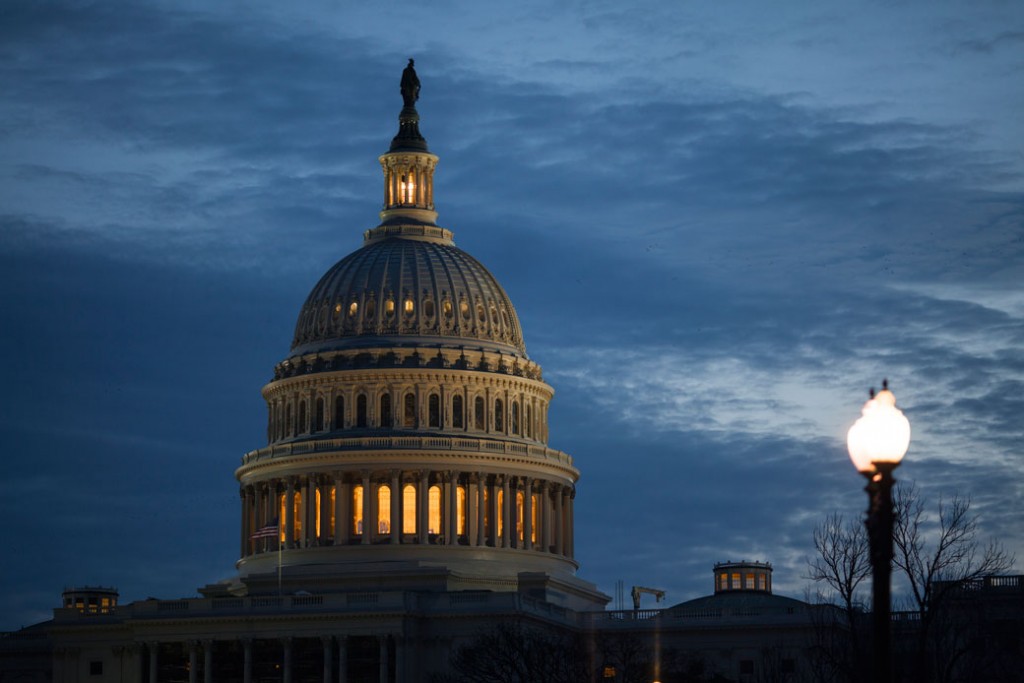
The lamp remains illuminated in the top of the Capitol Dome, February 2017.

Undoing the Affordable Care Act, or ACA, will likely mean less government spending on Medicaid and subsidies for private insurance and thus less spending on health care in general. At the same time, the new proposed law, the American Health Care Act, or AHCA, would also cut taxes for higher-income Americans. All three of these factors will likely impact the economy and, thus, employment. Less spending on health care due to cuts to Medicaid and health insurance subsidies will lower employment in the future, while tax cuts could result in some positive effects on jobs. As a result, there will be 1.8 million fewer jobs in 2022 than otherwise would have been, in our estimates.

GOP health overhaul puts pressure on state governments

http://abcnews.go.com/Health/wireStory/gop-health-overhaul-puts-pressure-state-governments-46136392

Image result for aca repeal and replace

The Republican health care plan means less money for states and gives them a tough choice: Find a pot of cash to make up the difference or let coverage lapse for millions of lower-income Americans.

Governors and state lawmakers analyzing the Republican plan to replace former President Barack Obama’s Affordable Care Act fear a return to the past, when those without health coverage used emergency rooms for their medical needs. That uncompensated care was written off by hospitals or billed to the state.

The ax would fall especially hard on Medicaid, the state-federal program that provides health care to the poor and lower-income workers.

In Washington, for example, state officials say they would have to come up with $1.5 billion a year starting in 2020 to keep coverage in place for about 600,000 residents who gained coverage through the Medicaid expansion that was a key part of Obama’s health care law.

“It would actually leave our nation worse off than before the ACA was implemented,” Gov. Jay Inslee, a Democrat, said in a written statement.

Most states don’t yet have firm cost estimates on the consequences of the proposal by Republicans in the U.S. House. A Congressional Budget Office analysis released Monday said the GOP plan would lead to 24 million Americans losing health care coverage over the next decade but did not provide a state-by-state breakdown.

In addition to Medicaid, states are concerned about the Republican plan to replace federal premium subsidies for people who buy private insurance with tax credits that would be adjusted based on age, with older people paying more. If the cost of health insurance is too great under the GOP plan, people might drop coverage and rely instead on emergency rooms.

Connecticut estimates that 34,000 people who buy policies in the insurance marketplace would drop their coverage under the GOP plan. Overall, it would add about $1 billion in annual costs for the state, equivalent to 5 percent of its budget.

It is the GOP’s proposed changes to Medicaid, which has become the largest source of federal revenue for states, that have drawn the most reaction since the CBO report was released.

Under the Affordable Care Act, 31 states and the District of Columbia expanded their Medicaid programs, providing coverage to about 11 million Americans. That included a number of Republican-led states, including Indiana under Vice President Mike Pence when he was governor there.

Among those benefiting from Indiana’s expansion is Michael Boone, a 55-year-old cook from Gary.

Boone said it was the first time he has had health coverage as an adult, and it allowed him to get treatment for medical problems he didn’t know he had. They included high cholesterol, high blood pressure and a hernia.

His coverage could be a casualty if the Medicaid cuts take effect and Indiana cannot find a way to pay for a larger share.

“I really don’t have a full grasp of the situation yet,” Boone said. “But right now, I’m scared to death.”


The Lessons of Obamacare

http://www.vox.com/policy-and-politics/2017/3/15/14908524/obamacare-lessons-ahca-gop

Image result for lessons to learn

On January 6, President Barack Obama sat down with us for one of his final interviewsbefore leaving the White House. The subject was the Affordable Care Act — the legislation that has come to carry his name and define his legacy.

It was strange circumstances Obama found himself in. He was leaving office an unusually popular president, with approval numbers nearing 60 percent. But his most important domestic achievement was imperiled. Republicans had spent years slamming Obamacare for high premiums, high deductibles, high copays, and daunting complexity. Donald Trump had won the White House in part by promising to repeal the ACA and replace it with “something terrific.” Both houses of Congress would be controlled by Republicans who appeared set to carry out his plan.

But over the course of the next 70 minutes, it became clear that Obama didn’t think they would get the job done. If he sounded unexpectedly confident, it’s because he believed the wicked problems of health reform — problems that bedeviled him and his administration for eight years — would turn on the GOP with equal force.

“Now is the time when Republicans have to go ahead and show their cards,” he said. “If in fact they have a program that would genuinely work better, and they want to call it whatever they want — they can call it Trumpcare or McConnellcare or Ryancare — if it actually works, I will be the first one to say, ‘Great; you should have told me that in 2009. I asked.’”

Two months later, the release of House Republicans’ replacement plan — the American Health Care Act — has made Obama look prescient. The bill quickly placed Republicans under siege from both the left, which has found more to like in Obamacare as its survival has become threatened, and the right, which attacked the replacement as unrealistic and ill-considered, and, most damning of all, as “Obamacare 2.0.”

The biggest problem Republicans face, though, isn’t from activists in either party. It’s from the tens of millions of Americans who now depend on Obamacare, and their friends, families, co-workers, and neighbors. They have been promised a replacement that costs less and covers more, and the GOP’s plan does neither.

According to the Congressional Budget Office, the AHCA would throw 24 million people off health insurance over the next 10 years and leave the remnant in plans with higher deductibles, higher copays, and less coverage. The law would let insurers charge older Americans 500 percent more than younger Americans, and the sparer subsidies wouldn’t adjust to the local cost of insurance coverage, and thus would be insufficient in many areas. This is not the “something terrific” Trump promised, nor the kind of health care that polling shows Americans want.

We are reporters who have covered health care, and the legislative ideas that became the Affordable Care Act, since before Obama’s election. In the course of that reporting, including recent conversations with Obama and dozens of elected officials and staffers responsible for the Affordable Care Act’s design, passage, and implementation, we have unearthed several lessons from the law, which current and future health reformers should heed.

At the moment, Republicans are ignoring most of them.


Why Organizations Fail to Solve Their Greatest People Challenges

https://www.linkedin.com/pulse/why-organizations-fail-solve-greatest-people-dr-marla-gottschalk?trk=v-feed&lipi=urn%3Ali%3Apage%3Ad_flagship3_feed%3BGeeDKIgSBUn6B98b%2B5BTqg%3D%3D

I’ve written previously concerning why people and organizations struggle to change. When we miss opportunities to do so — we fail to unlock an enormous amount of potential.

There is an enduring theme that must be acknowledged (and added) to that conversation. Organizations are made up of human beings. As human beings, we often struggle to let go of old product frameworks and notions concerning our customers. When organizations face persistent people problems such as low engagement, depleted morale or rising turnover — they also struggle to make progress — and there is a clear reason why this is the case. It’s often not about recognizing a shift.

Let me elaborate.

If there is a single, worrisome story that I observe it is the following:

Company finds great thing. Company begins to rest on its laurels concerning great thing. Company neglects great thing. Company eventually loses great thing. Company begins to decline.

Sadly we are not talking about customers or products — this story is about people. (Please know that I do not view people as “things”.)

Lamenting declining people-centric metrics will not solve people-centric problems. Identifying sub-groups of contributors in the gravest danger of jumping ship — is not the answer. Quantifying the high cost of turnover, is not the answer. (See a great discussion addressing employee engagement here.)

The answer lies in action.