

New STAT reporting reveals the IRS is seeking back taxes from UnitedHealth Group over foreign subsidiary transactions — adding to the conglomerate’s growing list of federal headaches.
In a big scoop this week, STAT’s Bob Herman revealed that the Internal Revenue Services is investigating UnitedHealth Group over what the agency says was an underpayment of taxes between 2017 and 2020 involving transfers of money to a foreign subsidiary.
According to STAT, the IRS is “seeking to significantly increase taxable income” reported by the company during those four years, and the dispute could extend to tax years after 2020. UnitedHealth disclosed in a recent regulatory filing that it received notices from the IRS in March.
The piece notes that this is not a routine tax audit. Investigations like this (involving what is known as “intercompany transfer pricing”) are exceedingly rare and typically examine how large multinational corporations allocate profits and expenses among subsidiaries in different countries. Which could lead one to assume there is a significant amount of money involved.
UnitedHealth disputes the IRS’ findings and says it intends to “vigorously contest” the proposed adjustments. It is not yet known which of the company’s many foreign subsidiaries is involved.
Herman also got an unusual glimpse behind the curtain: STAT was copied on internal emails about how UnitedHealth should respond to his questions, including one in which spokesperson Tyler Mason said he left out an explanation for withholding IRS documents because it “sounded too defensive.”
A bit about UnitedHealth Group’s international operations
Last year, the Center for Health & Democracy released the Sunlight Report on UnitedHealth Group which documented – for the first time – 2,694 subsidiaries and affiliated entities tied to the health care titan. That vast corporate structure shows that UnitedHealth has become so much more than the insurance company folks recognize from a card in their wallet. These days, through its subsidiaries UnitedHealthcare and Optum, this giant corporation’s reach stretches far beyond traditional health insurance. It has branched into physician practices, pharmacies, pharmacy benefit management, data analytics and numerous other corners of the health care system – and the world – with more than 150 international entities in the Sunlight Report’s tally.
And many of UnitedHealth’s international entities, as of late, have become thorns in the company’s side.
Last summer, HEALTH CARE un-covered wrote about the company’s desire to unload its subsidiary Banmédica (a Latin American health insurer and health care provider that operates hospitals and medical centers) after it racked up more than $8 billion in losses and pressures at home mounted. By November 2025, UnitedHealth had struck a roughly $1 billion deal to sell Banmédica to a Brazilian private equity firm.
International Yard Sale: UnitedHealth to Say Adiós to Latin American Subsidiary
UnitedHealth Group, the behemoth health insurer that has steadily transformed itself into a global health care conglomerate, is now looking to offload part of that empire to appease shareholders.
While that deal has continued moving toward completion, the latest we know is that the agreement is still awaiting final regulatory approval. There is no indication that Banmédica is the foreign subsidiary at the center of the IRS investigation but the two stories underscore the sheer complexity of UnitedHealth’s corporate structure and global reach.
IRS scrutiny, under this context
Financially, at least, the company appears to have regained its footing after one of the most turbulent stretches in its history. It wowed Wall Street when it announced that its profits increased a whopping 55% during the second quarter of 2026, from $5.2 billion at the end of 2Q 2025 to $8 billion in 2Q 2026. That puts the company on track to post profits for the year north of $30 billion.
But quarterly success is not the full picture. Make no mistake, UnitedHealth already had some very real problems behind the scenes — and that’s before this latest IRS situation:
- Medicare Advantage
UnitedHealth says it is complying with an ongoing Department of Justice criminal and civil investigation into its Medicare business. The criminal investigation has focused on whether practices within UnitedHealthcare’s Medicare Advantage operation resulted in the federal government paying the company more for its members. The company says it “has full confidence in its practices and is committed to working cooperatively with the Department throughout this process.”
- OptumRx and Optum doctors
Bloomberg reported last year that the Justice Department’s criminal investigation had broadened to examine business practices at OptumRx,the company’s massive pharmacy benefit manager, as well as how the company reimburses physicians employed by its own Optum businesses. - Insulin prices
OptumRx is also facing a separate challenge from the Federal Trade Commission, which accused it and the country’s other two dominant pharmacy benefit managers of using rebate practices that artificially inflated insulin list prices. That case appears to be nearing a resolution: the FTC withdrew the case against Optum from adjudication in June to consider a proposed consent agreement. OptumRx is still without a finalized deal.
None of these investigations or allegations establishes that UnitedHealth broke the law, and the company has disputed allegations of wrongdoing.
But taken together, they make for quite a contrast. UnitedHealth and its web of subsidiaries just reported another multibillion-dollar quarter at the same time that federal authorities are essentially digging through its trash — from its Medicare Advantage business and pharmacy benefit operations to, now, how it may have moved money through a foreign subsidiary for tax purposes.
P.S. — UnitedHealth Group and baseball
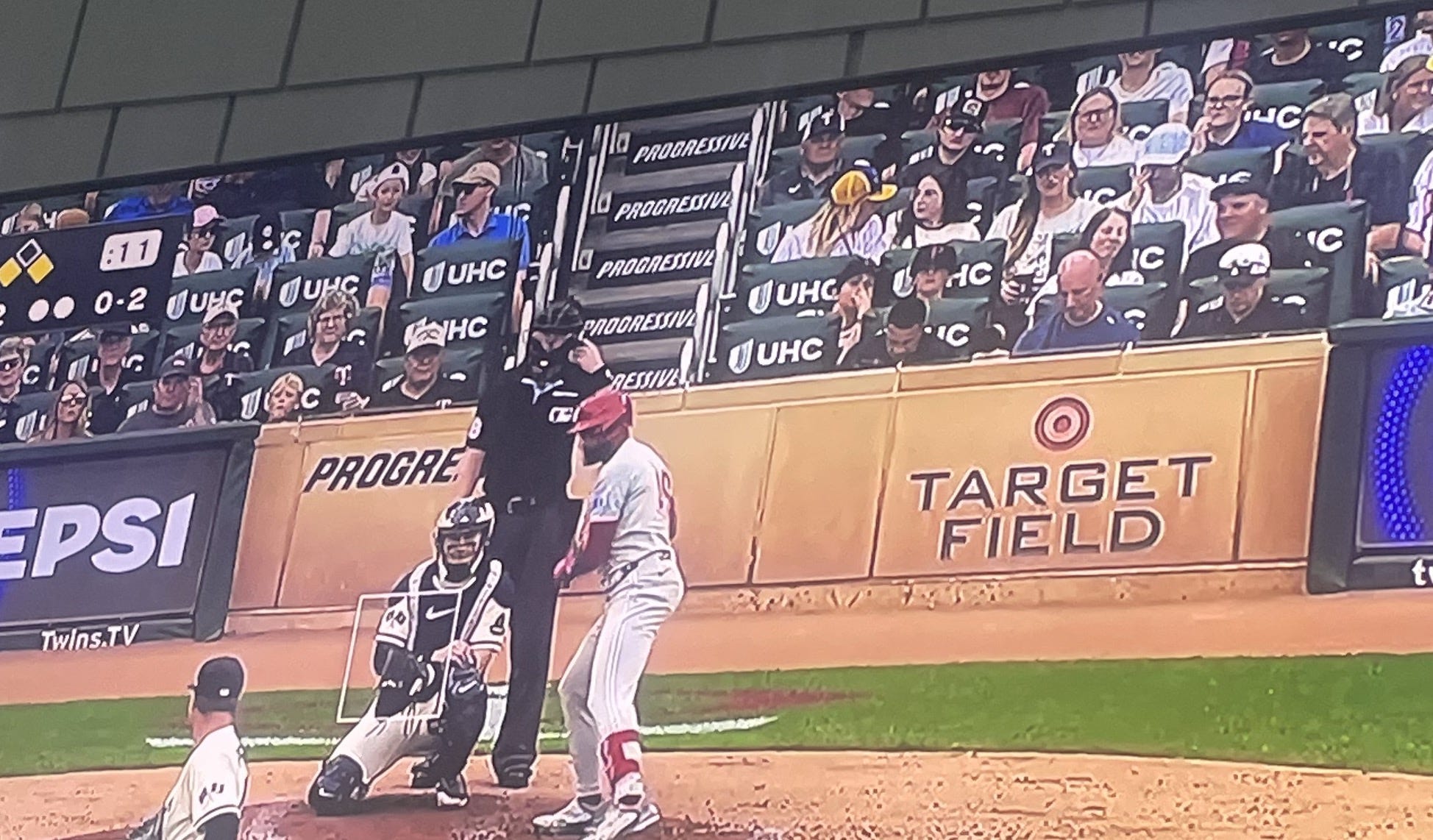
Last Saturday, while watching the Phillies take on the Minnesota Twins (Phillies won 9–1. Go Phils!) I (Joey) couldn’t help but notice the UnitedHealthcare-branded cushions lining the seats behind home plate. UnitedHealthcare, for those keeping track of the corporate family tree, is the health insurance subsidiary of UnitedHealth Group. UnitedHealthcare is commonly abbreviated as UHC (that’s what was on the seat cushions), while its parent company, UnitedHealth Group, is often shortened to UNH, its stock ticker.
And the joke I’m trying to make here is pretty simple: There’s no escaping UnitedHealth’s reach… not even at a baseball game!🥁
The game was at Target Field in Minneapolis, and Minnesota-based UnitedHealth Group, through its UnitedHealthcare subsidiary, has a longstanding partnership with the Twins. So while the Phillies were busy routing Minnesota on the field, UnitedHealth Group was getting plenty of airtime behind their hometown home plate. (Our premium dollars at work!)

