
Health systems’ minimum wage skyrockets

The percentage of healthcare organizations with an internal minimum wage of $15 or higher increased significantly over the last year, according to the “2022 Health Care Staff Compensation Survey” from SullivanCotter.

In 2021, less than 30 percent of healthcare organizations had an internal minimum wage of $15 per hour or more; this year, nearly 70 percent do. Some health systems are increasing the internal minimum wage to stay competitive amid staffing shortages and rising inflation. Others are increasing hourly rates as a result of union negotiations.

Health systems reported large increases in overall staff salaries, wages and benefits this year, and many expect to see increases in 2023 as well.

Here is how the internal minimum wage rates changed over the last year:

1. Less than $10 per hour
2021: 2.9 percent
2022: 2.2 percent

2. $10 per hour
2021: 14.7 percent
2022: 5 percent

3. $11 per hour
2021: 13.7 percent
2022: 3.9 percent

4. $12 per hour
2021: 12.7 percent
2022: 7.8 percent

5. $13 per hour
2021: 12.7 percent
2022: 6.1 percent

6. $14 per hour
2021: 14.7 percent
2022: 5.6 percent

7. $15 per hour
2021: 26.5 percent
2022: 53.9 percent

8. More than $15 per hour
2021: 2 percent
2022: 15.6 percent
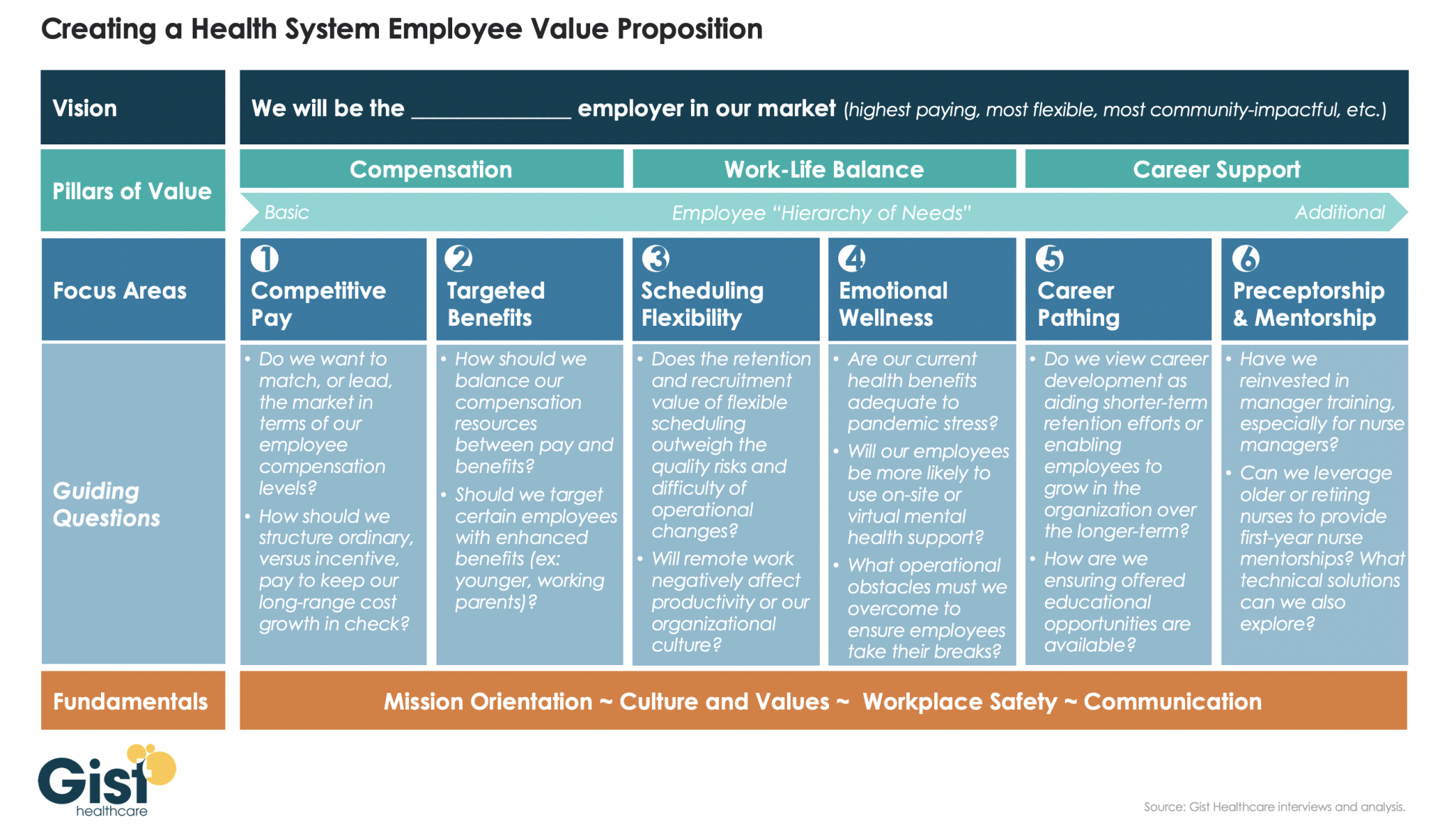
Developing a compelling value proposition for employees

https://mailchi.mp/ff342c47fa9e/the-weekly-gist-july-22-13699925?e=d1e747d2d8

As we’ve been discussing, the COVID pandemic and ensuing economic environment have driven health system job vacancies and attrition rates to all-time highs. Right now, for myriad reasons, many hospital workers are deciding that the financial, emotional, and professional benefits of working for a hospital are outweighed by the toll working in a hospital takes on them personally.

Health systems are responding to this challenge with a wide variety of discrete measures—including hiring and retention bonuses, incentive pay, employee wellbeing initiatives, and expanded professional development opportunities— that target specific groups of employees, but don’t form a long-term solution to workforce instability. 

To rebuild a stable and committed workforce, health systems must create, and then communicate, a compelling employee value proposition—a concise statement highlighting why employees should work for them.
 
The graphic above shows what we believe are the key components of a successful employee value proposition, which must have a clear vision and focus on the things most important to employee needs: compensation, work-life balance, and career support. Systems can use the guiding questions listed in each column to craft a value proposition that is differentiated in their local labor market, informed by their level of resources, and undergirded by their own culture and values.