Michigan’s Beaumont Health to acquire Ohio-based Summa Health

https://www.healthcarefinancenews.com/news/michigans-largest-health-system-acquire-ohio-based-summa-health?mkt_tok=eyJpIjoiTjJVNE9HTm1OelEwTlRkaiIsInQiOiJsaDZIK0JaczhmMFBzWElmSDluT1VROHc3ckM2azFCZ0NvUnR2U2NmYlRIa2VnYkw2dnR1NmJEMnFrcEFVZUVVSEpVTjlBcXkxaXZaSFFlUFR6djBvRjBTM2NpRFFQMXBDQkRVaFpQSEVtMVFTRlNqUTRBaUxTUmg2MnNrVXFiYiJ9

Beaumont Health will gain a health insurance arm in SummaCare.

Michigan-based Beaumont Health will gain a health insurance operation and opportunities for significant regional expansion as part of its acquisition of Summa Health, headquartered in Akron, Ohio.

The not-for-profit health systems announced their intent to merge last week in a deal that’s expected to close by the end of the year.  Among other benefits, the merger will add four hospitals, a health plan, and managed care expertise to Beaumont’s overall portfolio.

Financial terms were not disclosed.

WHY THIS MATTERS

These are big players in their respective markets. Beaumont is among Michigan’s largest healthcare systems and includes eight hospitals and a total annual net patient revenue of $4.7 billion.

Summa Health is among the largest such organizations in Ohio, encompassing a network of four hospitals, community health centers, a health plan, a physician-hospital organization, and a multi-specialty physician organization. The company reports total annual revenues of $1.4 billion.

Summa Health, which began seeking a partner in September 2018, will keep its name and some degree of local control.

THE LARGER TREND

The Beaumont-Summa deal is the latest merger to form a regional health system that allows two entities to share operational capabilities and care models across state lines but within a contiguous geography.

ON THE RECORD

“By welcoming Summa into the Beaumont family, both organizations will share expertise, invest in each other and continue to thrive as the industry evolves,” Beaumont Health CEO John Fox said.

“Since the formation of Beaumont Health, we have invested significantly in our Michigan employees, facilities and communities. We will continue to do so. One of our strategic goals is to become a regional healthcare leader. The planned addition of Summa Health allows us to take one step closer to achieving this key strategic priority,” Beaumont Health Board Chair John Lewis added.


CHS shares close at all-time low

https://www.beckershospitalreview.com/finance/chs-shares-close-at-all-time-low-071619.html

Image result for community health systems stock

Shares of Franklin, Tenn.-based Community Health Systems closed July 15 at $2.40, their lowest closing price ever and down 2 percent from July 12. 

The hospital chain’s stock price traded as low as $2.37 and as high as $2.52 on July 15 after closing July 12 at $2.45. Over the past year, CHS shares have traded between $2.35 and $5.35.

CHS has been selling off hospitals in recent years to improve its financial position and reduce its heavy debt load. In late 2017, the company announced a plan to sell a group of hospitals with combined annual revenue of $2 billion. During an earnings call on April 30, CHS Chairman and CEO Wayne Smith said the company expects to complete the hospital divestiture plan in 2019.

CHS carried $13.88 billion in long-term debt when it announced its divestiture plan at the end of 2017. As of March 31, CHS said its long-term debt totaled $13.39 billion.


Bernie Sanders pitches $20B hospital bailout plan

https://philadelphia.cbslocal.com/2019/07/15/bernie-sanders-hahnemann-university-hospital-rally-center-city/

Image result for Bernie Sanders Joins Rally In Philadelphia To Protest Hahnemann University Hospital Closure


Democratic Presidential Candidate Bernie Sanders calls Hahneman University Hospital Impending Closure Insane

https://philadelphia.cbslocal.com/2019/07/14/presidential-candidate-bernie-sanders-hahnemann-university-hospital-closure/

Image result for Fight to Save Hahnemann


Aligning executive comp with long-term strategy

https://mailchi.mp/3675b0fcd5fd/the-weekly-gist-july-12-2019?e=d1e747d2d8

Image result for long term decision making

I recently had a conversation with the CEO of a regional health system we’ve worked with for many years. It’s a system at the forefront of the shift to risk-based contracting—rather than the 3-5 percent of revenue at risk common across the industry, his system already has a third of its revenue fully at risk. (That’s not counting performance bonuses and other “value-based” reimbursement—it’s true, delegated risk for total cost of care.)

The system managed to get to this point without owning its own insurance plan, but now the CEO is considering whether that’s the right next step, which was the topic of our discussion. We talked through the pros and cons of launching a provider-sponsored plan, which has proven to be a difficult step for many other health systems.

When I asked the CEO how his team was able to move so much faster to risk than other systems, he told me an important component of their approach was the incentive structure put in place for executives and facility leaders. Rather than continuing to pay bonuses based on hospital or system profitability, the board agreed to encourage executives to take a longer-term, strategic view by paying straight salary.

Eliminating P&L-based bonuses allowed leaders to focus on making the right decisions to transform the business, without being overly concerned about the short-term impact on profitability. It’s an idea worth considering for other systems committed to leaving fee-for-service behind. The critical ingredient, of course, is ensuring the board is fully bought into the strategy and has a high degree of trust in system executives to make the best long-term decisions on behalf of the organization.


What happens when a teaching hospital shuts down

https://mailchi.mp/3675b0fcd5fd/the-weekly-gist-july-12-2019?e=d1e747d2d8

Image result for hahnemann hospital closing

It’s been less than a month since Hahnemann University Hospital in Philadelphia, the primary teaching hospital for Drexel University College of Medicine, announced that it will close in September. (A judge this week ordered the hospital to remain open while final bankruptcy and closure plans are approved.) The hospital was acquired by for-profit firm American Academic Health System (AAHS) from Tenet Healthcare Corp. just last year. AAHS cited untenable and irreversible financial losses as the reason for closure.

Hahnemann’s shuttering not only deprives the city of a 150-year old institution providing a large portion of its healthcare safety net, but also displaces 570 resident physicians, many of whom just arrived to begin training. The Philadelphia Inquirer eloquently captured the personal stories behind and implications of the closure. Many industry experts, including us, have questioned whether the country may be better served by fewer, larger teaching and research centers. With four medical schools, Philadelphia is a market where there may be too many academic medical centers, each operating at suboptimal scale.

But the Hahnemann saga illustrates the myriad difficulties of actually closing a financially-strained teaching hospital: challenges of for-profit “turnaround” management and performance goals, disruption for hundreds of trainees, and impact on access for the neediest patients. Getting to the right academic training and care delivery model for a region won’t come from reactive responses to abrupt closures, but will require community, government, academic and hospital leaders across organizations to collaborate on a long-term plan aimed at delivering greater value, scale and productivity.


Nonprofit Provider Pensions Remain Solidly Funded

https://www.healthleadersmedia.com/finance/nonprofit-provider-pensions-remain-solidly-funded

Nonprofit healthcare organizations benefited from an increase in pension funding last year, according to S&P.

Despite a volatile investment market, the median funded status of defined benefit pension plans for nonprofit healthcare organizations in 2018 was 85%, increasing nearly 5% due to a higher bond rate, according to an S&P Global Ratings report released Thursday afternoon.

Among nonprofit providers, Ponoma Valley Hospital Medical Center in California led the way with a 144.5% funding status, followed by Jackson County Schneck Memorial Hospital in Indiana and Northwestern Memorial Hospital in Illinois.

The lowest funded pension plans were at Northern Inyo County Hospital District in California, with a 44.6% funding status, followed by Kaiser Foundation Health Plan in California and Catholic Health System in New York.

The report found that most pension costs for Financial Accounting Standards Board (FASB) issuers are still low while Governmental Accounting Standards Board (GASB) issuers have dealt with cost as a credit pressure on the organization.


The ratings agency also noted that overall funded ratios have improved, crediting the absence of defined benefit plans as a positive factor, but indicated that such a trend is unlikely to continue going forward.

“In our view, most hospitals and health systems have managed their pension burdens well, with no credit implications,” the report stated. “However, we believe that even without a direct negative credit impact, in some circumstances, a high funding burden has inhibited improvement in credit quality.” 

The report continued: “Furthermore, not all hospitals’ pension funding improved in 2018, and for providers already struggling with thin income statements and balance sheets, underfunded pension plans could contribute to credit
stress.”

Looking at the short-term, nonprofit providers are slated to experience a boost to their respective financial profiles due to a higher funded status resulting in “lower statutory minimum contributions” to defined benefit plans.  

Conversely, the S&P report indicated that underfunded or soon-to-be underfunded defined benefit plans posed a credit risk for nonprofit providers.

As with other lingering financial challenges that health systems face, the looming pension crisis poses a substantial risk to long-term solvency  and the ability to attract clinical talent.  

According to the S&P report, the majority of issuers have closed plan offerings to new employees or eliminated plans to lower risk, while some have used debt funding to prop up plans despite an increased market risk.


2020 Election’s Healthcare Debate: Truths, Half-Truths, And Falsehoods

https://www.forbes.com/sites/joshuacohen/2019/07/08/2020-elections-healthcare-debate-truths-half-truths-and-falsehoods/#57fb72076466

Image result for health policy

are may emerge as the number one issue in the 2020 election. In itself this isn’t surprising, given that for many decades the electorate has considered healthcare a key issue.

And, the truth is healthcare access continues to be a major problem in the U.S., along with inequalities in outcomes, relatively high prices for healthcare services, and high out-of-pocket spending. Democratic presidential candidates have weighed in on these issues.

Without more clarity, however, the debate runs the risk of unraveling into exercises in sophistry.

Politicians in America have had a knack for telling half-truths or even untruths about healthcare. For example, in 2012, John Boehner claimed that “the U.S. has the best healthcare delivery system in the world.” And, just prior to signing the Affordable Care Act (ACA) into law, President Obama stated “if you like your healthcare plan, you can keep it.”

Many constituents — myself included — are also confused by certain terms used in the current debate.

Democrats appear to all want universal coverage. Among the presidential candidates there are different ideas about how to achieve the objective. One group, led by Vermont Senator Bernie Sanders, wants a single payer system, misnamed “Medicare for All.” When Sanders and others talk about Medicare for All, they aren’t aiming to expand the currently existing Medicare program to include all U.S. residents. Rather, they’re talking about a government program that would replace all currently existing forms of insurance, both private and public. Sanders’s plan would also substitute premiums and out-of-pocket spending with taxes. Whether this single payer system would result in lower healthcare costs for individuals – paid in the form of premiums and out-of-pocket costs, or taxes – remains to be calculated.

When Sanders and others speak of eliminating private insurance and replacing it with Medicare for All they ignore the fact that private insurance is embedded in many aspects of the Medicare program. For example, more than a third of Medicare beneficiaries are enrolled in a Medicare Advantage plan, and over 60% have their prescription drug coverage managed in stand-alone fashion by a prescription drug plan. So, in addition to the abolition of commercial private insurance, Medicare for All would radically alter the Medicare program as it operates today, which makes the name of Sanders’ plan all the more curious.

There are of course some things that presumably Medicare for All would do that the currently existing Medicare program does not, including coverage of long-term care expenses, hearing, dental, vision and foot care.

A number of candidates have proposed tinkering with the existing system by expanding Medicare eligibility, i.e., Medicare for More, and still others have proposed including a “public option” to augment ACA. Regarding the former, certain groups of people — for example, those over age 50 — would be offered the opportunity to purchase Medicare. And, in the ACA-plus scenario, certain individuals could buy into existing programs, such as Medicaid, state employee health plans, or an entirely new health plan run by the state.

One area of apparent consensus across the Medicare for All, Medicare for More, and ACA-plus camps is establishing a system in which there are lower reimbursement rates for healthcare services, which would drive down costs. Currently, there is a very sizable gap between Medicare and private health insurer reimbursement rates to hospitals and physicians. Medicare for All goes furthest in ratcheting down payments to essentially a single rate. By abolishing private insurance the rates would be reduced to Medicare levels, which are at least 40% lower. This, however, could prove to be problematic as such measures could force hospitals to close if they had to accept the rates currently paid by Medicare. Physicians would also stand to lose under a drastic rate reduction.

The healthcare industry is particularly opposed to Medicare for All because of concerns about disruption to the system – even undermining insurers’ raison d’être – and much lower reimbursement rates.

A frank discussion would be welcome regarding the implications of all proposals across the political spectrum, including ramifications of undoing the ACA. For too long, the healthcare debate on both sides of the aisle has shied away from explaining the consequences of policy proposals, or inaction for that matter.


Hospital Pass-through Billing Scheme Detailed in Florida Plea Agreement

https://www.healthleadersmedia.com/hospital-pass-through-billing-scheme-detailed-florida-plea-agreement

Kyle Marcotte of Jacksonville Beach admitted to using rural hospitals in a scheme that kicked back more than $50 million in insurance reimbursements for urine tests.


KEY TAKEAWAYS

Marcotte, the owner of a substance abuse treatment facility, sent his patients’ urine samples to a lab that retuned 40% of the insurance reimbursements to Marcotte. 

The lab owner then arranged with the managers of two rural hospitals in Florida to have the testing billed to private insurers at a better reimbursement under the hospitals’ in-network contracts.

The scheme expanded to include rural hospitals in Georgia, and more drug rehab centers, and laundered more than $57million in illicit reimbursements.

The owner of a Florida substance abuse treatment center pleaded guilty Tuesday to his role in a pass-through billing scheme that used rural hospitals to launder millions of dollars, the Department of Justice said.

Kyle Ryan Marcotte, 36, pleaded guilty to one count of conspiracy to commit money laundering and agreed to forfeit $10.2 million. His sentencing date has not been set, DOJ said.

According to DOJ, Marcotte, the owner of a substance abuse treatment facility in Jacksonville Beach, Florida. In 2015, Marcotte sent his patients’ urine samples to a lab that retuned 40% of the insurance reimbursements to Marcotte.


The lab owner then arranged with the managers of Campbellton–Graceville Hospital and Regional General Hospital Williston in Florida to have the testing billed to private insurers through the rural hospitals at a better reimbursement under the hospitals’ in-network contracts, DOJ said.

Attempts by HealthLeaders’ to contact officials at Campbellton–Graceville Hospital and Regional General Hospital Williston for comment were not successful.

Marcotte also admitted that he brokered deals with other substance abuse treatment centers to have their urine tests billed through the two hospitals in exchange for Marcotte receiving 10% of the insurance reimbursements. The other rehab centers received 30% of the reimbursements, DOJ said.

The lab owner, who was not identified by DOJ, then acquired Chestatee Hospital, in Dahlonega, Georgia, and other rural hospitals, and Marcotte continued to supply samples from his rehab facility and brokered deals with other substance rehab facilities that used those hospitals, DOJ said.

The reimbursements were sent from the hospitals to the lab, which sent them to two companies Marcotte controlled, North Florida Labs and KTL Labs.

Marcotte used the reimbursements from KTL Labs to pay $50 million in kickbacks to at least 88 companies and people operating other rehab facilities who involved in the scheme.  The total amount of money involved in the laundering scheme was $57.3 million, DOJ said.


Judge halts Philadelphia hospital closure

https://www.beckershospitalreview.com/finance/judge-halts-philadelphia-hospital-closure.html

Image result for hahnemann university hospital

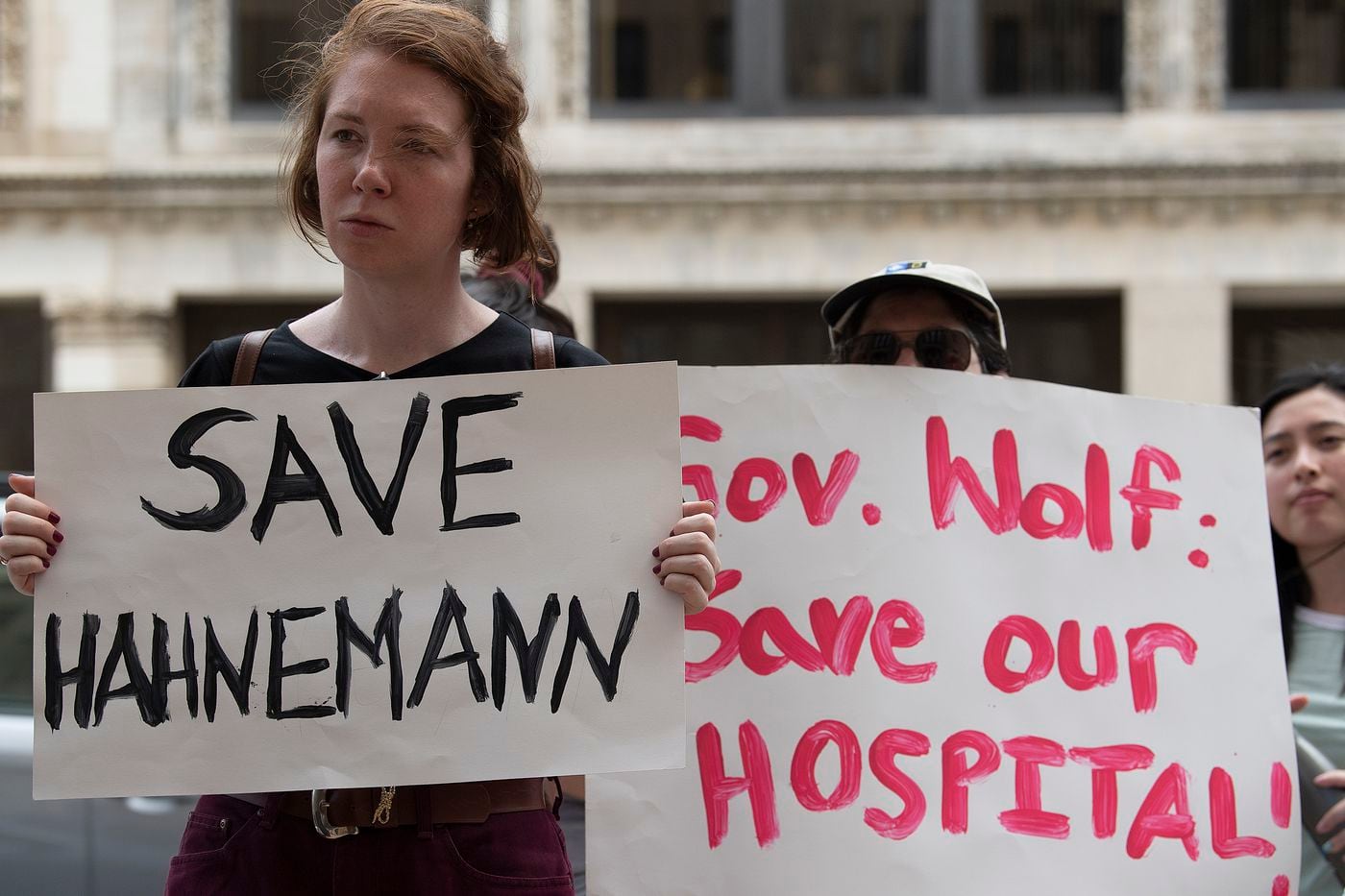
A Philadelphia Common Pleas judge granted part of a preliminary injunction request sought by the city to stop Hahnemann University Hospital from closing, but the Philadelphia hospital plans to continue scaling back services this week.

Judge Nina Padilla granted the injunction, which stops Hahnemann’s owners from shutting down the hospital without a closure plan authorized by the Philadelphia health commissioner. The injunction specifically prohibits Hahnemann’s owners “from closing, ceasing operations, or in any way further reducing or disrupting services” at the hospital’s emergency room until the health commissioner signs off on the closure plan, according to KYW Newsradio.

Hahnemann is diverting high-level trauma cases, but the hospital’s ER will remain open to treat patients with minor health issues, Marcel Pratt, city solicitor of Philadelphia, told KYW Newsradio.

Although the ER will remain open, Hahnemann plans to scale back other services this week. The hospital said it will stop all nonemergency surgeries and procedures, including child deliveries, on July 12, according to CBS Philly.

Philadelphia Academic Health System, which entered Chapter 11 bankruptcy June 30, plans to close Hahnemann University Hospital by Sept. 6.