Americans with coronavirus were flown home over CDC objections: report

https://thehill.com/policy/healthcare/483925-americans-with-coronavirus-flown-home-over-cdc-objections-report?utm_source=&utm_medium=email&utm_campaign=27749

Image result for Americans with coronavirus were flown home over CDC objections: report

More than a dozen Americans who had tested positive for coronavirus and were flown home alongside others without the virus were transported despite objections from the Centers for Disease Control and Prevention (CDC), The Washington Post reported on Thursday.

The 14 Americans who tested positive were among more than 300 who arrived back in the United States earlier this week after being evacuated from the Diamond Princess cruise ship in Japan, which has been the center of scrutiny over a coronavirus outbreak on board.

When those individuals tested positive for the virus, U.S. officials had to make a choice as to whether to let them fly home alongside the other passengers.

The State Department and some Department of Health and Human Services (HHS) officials decided to allow it while the CDC objected, warning of the risk of the disease spreading on the plane, the Post reported.

The plane did have a plastic-lined enclosure that allowed the 14 people with the virus to be separated from the others, according to the newspaper.

The State Department and HHS explained the decision to allow the flights with sick passengers in a statement earlier this week, without mentioning the CDC objections.

The Post reported that the CDC asked to be taken off the press release.

“These individuals were moved in the most expeditious and safe manner to a specialized containment area on the evacuation aircraft to isolate them in accordance with standard protocols,” the departments said in the earlier statement.

“Every precaution to ensure proper isolation and community protection measures are being taken, driven by the most up-to-date risk assessments by U.S. health authorities,” they added.

All of the Americans evacuated from the cruise ship will be quarantined on military bases for 14 days to ensure they do not spread the disease to others.


The Recurring Themes of Disease Outbreaks

The Recurring Themes of Disease Outbreaks

Image result for Disease Outbreaks"

With news this weekend that the coronavirus is poised to become a global pandemic and that China covered up early evidence of its spread, I was pleased to see an article from Ashley Fuoco Antonelli of the Advisory Board’s Daily Briefing revisiting a four-year-old post of mine. Kristina Daugirdas (my wife) and I had just taught a class on global outbreaks, and we pulled together a list of recurring patterns.

Fuoco Antonelli goes through that list and carefully shows how each of them maps pretty well onto what we’ve seen so far with the coronavirus. Here’s a taste:

Bagley’s 2016 list features several recurring themes that center on governments’ responses to disease outbreaks. For instance, three themes that he highlighted are:

  • Governments are typically unprepared, disorganized, and resistant to taking steps necessary to contain infectious diseases, especially in their early phases”;
  • Public officials are reluctant to publicize infections for fear of devastating the economy”; and
  • “Local, state, federal, and global governing bodies are apt to point fingers at one another over who’s responsible for taking action. Clear lines of authority are lacking.”

Each of those themes certainly holds true today. Media outlets have reported that China was slow to report the new coronavirus outbreak and implement measures to contain it. And some observers have questioned whether Chinese officials downplayed the outbreak’s severity.

For example, the New York Times‘s Li Yuan writes that, as the first cases of the virus emerged, officials “insisted that it was controlled and treatable,” and “the [Chinese] government took pains to keep up appearances.” For example, she notes, “[T]wo days before Wuhan told the world about the severity of the outbreak, it hosted a potluck banquet attended by more than 40,000 families so the city could apply for a world record for most dishes served at an event.”

Media reports also have highlighted complications and conflict between local and central officials in China regarding what information could be shared with the public. For instance, the Wall Street Journal‘s Josh Chin writes that Wuhan Mayor Zhou Xianwang has cited rules set by leaders in Beijing for “limit[ing] what he could disclose about the threat posed by the pathogen.”

As I told Fuoco Antonelli, there’s a sense that we’ve seen this movie before, and history offers us resources for thinking about how this is likely to play out. That may explain why some of the best writing on the virus has come from historians of infectious disease—including in particular my colleague Howard Markel, who has criticized the Chinese authorities for their heavy-handed quarantine.

I wanted to close by flagging Ashish Jha’s recent post at the Health Affairs Blog. Ashish takes an early look at the American response and closes with a look toward the future:

Here is the bottom line: we need to be doing more. This outbreak, under the best of circumstances, is going to cost countries around the world tens of billions of U.S. dollars and American businesses possibly many billions more. Yet we spend a fraction of that each year on vaccine platforms, research on viruses, and capacity-building for rapid vaccine production.  Firefighting is always more expensive than fire prevention. In a highly connected world, with climate change upon us, novel disease outbreaks that become global is the new normal.

Indeed, if history teaches us anything, it’s that outbreaks of novel infectious diseases have always been normal. Even so, we’re almost never ready. History teaches us that too.


First Case of Coronavirus Lands in U.S.

https://www.medpagetoday.com/infectiousdisease/publichealth/84458?xid=NL_breakingnewsalert_2020-01-21&eun=g885344d0r&utm_source=Sailthru&utm_medium=email&utm_campaign=VirusUpdateAlert_012120&utm_term=NL_Daily_Breaking_News_Active

Image result for First Case of Coronavirus Lands in U.S.

The first travel-related case of the novel coronavirus has been detected in the U.S. in a man from Washington state, CDC officials said on Tuesday.

The man tested positive for the novel coronavirus via laboratory testing, CDC officials said. According to Washington health officials, he arrived without symptoms on an “indirect” flight into Seattle-Tacoma International Airport on Jan. 15, prior to implementation of the new screening procedures at other U.S. airports. Described as “an astute gentleman,” the passenger was aware of the virus and promptly shared information with his provider when his symptoms developed.

Currently, the patient is hospitalized “out of an abundance of caution,” but not because of severe illness. He reported he did not visit any of the implicated markets in the Wuhan area.

A statement released by the CDC details how the man sought care at a nearby medical facility, where health professionals suspected novel coronavirus, and based on the patient’s travel history and symptoms, sent specimens out for testing. CDC confirmed the diagnosis on Monday.

Washington health officials emphasized that this was one of the hospitals that had “done a drill” about this type of illness, including how to transport a patient in an ambulance and what type of isolation is needed. They said that the patient here is “isolated and poses low risk to staff or to the general public.”

Julie Fischer, PhD, of Georgetown University in Washington, D.C., told MedPage Today that this looks to be a similar pattern for human-to-human transmission as SARS, where currently most cases of this novel coronavirus “are probably close contacts,” including healthcare workers. Chinese health officials announced that 14 healthcare workers had been infected.

“This is a big heads up to the rest of the world to go ahead and start preparing your healthcare workers and make sure they have proper equipment,” she said. “It’s a reminder of what we already knew was a risk.”

Fischer said that in addition to taking precautions to avoid infection (such as personal protective equipment), clinicians should “pay attention to evolving guidance.”

The CDC had already decided to step up screening at two additional U.S. airports prior to this case being reported, with additional screening being added at both Hartsfield-Jackson Atlanta International Airport (ATL) and Chicago O’Hare International Airport (ORD) this week. In addition, passengers from Wuhan will be “funneled” into airports with enhanced screening measures, CDC officials said.

“The long incubation period [for the virus] also makes early detection much harder, especially as we do not know how many passengers have flown abroad and how many will do so in the coming weeks,” Stratfor Senior East Asia analyst Zhixing Zhang said in a statement.

Fischer added that screening will be especially challenging, given that this is in the middle of increased flu activity in the U.S. and that clinicians must rely on a “non-specific, place-based case definition” (based on travel) until new diagnostics emerge.

She emphasized the importance of “a good diagnostic test,” saying that only a handful of labs are capable of testing for the virus now. Once molecular testing is available, such as a polymerase chain reaction (PCR) test, the CDC will figure out how best to optimize it and share it more widely, Fischer said.

Indeed, CDC officials said that they are having “active conversations” about diagnostics, as well as research into vaccines.

Over the weekend, the case count for the novel coronavirus rose to over 300, with 6 deaths, according to news reports. The World Health Organization (WHO) is scheduled to meet on Wednesday about whether this virus constitutes an international health emergency.


Measles deaths ‘staggering and tragic’

https://www.bbc.com/news/health-50659893?fbclid=IwAR3gBbcdBh9DpvLZetL7k8uvV5VXxk5TBy1bNtDYeRKEcpGy2Xx58ydn39s
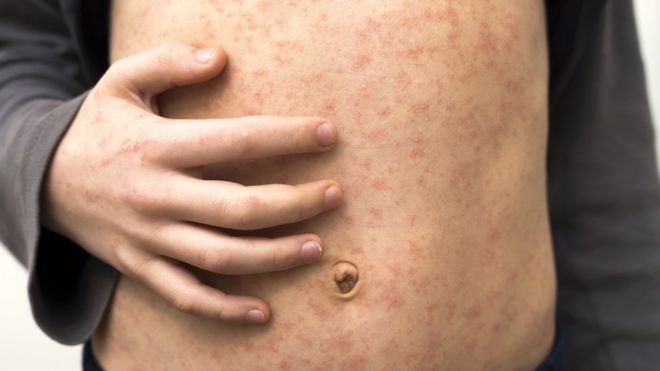
Measles

More than 140,000 people died from measles last year as the number of cases around the world surged once again, official estimates suggest.

Most of the lives cut short were children aged under five.

The situation has been described by health experts as staggering, an outrage, a tragedy and easily preventable with vaccines.

Huge progress has been made since the year 2000, but there is concern that incidence of measles is now edging up.

In 2018, the UK – along with Albania, the Czech Republic and Greece, lost their measles elimination status.

And 2019 could be even worse.

The US is reporting its highest number of cases for 25 years, while there are large outbreaks in the Democratic Republic of Congo, Madagascar and Ukraine.

The Pacific nation of Samoa has declared a state of emergency and unvaccinated families are hanging red flags outside their homes to help medical teams find them.

What is measles?

  • Measles is a highly infectious virus spread in droplets from coughs, sneezes or direct contact
  • It can hang in the air or remain on surfaces for hours
  • Measles often starts with fever, feeling unwell, sore eyes and a cough followed by a rising fever and rash
  • At its mildest, measles makes children feel very miserable, with recovery in seven-to-10 days – but complications, including ear infections, seizures, diarrhoea, pneumonia and brain inflammation, are common
  • The disease is more severe in the very young, in adults and in people with immunity problems

What are the numbers?

The global estimates are calculated by the World Health Organization (WHO) and the US Centers for Diseases Control and Prevention.

They show:

  • In 2000 – there were 28.2 million cases of measles and 535,600 deaths
  • In 2017 – there were 7.6 million cases of measles and 124,000 deaths
  • In 2018 – there were 9.8 million cases of measles and 142,000 deaths

Measles cases do not go down every year – there was an increase between 2012 and 2013, for example.

However, there is greater concern now that progress is being undone as the number of children vaccinated stalls around the world.

“The fact that any child dies from a vaccine-preventable disease like measles is frankly an outrage and a collective failure to protect the world’s most vulnerable children,” said Dr Tedros Ghebreysus, director-general of the WHO.

How are the numbers calculated?

Every single case of measles cannot be counted. In 2018, only 353,236 cases were officially recorded (out of the 7.8 million estimated).

So scientists perform complex maths for each country.

They take reported cases, the population size, deaths rates, the proportion of children vaccinated and more to eventually produce a global estimate.

Dr Minal Patel, who performed the number-crunching, told the BBC: “We’ve had a general trajectory downwards for deaths, which is great. Everyone involved in vaccination programmes should be very proud.

“But we’ve been stagnating in numbers of deaths for about the past seven years, and what’s really concerning is from last year we’ve gone up, and it looks like we’ve gone backwards.”

What is going on?

In short, not enough children are being vaccinated.

In order to stop measles spreading, 95% of children need to get the two doses of the vaccine.

But the figures have been stubbornly stuck for years at around 86% for the first jab, and 69% for the second.

Why enough children are not being vaccinated is more complicated – and the reasons are not the same in every country.

The biggest problem is access to vaccines, particular in poor countries.

The five worst-affected countries in 2018 were Democratic Republic of Congo, Liberia, Madagascar, Somalia and Ukraine.

The Ebola outbreak in Liberia (2014-16) and plague in Madagascar (2017) have taken a toll on their healthcare systems.

“Democratic Republic of Congo, Somalia and Ukraine, the other countries hardest-hit by measles, each face conflicts, with DRC additionally battling a serious Ebola outbreak and rampant distrust,” Prof Heidi Larson, from the London School of Hygiene & Tropical Medicine, explained.

The other issue is people who do have access to vaccines choosing not to immunise their children.

Will things be worse next year?

It looks likely.

The number of reported cases by mid-November this year was 413,000 compared with 353,000 for the whole of last year.

What do the experts say?

Henrietta Fore, Unicef’s executive director, said: “The unacceptable number of children killed last year by a wholly preventable disease is proof that measles anywhere is a threat to children everywhere.”

Dr Seth Berkley, chief executive of Gavi, the Vaccine Alliance, said: “It is a tragedy that the world is seeing a rapid increase in cases and deaths from a disease that is easily preventable with a vaccine.

“While hesitancy and complacency are challenges to overcome, the largest measles outbreaks have hit countries with weak routine immunisation and health systems.”

Prof Larson said: “These numbers are staggering. Measles, the most contagious of all vaccine-preventable diseases, is the tip of the iceberg of other vaccine-preventable disease threats and should be a wake-up call.”