


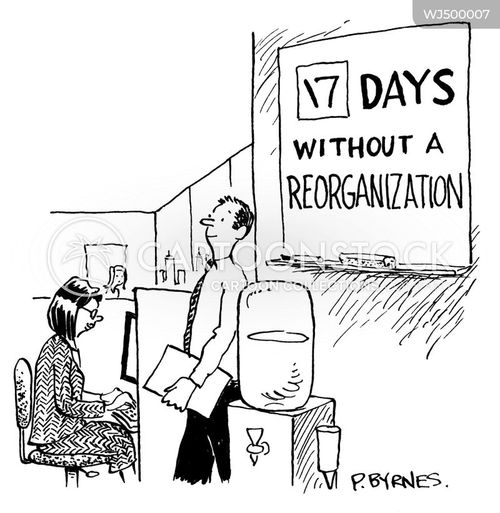


Catholic Health, based in Buffalo, New York, has dramatically restructured its senior leadership team.
President and CEO Mark Sullivan announced what the organization described as a “major reorganization” this week, about a year and a half after he was named to the system’s top executive job.
“Change is happening all around us in healthcare and rather than react to the pressures of our industry, we must lead change in the region to sustain our mission and meet the needs of the patients and communities we serve,” Sullivan said in a statement. “This new leadership structure will build on the high quality care that already exists within our system and drive development, innovation and efficiencies that will have an even greater impact on the health of our community.”
The team will spend the next several months transitioning into their new roles, Sullivan said.
“We are all excited about the opportunities before us to lead the transformation of healthcare in our community, but we also know how important smooth transitions are,” he added, “not only for our physician partners and associates, but more importantly, for the patients and long term care residents we serve.”
Here are seven significant changes outlined in Sullivan’s announcement:
Walt Ludwig, who was named president and CEO of Kenmore Mercy Hospital just last year, will keep his position, according to the announcement.
The overhaul comes after two recent high-level hires. William Pryor was named Catholic Health’s new chief administrative officer, and Dr. Hans Cassagnol was named chief clinical officer and physician executive. And it comes as Catholic Health is currently conducting a national search for a chief operating officer and chief transformation & innovation officer, according to the announcement.
“How healthcare is delivered in the future will be different than it is today and our executive team must be reflective and responsive to these changes,” Sullivan said. “With the new talent we are recruiting to the region and the experienced leaders we have assuming new roles within our system, I am confident we have the right team in place to fulfill our Mission and drive change where it is needed to better serve the community and build upon our success as the quality, safety and patient satisfaction leader in Western New York.”

On his first day as CEO of the Carlsberg Group, a global brewery and beverage company, Cees ‘t Hart was given a key card by his assistant. The card locked out all the other floors for the elevator so that he could go directly to his corner office on the 20th floor. And with its picture windows, his office offered a stunning view of Copenhagen. These were the perks of his new position, ones that spoke to his power and importance within the company.
Cees spent the next two months acclimating to his new responsibilities. But during those two months, he noticed that he saw very few people throughout the day. Since the elevator didn’t stop at other floors and only a select group of executives worked on the 20th floor, he rarely interacted with other Carlsberg employees. Cees decided to switch from his corner office on the 20th floor to an empty desk in an open-floor plan on a lower floor.
When asked about the changes, Cees explained, “If I don’t meet people, I won’t get to know what they think. And if I don’t have a finger on the pulse of the organization, I can’t lead effectively.”
This story is a good example of how one leader actively worked to avoid the risk of insularity that comes with holding senior positions. And this risk is a real problem for senior leaders. In short, the higher leaders rise in the ranks, the more they are at risk of getting an inflated ego. And the bigger their ego grows, the more they are at risk of ending up in an insulated bubble, losing touch with their colleagues, the culture, and ultimately their clients. Let’s analyze this dynamic step by step.
As we rise in the ranks, we acquire more power. And with that, people are more likely to want to please us by listening more attentively, agreeing more, and laughing at our jokes. All of these tickle the ego. And when the ego is tickled, it grows. David Owen, the former British Foreign Secretary and a neurologist, and Jonathan Davidson, a professor of psychiatry and behavioral sciences at Duke University, call this the “hubris syndrome,” which they define as a “disorder of the possession of power, particularly power which has been associated with overwhelming success, held for a period of years.”
An unchecked ego can warp our perspective or twist our values. In the words of Jennifer Woo, CEO and chair of The Lane Crawford Joyce Group, Asia’s largest luxury retailer, “Managing our ego’s craving for fortune, fame, and influence is the prime responsibility of any leader.” When we’re caught in the grip of the ego’s craving for more power, we lose control. Ego makes us susceptible to manipulation; it narrows our field of vision; and it corrupts our behavior, often causing us to act against our values.
Our ego is like a target we carry with us. And like any target, the bigger it is, the more vulnerable it is to being hit. In this way, an inflated ego makes it easier for others to take advantage of us. Because our ego craves positive attention, it can make us susceptible to manipulation. It makes us predictable. When people know this, they can play to our ego. When we’re a victim of our own need to be seen as great, we end up being led into making decisions that may be detrimental to ourselves, our people, and our organization.
An inflated ego also corrupts our behavior. When we believe we’re the sole architects of our success, we tend to be ruder, more selfish, and more likely to interrupt others. This is especially true in the face of setbacks and criticism. In this way, an inflated ego prevents us from learning from our mistakes and creates a defensive wall that makes it difficult to appreciate the rich lessons we glean from failure.
Finally, an inflated ego narrows our vision. The ego always looks for information that confirms what it wants to believe. Basically, a big ego makes us have a strong confirmation bias. Because of this, we lose perspective and end up in a leadership bubble where we only see and hear what we want to. As a result, we lose touch with the people we lead, the culture we are a part of, and ultimately our clients and stakeholders.
Breaking free of an overly protective or inflated ego and avoiding the leadership bubble is an important and challenging job. It requires selflessness, reflection, and courage. Here are a few tips that will help you:


 HENRY KOTULA