Obamacare Repeal Could Push Rural Hospitals to the Brink

http://www.thefiscaltimes.com/2017/01/05/Obamacare-Repeal-Could-Push-Rural-Hospitals-Brink?utm_campaign=KHN%3A+Daily+Health+Policy+Report&utm_source=hs_email&utm_medium=email&utm_content=40201659&_hsenc=p2ANqtz-8KqKXcgqf_db4edAlc57mjW0ZBhwKkpUjZiSlsuEm5fUpTtlY79dLUg_WR5hqtaQqIpmHbr1QCs8iiVNz7EsE_1FhovQ&_hsmi=40201659

Many of the rural hospitals and health centers serving 62 million Americans have operated on a shoestring for years.

Since January 2010, 80 rural hospitals and health care facilities that provided treatment to large numbers of elderly and low-income families were forced to close for financial reasons. More than 670 of the remaining 2,078 facilities are vulnerable or “at risk” of closure, according to hospital industry experts.

For many of those hospitals, the Affordable Care Act (ACA) was a lifeline, providing millions of their patients with the financial wherewithal to obtain health care treatment and prescription drugs without having to turn to emergency rooms for assistance.

But as the new Republican Congress and GOP President-elect Donald Trump press to repeal Obamacare in the coming months with no suitable replacement in hand, rural hospital officials say they are facing a “triple whammy” of lost financial benefits that could force many of the remaining rural hospitals out of business in the coming decade.

“We’re in the midst of a rural hospital closure crisis right now, and that is with the ACA currently in place,” Alan Morgan, the CEO of the National Rural Health Association, said in an interview Thursday. “Looking at our projections for where we’re headed, at the current rate we could see a third of all rural hospitals closed within the next decade.”

The advent of Obamacare enabled 1.7 million rural Americans to purchase subsidized private coverage on government operated exchanges last year, an 11 percent increase from 2015, according to the U.S. Department of Health and Human Services. Millions more obtained expanded Medicaid coverage for low-income adults in rural states that opted into the program under Obamacare.

For-profit hospital chain Iasis Healthcare backs away from IPO

For-profit hospital chain Iasis Healthcare backs away from IPO

off-switch

Iasis Healthcare, a for-profit chain with 18 hospitals, nearly 150 ambulatory clinics and a health insurance arm, has withdrawn plans for an initial public offering.

Iasis, based in the Nashville suburb of Franklin, Tennessee, quietly announced the cancellation of the IPO in a Dec. 30 filing with the Securities and Exchange Commission. That was the last business day of the year, when investors and news organizations are typically not paying much attention.

The company had announced nearly two years earlier that it would have an IPO worth as much as $100 million. Iasis did not give a reason for the withdrawal.

The healthcare chain reported a pre-tax loss from continuing operations of $117 million for the fiscal year ended Sept. 30, 2016. That compares to operational earnings of $6.8 million during fiscal 2015.

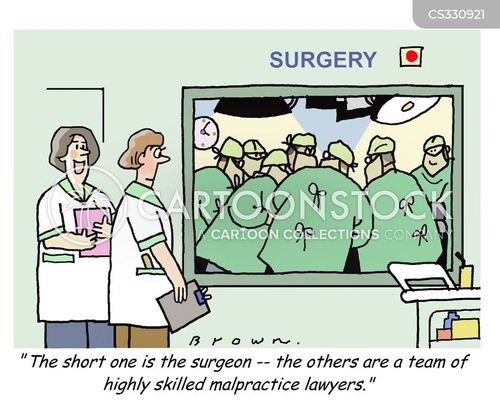
How can Doctors avoid Malpractice Suits?

Image result for how doctors can avoid malpractice suits

Why do doctors get sued? How can malpractice suits be avoided? It turns out, the answer may be simple. Defensive medicine refers to the idea that doctors are forced to order extra tests, perform extra procedures, or push for more office visits because they think that without them, they’re at greater risk for being sued.

Only 20 Percent Of Americans Support Health Law Repeal Without Replacement Plan

http://khn.org/news/only-20-of-americans-support-health-law-repeal-without-replacement-plan/

0106117-kff-fig7

The Republican strategy of repealing the Affordable Health Care Act before devising a replacement plan has the support of only one in five Americans, a poll released Friday finds.

The Kaiser Family Foundation survey also disclosed that shrinking the federal government’s involvement and spending in health care — the long-sought goal of House Speaker Paul Ryan and other Republican lawmakers — is less important to most Americans than is ensuring medical care is affordable and available. (Kaiser Health News is an editorially independent project of the foundation.)

Views split not only on partisan lines but also within the Republican Party, where nearly four in 10 think that the government should guarantee health care is available to the elderly and to low-income people, even if it means more federal involvement.

Despite the rout of Democrats in the election, which gave the GOP control of both the White House and Congress, the public’s view on the Affordable Care Act remains as divided as it has been since it was passed by President Barack Obama and congressional Democrats in 2010.  Currently, 47 percent of the public wants to keep the law, which upended the way insurers do business and expanded coverage to 20 million Americans.


The Complex Mess of Health Insurance

The Kaiser Family Foundation is one of the best sources of information on health care, and it recently convened some focus groups in the Midwest and Pennsylvania. These groups included people who received health insurance through an Obamacare exchange and who also voted for Donald Trump.

You can read about the results in an Op-Ed today by Drew Altman, Kaiser’s chief executive. It underscores how messy and uncertain the coming debate over Obamacare’s future will likely be.

I want to point out one theme that keeps popping up in Altman’s piece — and existed long before Obamcare: A lot of Americans are deeply frustrated by the logistical headaches built into our health care system.

As Altman writes: “They were especially upset by surprise bills for services they believed were covered. They said their coverage was hopelessly complex.” If they had their way, Altman says, their insurance would become “much more understandable.”

I share their frustration, and I imagine most of you do, too. Just this week, a member of my family endured the Kafkaesque experience of being told that she needed to show up for an appointment even if she were no longer sick or face a penalty, thanks to insurance rules.

The Health Care Plan Trump Voters Really Want

This week Republicans in Congress began their effort to repeal and potentially replace the Affordable Care Act. But after listening to working-class supporters of Donald J. Trump — people who are enrolled in the very health care marketplaces created by the law — one comes away feeling that the Washington debate is sadly disconnected from the concerns of working people.

Those voters have been disappointed by Obamacare, but they could be even more disappointed by Republican alternatives to replace it. They have no strong ideological views about repealing and replacing the Affordable Care Act, or future directions for health policy. What they want are pragmatic solutions to their insurance problems. The very last thing they want is higher out-of-pocket costs.

The Kaiser Foundation organized six focus groups in the Rust Belt areas — three with Trump voters who are enrolled in the Affordable Care Act marketplaces, and three with Trump voters receiving Medicaid. The sessions, with eight to 10 men and women each, were held in late December in Columbus, Ohio, Grand Rapids, Mich., and New Cumberland, Pa. Though the participants did not agree on everything, they expressed remarkably similar opinions on many health care questions. They were not, by and large, angry about their health care; they were simply afraid they will be unable to afford coverage for themselves and their families. They trusted Mr. Trump to do the right thing but were quick to say that they didn’t really know what he would do, and were worried about what would come next.

They spoke anxiously about rising premiums, deductibles, copays and drug costs. They were especially upset by surprise bills for services they believed were covered. They said their coverage was hopelessly complex. Those with marketplace insurance — for which they were eligible for subsidies — saw Medicaid as a much better deal than their insurance and were resentful that people with incomes lower than theirs could get it. They expressed animosity for drug and insurance companies, and sounded as much like Bernie Sanders supporters as Trump voters. One man in Pennsylvania with Type 1 diabetes reported making frequent trips to Eastern Europe to purchase insulin at one-tenth the cost he paid here.