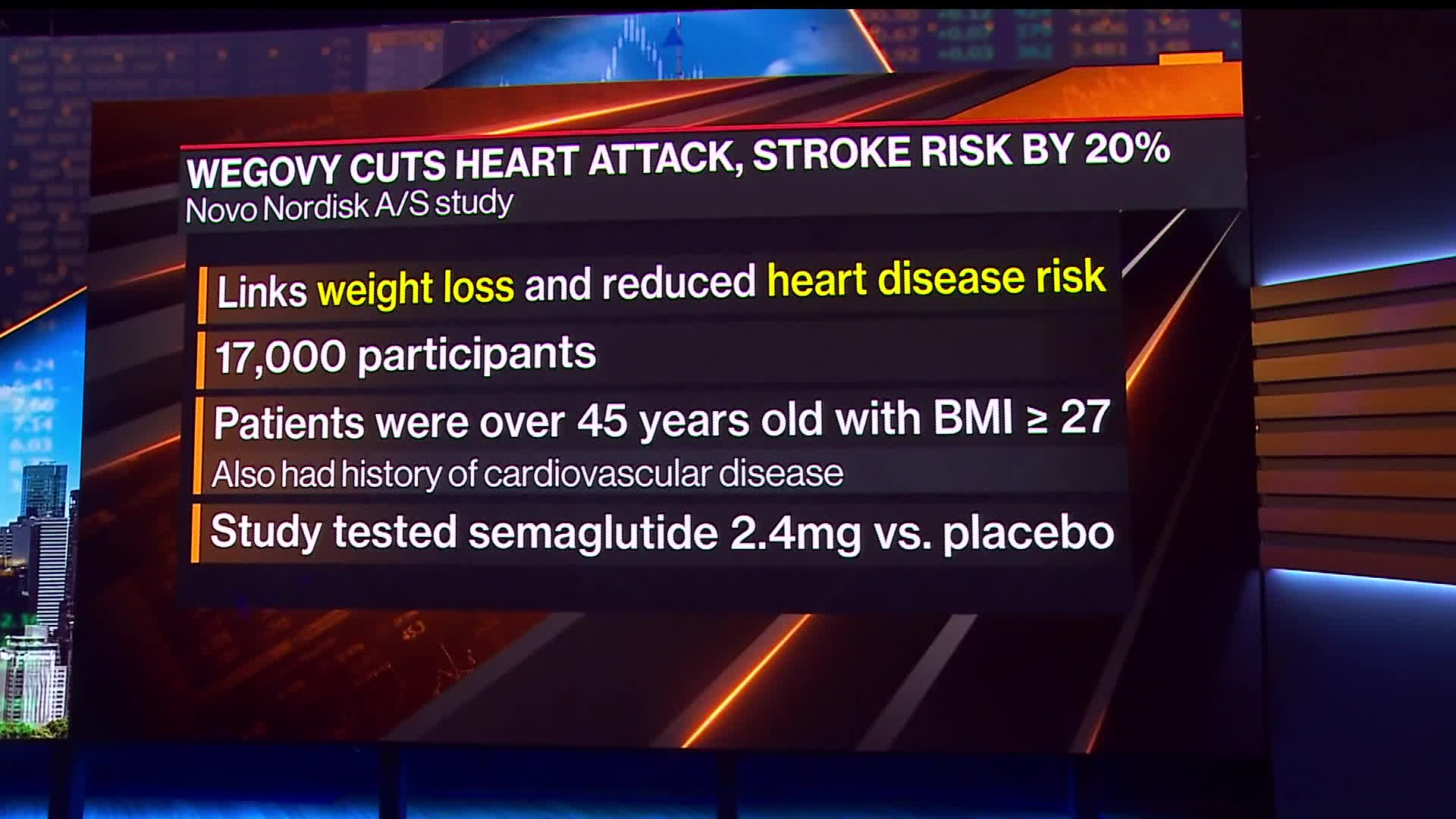
On Tuesday, Novo Nordisk released the headline results of a large clinical trial demonstrating that its popular GLP-1 inhibitor Wegovy reduced the risk of heart attacks, strokes, and cardiovascular deaths by 20 percent. The SELECT trial enrolled roughly 17,600 non-diabetic adults aged 45 and older who were overweight or obese with established cardiovascular disease. It compared people in this population treated with the drug to those given a placebo, and tracked them for up to five years. The drugmaker said it plans to release the full trial results at a conference later this year. These results are similar to a previous study that found Wegovy sister drug Ozempic, also made by Novo Nordisk, reduced the risk of adverse cardiac events by 26 percent in adults with type 2 diabetes.
The Gist: The cardioprotective effects demonstrated in this study far exceeded researchers’ expectations. Though concerns still abound about the high costs of Wegovy (nearly $1,350 per month) and similar drugs, these results will certainly put pressure on Medicare and other insurers to provide coverage.
Questions remain around how the drug actually improves cardiovascular outcomes, and whether patients with cardiac disease who are not overweight or obese might also benefit from taking it.
Despite the fact that the data are still preliminary, the argument that obesity medications are solely “lifestyle” or “vanity drugs”—which some insurers and employers have been using to deny coverage—will now be much harder to defend.
At a recent meeting of physician leaders, we sat next to the head of the health system’s bariatric surgery program. Given the recent and rapid uptake of GLP-1 inhibitors like Ozempic and Wegovy, we asked how he thought these drugs, which can generate dramatic weight loss, would affect his practice.
He chuckled, “they’re really good drugs…they could put me out of business!
It’s too early to say if they’ll be effective over a lifetime, but there’s no doubt they’re going to have a huge impact on our work.” It got us thinking about the other reverberations this class of drugs could have on care needs, if a majority of obese Americans had access to them.
Some effects are obvious.
We could see significant declines in treatment needs for chronic diseases like obesity and heart failure, for which obesity is a strong risk factor. Given that obese patients are much more likely to need joint replacement surgery, we could see a big hit to that demand—although some patients who are poor candidates for surgery because of weight-related complications could become eligible.
Even longer-term, if American’s aren’t dying of chronic disease, we’ll still die of something, so expect diseases of advanced age, like Alzheimer’s and many cancers, to increase. Other pharmaceutical innovations, like the growth of immunotherapy and more targeted cancer treatments, also have the potential to radically alter how disease is managed.
We may be at the beginning of another wave of disruptive medical innovation on the order of the introduction of statins in the 1990s, which combined with minimally invasive catheterization, slashed the need for bypass surgery.
Given their sky-high prices, it’s too soon to tell how quickly the use of these new obesity drugs will grow, but innovations like these will serve to pull more care out of hospitals and into less invasive outpatient medical management.
When COVID-19 first swarmed the United States, one health insurer called some customers with a question: Do you have enough to eat?
Oscar Health wanted to know if people had adequate food for the next couple weeks and how they planned to stay stocked up while hunkering down at home.
“We’ve seen time and again, the lack of good and nutritional food causes members to get readmitted” to hospitals, Oscar executive Ananth Lalithakumar said.
Food has become a bigger focus for health insurers as they look to expand their coverage beyond just the care that happens in a doctor’s office. More plans are paying for temporary meal deliveries and some are teaching people how to cook and eat healthier foods.
Benefits experts say insurers and policymakers are growing used to treating food as a form of medicine that can help patients reduce blood sugar or blood pressure levels and stay out of expensive hospitals.
“People are finally getting comfortable with the idea that everybody saves money when you prevent certain things from happening or somebody’s condition from worsening,” said Andrew Shea, a senior vice president with the online insurance broker eHealth.
This push is still relatively small and happening mostly with government-funded programs like Medicaid or Medicare Advantage, the privately run versions of the government’s health program for people who are 65 or older or have disabilities. But some employers that offer coverage to their workers also are growing interested.
Medicaid programs in several states are testing or developing food coverage. Next year, Medicare will start testing meal program vouchers for patients with malnutrition as part of a broader look at improving care and reducing costs.
Nearly 7 million people were enrolled last year in a Medicare Advantage plan that offered some sort of meal benefit, according to research from the consulting firm Avalere Health. That’s more than double the total from 2018.
Insurers commonly cover temporary meal deliveries so patients have something to eat when they return from the hospital. And for several years now, many also have paid for meals tailored to patients with conditions such as diabetes.
But now insurers and other bill payers are taking a more nuanced approach. This comes as the coronavirus pandemic sends millions of Americans to seek help from food banks or neighborhood food pantries.
Oscar Health, for instance, found that nearly 3 out of 10 of its Medicare Advantage customers had food supply problems at the start of the pandemic, so it arranged temporary grocery deliveries from a local store at no cost to the recipient.
The Medicare Advantage specialist Humana started giving some customers with low incomes debit cards with either a $25 or $50 on them to help buy healthy food. The insurer also is testing meal deliveries in the second half of the month.
That’s when money from government food programs can run low. Research shows that diabetes patients wind up making more emergency room visits then, said Humana executive Dr. Andrew Renda.
“It may be because they’re still taking their medications but they don’t have enough food. And so their blood sugar goes crazy and then they end up in the hospital,” he said.
The Blue Cross-Blue Shield insurer Anthem connected Medicare Advantage customer Kim Bischoff with a nutritionist after she asked for help losing weight.
The 43-year-old Napoleon, Ohio, resident had lost more than 100 pounds about 11 years ago, but she was gaining weight again and growing frustrated.
The nutritionist helped wean Bischoff from a so-called keto diet largely centered on meats and cheeses. The insurer also arranged for temporary food deliveries from a nearby Kroger so she could try healthy foods like rice noodles, almonds and dried fruits.
Bischoff said she only lost a few pounds. But she was able to stop taking blood pressure and thyroid medications because her health improved after she balanced her diet.
“I learned that a little bit of weight gain isn’t a huge deal, but the quality of my health is,” she said.
David Berwick of Somerville, Massachusetts, credits a meal delivery program with improving his blood sugar, and he wishes he could stay on it. The 64-year-old has diabetes and started the program last year at the suggestion of his doctor. The Medicaid program MassHealth covered it.
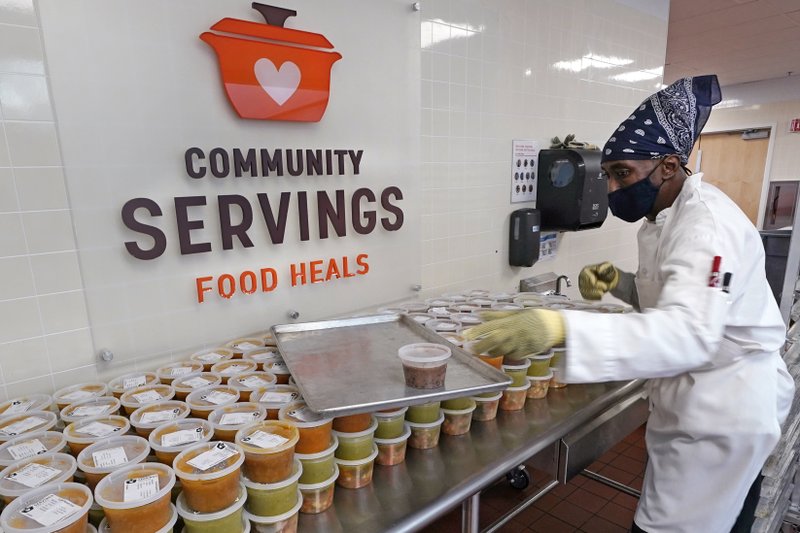
Berwick said the nonprofit Community Servings gave him weekly deliveries of dry cereal and premade meals for him to reheat. Those included soups and turkey meatloaf Berwick described as “absolutely delicious.”
“They’re not things I would make on my own for sure,” he said. “It was a gift, it was a real privilege.”
These programs typically last a few weeks or months and often focus on customers with a medical condition or low incomes who have a hard time getting nutritious food. But they aren’t limited to those groups.
Indianapolis-based Preventia Group is starting food deliveries for some employers that want to improve the eating habits of people covered under their health plans. People who sign up start working with a health coach to learn about nutrition.
Then they can either begin short-term deliveries of meals or bulk boxes of food and recipes to try. The employer picks up the cost.
It’s not just about hunger or a lack of good food, said Chief Operating Officer Susan Rider. They’re also educating people about what healthy, nutritious food is and how to prepare it.
Researchers expect coverage of food as a form of medicine to grow as insurers and employers learn more about which programs work best. Patients with low incomes may need help first with getting access to nutritional food. People with employer-sponsored coverage might need to focus more on how to use their diet to manage diabetes or improve their overall health.
A 2019 study of Massachusetts residents with similar medical conditions found that those who received meals tailored to their condition had fewer hospital admissions and generated less health care spending than those who did not.
Study author Dr. Seth Berkowitz of the University of North Carolina noted that those meals are only one method for addressing food or nutrition problems. He said a lot more can be learned “about what interventions work, in what situations and for whom.”
A lack of healthy food “is very clearly associated with poor health, so we know we need to do something about it,” Berkowitz said.



 HENRY KOTULA