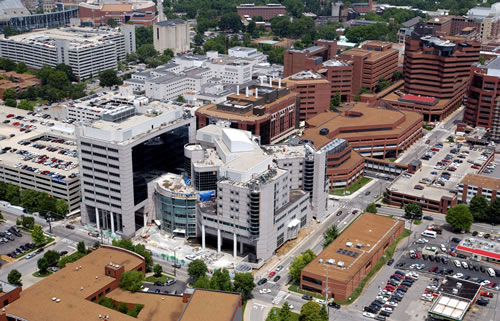
Vanderbilt University Medical Center points to Epic rollout for 68% drop in operating income

https://www.beckershospitalreview.com/finance/vanderbilt-university-medical-center-points-to-epic-rollout-for-68-drop-in-operating-income-082918.html

Related image


Nashville, Tenn.-based Vanderbilt University Medical Center saw revenues increase in fiscal year 2018, but the hospital ended the period with lower operating income, according to recently released unaudited financial documents.

Here are five things to know about the hospital’s most recent financial results:

1. VUMC reported operating revenues of $4.1 billion in the 12 months ended June 30, up from $3.9 billion in the same period a year earlier. The hospital said the financial boost was largely attributable to higher net patient service revenue, which climbed 3.4 percent year over year.

2. VUMC’s operating expenses increased 8.3 percent year over year to $4 billion in fiscal year 2018. The hospital saw expenses across several categories rise, including a 7.2 percent year-over-year increase in expenses related to salaries, wages and benefits.

3. “The increase in salaries, wages and benefits is primarily due to increased staffing to meet additional demand associated with higher net patient service revenue, research contracts, along with training costs and post-live ramp up related to our EMR system implementation,” VUMC said. Higher consulting and management fees related to the Epic EMR implementation and an increase in subcontract expenses related to increased grant and contract revenue also caused the hospital’s expenses to rise.

4. VUMC ended fiscal year 2018 with operating income of $56.2 million, down 68.5 percent from $178.5 million in the same period a year earlier. The decline was largely attributable to the rollout of the new EMR system. VUMC said it had planned for future operating income reductions due to the implementation.

5. “We successfully completed our EMR implementation in November and we anticipate the new system will yield future efficiencies,” VUMC said. “However, in the year of implementation, increased operating expenses related to implementation caused a reduction in operating income. The EMR implementation put pressure on clinical volumes in the post-live period. Although we have achieved net patient services revenue in excess of our budget, the implementation has muted procedural volumes.


Vanderbilt University Medical Center points to Epic rollout for 60% drop in operating income

https://www.beckershospitalreview.com/finance/vanderbilt-university-medical-center-points-to-epic-rollout-for-60-drop-in-operating-income.html

Related image


Nashville, Tenn.-based Vanderbilt University Medical Center saw revenues increase in the first nine months of fiscal year 2018, but the hospital ended the period with lower operating income.

Here are four things to know about the hospital’s most recent financial results.

1. VUMC reported revenues of $3.04 billion in the nine months ended March 31, up from revenues of $2.85 billion in the same period of the year prior, according to recently released bondholder documents. The hospital said the financial boost was primarily attributable to higher net patient service revenue, which climbed 5 percent year over year.

2. The hospital’s operating expenses increased 9 percent year over year to nearly $3 billion in the first nine months of the current fiscal year. The hospital’s expenses related to salaries, wages and benefits, as well as drug and supplies costs, increased year over year.

3. “The increase in salaries, wages and benefits is primarily due to increased staffing to meet additional demand associated with higher net patient service revenue, research contracts, and training costs for staff related to our EMR system implementation,” VUMC said. Higher consulting and management fees related to the Epic EMR implementation also caused the hospital’s expenses to rise.

4. VUMC ended the first nine months of fiscal year 2018 with operating income of $44.4 million, down 60 percent from $110 million in the same period a year earlier. The decline was largely attributable to higher expenses related to the rollout of the new EMR system. The hospital said it planned for future operating income reductions due to the implementation.

“We successfully completed our EMR implementation in November and we anticipate the new system will yield future efficiencies,” VUMC said. “However, in the year of implementation, increased operating expenses related to implementation caused a reduction in operating income. The EMR implementation put pressure on clinical volumes in the post-live period. Although we have achieved net patient services revenue in excess of our budget, the implementation has muted volumes.”


Banner Health secures $550M bond to finance construction of two hospitals

http://www.beckershospitalreview.com/facilities-management/banner-health-secures-550m-bond-to-finance-construction-of-two-hospitals.html

Image result for hospital construction

Phoenix-based Banner Health secured a $550 million revenue bond issue to finance the construction of two new teaching hospitals in Tucson, Ariz., and Phoenix, according to Az Central.  

The bonds will be used to help finance $325 million of a new 16-story patient tower currently under construction at Banner University Medical Center in Phoenix, and another $225 million will finance the construction of a nine-story tower at Banner University Medical Center in Tucson.

When the construction is completed in Phoenix, the tower will house 256 inpatient beds, an emergency department, trauma center, operating rooms and lab space. The 16-story tower is expected to be completed by October 2018.

The new hospital tower in Tucson will replace the current hospital, include 200 patient rooms and provide new laboratories, operating rooms and diagnostic centers, according to The Daily Wildcat.

The Maricopa County Board of Supervisors approved the bond issue Sept. 6. Banner Health is obligated to pay off the bonds, under the agreement.

The countdown is on for the 2017 opening of the new Lucile Packard Children’s Hospital Stanford

http://www.stanfordchildrens.org/en/about/news/releases/2017/countdown-for-opening-of-new-hospital?source=homepage-banner#.WRIvnTcFKhI.facebook

Lucile Packard Children's Hospital Stanford - New Hospital

More than doubling its current size, the expanded children’s hospital will transform the patient experience through family-centered design and technological innovation, while setting new standards for sustainability in hospital design

Palo Alto, Calif. – Nearly a decade in the making, Lucile Packard Children’s Hospital Stanford announces its countdown to the debut of its new pediatric and obstetric hospital campus, slated to open in December 2017.  With a mission to lead the way in family-centered care, the Packard Children’s expansion will more than double the size of the existing campus by linking the original hospital with a new main building, bringing the total hospital space to measure 844,000 square feet.

“This will be the nation’s most technologically advanced, environmentally sustainable and family-friendly hospital for children and expectant mothers,” said Christopher G. Dawes, chief executive officer. The top-ranked children’s hospital in Northern California is at the center of the Stanford Children’s Health enterprise, which is the largest in the Bay Area exclusively dedicated to pediatric and obstetric care.

The new, 521,000 square foot facility and surrounding 3.5 acres of healing green space and gardens were designed in partnership with patients, families, and every level of hospital staff and faculty to ensure all areas of need were accounted for.

“When my mother founded this hospital, she envisioned a place where children and families could receive truly healing care,” said Susan Packard Orr. “She saw the power that nature had to heal and uplift. I’m proud that we have carried her vision forward, with world-class sustainability and holistic elements throughout the new hospital. Everything we do at this hospital will have an eye to ensuring that generations to come will be healthier.”

Dignity Health in joint venture discussions with teaching hospital

http://www.beckershospitalreview.com/hospital-transactions-and-valuation/dignity-health-in-joint-venture-discussions-with-teaching-hospital.html

Image result for joint venture


San Francisco-based Dignity Health saw revenues and operating income increase in the first quarter of fiscal year 2017, which ended Sept. 30.

The 39-hospital system reported revenues of $3.25 billion in the first quarter of FY 2017, up from $3.08 billion in the same period of the year prior. The financial boost was partially attributable to an increase in net patient and premium revenues, which increased 5.1 percent year over year.

During a first-quarter investors call, Daniel Morissette, senior executive vice president and CFO of Dignity Health, provided an update on the health system’s strategic initiatives. He said Dignity is in discussions to create a joint venture with an undisclosed major academic medical center in the San Francisco Bay Area. Mr. Morissette said discussions are in early stages.

Dignity Health ended the first quarter of FY 2017 with operating income $30.77 million. That’s a significant improvement from the $47.54 million operating loss the system recorded in the first quarter of FY 2016.

Vanderbilt Medical Center Now Independent

http://www.healthleadersmedia.com/leadership/vanderbilt-medical-center-now-independent?spMailingID=8897112&spUserID=MTMyMzQyMDQxMTkyS0&spJobID=920911578&spReportId=OTIwOTExNTc4S0

Vanderbilt Medical Center

VUMC will now be guided by its own board of directors comprised of university and academic medical center leadership, and community business and civic leaders.

Huge gift from Wall Street legend, wife propels UCSF’s neuroscience program

http://www.bizjournals.com/sanfrancisco/blog/biotech/2016/04/ucsf-sandy-weill-citigroup-c-neuroscience-gift.html?utm_campaign=CHL%3A+Daily+Edition&utm_source=hs_email&utm_medium=email&utm_content=28910945&_hsenc=p2ANqtz-_44wHu9Ca2BZ8YMNNWeIF3MlZw9yA5ZquifG0ZWSV62IwPHMKAohxQlNkjzhUbtffuphNv8ApXnrs7cxPOPetcZx_gfA&_hsmi=28910945

Former Citigroup CEO Sanford "Sandy" Weill and his wife, Joan Weill, at UCSF.

A $185 million gift from legendary Wall Street financier Sanford “Sandy” Weill and his wife Joan could catapult UCSF’s neuroscience program — and a new Mission Bay building — to the head of the class.

Jefferson, Aria Health make spring merger plans official

http://www.healthcarefinancenews.com/news/jefferson-aria-health-make-spring-merger-plans-official?mkt_tok=3RkMMJWWfF9wsRonuqnJde%2FhmjTEU5z16ukvX6%2B%2Fh4kz2EFye%2BLIHETpodcMTcBmPL3YDBceEJhqyQJxPr3MLtINwNlqRhPrCg%3D%3D

Image via <a href="https://upload.wikimedia.org/wikipedia/commons/1/13/Thomas_Jefferson_University_Hospital_in_Philadelphia.jpg">Wikipedia</a>.

Aria will be designated as a regional referral site and will be an epicenter for new program development, officials say.

Will academic medical centers sink or swim?

http://www.beckershospitalreview.com/finance/will-academic-medical-centers-sink-or-swim.html

Academic Medical Center

UCSF lures top pediatric heart surgeon back from Stanford’s Lucile Packard hospital

http://www.bizjournals.com/sanfrancisco/blog/2015/09/ucsf-lures-top-pediatric-heart-surgeon-stanford.html?ana=e_ptl_hc&u=FAuoHGaGEPdmk4X6khnaiw045b16af&t=1441466792

Mark Laret, chief executive of UCSF Medical Center, has a new reason to smile, now that UCSF has lured a top pediatric cardiac surgeon from rival Lucile Packard Children's Hospital at Stanford.