Mercy Health and Bon Secours Announce Merger

http://www.healthleadersmedia.com/finance/mercy-health-and-bon-secours-announce-merger?utm_source=edit&utm_medium=ENL&utm_campaign=HLM-Daily-SilverPop_02222018&spMailingID=12986669&spUserID=MTY3ODg4NTg1MzQ4S0&spJobID=1342027713&spReportId=MTM0MjAyNzcxMwS2#

Image result for hospital merger


The Maryland and Ohio health systems announced Wednesday their intention to merge. The joint venture would be the nation’s fifth-largest Catholic health system.

Bon Secours Health System and Mercy Health announced their intention Wednesday to merge, potentially forming the fifth-largest Catholic health system in the country.

The proposed merger would join Mercy, the largest health system in Ohio, with Bon Secours, a Maryland-based Catholic health system with locations throughout the East Coast.

Related: Expect M&A Deluge To Continue Through 2018 And Beyond

If approved, the new system would operate 43 hospitals and more than 1,000 care sites across seven states, while generating close to $9 billion in annual operating revenues. Additionally, the new system would employ more than 2,100 physicians and advanced practice clinicians.

“Our decision to join forces with Bon Secours is rooted in our shared and very deep commitment to delivering compassionate, low-cost, high-quality health care to our communities,” said John M. Starcher Jr., president and CEO of Mercy Health, in a statement. “Working together, our strong faith-based heritage fuels our mutual focus to provide efficient and effective health care for each patient who comes through our doors.”

The proposed merger will need to gain approval from state and federal regulators as well as the Catholic Church, which oversees both systems. Leaders from Mercy and Bon Secours expect the deal to be completed by the end of the year.

“The mission, vision, values and geographic service areas of Bon Secours and Mercy Health are remarkably well-aligned and highly complementary,” said Richard J. Statuto, president and CEO of Bon Secours, in a statement. “This merger strengthens our shared commitment to improve population health, eliminate health disparities, build strength to address social determinants of health, and invest heavily in innovating our approaches to health care.”

Henry Ford Allegiance ‘Reluctantly’ Settles DOJ Antitrust Suit

http://www.healthleadersmedia.com/marketing/henry-ford-allegiance-reluctantly-settles-doj-antitrust-suit?utm_source=edit&utm_medium=ENL&utm_campaign=HLM-Daily-SilverPop_02142018&spMailingID=12931448&spUserID=MTY3ODg4NTg1MzQ4S0&spJobID=1341286596&spReportId=MTM0MTI4NjU5NgS2

Image result for lawsuit settlement

The Jackson, Michigan–based health system agrees to stop coordinated anti-competitive business activities with competitors, but insists that it did nothing wrong.

Henry Ford Allegiance Health has settled its three-year antitrust fight with state and federal prosecutors, just weeks before the case was set for trial in federal court.

The Department of Justice and the Michigan Attorney General’s office filed suit in 2015, alleging that Henry Ford Allegiance Health and three other health systems in south central Michigan carved up the territory and insulated themselves from competition by agreeing to withhold outreach and marketing in each other’s respective counties.

The three other health systems, Hillsdale Community Health Center; Community Health Center of Branch County in Coldwater; and ProMedica Health System in Toledo, OH, settled their suits two years ago.

“As a result of Allegiance’s per se illegal agreement to restrict marketing of competing services in Hillsdale County, Michigan consumers were deprived of valuable services and healthcare information,” Assistant Attorney General Makan Delrahim in DOJ’s Antitrust Division said in a media release. “By prohibiting further anticompetitive conduct and educating Allegiance executives on antitrust law, this settlement will ensure that consumers receive the fruits of robust competition.”

The proposed settlement was filed Friday in U.S. District Court for the Eastern District of Michigan, where the case was scheduled to go to trial on March 6.

Allegiance said in prepared remarks that it felt compelled to settle even though it did nothing wrong.

“We reluctantly chose to settle this litigation because continuing to defend ourselves against the United States and State of Michigan became too costly,” the health system said. “This decision, regrettable but necessary, requires us to discontinue our defense of this case before the Court could rule on any of the highly contested issues raised in the litigation.”

DOJ’s settlement with Allegiance expands on the earlier settlements with the other three health systems, which means that Allegiance cannot communicate, coordinate or limit marketing or business development with competitors. The agreement ends the health system’s carve out in Hillsdale County. Allegiance must also file annual compliance reports and submit to compliance inspections, and reimburse state and federal prosecutors for the court costs.

DOJ said the deal includes several new provisions that are now included in all new consent decrees that add greater specificity and accountability.

“The proposed settlement will make it easier and more efficient for the department to enforce the decree by allowing the department to prove alleged violations by a preponderance of the evidence,” Delrahim said. “These provisions will encourage a stronger commitment to compliance and will ease the strain on the department in investigating and enforcing possible violations.”

Patricia Wagner, an antitrust attorney with Epstein Becker Green and a disinterested observer, said DOJ is applying more rigorous benchmarks for its consent decrees.

“When you do your annual report you have to document that everybody got their four hours of training and you have to provide the materials that were used in those training sessions. If DOJ asks, you’d have to provide a lot of who had what conversations, and when,” Wagner said. “Instead of just having a general ‘you will comply with this consent order and verify annually that you are doing so,’ it is giving organizations the steps that DOJ thinks they need to take in order to comply with the consent judgements.”

“If I am a CEO of a hospital maybe I am thinking about how to get ahead of this situation. Should I have someone who is responsible for antitrust compliance?” she said. “All hospitals have large compliance programs that are usually focused, as they should be, on fraud and abuse and licensure issues. It seems like a natural evolution to say ‘maybe we should be thinking about including antitrust in that larger compliance program.'”

Henry Ford Allegiance Health operates the only hospital in Jackson County, MI. The system also operates primary care, physical rehabilitation, and diagnostic facilities in several counties in south central Michigan. Allegiance joined Henry Ford Health System in 2016.

Allegiance’s statement in full reads as follows:

Allegiance Health and the Department of Justice have settled an antitrust case brought by the DOJ against Allegiance Health in 2015. The original complaint alleged that Allegiance Health entered into an agreement with Hillsdale Community Health Center to limit marketing in Hillsdale County.

We reluctantly chose to settle this litigation because continuing to defend ourselves against the United States and State of Michigan became too costly. This decision, regrettable but necessary, requires us to discontinue our defense of this case before the Court could rule on any of the highly contested issues raised in the litigation. 

We still deny unlawful conduct of any kind, and the settlement does not include any admission of liability. Despite almost three years of litigation, there was no finding of wrong doing by the Court, and, as recently as December, the Court contemplated dismissing the action in its entirety.  In addition, the Court has never ruled that the citizens of Hillsdale County were harmed by our marketing strategy.

We reaffirm our belief that we promoted competition in south central Michigan and benefitted the citizens of Hillsdale County in undeniable ways. The terms of the settlement allow us to continue our marketing strategies in order to best serve the people of south central Michigan including Hillsdale County.


Citing cost, BCBS North Carolina CEO Patrick Conway comes out against Carolinas, UNC merger

http://www.healthcarefinancenews.com/news/citing-cost-bcbs-north-carolina-ceo-patrick-conway-comes-out-against-carolinas-unc-merger?mkt_tok=eyJpIjoiTldGaU9Ua3lNall4WldSbCIsInQiOiJmSDNkSWVPXC9FWVlMbWY3OHFhc3RUTGVPQytZVEZSRUx6dHd2dldIamJvOUh5V2pNbFQ4dTQyY0JVQWFWVFpGZkI2VUlHV1BMVTNmTk9pSjk4T1B4ZGxRMUZRQXpNSEErSU9zdHExNVlBZkxxWDZ5YTEwdWxkXC9tTkl0dkNVZGFVIn0%3D

BSBC North Carolina office in Durham, NC Credit: Google Street View


The health systems touted the benefit of better leverage to negotiate deals with insurers when the proposed merger was announced in August.

BlueCross BlueShield North Carolina CEO Patrick Conway has come out against the merger between UNC Health Care and the Carolinas HealthCare System.

Should the deal go through, Conway said in a January 24 letter to the CEOs of the health systems, the cost to consumers would rise.

“Blue Cross NC has a responsibility to our customers to help slow rising healthcare costs,” Conway said in the letter. “After a thorough review of independent research which shows that when healthcare systems combine costs for consumers go up, Blue Cross NC cannot support your proposed combination.”

Conway told CEOs Bill Roper of UNC and Gene Woods of the Carolinas system that he was open to continued dialogue.

In August when the proposed merger was announced, executives of the two healthcare systems touted the benefit of the merger in giving them leverage to negotiate better deals with insurance companies and vendors.

Also questioning the deal is the UNC Board of Governors, according to The News & Observer.

UNC Board of Governors member Tom Fetzer, former chairman of the North Carolina Republican Party, reportedly sent an email to the board chairman on January 18, questioning whether the proposed partnership was being conducted legally, as the board was to be apprised of any policy changes.

The merger would result in efficiencies and $14 billion in annual revenue, according to the health systems.

Conway, MD, formerly headed the Centers for Medicare and Medicaid Services Innovation Center. He was named president and CEO of Blue Cross and Blue Shield of North Carolina on December 5.

13 healthcare M&A deals that made headlines in 2017

https://www.fiercehealthcare.com/finance/healthcare-mergers-and-acquisitions-hospitals-payers-year-review?mkt_tok=eyJpIjoiTnpreE9HSTFPVFJqWldZMSIsInQiOiJNM0NTa1ZBZW1kU001bkx4SEcwNmtSeEFVNG9oZnpUbEF2UVpMY1lDUWNZYm8zZTFuejJNUGpPOTJuYVlXTlZwWHdXU1hrRm50Z1NFbHJGRjdUMld6U1JoYWo0enNaUlEzNldab2tcL3hxV3NPaTBlK2xKbmVSQmgwMTE2NFZpYzgifQ%3D%3D&mrkid=959610

handshake

Analysts rightly predicted that 2016 would be a big year for healthcare industry mergers, but 2017 is on pace to top it, with a number of blockbuster mergers between big-name health systems headlining the year in M&A.

Kaufman Hall reported that 87 hospital mergers had been recorded through the third quarter of 2017, compared to 102 overall in 2016. By that point, eight transactions had included hospitals with $1 billion or more in revenue, twice as many big-ticket mergers as in all 2016.

“These transactions are driven primarily by strategic imperative and less so by financial drivers,” said Anu Singh, managing director of Kaufman Hall.

M&A activity wasn’t restricted to hospitals and health systems, as a number of deals in the payer sphere could also significantly impact the industry.

However, though the industry’s merger mania continued throughout 2017, a number of major deals were abandoned or put on hold, as the Federal Trade Commission continued to keep a close eye on merger activity.

Here’s a recap of some of the biggest healthcare industry mergers that were announced last year:

Aetna and Humana

These two payer giants announced merger plans in 2015 but abandoned the deal in February after a judge blocked it on antitrust grounds.

The Department of Justice and several states sued to block the merger in the summer of 2016, and a judge ruled that merger would unlawfully weaken competition in the Medicare Advantage market.

Anthem and Cigna

If Aetna and Humana parted ways on what one might consider good terms, the same was not true for Anthem and Cigna. This insurance megamerger was also blocked by a federal judge on antitrust grounds, but what followed was a protracted legal dispute between Anthem and Cigna over ending the deal. Anthem finally agreed to end the deal in May after a judge ruled Cigna was free to walk away.

NorthShore University HealthSystem and Advocate Health Care

A potential deal between NorthShore and Advocate was first announced in 2014, but a federal judge blocked it in early March. The two Illinois systems then agreed to abandon the merger in response.

PinnacleHealth and UPMC

PinnacleHealth revealed in March that it would merge with UPMC, the largest integrated health system in Pennsylvania, and would acquire four new hospitals in an effort to expand its reach in the central part of the state. Pinnacle previously pursued a merger with Penn State Hershey.

Partners HealthCare and Care New England Health System

Care New England had been aligned with Partners since 2009, but Partners announced in April that it would acquire the system, which is the second largest in Rhode Island.

Steward Health Care System and IASIS Healthcare LLC

Steward’s purchase of IASIS, which was finalized in October after being announced in May, established the system as the largest private hospital operator in the U.S. With the purchase, Steward now operates 36 hospitals across 10 states and is projected to have revenue in excess of $8 billion in 2018.

Ascension and Presence Health

Ascension, the largest Catholic health system in the U.S., announced plans to purchase Illinois’ largest Catholic system, Presence Health.

If the deal is finalized, Presence will operate under Ascension’s AMITA Health venture.

UNC Health Care and Carolinas HealthCare System

A final deal between UNC and Carolinas would create one of the largest nonprofit health systems in the U.S. The two providers said the alignment would increase rural access to healthcare, allow each to negotiate better with payers and potentially save millions of dollars in healthcare costs.

Centene and Fidelis Care

Centene spent much of 2017 expanding its reach in the Affordable Care Act’s marketplaces, but it announced in September that it would acquire New York-based Fidelis Care for $3.75 billion. Centene said purchasing the 1.6 million-member insurer would benefit shareholders and allow it to continue to reach underserved areas.

CVS and Aetna

Though Aetna’s merger with Humana failed earlier in 2017, it was snapped up later in the year by pharmacy giant CVS in a deal worth $69 billion.

The purchase had been rumored since October and could impact hospitals or health systems that operate urgent clinics, as gaining Aetna’s 22 million members would be a significant boon to CVS’ MinuteClinics.

Dignity Health and Catholic Health Initiatives

These two massive Catholic systems signed a deal to create a new nonprofit system, the name of which has yet to be announced. The merger would unite 139 hospitals and 700 care sites across 28 states under the same umbrella. Dignity and CHI had a combined $28.4 billion in revenue in 2017.

Providence St. Joseph Health and Ascension

A deal between these two systems has not officially been announced, but sources told The Wall Street Journal that Providence and Ascension were deep in merger talks. If these two systems were to align, it would create the largest hospital operator in the U.S., with 191 hospitals across 27 states and a combined annual revenue of $44.8 billion.

Humana and Kindred Healthcare

Following its failed merger with Aetna, Humana seemed a ripe target for acquisition by another insurer. Instead, it was revealed in mid-December that it, alongside two private equity firms, would purchase Kindred in a deal worth $4.1 billion. The Kindred deal won’t kill talk that Humana could be acquired, however.


The Pennsylvania health care battle

https://www.axios.com/the-pennsylvania-health-care-battle-2519142732.html

Image result for The Pennsylvania health care battle

Highmark Health, a powerful Blue Cross Blue Shield insurer that also owns a hospital network in Pennsylvania, and academic system Penn State Health signed an agreement last week to build a health care network in central Pennsylvania.

The deal sounds like a merger, but it’s not. It also adds another layer to the turf war between Highmark and UPMC — the two have feuded for years, and UPMC recently embarked on a hospital buying spree. I spoke with executives from Highmark and Penn State to explain what their deal is and why it matters.

The details: Highmark and Penn State Health are investing $1 billion to build out a network of doctors and health care facilities, but the organizations aren’t disclosing how much each side is contributing. Penn State Health CEO Craig Hillemeier said the deal is a strategic partnership, not a merger of assets. Here’s a condensed version of the conversation:

You all are talking a lot about “value-based care.” But what will you do specifically to fulfill the promise that this deal will lower health care costs for people in your region?

Highmark CEO David Holmberg: “This is about making sure that we design insurance products so that when a member has to make a decision, they have access to care near where they live. (Penn State’s academic medical center) is also more affordable and more effective than many of the other academic systems.”

So how much did UPMC play into this? UPMC has bought a lot of hospitals this year, and I have to imagine that name came up multiple times in discussions.

Penn State Health CFO Steve Massini: “We’ve had a strategy for a number of years to build out this community-based network and support the academic center. We felt that having an insurance partner like Highmark was a very valuable piece of that strategy … what others do is not what we tend to get hung up on.”

Holmberg: “We’re in this for the long term. We’re not going to worry about what the other guys do.”

Will you create health plans that, for example, have cheaper premiums but limited networks where people can only go to Penn State doctors and hospitals?

Highmark President Deborah Rice-Johnson: “We have those in the market today. It’s not new to the industry. We’ll still have broad-network products … but we have absolutely seen premiums and care costs moderate very differently (in limited-network plans) than the broad-network products.”

Can you guarantee that premiums for those types of narrow plans won’t rise faster than the rate of inflation?

Rice-Johnson: “We have done that, yes.” But employers need to sign multiyear agreements with Highmark to get those capped rates.


Still no deal as UNC Health Care and Carolinas HealthCare continue secret talks

http://www.newsobserver.com/news/business/article191010834.html

Image result for Still no deal as UNC Health Care and Carolinas HealthCare continue secret talks

A UNC special committee missed its first deadline to review whether a proposed partnership between UNC Health Care System and Carolinas HealthCare would be good for the residents of North Carolina.

The UNC system’s Board of Governors formed the special committee in November to review the mega-deal that would transform the state’s health care landscape and raise questions about the future operations of UNC Health Care System and UNC’s School of Medicine, which are owned by the state. The special committee had planned to meet as often as necessary to complete its review by Wednesday and previously conducted several meetings in closed session.

As of Wednesday, however, Chapel Hill-based UNC and Charlotte-based Carolinas had not submitted a proposed business agreement for the special committee to review. The sensitive negotiations are being conducted in utmost secrecy.

“We hope we can finalize deal terms by the end of the first quarter of 2018,” UNC Health Care spokesman Phil Bridges said by email. “This is a complicated deal, and we are taking our time to get things right for both entities.

“We understand, however, that the Board of Governors’ special committee has adjusted its deadline to complete the review by the end of January,” he said. “We are not behind schedule.”

The hospital partnership, proposed in August, would create one of the largest health care systems and academic research centers in the country, with more than 50 hospitals and 90,000 employees. The two organizations say that legally it would not be a merger because they would not transfer assets out of the state’s control.

The joint operating company would be overseen by an independent board of directors whose members would be nominated by Carolinas HealthCare and by UNC Health Care. Bill Roper, CEO of UNC Health Care, would be the executive chairman of the new independent board; Gene Woods, CEO of Carolinas HealthCare, would be CEO of the new joint operating company.

UNC spokesman Joshua Ellis was unable to provide answers on Wednesday about the status of the negotiations.

This month, the special committee hired Texas health care attorney Jerry Bell Jr. to help vet the proposed joint operating company. Bell represents hospitals, academic medical centers, medical schools and other health care networks on a wide variety of matters, including mergers and acquisitions, business transactions, as well as federal and state regulatory issues.

It’s unclear what authority UNC’s Board of Governors has to review, or potentially to block, the formation of the proposed joint operating committee if it were to conclude that the proposed arrangement would harm the UNC Health Care System and UNC’s medical school. Roper has said the decision on whether to combine with Carolinas rests with UNC Health Care System’s board of directors, of which he is a member.

But the formation of the special committee by UNC’s Board of Governors suggests they expect to play some role. Under state law, the UNC Health Care System reports to the Board of Governors, which appoints the system’s CEO and half of the 24 members of its board of directors. But the UNC Board of Governors would not have direct control of the independent board that would oversee the UNC-Carolinas joint operating company.

The special committee’s members come from UNC’s Board of Governors: auto parts magnate O. Temple Sloan III; health care attorney Carolyn Coward; Leo Daughtry, a Smithfield lawyer and former longtime state lawmaker; Doyle Parrish, founder of Summit Hospitality Group, a hotel management business in Raleigh; Randall Ramsey, founder and president of Jarrett Bay Boatworks in Beaufort; and corporate lawyer W. Louis Bissette Jr.

Because the details of the proposal are not known, the partnership has evoked only general concerns over higher health care prices. Such worries are typical when hospitals consolidate because giant hospital networks have more leverage in negotiating higher reimbursement rates from health insurance companies. The insurers pass on those higher costs to their customers.

North Carolina’s attorney general Josh Stein has said he is examining whether the proposed deal would harm health care competition in the state, but state lawmakers have largely been silent on the issue.

After the deal was announced at the end of August, Republican state Sen. Jeff Tarte expressed concerns that the partnership was the prelude to a full merger that would one day leave UNC Health Care owned by the larger Carolinas HealthCare. But earlier this month, Tarte, a retired health care business consultant from Cornelius, said the issue is not a topic of discussion among lawmakers, unless “it’s very high up and only a few people” are involved.

When asked if the legislature will review the deal, N.C. Senate President Pro Tem Phil Berger’s press secretary, Amy Auth, emailed: “We’d prefer not to put the cart before the horse.”


When hospitals merge, you pay the bill

https://www.usatoday.com/story/opinion/2017/12/17/when-hospitals-merge-you-pay-editorials-debates/953998001/

Image result for large hospital mergers


Mega medical chains could be hazardous to your health: Our view

Health insurers are not the most beloved companies. They deny claims, bury people in paperwork, and generally make life more difficult.

But a good case can be made that America’s health care woes lie more with its providers than its insurers. Some communities are served by a single hospital or group of specialists. Some patients are reliant on a single drug. That gives these businesses enormous leverage to hike prices.

In theory, insurance companies hold down costs by driving hard bargains with providers. In reality, they find it difficult to do so.

OPPOSING VIEW: Health care mergers benefit patients

UnitedHealth Group is the largest private health insurer, with about 11% of the overall market. Everyone else is less than 10% (though in local and regional markets there is more concentration).

That makes these insurers plenty big enough to beat up on consumers, but too small to take on powerful providers.

The result: In the USA, 18 cents of every dollar spent goes to health care each year. In other developed countries, health care expenditures are much less, in the range of 10 to 12 cents per dollar.

Which makes recent trends in the hospital industry all the more troubling. Two major hospital chains, Ascension and Providence St. Joseph Health, are in talks to merge, a move that would create a 191-hospital colossus operating in 27 states.

This comes on top of a raft of other hospital mergers and announced mergers. That they have been in the non-profit space, including a proposed chain of 139 Catholic-run hospitals, does not change the economics.

These massive businesses run much as their for-profit brethren — and will put pressure on for-profits to merge as well. That won’t be good for consumers, or the ridiculously high premium the American economy pays for a health care system that lacks effective cost controls.

Not all mergers in health care are problematic. The proposed combination of CVS, the owner of drug stores and walk-in clinics, with Aetna, a major insurer, holds intriguing possibilities for efficiencies and more comprehensive tracking of health care decisions.

It could also be argued that there should be more consolidation among insurance companies. This might not be a hugely popular concept, but it would give them more leverage to say no to costly increases demanded by hospitals and other potent health care providers.

At the very least, it’s time to take a critical eye to the mega hospital empires being erected. They could be very hazardous to your health.

What all these health care mergers mean for patients

The health care industry is on a mergers-and-acquisitions bender right now. But, as my colleague Bob Herman reports this morning, it’s not clear whether all of that consolidation will leave patients any better off.

  • Five proposed megamergers have been announced just within the past few weeks. They would create the top two largest non-profit hospital systems in the country. The proposed CVS-Aetna deal alone would be creating a giant pharmacy chain, clinic operator, pharmacy benefit manager and health insurer — all under one roof.

Why now? As more Baby Boomers age into Medicare and more low-income families gain coverage through the ACA’s Medicaid expansion, hospitals are taking on a lot more patients whose bills get paid by the government.

  • Merging into bigger, more concentrated health systems gives them more bargaining power with private insurance, where they can command higher rates than what they get from Medicare and Medicaid

Yes, but: The risk to the broader system is that health care companies might see savings from mergers, but people won’t feel the benefits.

  • “If you become too big, you don’t have the incentives to turn that into lower prices for consumers. That’s sort of the sticking point for when the merger gets out of hand for its size and scope,” says Tim Greaney, a former Department of Justice antitrust official who’s now a health law professor at the UC Hastings.

Image result for axios

Hospital Market Consolidation

https://www.beckershospitalreview.com/hospital-management-administration/54-health-systems-with-the-most-hospitals.html

Image result for hospital consolidation

The following health systems contain the most short-term acute care hospitals in the United States.

The number of short-term acute care hospitals is based on data from the American Hospital Directory, which is based on hospitals’ CMS cost reports. Data was accessed Dec. 4. The list includes nonprofit, public and for-profit organizations. There are 54 organizations listed here; numbering does not serve as a ranking or reflect ties in the number of hospitals.

Note: Figures reflect facilities that fall under the category of “short term acute care” as defined by CMS. Numbers do not include psychiatric, rehabilitation, children’s, critical access, long-term or “other” types of hospitals, and may differ from systems’ marketing materials.

1. HCA Healthcare (Nashville, Tenn.) — 174
2. U.S. Department of Veterans Affairs (Washington, D.C.) — 143
3. Community Health Systems (Franklin, Tenn.) — 119
4. Ascension Health (St. Louis) — 78
5. Tenet Healthcare (Dallas) — 59
6. LifePoint Health (Brentwood, Tenn.) — 45
7. Trinity Health (Livonia, Mich.) — 44
8. Prime Healthcare Services (Ontario, Calif.) — 42
9. Providence Health & Services (Renton, Wash.) — 41
10. Kaiser Permanente (Oakland, Calif.) — 39
11. Dignity Health (San Francisco) — 36
12. Catholic Health Initiatives (Englewood, Colo.) — 34
13. Steward Health Care System (Boston) — 32
14. Adventist Health System (Winter Park, Fla.) — 31
15. Indian Health Service (Rockville, Md.) — 31
16. UPMC (Pittsburgh) — 29
17. Universal Health Services (King of Prussia, Pa.). — 28
18. Christus Health (Irving, Texas) — 26
19. Quorum Health (Brentwood, Tenn.) — 26
20. Sutter Health (Sacramento, Calif.) — 26
21. Baylor Scott & White Health (Dallas) — 20
22. Banner Health (Phoenix) — 19
23. Mercy Health (Cincinnati) — 18
24. SSM Health (St. Louis) — 18
25. Intermountain Healthcare (Salt Lake City) — 17
26. Mercy (Chesterfield, Mo.) — 17
27. UnityPoint Health (Des Moines, Iowa) — 17
28. Northwell Health (Great Neck, N.Y.) — 16
29. Prospect Medical Holdings (Los Angeles) — 15
30. Adventist Health (Roseville, Calif.) — 14
31. Centura Health (Englewood, Colo.) — 14
32. Aurora Health Care (Milwaukee) — 13
33. BayCare Health System (Clearwater, Fla.) — 13
34. Franciscan Health (Mishawaka, Ind.) — 13
35. Memorial Hermann (Houston) — 13
36. Texas Health Resources (Arlington) — 13
37. Ardent Health Services (Nashville, Tenn.) — 12
38. Baptist Memorial Health Care Corp. (Memphis) — 12
39. Cleveland Clinic — 12
40. Duke LifePoint (Brentwood, Tenn.) — 12
41. Hospital Sisters Health System (Springfield, Ill.) — 12
42. Sentara Healthcare (Norfolk, Va.) — 12
43. Bon Secours Health System (Marriottsville, Md.) — 11
44. Carolinas HealthCare System (Charlotte, N.C.) — 11
45. Hackensack Meridian Health (Edison, N.J.) — 11
46. Mayo Clinic (Rochester, Minn.) — 11 (includes short-term acute care hospitals in Rochester, Phoenix and Jacksonville, Fla., as well as those part of Mayo Clinic Health System)
47. McLaren Health Care (Flint, Mich.) — 11
48. NYC Health + Hospitals (New York City) — 11
49. Presence Health (Chicago) — 11
50. RWJBarnabas Health (West Orange, N.J.) — 11
51. Advocate Health Care (Downers Grove, Ill) — 10
52. Allina Health (Minneapolis) — 10
53. Novant Health (Winston-Salem, N.C.) — 10
54. University Hospitals (Cleveland) — 10


CVS merger with Aetna: Health care cure or curse?

https://theconversation.com/cvs-merger-with-aetna-health-care-cure-or-curse-88670?utm_medium=email&utm_campaign=Latest%20from%20The%20Conversation%20for%20December%206%202017%20-%2089557547&utm_content=Latest%20from%20The%20Conversation%20for%20December%206%202017%20-%2089557547+CID_461096d86af0ad8c2eedceabf8b8a42f&utm_source=campaign_monitor_us&utm_term=CVS%20merger%20with%20Aetna%20Health%20care%20cure%20or%20curse
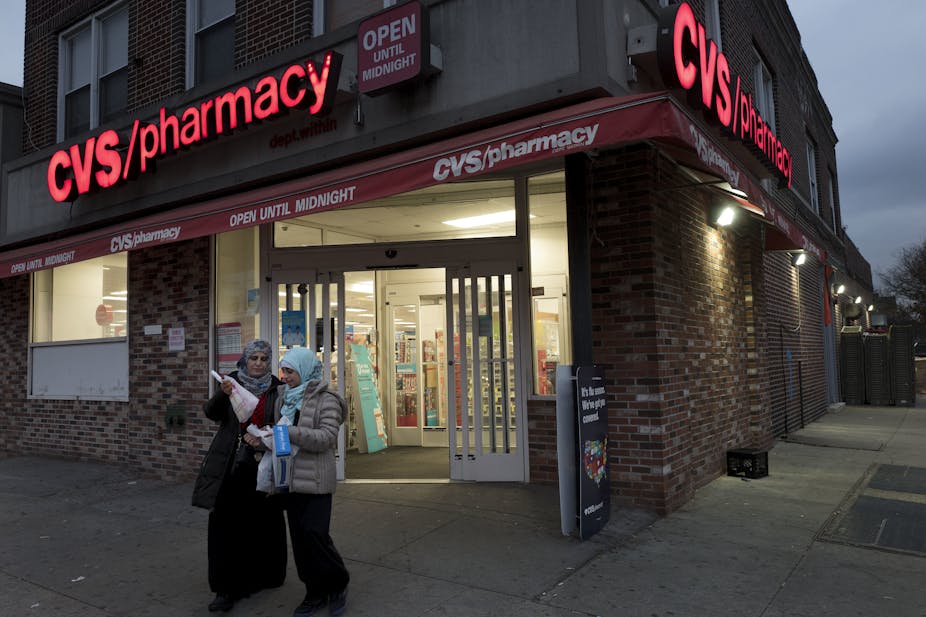
The announcement that CVS plans to acquire Aetna for US$69 billion raises hope and concerns.

The transaction would create a new health care giant. Aetna is the third-largest health insurer in the United States, insuring about 46.7 millionpeople.

CVS operates 9,700 pharmacies and 1,000 MinuteClinics. A decade ago, it also purchased Caremark and now operates CVS/Caremark, a pharmacy benefits manager, a type of business that administers drug benefit programs for health plans. CVS/Caremark is one of the three largest pharmacy benefits managers in the United States. Along with ExpressScripts and OptummRXTogether, these three control at least 80 percent of the market.

Should American consumers be happy or concerned about the proposed merger? As a professor of health law and bioethics, I see compelling arguments on both sides.

Good for consumers, or for the companies?

CVS and Aetna assert they are motivated by a desire to improve services for consumers and that the merger will lower health care costs and improve outcomes.

Many industry experts have postulated, however, that financial gain is at the heart of the deal.

CVS has suffered declining profits as consumers turn to online suppliers for drugs. Reports that Amazon is considering entry into the pharmacy business raise the specter of increasingly fierce competition.

The merger would provide CVS with guaranteed business from Aetna patients and allow Aetna to expand into new health care territory.

The heart of the deal

The merger would eliminate the need for a pharmacy benefits manager because CVS would be part of Aetna.

Pharmacy benefits managers, which sprang up in the early 2000s in response to rising costs of care, administer drug benefit programs for health plans. Most large employers contract with pharmacy benefits managers that are different from their health insurers.

Nevertheless, a consolidation along the lines of a CVS/Caremark and Aetna merger would not be unprecedented. The nation’s largest health insurance company, United Healthcare, operates its own pharmacy benefits manager, OptumRx.

Pharmacy benefits managers process and pay prescription drug claims, negotiate with manufacturers for lower drug prices, and can employ other cost-saving mechanisms. They thus act as intermediaries between the insurer and pharmacies.

They also make a lot of money. They have been controversial in recent years for how they do so, allegedly keeping a keener focus on profits than on patients.

The merger has not been finalized and requires approval from government regulators, which isn’t always easy to get. In 2016 the U.S. Department of Justice sued to block two health insurer mergers: one between Aetna and Humana and a second between Anthem and Cigna. The government objected on antitrust grounds, arguing that the mergers would unduly restrict competition. Both efforts were abandoned.

CVS and Aetna argue that their proposed merger is different. It is a vertical rather than a horizontal merger, which means that it would combine companies providing different services for patients (insurance and filling prescriptions) rather than two companies doing the same thing.

However, the Trump administration is currently opposing another vertical merger, that between AT&T and Time Warner. It is unclear whether the administration will likewise oppose the CVS/Aetna merger.

Benefits of a merger

There is some evidence that a merger could help consumers.

A merger could result in more negotiating power. Combining the power of a leading pharmacy and a top insurer may allow CVS/Aetna to negotiate more effectively for price discounts from drug and device manufacturers.

It also could cut out the middleman. PBMs themselves have been blamed for raising health care costs. They often do not pass on negotiated drug discounts to consumers, but rather keep the money themselves. In addition, many believe they “make money through opaque rebates that are tied to drug prices (so their profits rise as those prices do).” With the merger, CVS/Aetna would not need CVS/Caremark to function as an intermediary. Eliminating a profit-seeking middleman from the picture could lower consumer prices.

The merger could provide easy access to health care for minor injuries and illnesses. CVS said it plans to expand its MinuteClinics, walk-in clinics that provide treatment by nurse practitioners for minor conditions. Also, CVS said it would offer more services, such as lab work, nutritional advice, vision and hearing care, and more. Thus, CVS promises that its clinics will become “health hubs.”

Many patients could turn to these clinics instead of seeking more expensive care from physicians or emergency rooms. Furthermore, health hubs could provide “one-stop shopping” convenience for some patients. This could be particularly beneficial to elderly individuals or those with disabilities.

Another benefit could be improved and expanded data analytics, which could result in better care. Combining information from patients’ health insurers with that of their pharmacies, including nonprescription health purchases, may promote better care. CVS pharmacists and health hub providers would be able to monitor and counsel patients regarding chronic disease management, pain management, prenatal care and other matters. Such attention could reduce the risk of complications and hospitalizations and thus also decrease expenditures.

Increase of other risks?

Skeptics argue that the CVS/Aetna merger is unlikely to yield cost savings and improved outcomes. They note that mergers in the health care sector generally lead to higher, not lower, prices and worry about other adverse consequences.

If the market shrinks to fewer pharmacy benefits managers because of consolidation, costs may actually increase. The remaining pharmacy benefits managers may have little incentive to compete with each other by demanding discounts from drug companies. As noted above, they may actually profit from higher pharmaceutical prices and thus welcome increases.

After the merger, Aetna may require those it insures to use only CVS pharmacies. In addition, it may require individuals to turn to CVS MinuteClinics for certain complaints even if patients prefer to visit their own doctors. Such restrictions would mean less choice for consumers, and many may find them to be very distressing.

The merger could also decrease competition and bar other companies from entering the pharmacy market. For example, Aetna may refuse to cover prescription drugs that are not purchased from CVS. In that case, Amazon may find it extremely difficult if not impossible to break into the industry. Less competition, in turn, often means higher prices for consumers.

It is difficult to predict the precise consequences of a CVS/Aetna merger. One way or another, however, its impact will likely be significant.