


On the phone, Patrick Soon-Shiong speaks slowly and deliberately. He clearly trusts himself, but he doesn’t trust journalists anymore.
A series of scathing articles by STAT News and Politico sent stocks in his publicly-traded companies tumbling earlier this year. On Monday, he has an opportunity to change that narrative somewhat, with the unveiling of data from human trials of his cancer vaccine at a major oncology conference.
The stories allege that despite his bold claims, Soon-Shiong’s NantWorks subsidiaries are underperforming and reliant on contracts from other companies in the group. Reporters have also claimed that one of his companies, NantHealth, has received contracts from institutions that had received donations from his nonprofit foundation — a major conflict of interest. This was not adequately disclosed prior to the massive initial public offering of NantHealth, they argue, which may violate SEC laws.
For his part, Soon-Shiong, dismisses the allegations noting that part of the motivation behind those stories was political: “They had never written about me until they saw this picture of me with Trump.”
Speaking to MedCity on Wednesday after his recent appointment to a national health IT advisory committee, Soon-Shiong detailed how the various threads of his career are converging toward a pivotal moment. A solution for healthcare is almost within reach and he’s poised to unveil what he believes is a disruptive cancer therapy – the Nant vaccine – at the annual meeting of the American Society of Clinical Oncology (ASCO) in Chicago on Monday.
This story clearly clashes with many other viewpoints in the industry.
http://www.beckershospitalreview.com/finance/broward-health-fires-another-auditor.html

Fort Lauderdale, Fla.-based Broward Health will terminate a contract with its outside CPA at the end of this month after a 29-year working relationship. The fired audit director sees the break-up as the health system’s attempt to curb independent examination of the public system, according to the Sun Sentinel.
Joel Mutnick, audit director for Plantation, Fla.-based Fiske & Co., abstained from a vote to approve a draft of the firm’s audit since the documentation did not disclose several key events, including the suicide of late CEO Nabil El Sanadi, MD, in January 2016, the governor’s suspension of two board members and the lawsuit filed against the board by Pauline Grant, interim CEO who was fired in December 2016.
The audit covered the year ending June 30, 2016. Mr. Mutnick served on the committee of Broward board members and executives that supervised a third-party annual audit of the five-hospital system.
“They didn’t like not having control of me,” Mr. Mutnick told the Sun Sentinel. “Clearly they didn’t like the idea of me turning down the financial statements because of their inadequate disclosure. I don’t think they liked an outside auditor telling them or questioning the financial statement results.”
The chairman of Broward Health’s audit committee, Chris Ure, refused accounts that Mr. Mutnick’s departure involved his voting record or his independence. Mr. Ure said the committee is operating under new bylaws that impose term limits on members to strengthen independence and fresh perspectives, according to the Sun Sentinel. Under those new bylaws, Mr. Ure said outside members will no longer be paid.
Last September, Broward Health cut ties with KPMG after the accounting firm refused a contract addendum that would have extensively restricted its inquiry powers into Broward’s activities. Broward officials said they added the addendum over concerns KPMG would be unable to certify the system’s financial statements by the end of the year, due to the length of KPMG’s possible investigation into corruption allegations against the system.

http://www.medpagetoday.com/hospitalbasedmedicine/generalhospitalpractice/64239
Medical device powerhouse Medtronic is testing the waters of hospital management, having begun operating a cardiac catheterization lab within a major U.S. hospital earlier this year.
UH Cleveland is the first U.S. facility to outsource its cath lab to a device maker – a new business model that’s met with some success in Europe, reportedly saving hospitals money while expanding Medtronic’s business portfolio.
With hospitals facing pressure to cut costs without sacrificing quality of care, they may be enticed to turn to well-heeled device and drug manufacturers willing to take over certain operations, and perhaps give their own products a boost in the process.
But such arrangements raise questions about how much control hospitals can retain over the operations — which run in their facilities and under their names — and how much freedom physicians will have to use devices from rival manufacturers.
Medtronic as Management
Medtronic launched its Hospital Solutions business in 2013, and its first foray into cath lab management came in 2014, when it acquired the Italian firm NGC Medical. It took over several outsourced catheterization labs in Italy, with the expectation of expanding NGC’s business outside that country.
Ron ten Hoedt, a Medtronic senior vice president and president for Europe, the Middle East, Africa & Canada, once said in a company meeting that Medtronic “needs to switch from a medical device company to a healthcare company,” according to a 2013 PriceWaterhouseCoopers report.
“If we want to be a part of the solution of the delivery of healthcare, then we need to risk-share, and we need to go into this market in a completely different way and with a completely different model,” ten Hoedt said.
Physician Concerns
Can doctors really remain unswayed in the hospital while working side by side with device company employees? Interventionalists said that freedom from pressure to use certain devices will be key to an ethical arrangement.
An anonymous source reported initial fears from UH Cleveland’s catheterization and electrophysiology lab operators that Medtronic would force them to use its durable goods when the deal was first proposed. They said their fears were assuaged, however, when it was clear that UH Cleveland was not going to push them to use Medtronic devices.
Morton Kern, MD, an interventionist and Chief of Medicine at VA Long Beach Health Care System in California, said doctors who work under this new management “will have to use their best judgment for which equipment to select.”
“If the equipment is equivalent, then it shouldn’t make a difference,” he said. “There is the perception that it could be a conflict, but it depends on who’s doing the ordering and the contracting. If it’s Medtronic, it doesn’t sound so kosher.”
“If there is separation between church and state, then there shouldn’t be a conflict of interest,” he added. “I don’t care who runs my lab as long as it works well and the equipment is current. From the doctor’s point of view, it should be invisible.”
Medical device powerhouse Medtronic is testing the waters of hospital management, having begun operating a cardiac catheterization lab within a major U.S. hospital earlier this year.
UH Cleveland is the first U.S. facility to outsource its cath lab to a device maker – a new business model that’s met with some success in Europe, reportedly saving hospitals money while expanding Medtronic’s business portfolio.
With hospitals facing pressure to cut costs without sacrificing quality of care, they may be enticed to turn to well-heeled device and drug manufacturers willing to take over certain operations, and perhaps give their own products a boost in the process.
But such arrangements raise questions about how much control hospitals can retain over the operations — which run in their facilities and under their names — and how much freedom physicians will have to use devices from rival manufacturers.

drug and healthcare costs, a significant majority accept payouts from the pharmaceutical industry, according to a new study.
Researchers at the University of Pennsylvania found that 83% of patient advocacy groups accepted donations from drug or medical device makers.
The study, published in the New England Journal of Medicine, also found that in close to 40% of cases, executives in the pharmaceutical industry sit on governing boards of patient groups. For some groups in the study, donations from the industry make up more than half of their annual income.
The study examined financial data for the top 104 patient advocacy groups that reported more than $7.5 million in revenue per year. Ezekiel Emanuel, M.D., vice provost at the University of Pennsylvania and one of the study’s authors, told The New York Times that these patient advocacy groups “wrap themselves in white as if they’re pure.”
He told the publication that these groups should have to disclose ties to industry in the same way as medical researchers, who are pushed to reveal connections to industry groups as they perform research and speak in public.
Some patient advocacy groups are taking aim at the study’s findings. For instance, National Health Council CEO Marc Boutin, said in a statement (PDF) that the organizations under its umbrella adhere to 38 standards, about 16 of which are designed to ensure that the group’s mission is kept separate from donations.
“Patient advocacy organizations are driven by their missions—putting patients first,” Boutin said. “To say otherwise negates the extraordinary work achieved by these organizations on behalf of their patients.”

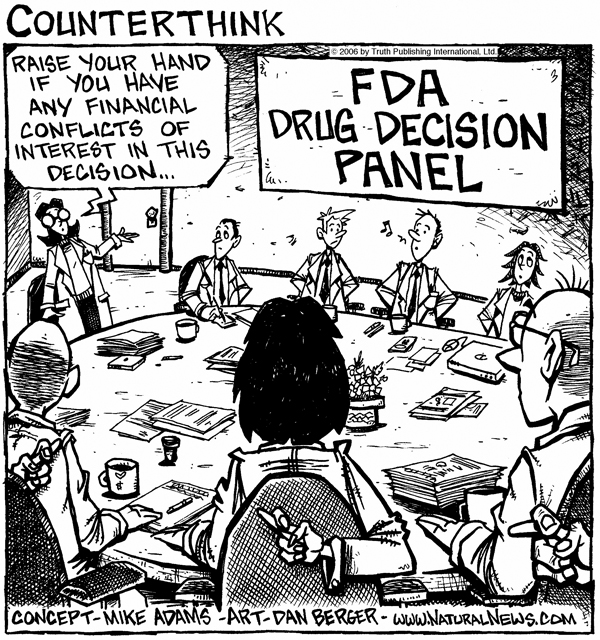

Photo: Inside the Mar-a-Lago, courtesy of The Mar-a-Lago Club website.
More than 1,100 doctors, nurses and medical students are urging the Cleveland Clinic to cancel an annual fundraiser planned at a resort owned by President Donald Trump in the wake of his executive order on immigration.
Over the last three days, 1,141 medical professionals have signed an open letter to Cleveland Clinic President and CEO Toby Cosgrove asking him to cut the perceived ties to Trump in light of the executive order that led to a first-year internal medicine resident at the organization being detained and forced to return to Saudi Arabia because her visa was issued in Sudan, one of the countries on Trump’s list
Suha Abushamma, M.D., has sued the Trump administration, CNBC reports, and a federal judge has ordered the White House to explain why she shouldn’t be allowed to return to the United States.
The ban also had a direct impact on nine patients scheduled to receive care at the Cleveland Clinic over the next 90 days.
Many of the medical professionals who signed the letter are students at Case Western Reserve University, which runs the Cleveland Clinic Lerner College of Medicine.
The letter asks Cosgrove to:
 HENRY KOTULA