Struggling GE to Spin Off Healthcare Subsidiary

https://www.healthleadersmedia.com/strategy/struggling-ge-spin-healthcare-subsidiary?utm_source=silverpop&utm_medium=email&utm_campaign=20180626_HLM_Daily%20(1)&spMailingID=13762039&spUserID=MTY3ODg4NTg1MzQ4S0&spJobID=1422371068&spReportId=MTQyMjM3MTA2OAS2

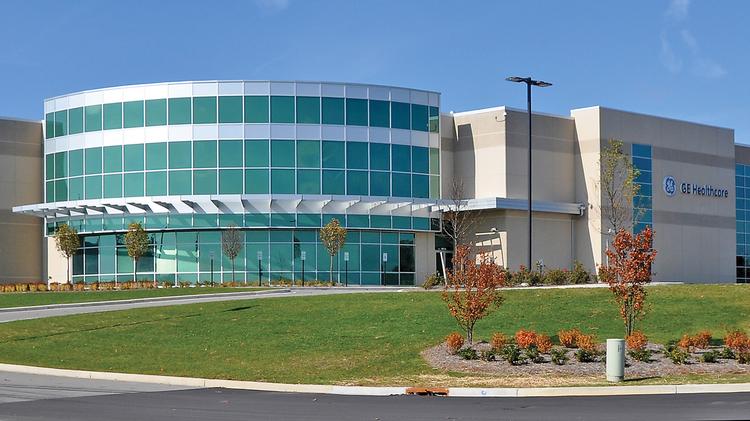
Image result for GE Healthcare

The downsizing over the next 18 months is expected to reduce debts by $25 billion, and comes as the storied company falls off the Dow Jones Industrial Average for the first time in 110 years.

GE announced Tuesday it would separate GE Healthcare into a standalone company and use the proceeds from the sale to pay down its debts.

  • As part of a restructuring, the storied company said it would also sell its stake in the oil and gas company Baker Hughes and refocus on core high-tech areas of aviation, power, and renewable energy;
  • The strategy is expected to reduced debt by $25 billion, and create a “leaner corporate structure” with $500 million in savings by the end of 2020, GE said in a media release.
  • GE said it expects to generate cash from the disposition of approximately 20% of its interest in the GE Healthcare business and to distribute the remaining 80% to GE shareholders.
  • Today’s announcement came on the first day in 110 years that GE was not on the Dow Jones Industrial Average, CNN reports. It was replaced by Walgreens Boots Alliance in the elite 30-stock index Tuesday.
  • GE Healthcare generated more than $19 billion in revenues in 2017 and posted 5% revenue growth and 9% segment profit growth, and accounted for 16% of the company’s total sales.
  • GE has seen its stock value drop precipitously in the past year. However, GE shares jumped 6.4% to $13.57 in early trading Tuesday.

S&P Global Ratings responded to the news by placing GE’s “A” long-term rating on CreditWatch with “negative implications.”

“GE’s divestiture of its core healthcare segment leaves the company with less business diversity, earnings and cash flow and as such, potential for heightened volatility in profits and cash flow. However, debt reduction and substantial cash balances will reduce balance sheet risk,” S&P said.


 John Flannery, chairman and CEO of GE, said in a media release that the spin-offs would “improve our operations and balance sheet as we make GE simpler and stronger.”

“Today’s actions unlock both a pure-play healthcare company and a tier-one oil and gas servicing and equipment player,” Flannery said.

“We are confident that positioning GE Healthcare and BHGE outside of GE’s current structure is best not only for GE and its owners, but also for these businesses, which will strengthen their market-leading positions and enhance their ability to invest for the future, while carrying the spirit of GE forward,” he said.

Kieran Murphy, president and CEO of GE Healthcare, will continue to lead the standalone company under the GE brand.

“As an independent global healthcare business, we will have greater flexibility to pursue future growth opportunities, react quickly to changes in the industry and invest in innovation,” Murphy said.

“We will build on strong customer demand for integrated precision health solutions and great technology with digital and analytics capabilities as we enter our next chapter,” he said.

GE Healthcare’s core business is medical imaging, monitoring, and other high-tech hospital equipment. The company does business in 140 countries.

The sell-offs are expected to be completed over the next 12 to 18 months.


CHI’s operating loss widens in Q3, but finances improve over longer term

https://www.beckershospitalreview.com/finance/chi-s-operating-loss-widens-in-q3-but-finances-improve-over-longer-term.html

Image result for catholic health initiatives


Englewood, Colo.-based Catholic Health Initiatives saw its operating loss widen in the third quarter of fiscal year 2018, but the health system’s financial picture improved over the first nine months of the fiscal year.

CHI’s operating revenues declined from $3.8 billion in the third quarter of fiscal year 2017 to $3.7 billion in the third quarter of fiscal 2018. However, the health system’s expenses before restructuring also declined about 1.7 percent year over year to $3.7 billion in the third quarter of the current fiscal year.

After factoring in restructuring, impairment and other one-time costs, the system ended the third quarter of fiscal year 2018 with an operating loss of $35.3 million, compared to an operating loss of $17.2 million in the same period a year earlier. CHI said its operating EBIDA improved by nearly $80 million during the third quarter of fiscal year 2018 after adjusting for transactional gains and other items.

CHI launched a turnaround plan about three years ago, and the improvements the system has achieved under that plan are clear when looking at financial results for the first nine months of the current fiscal year. For the nine months ended March 31, CHI reported an operating loss of $114.7 million, which was a significant improvement from the nearly $344 million loss the system recorded in the same period of the year prior.

“We continue to see strong momentum that has played out in the current fiscal year,” said Dean Swindle, president of enterprise business lines and CFO of CHI, in an earnings release. “We have established a strong foundation through a performance-improvement plan stretching back nearly three years, and we expect that these positive results will continue throughout the rest of this fiscal year and well beyond as we become a truly high-performing health system.”

The three major rating agencies — Moody’s Investors Service, Fitch Ratings and S&P Global Ratings — have all recognized CHI’s progress in recent months with positive adjustment in their outlooks for the health system.


Healthcare megadeals may have major long-term impact, Moody’s says

https://www.healthcaredive.com/news/healthcare-megadeals-may-have-major-long-term-impact-moodys-says/521578/

Image result for mega deals

Dive Brief:

  • CVS Health’s plan to buy Aetna could have a significant impact on hospitals, health insurers and pharmacy benefit managers (PBMs), according to Moody’s Investors Service’s Healthcare Quarterly.
  • Payers’ vertical integration strategies are credit negative for hospitals, but hospitals’ plans to make generic drugs and other new strategies are positives, Moody’s said.
  • On the payer side, Moody’s said mergers between health insurers and PBMs are credit negative in the short-term because of increased debt and risk associated with integration. However, in the long run, these deals may lower costs.

Moody’s said hospitals may feel the impact of UnitedHealth’s Optum buying DaVita Medical and Humana investing in Kindred Healthcare. However, Cigna’s purchase of Express Scripts won’t have much of an effect on hospitals.

Payers’ vertical integration strategies, such as buying physician groups and non-acute care providers, are credit negative for nonprofit and for-profit hospitals and put more pressure on hospital volumes and margins, Moody’s said.

The issue comes from payer vertical integration being able to offer preventive, outpatient and post-acute care for lower costs than acute care hospitals. These initiatives will have an increasingly disruptive impact to hospitals’ credit quality, according to the report.

“These strategies would place insurers in direct competition with hospitals, which offer the same services and are also seeking to align with physician groups,” Moody’s said.

On the payer side, two recently announced megadeals, CVS-Aetna and Cigna-Express Scripts, are both designed to control rising medical costs and target drug prescriptions, which now account for nearly one-fifth of total health spending. While payers have been able to limit growth in utilization, medical inflation and sources of medical care, prescription drug costs continue to rise, Moody’s said.

Though Moody’s expects both deals to be credit negative in the short-term, they have the potential to turn credit positive in the long run, especially CVS-Aetna. “The combined company has the potential to lower medical costs as Aetna will be better able to engage with its members as they purchase drugs at CVS retail pharmacies or through its prescription drug programs,” Moody’s said.

These deals will result in most payers having to contract with a PBM owned by a competitor. Moody’s expects PBM competition to remain high. Payer-owned PBMs must still offer the same cost savings to competitors to keep customers.

Out of the recent megadeals, only CVS buying Aetna is expected to have “more significant impact” for payers. The other announced transactions aren’t expected to cause many problems for insurance companies, Moody’s said.

Looking at initiatives that are in development, Moody’s said none of the big-name plans are expected to have much of an impact on the healthcare segments. These include the Amazon, Berkshire Hathaway and J.P. Morgan Chase’s partnership, Apple opening medical clinics and entering the medical record business or nonprofit hospitals forming a generics company.


S&P assigns ‘A’ to Overlake Hospital Medical Center

https://www.beckershospitalreview.com/finance/s-p-assigns-a-to-overlake-hospital-medical-center.html

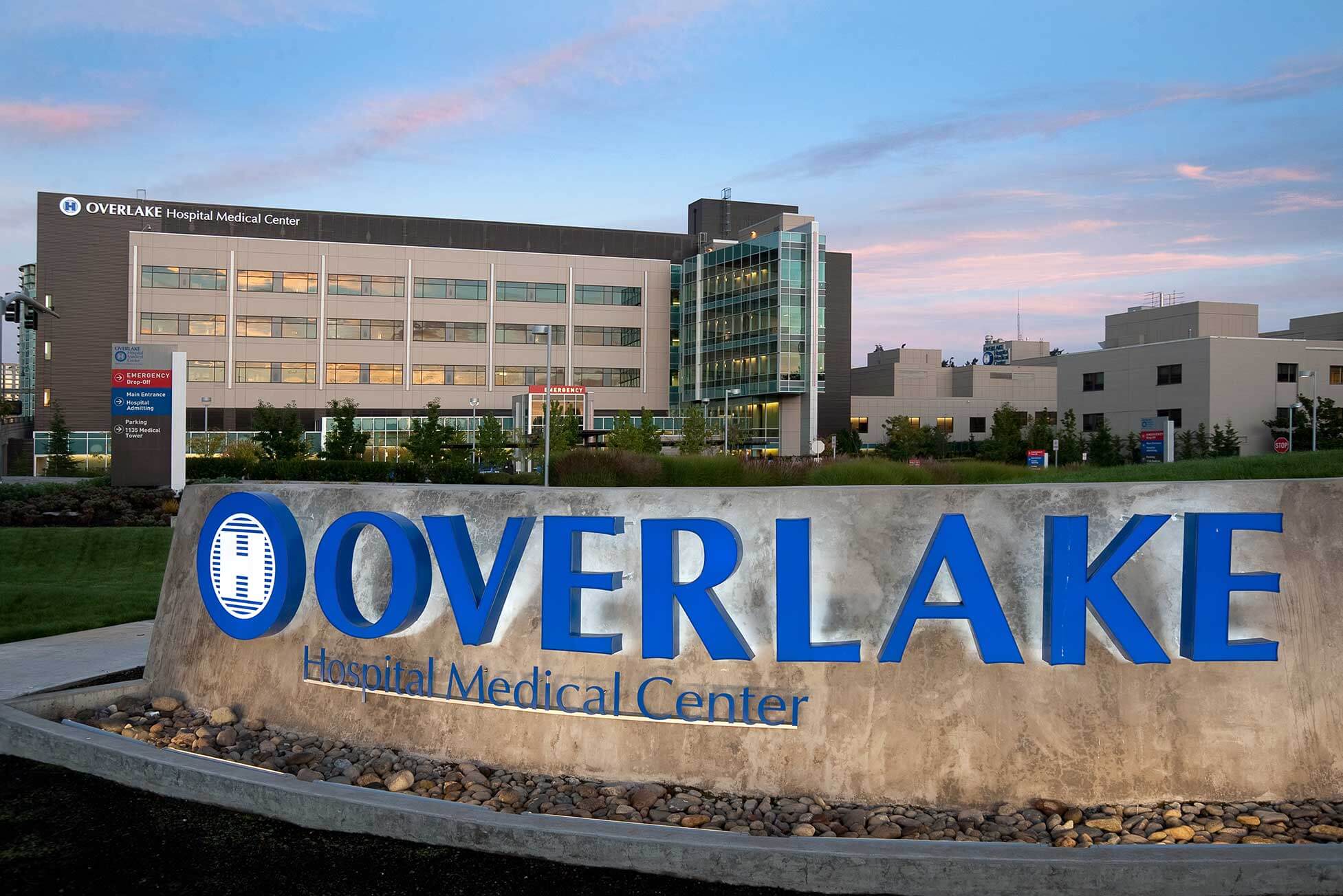
Image result for overlake hospital medical center

S&P Global Ratings assigned its “A” rating to Bellevue, Wash.-based Overlake Hospital Medical Center’s proposed $94.2 million series 2017A and $84.7 million series 2017B revenue bonds.

The assignment is a result of several factors, including its strong market position, affiliation with Oakland, Calif.-based Kaiser Permanente, healthy balance sheet and growing outpatient presence. S&P also acknowledged the OHMC’s sizable capital plans and highly competitive market.

The outlook is stable.

Moody’s affirms ‘Aa3’ on Yale New Haven Health

https://www.beckershospitalreview.com/finance/moody-s-affirms-aa3-on-yale-new-haven-health.html

Image result for yale new haven health

Moody’s Investors Service affirmed its “Aa3” rating on Yale New Haven (Conn.) Health, affecting $1.1 billion of outstanding debt.

The affirmation is a result of the health system’s strong market position, favorable operating margins, moderate capital spending, solid liquidity, manageable leverage and affiliation with New Haven-based Yale University. Moody’s also acknowledged the health system’s sizable pension, large operating lease obligations and reimbursement pressures coming from Medicaid an state hospital tax funding.

The outlook is stable, reflecting Moody’s expectation that Yale New Haven Health will maintain its healthy operating performance to offset any reimbursement pressures.

Moody’s assigns ‘Aa3’ to University of Pennsylvania Health System

https://www.beckershospitalreview.com/finance/moody-s-assigns-aa3-to-university-of-pennsylvania-health-system.html

Related image

Moody’s Investors Service assigned its “Aa3” rating to Philadelphia-based University of Pennsylvania Health System’s proposed $200 million series 2017 taxable bonds as well as its proposed $400 million series A of 2017 revenue bonds.

At the same time, Moody’s affirmed the “Aa3” rating on UPHS’ outstanding bonds.

The affirmation is a result of several factors, including the health system’s strong market position, favorable reputation, close affiliation with the University of Pennsylvania and healthy liquidity. Moody’s also acknowledged UPHS’ limited debt burden and effective management of capital spending.

The outlook is stable, reflecting Moody’s expectation that UPHS will maintain solid operating margins to absorb some of the decline in liquidity as construction projects progress.

Fitch revises Prime Healthcare Foundation’s outlook to negative

https://www.beckershospitalreview.com/finance/fitch-revises-prime-healthcare-foundation-s-outlook-to-negative.html

Image result for prime healthcare


Fitch Ratings assigned its “BB-” rating to Ontario, Calif.-based Prime Healthcare Foundation’s proposed $123 million series 2017A and $127 million series 2017B.

The assignment was a result of PHF’s strong liquidity metrics relative to its debt burden and its experienced senior management team.

The outlook was revised to negative from stable, reflecting PHF’s unexpected decline in profitability and an increased debt burden.

CHS in negotiations to extend nearly $2B in debt

https://www.beckershospitalreview.com/finance/chs-in-negotiations-to-extend-nearly-2b-in-debt.html

Image result for ship taking on water

Franklin, Tenn.-based Community Health Systems is in talks with a group of bondholders led by Franklin Resources, an asset management company, to extend approximately $2 billion in bonds due in 2019, people familiar with the matter told the Wall Street Journal.

The company is in talks to swap the 2019 unsecured notes for debt secured by its assets, one person familiar with the matter told WSJ. This type of transaction would be difficult for CHS to complete, as the company can only issue about $1 billion in new secured debt without permission from its lenders to waive a covenant in its revolver loans.

Extending the debt due in 2019 is only a short-term solution because CHS faces billions of dollars in debt maturities from 2020 to 2023, according to the report.

CHS put a financial turnaround plan into place last year, which included selling 30 hospitals to reduce its heavy debt load. The company completed the divestiture plan earlier this month. With the help of proceeds from the hospital sales, CHS brought down its long-term debt load to $13.9 billion in the third quarter of this year, from $14.8 billion in the same period of 2016.

CHS ended the most recent quarter with a net loss of $110 million on revenues of $3.67 billion. That’s compared to the third quarter of 2016, when the company posted a net loss of $79 million on revenues of $4.38 billion.


Fitch affirms ‘AA-‘ on Virtua Health’s revenue bonds

https://www.beckershospitalreview.com/finance/fitch-affirms-aa-on-virtua-health-s-revenue-bonds.html

Related image

Fitch Ratings affirmed its “AA-” rating on Marlton, N.J.-based Virtua Health’s revenue bonds, affecting a total of $605 million of debt.

The affirmation is a result of several factors, including the health system’s solid liquidity growth, strong market position, favorable operating margins, sizable clinical platform and moderate debt burden.

The outlook is stable.


House GOP tax plan eliminates tax-exempt bonds that finance hospitals

https://www.beckershospitalreview.com/finance/house-gop-tax-plan-eliminates-tax-exempt-bonds-that-finance-hospitals.html

Image result for bankrupt hospitals

House Republicans recently unveiled a tax reform plan that calls for the elimination of private activity bond issuance, which is likely to significantly impact the entire nonprofit hospital sector.

Nonprofit hospitals issue tax-exempt bonds to finance capital projects. Under the tax plan, interest on newly issued private activity bonds would no longer be tax-exempt. This change would reduce financing options for lower-rated healthcare organizations by raising the cost of capital, according to S&P Global Ratings.

“From a credit perspective, higher borrowing rates can lead to budget imbalances, a challenge for all, and a hallmark of struggling credits,” said S&P. “We believe operating margin pressure is likely to be exacerbated by the House tax proposal, as it will pressure costs and hurt margins for a considerable portion of our rated healthcare providers.”

The American Hospital Association also noted how the tax plan could negatively impact healthcare providers. “For many communities, tax-exempt financing, such as private activity bonds, has been a key to maintaining vital hospital services,” said Tom Nickels, executive vice president of the AHA. “If hospital access to tax-exempt financing is limited or eliminated, hospitals’ ability to make investments in new technologies and renovations in the future will be challenged.”

Senate Finance Committee Chair Orrin Hatch, R-Utah, released a draft of Senate Republicans’ tax plan on Thursday. Unlike the House tax proposal, the Senate’s tax plan would not eliminate hospitals’ ability to access low-cost capital financing through tax-exempt bonds.