3 former execs at medical billing company face criminal charges in $300M investment fraud scheme

https://www.beckershospitalreview.com/legal-regulatory-issues/3-former-execs-at-medical-billing-company-face-criminal-charges-in-300m-investment-fraud-scheme.html

Image result for investment fraud scheme


Three former executives of Constellation Healthcare Technologies, a now-bankrupt medical billing company, were charged May 16 with orchestrating an elaborate scheme to defraud investors out of more than $300 million.

The former CEO, CFO and executive director stand accused of creating phony customers, subsidiaries and acquisitions and falsifying bank records to inflate the company’s value and revenue to defraud investors. They are charged with using these methods to make their publicly traded company appear more attractive and financially stable to investors before transitioning it to the private sector.

The alleged actions caused a private investment firm and other investors to value Constellation Healthcare at more than $300 million for purposes of financing the transaction to move the company private.

The scheme was discovered in September 2017, when the three executives resigned from their positions. On March 16,  Constellation Healthcare Technologies filed for bankruptcy, citing the alleged fraud scheme as the cause of its downfall.

Parmjit Parmar, Sotirios Zaharis and Ravi Chivukula are each charged with one count of conspiracy to commit securities fraud and one count of securities fraud.  The CEO, Mr. Parmar, was arrested May 16. Mr. Zaharais and Mr. Chivukula remain at large, according to the U.S. Justice Department.

https://www.justice.gov/opa/pr/former-ceo-cfo-and-director-health-care-services-company-charged-elaborate-300-million


Feds sue to close stem cell clinics in California, Florida

https://www.washingtonpost.com/national/health-science/feds-sue-to-close-stem-cell-clinics-in-california-florida/2018/05/09/3f6f4dc2-53e5-11e8-a6d4-ca1d035642ce_story.html?utm_term=.87173e3a6377

Image result for stem cell clinics

Federal prosecutors in California and Florida have sued to stop two companies from providing stem cell treatments, alleging the clinics marketed their procedures as remedies for ailments including cancer and heart disease without proof of safety and efficacy.

The Justice Department says in court filings Wednesday that the firms put consumers at risk by promising benefits from treatments never approved by the Food and Drug Administration.

The complaints involve treatments derived from cells taken from patients’ own fat tissue.

The lawsuits target Southern California’s Stem Cell Treatment Center and U.S. Stem Cell Clinic of Sunrise, Florida. Mark Berman, director of the California clinics, says he stands by his treatments and looks forward to fighting the lawsuit.

U.S. Stem Cell said in a statement it would vigorously defend itself in court.


Former finance director gets prison time for stealing $3.9M from UNC hospital

https://www.beckershospitalreview.com/legal-regulatory-issues/former-finance-director-gets-prison-time-for-stealing-3-9m-from-unc-hospital.html

Image result for embezzlement


The former finance director for High Point (N.C.) Regional Hospital, part of Chapel Hill, N.C.-based UNC Health Care, was sentenced May 3 to 8.5 years in prison for embezzling $3.9 million from the hospital, according to the Department of Justice.

Kimberly Hobson worked in the accounting and finance department at High Point Regional Hospital for more than 20 years, most recently as finance director. She was fired after the hospital discovered her embezzlement in July 2017, according to the Winston-Salem Journal.

Ms. Hobson was charged with wire fraud, bank fraud and aggravated identity theft. She pleaded guilty in February.

Over a 10-year period, Ms. Hobson wrote checks to herself and her family members, which were deposited in her personal bank account. She also sent payments from hospital accounts to her personal loans and credit cards, used a hospital-issued credit card for personal expenses, and substituted her bank account for the direct deposit accounts of nine other employees, according to the DOJ.

“Today’s stiff sentence serves notice that white collar criminals will be brought to justice,” said U.S. Attorney Matthew G.T. Martin of the Middle District of North Carolina. “Thank you to the law enforcement officers with the Department of Treasury, U.S. Secret Service, Guilford County Sheriff’s Department, and High Point Police Department who have worked diligently to uncover Ms. Hobson’s fraud and seek restitution for the hospital.”


Why DOJ must block the Cigna-Express Scripts merger

Why DOJ must block the Cigna-Express Scripts merger

Why DOJ must block the Cigna-Express Scripts merger

If one message is becoming clear, it’s that increased concentration is harming consumers and leading to less competition, decreased choice and higher cost. The need for corporations to compete is dampened when markets are dominated by a small number of firms. Worse, when consumers don’t have the ability to discipline markets there is a lack of transparency or accountability.

Nowhere is that more true than in the market for Pharmacy Benefit Managers (PBMs) — the unregulated entities that control the reimbursement of drugs. These little known, unregulated middlemen are able to ramp up the cost of drugs by demanding rebates and other payments from drug manufacturersand because of a lack of transparency and choice they are able to pocket much of these rebates, escalating the cost of drugs.

The Council of Economic Advisors, after a comprehensive review of rising drug costs, identified the lack of PBM competition as a major culprit. It found that only three PBMs controlled more than 85 percent of the market, “which allows them to exercise undue market power against manufacturers and against the health plans and beneficiaries they are supposed to be representing, thus generating outsized profits for themselves.”

The effect of market power on rebates and other payments to PBMs is clear. As one study found pharmaceutical manufacturer rebates skyrocketed 108 percent from 2011 to 2016 — rising from $66 billion to $127 billion in those five years.

Do skyrocketing rebates benefit consumers? Not much. As Health and Human Services Secretary Alex Azar has observed, “this thicket of negotiated discounts makes it impossible to recognize and reward value, and too often generates profits for middlemen rather than savings for patients.” Consumers pay more because their copays are based on list prices that are inflated by the rebates and other payments secured by the PBMs.

You do not need a Ph.D. in economics to figure out that the market is not competitive and that consumers are paying more than they otherwise would. FDA Commissioner Scott Gottlieb observed, “Kabuki drug-pricing constructs — constructs that obscure profit taking across the supply chain that drives up costs; that expose consumers to high out of pocket spending; and that actively discourage competition.”

Gottlieb identifies the lack of PBM competition and transparency as the real culprit. “The consolidation and market concentration make the rebating and contracting schemes all that more pernicious. And the very complexity and opacity of these schemes help to conceal their corrosion on our system — and their impact on patients.”

Now the two largest PBMs seek to merge with two insurance giants — CVS Caremark’s proposed acquisition of Aetna and Cigna’s proposed acquisition of Express Scripts. I have already observed how the CVS deal will harm competition and consumers. Adding another deal is like fighting a fire with gasoline.

These mergers rightly face tough scrutiny before the Antitrust Division of the Department of Justice. As the American Antitrust Institute’s recent comprehensive white paper documents in detail, these mergers significantly threaten competition in health insurance, pharmacy and PBM markets and must be blocked.

And as Rep. Rick Crawford’s (R-Ariz.) recent letter to Attorney General Jeff Sessions opposing the CVS/Aetna merger nicely emphasizes, such “vertical integration does not encourage competition or lower prices, but rather, could limit the choices and access for patients, driving out competitors while driving up prices and reimbursements for themselves.”

The reasons are straightforward and compelling. Many insurance companies want the service of an independent PBM — one not aligned with a rival insurance company. PBM services and the ability to control pharmaceutical costs are a crucial input for any insurance company, especially since the costs of drugs is an increasing part of the costs that need to be controlled.

Such reforms would include meaningful transparency and disclosure of rebates to payers, eliminating pharmacy gag clauses that prevent pharmacists from disclosing lower priced drugs, preventing PBMs from egregious reimbursement practices that force pharmacists to dispense below cost, and proper disclosure of pricing to pharmacists. As a basic first step both Express Scripts and Cigna must commit to pass through rebates to lower consumer costs as UnitedHealthcare has done.

But even these commitments are probably not enough. History tells a dismal story — past mergers have harmed consumers through less choice and higher costs as PBM profits have soared. No promises of good conduct can overcome the excessive concentration in the PBM market. The CEA recommended, “policies to decrease concentration in the PBM market … can increase competition and further reduce the price of drugs.” DOJ can begin this process by preventing the market from getting worse and simply blocking these mergers.


Henry Ford Allegiance ‘Reluctantly’ Settles DOJ Antitrust Suit

http://www.healthleadersmedia.com/marketing/henry-ford-allegiance-reluctantly-settles-doj-antitrust-suit?utm_source=edit&utm_medium=ENL&utm_campaign=HLM-Daily-SilverPop_02142018&spMailingID=12931448&spUserID=MTY3ODg4NTg1MzQ4S0&spJobID=1341286596&spReportId=MTM0MTI4NjU5NgS2

Image result for lawsuit settlement

The Jackson, Michigan–based health system agrees to stop coordinated anti-competitive business activities with competitors, but insists that it did nothing wrong.

Henry Ford Allegiance Health has settled its three-year antitrust fight with state and federal prosecutors, just weeks before the case was set for trial in federal court.

The Department of Justice and the Michigan Attorney General’s office filed suit in 2015, alleging that Henry Ford Allegiance Health and three other health systems in south central Michigan carved up the territory and insulated themselves from competition by agreeing to withhold outreach and marketing in each other’s respective counties.

The three other health systems, Hillsdale Community Health Center; Community Health Center of Branch County in Coldwater; and ProMedica Health System in Toledo, OH, settled their suits two years ago.

“As a result of Allegiance’s per se illegal agreement to restrict marketing of competing services in Hillsdale County, Michigan consumers were deprived of valuable services and healthcare information,” Assistant Attorney General Makan Delrahim in DOJ’s Antitrust Division said in a media release. “By prohibiting further anticompetitive conduct and educating Allegiance executives on antitrust law, this settlement will ensure that consumers receive the fruits of robust competition.”

The proposed settlement was filed Friday in U.S. District Court for the Eastern District of Michigan, where the case was scheduled to go to trial on March 6.

Allegiance said in prepared remarks that it felt compelled to settle even though it did nothing wrong.

“We reluctantly chose to settle this litigation because continuing to defend ourselves against the United States and State of Michigan became too costly,” the health system said. “This decision, regrettable but necessary, requires us to discontinue our defense of this case before the Court could rule on any of the highly contested issues raised in the litigation.”

DOJ’s settlement with Allegiance expands on the earlier settlements with the other three health systems, which means that Allegiance cannot communicate, coordinate or limit marketing or business development with competitors. The agreement ends the health system’s carve out in Hillsdale County. Allegiance must also file annual compliance reports and submit to compliance inspections, and reimburse state and federal prosecutors for the court costs.

DOJ said the deal includes several new provisions that are now included in all new consent decrees that add greater specificity and accountability.

“The proposed settlement will make it easier and more efficient for the department to enforce the decree by allowing the department to prove alleged violations by a preponderance of the evidence,” Delrahim said. “These provisions will encourage a stronger commitment to compliance and will ease the strain on the department in investigating and enforcing possible violations.”

Patricia Wagner, an antitrust attorney with Epstein Becker Green and a disinterested observer, said DOJ is applying more rigorous benchmarks for its consent decrees.

“When you do your annual report you have to document that everybody got their four hours of training and you have to provide the materials that were used in those training sessions. If DOJ asks, you’d have to provide a lot of who had what conversations, and when,” Wagner said. “Instead of just having a general ‘you will comply with this consent order and verify annually that you are doing so,’ it is giving organizations the steps that DOJ thinks they need to take in order to comply with the consent judgements.”

“If I am a CEO of a hospital maybe I am thinking about how to get ahead of this situation. Should I have someone who is responsible for antitrust compliance?” she said. “All hospitals have large compliance programs that are usually focused, as they should be, on fraud and abuse and licensure issues. It seems like a natural evolution to say ‘maybe we should be thinking about including antitrust in that larger compliance program.'”

Henry Ford Allegiance Health operates the only hospital in Jackson County, MI. The system also operates primary care, physical rehabilitation, and diagnostic facilities in several counties in south central Michigan. Allegiance joined Henry Ford Health System in 2016.

Allegiance’s statement in full reads as follows:

Allegiance Health and the Department of Justice have settled an antitrust case brought by the DOJ against Allegiance Health in 2015. The original complaint alleged that Allegiance Health entered into an agreement with Hillsdale Community Health Center to limit marketing in Hillsdale County.

We reluctantly chose to settle this litigation because continuing to defend ourselves against the United States and State of Michigan became too costly. This decision, regrettable but necessary, requires us to discontinue our defense of this case before the Court could rule on any of the highly contested issues raised in the litigation. 

We still deny unlawful conduct of any kind, and the settlement does not include any admission of liability. Despite almost three years of litigation, there was no finding of wrong doing by the Court, and, as recently as December, the Court contemplated dismissing the action in its entirety.  In addition, the Court has never ruled that the citizens of Hillsdale County were harmed by our marketing strategy.

We reaffirm our belief that we promoted competition in south central Michigan and benefitted the citizens of Hillsdale County in undeniable ways. The terms of the settlement allow us to continue our marketing strategies in order to best serve the people of south central Michigan including Hillsdale County.


Court sets speedy 340B lawsuit schedule, siding with AHA

https://www.healthcaredive.com/news/court-sets-speedy-340b-lawsuit-schedule-siding-with-aha/515988/

Dive Brief:

  • The American Hospital Association and other parties’ request for an expedited brief schedule for the group’s lawsuit over CMS cuts to the 340B program was agreed to by the U.S. Court of Appeals for the District of Columbia Circuit Tuesday, despite the government’s request for more time to respond to the lawsuit.
  • U.S. District Judge Rudolph Contreras dismissed the initial lawsuit in December, saying the groups did not have standing to sue because the cuts hadn’t yet taken effect. On January 11, AHA and the other groups appealed the decision, and then asked the court to expedite the case citing the immediate impact the cuts have on 340B hospitals’ ability to provide services to underserved communities.
  • Attorneys for the Department of Justice argued the compressed briefing schedule would not give adequate time for the government to prepare its brief and coordinate with affected agencies.

Dive Insight:

The lawsuit concerns a HHS final rule that took effect at the start of the year changing the amount 340B hospitals are paid for drugs to 22.5% less than the average sales price. Last year, hospitals paid the average price plus 6%.

“America’s hospitals and health systems are pleased that the U.S. Court of Appeals has accepted our expedited brief schedule in our appeal to reverse the significant cuts to the 340B Drug Savings Program, which for over 25 years has played a vital role in helping hospitals stretch scarce federal resources to expand and enhance patient services and access to care for vulnerable communities without any cost to the government,” Melinda Hatton, general counsel for the American Hospital Association, told Healthcare Dive.

AHA is joined in the lawsuit by America’s Essential Hospitals, the Association of American Medical Colleges, Eastern Maine Healthcare Systems (Brewer, Maine), Henry Ford Health System (Detroit) and Adventist Health System’s Park Ridge Health (Henderson, North Carolina).

The groups argue the cuts will hurt 340B hospitals’ budgeted operations, bond covenants and other items necessary to provide community care, and say the reimbursement change exceeds HHS’ authority.

“For 340B hospitals, the ability to provide care to their communities is tied to receipt of third-party reimbursements; constriction in the flow of Medicare revenues to 340B hospitals will increasingly constrict funds for medical care for all their patients, most particularly those who are poor and underserved and most reliant on these services,” the groups wrote in their request to expiate the appeal brief schedule.

AHA noted that it is actively exploring other options to address the cuts.

“We will continue to pursue our legislative and legal strategies to reverse these cuts, and expect to prevail in holding the agency accountable for overstepping its authority,” Hatton said.

The Court of Appeals set the the brief schedule to conclude by April 2, appearing to allow AHA’s request that oral arguments to occur by May, prior to the summer recess. “Otherwise the next opportunity for argument would be in September, which would likely significantly delay the resolution of this action,” the plaintiff attorneys had argued.


10 thoughts from discussion on 2018 Anti-Kickback and Stark Law issues

https://www.beckershospitalreview.com/legal-regulatory-issues/10-thoughts-from-discussion-on-2018-anti-kickback-and-stark-law-issues.html

Image result for fraud and abuse


We had a chance to moderate and participate in a webinar with leading colleagues John Harig, Tim Fry, David Pivnick and Brett Barnett regarding key Anti-Kickback Statute and Stark Law issues facing health systems, surgery centers, dialysis providers and other healthcare providers and investors. Below are 10 key thoughts discussed during the webinar as to fraud and abuse issues in play in 2018.

1. The reading and implementation of the “Yates Memo” issued by the U.S. Department of Justice will influence how the government aims to prosecute individuals in addition to companies.

2. The reading of the U.S. Supreme Court’s Escobar decision will influence whether defendants in false claims cases will receive some relief from technical billing violations that are not fundamental or material to the government’s paying of a claim.

3. Regulators and potential buyers are focused on “creative marketing arrangements” by physician practices, often related to laboratory and/or pharmacy arrangements.

4. Government enforcement agencies and potential buyers are focused on physician compensation arrangements, particularly their compliance with the Stark Law.

5. Potential buyers face a challenge in determining how deeply to examine targets’ past practices through billing and coding audits, as well as how to handle the results of billing and coding audits in negotiation of transactions.

6. Private equity buyers face challenges in their evaluation of risk posed by regulatory issues and how to address regulatory risks in a seller’s market.

7. Sellers present the historical legal analysis of fraud and abuse issues during the due diligence process, particularly when the legal analysis is positive, but assumptions underlying the legal analysis do not align with the sellers’ actual operations.

8. The turnover in the U.S. Department of Justice may impact the timing of fraud and abuse prosecutions and settlements.

9. Recoveries by the government resulting from fraud and abuse prosecutions have increased in magnitude. Furthermore, there are more recoveries coming from cases in which the government has not joined in the case with the relator.

10. The wide array of laboratory arrangements and businesses hold implications for fraud and abuse laws.


DOJ recovers $2.4B in healthcare fraud cases: 4 things to know

https://www.beckershospitalreview.com/legal-regulatory-issues/doj-recovers-2-4b-in-healthcare-fraud-cases-4-things-to-know.html

Image result for false claims act

The Department of Justice obtained $2.4 billion in fraud and false claims settlements and judgments in fiscal year 2017, marking the eighth consecutive year recoveries in the healthcare sector exceeded $2 billion.

Here are four things to know about the DOJ’s false claims and fraud recoveries.

1. The DOJ recovered more than $900 million from the drug and medical device industry in fiscal year 2017. That total includes Shire Pharmaceuticals’ $350 million settlement. The settlement resolved allegations Shire, a multinational pharmaceutical company with its U.S. headquarters in Lexington, Mass., and one of its subsidiaries paid kickbacks and used other unlawful means to induce physicians and clinics to use or overuse Dermagraft, a bioengineered human skin substitute approved by the Food and Drug Administration for the treatment of diabetic foot ulcers. The settlement was the largest False Claims Act recovery by the federal government in a kickback case involving a medical device.

2. The DOJ also reported substantial recoveries from healthcare providers, including Cleveland, Tenn.-based Life Care Centers of America, which agreed to pay $145 million to settle allegations it caused skilled nursing facilities to submit fraudulent claims to Medicare for unnecessary rehabilitation services.

3. In another substantial settlement this year, Westborough, Mass.-based eClinicalWorks, an EHR vendor, and some of its executives and employees agreed to pay $155 million to resolve false claims allegations. The government alleged eClinicalWorks falsely obtained certification for its EHR software by withholding information from its certifying entity. Due to eClinicalWorks’ alleged misrepresentations, healthcare organizations using the company’s software submitted false claims for federal incentive payments, according to the DOJ.

4. In 2017, the DOJ continued to pursue physicians and healthcare executives involved in fraud cases to hold them personally responsible. For example, in 2015, Fort Myers, Fla.-based 21st Century Oncology paid $19.75 million to settle allegations it violated the False Claims Act by billing for medically unnecessary laboratory urine tests and paid bonuses to physicians based on the number of tests they referred to its laboratory. This year, the DOJ secured separate settlements with various urologists who allegedly referred unnecessary tests to one of 21st Century Oncology’s labs.

Hospital Market Consolidation

https://www.beckershospitalreview.com/hospital-management-administration/54-health-systems-with-the-most-hospitals.html

Image result for hospital consolidation

The following health systems contain the most short-term acute care hospitals in the United States.

The number of short-term acute care hospitals is based on data from the American Hospital Directory, which is based on hospitals’ CMS cost reports. Data was accessed Dec. 4. The list includes nonprofit, public and for-profit organizations. There are 54 organizations listed here; numbering does not serve as a ranking or reflect ties in the number of hospitals.

Note: Figures reflect facilities that fall under the category of “short term acute care” as defined by CMS. Numbers do not include psychiatric, rehabilitation, children’s, critical access, long-term or “other” types of hospitals, and may differ from systems’ marketing materials.

1. HCA Healthcare (Nashville, Tenn.) — 174
2. U.S. Department of Veterans Affairs (Washington, D.C.) — 143
3. Community Health Systems (Franklin, Tenn.) — 119
4. Ascension Health (St. Louis) — 78
5. Tenet Healthcare (Dallas) — 59
6. LifePoint Health (Brentwood, Tenn.) — 45
7. Trinity Health (Livonia, Mich.) — 44
8. Prime Healthcare Services (Ontario, Calif.) — 42
9. Providence Health & Services (Renton, Wash.) — 41
10. Kaiser Permanente (Oakland, Calif.) — 39
11. Dignity Health (San Francisco) — 36
12. Catholic Health Initiatives (Englewood, Colo.) — 34
13. Steward Health Care System (Boston) — 32
14. Adventist Health System (Winter Park, Fla.) — 31
15. Indian Health Service (Rockville, Md.) — 31
16. UPMC (Pittsburgh) — 29
17. Universal Health Services (King of Prussia, Pa.). — 28
18. Christus Health (Irving, Texas) — 26
19. Quorum Health (Brentwood, Tenn.) — 26
20. Sutter Health (Sacramento, Calif.) — 26
21. Baylor Scott & White Health (Dallas) — 20
22. Banner Health (Phoenix) — 19
23. Mercy Health (Cincinnati) — 18
24. SSM Health (St. Louis) — 18
25. Intermountain Healthcare (Salt Lake City) — 17
26. Mercy (Chesterfield, Mo.) — 17
27. UnityPoint Health (Des Moines, Iowa) — 17
28. Northwell Health (Great Neck, N.Y.) — 16
29. Prospect Medical Holdings (Los Angeles) — 15
30. Adventist Health (Roseville, Calif.) — 14
31. Centura Health (Englewood, Colo.) — 14
32. Aurora Health Care (Milwaukee) — 13
33. BayCare Health System (Clearwater, Fla.) — 13
34. Franciscan Health (Mishawaka, Ind.) — 13
35. Memorial Hermann (Houston) — 13
36. Texas Health Resources (Arlington) — 13
37. Ardent Health Services (Nashville, Tenn.) — 12
38. Baptist Memorial Health Care Corp. (Memphis) — 12
39. Cleveland Clinic — 12
40. Duke LifePoint (Brentwood, Tenn.) — 12
41. Hospital Sisters Health System (Springfield, Ill.) — 12
42. Sentara Healthcare (Norfolk, Va.) — 12
43. Bon Secours Health System (Marriottsville, Md.) — 11
44. Carolinas HealthCare System (Charlotte, N.C.) — 11
45. Hackensack Meridian Health (Edison, N.J.) — 11
46. Mayo Clinic (Rochester, Minn.) — 11 (includes short-term acute care hospitals in Rochester, Phoenix and Jacksonville, Fla., as well as those part of Mayo Clinic Health System)
47. McLaren Health Care (Flint, Mich.) — 11
48. NYC Health + Hospitals (New York City) — 11
49. Presence Health (Chicago) — 11
50. RWJBarnabas Health (West Orange, N.J.) — 11
51. Advocate Health Care (Downers Grove, Ill) — 10
52. Allina Health (Minneapolis) — 10
53. Novant Health (Winston-Salem, N.C.) — 10
54. University Hospitals (Cleveland) — 10


CVS merger with Aetna: Health care cure or curse?

https://theconversation.com/cvs-merger-with-aetna-health-care-cure-or-curse-88670?utm_medium=email&utm_campaign=Latest%20from%20The%20Conversation%20for%20December%206%202017%20-%2089557547&utm_content=Latest%20from%20The%20Conversation%20for%20December%206%202017%20-%2089557547+CID_461096d86af0ad8c2eedceabf8b8a42f&utm_source=campaign_monitor_us&utm_term=CVS%20merger%20with%20Aetna%20Health%20care%20cure%20or%20curse
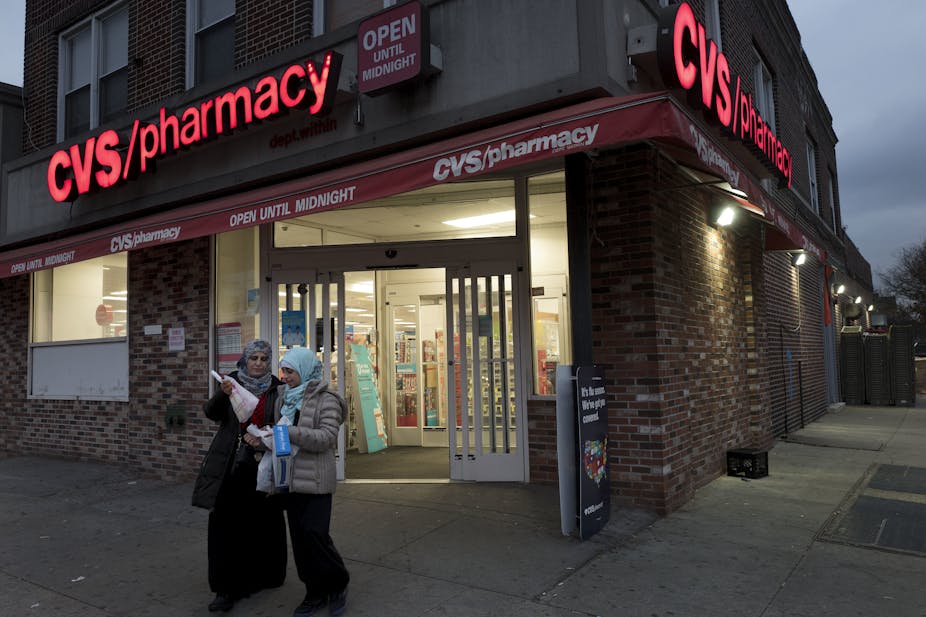
The announcement that CVS plans to acquire Aetna for US$69 billion raises hope and concerns.

The transaction would create a new health care giant. Aetna is the third-largest health insurer in the United States, insuring about 46.7 millionpeople.

CVS operates 9,700 pharmacies and 1,000 MinuteClinics. A decade ago, it also purchased Caremark and now operates CVS/Caremark, a pharmacy benefits manager, a type of business that administers drug benefit programs for health plans. CVS/Caremark is one of the three largest pharmacy benefits managers in the United States. Along with ExpressScripts and OptummRXTogether, these three control at least 80 percent of the market.

Should American consumers be happy or concerned about the proposed merger? As a professor of health law and bioethics, I see compelling arguments on both sides.

Good for consumers, or for the companies?

CVS and Aetna assert they are motivated by a desire to improve services for consumers and that the merger will lower health care costs and improve outcomes.

Many industry experts have postulated, however, that financial gain is at the heart of the deal.

CVS has suffered declining profits as consumers turn to online suppliers for drugs. Reports that Amazon is considering entry into the pharmacy business raise the specter of increasingly fierce competition.

The merger would provide CVS with guaranteed business from Aetna patients and allow Aetna to expand into new health care territory.

The heart of the deal

The merger would eliminate the need for a pharmacy benefits manager because CVS would be part of Aetna.

Pharmacy benefits managers, which sprang up in the early 2000s in response to rising costs of care, administer drug benefit programs for health plans. Most large employers contract with pharmacy benefits managers that are different from their health insurers.

Nevertheless, a consolidation along the lines of a CVS/Caremark and Aetna merger would not be unprecedented. The nation’s largest health insurance company, United Healthcare, operates its own pharmacy benefits manager, OptumRx.

Pharmacy benefits managers process and pay prescription drug claims, negotiate with manufacturers for lower drug prices, and can employ other cost-saving mechanisms. They thus act as intermediaries between the insurer and pharmacies.

They also make a lot of money. They have been controversial in recent years for how they do so, allegedly keeping a keener focus on profits than on patients.

The merger has not been finalized and requires approval from government regulators, which isn’t always easy to get. In 2016 the U.S. Department of Justice sued to block two health insurer mergers: one between Aetna and Humana and a second between Anthem and Cigna. The government objected on antitrust grounds, arguing that the mergers would unduly restrict competition. Both efforts were abandoned.

CVS and Aetna argue that their proposed merger is different. It is a vertical rather than a horizontal merger, which means that it would combine companies providing different services for patients (insurance and filling prescriptions) rather than two companies doing the same thing.

However, the Trump administration is currently opposing another vertical merger, that between AT&T and Time Warner. It is unclear whether the administration will likewise oppose the CVS/Aetna merger.

Benefits of a merger

There is some evidence that a merger could help consumers.

A merger could result in more negotiating power. Combining the power of a leading pharmacy and a top insurer may allow CVS/Aetna to negotiate more effectively for price discounts from drug and device manufacturers.

It also could cut out the middleman. PBMs themselves have been blamed for raising health care costs. They often do not pass on negotiated drug discounts to consumers, but rather keep the money themselves. In addition, many believe they “make money through opaque rebates that are tied to drug prices (so their profits rise as those prices do).” With the merger, CVS/Aetna would not need CVS/Caremark to function as an intermediary. Eliminating a profit-seeking middleman from the picture could lower consumer prices.

The merger could provide easy access to health care for minor injuries and illnesses. CVS said it plans to expand its MinuteClinics, walk-in clinics that provide treatment by nurse practitioners for minor conditions. Also, CVS said it would offer more services, such as lab work, nutritional advice, vision and hearing care, and more. Thus, CVS promises that its clinics will become “health hubs.”

Many patients could turn to these clinics instead of seeking more expensive care from physicians or emergency rooms. Furthermore, health hubs could provide “one-stop shopping” convenience for some patients. This could be particularly beneficial to elderly individuals or those with disabilities.

Another benefit could be improved and expanded data analytics, which could result in better care. Combining information from patients’ health insurers with that of their pharmacies, including nonprescription health purchases, may promote better care. CVS pharmacists and health hub providers would be able to monitor and counsel patients regarding chronic disease management, pain management, prenatal care and other matters. Such attention could reduce the risk of complications and hospitalizations and thus also decrease expenditures.

Increase of other risks?

Skeptics argue that the CVS/Aetna merger is unlikely to yield cost savings and improved outcomes. They note that mergers in the health care sector generally lead to higher, not lower, prices and worry about other adverse consequences.

If the market shrinks to fewer pharmacy benefits managers because of consolidation, costs may actually increase. The remaining pharmacy benefits managers may have little incentive to compete with each other by demanding discounts from drug companies. As noted above, they may actually profit from higher pharmaceutical prices and thus welcome increases.

After the merger, Aetna may require those it insures to use only CVS pharmacies. In addition, it may require individuals to turn to CVS MinuteClinics for certain complaints even if patients prefer to visit their own doctors. Such restrictions would mean less choice for consumers, and many may find them to be very distressing.

The merger could also decrease competition and bar other companies from entering the pharmacy market. For example, Aetna may refuse to cover prescription drugs that are not purchased from CVS. In that case, Amazon may find it extremely difficult if not impossible to break into the industry. Less competition, in turn, often means higher prices for consumers.

It is difficult to predict the precise consequences of a CVS/Aetna merger. One way or another, however, its impact will likely be significant.