

http://healthaffairs.org/blog/2017/06/02/erisa-a-bipartisan-problem-for-the-aca-and-the-ahca/

The Supreme Court has once again been called on to mediate the boundaries of a far-reaching, infamously complex, federal employee benefits law. And once again this law may have an important and unanticipated effect on health care.
The main goal of this law, the Employee Retirement Income Security Act of 1974 (ERISA), was to provide uniform, federal regulation of pensions and employee benefit plans (including health care). But the law has had a far more dramatic impact on health policy beyond what Congress ever contemplated. Because ERISA pushes aside state regulation of these plans, it has impeded the states’ ability to partner with the federal government to achieve key health policy goals. ERISA has also stymied some of Congress’s goals under the Affordable Care Act, and may prove an even greater obstacle to Republican efforts to return more authority over health policy to the states.
ERISA and health reform have not meshed well. For instance, the ACA’s attempt to create greater uniformity of benefits is at odds with the way ERISA creates a special class of protected plans and blocks states efforts to regulate them. When you ask yourself why the ACA’s guarantee of essential health benefits applies to some health plans but not to others, the answer is deference to ERISA. When you ask yourself why some health plans are subject to state-mandated benefit laws but some remain exempt, the answer is ERISA.
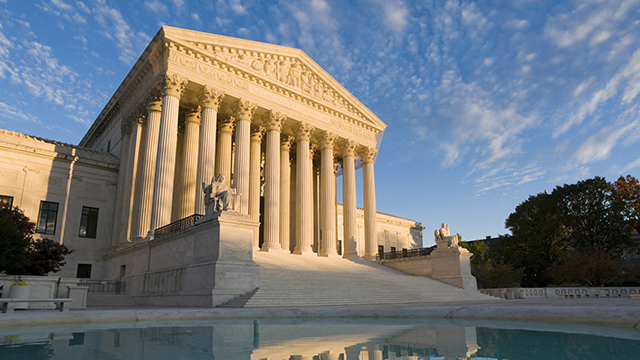
The US Supreme Court has not helped. The Court decided two important ERISA cases last term and has another one in the term about to conclude. Those interested in health care should watch this case closely. Last term, even as the Court acknowledged ERISA’s tensions with the ACA, it ruled that ERISA blocked Vermont’s attempt, through an all-payer claims database, to partner in the ACA’s efforts to make health care spending more transparent. States, including Alaska for example, struggle in the wake of this ruling to make an all-payer claims database work. In the second case, the Court indicated that ERISA might thwart a compromise in a dispute between the federal government and Christian nonprofit organizations over the ACA and contraception coverage.
This term, the fight involves the intersection of religion, health, and ERISA once again. And again, the Court must say how far ERISA reaches. ERISA exempts “church plans” from its broad regulation. The Supreme Court will decide whether the exemption for church plans, defined as plans “established and maintained” by houses of worship, applies narrowly to plans created by churches or, more broadly, also to those created by church-affiliated organizations. The three plans in this litigation and many plans in question are pension plans for employees at Catholic hospitals and health systems. In Advocate Health Care Network v. Stapleton, consolidated with two other cases, the Court will determine whether Catholic hospitals—which now care for one in six patients in the U.S.—must guarantee the security of their employees’ pensions. Billions of dollars of pension shortfall and the financial security of 300,000 hospital workers are at stake.
We review the recent and upcoming ERISA jurisprudence below and conclude it is time for the Court, or Congress, to cabin ERISA’s reach when it comes to health care.



 HENRY KOTULA