


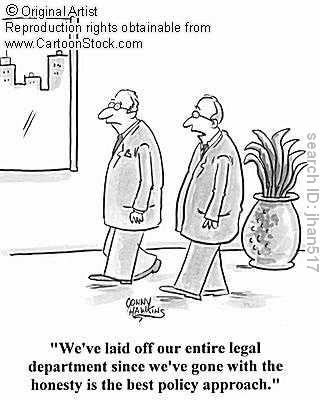
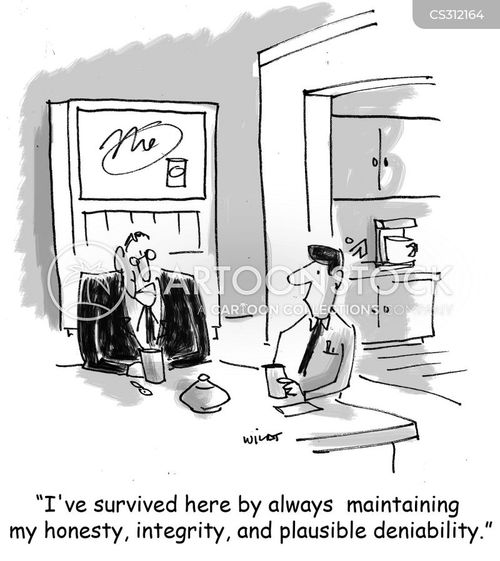
Cartoon – The Second Best Policy



As the well-known, dramatic story unfolds, “Humpty Dumpty sat on the wall, Humpty Dumpty had a great fall. All the king’s horses, and all the king’s men, couldn’t put Humpty Dumpty together again.” Coincidentally, this nursery rhyme has me thinking about an important leadership issue.
During this Independence Day season, I’m concerned that our freedom is being threatened. Now is the time for honorable patriots to speak up and do our part on this issue. We must take a stand for civility in our culture, and it’s a basic responsibility as fellow colleagues and citizens.
What is Civility and why is it important?
The word “civil” ties back to the Latin word for citizen, and the core meaning is the idea of people living together as a society under a government. The other well-known and related definition of the word civil is being courteous, respectful and considerate of others. To have and maintain freedom requires a degree of civility and tolerance for each other.
Just over fifty years ago Dr. Martin Luther King set the standard for civility when debating highly contested issues. Out of that era, our society learned a lot about respectful tolerance for others—it has been a foundational ethos over the past 30 years in the issues of race, gender, and religion, and it’s made us a better nation because of it. We had our differences in the past, but there was a general attitude of civility in debating them.
Today though, the tragic change is tolerance for being intolerant of others who have different ideas and views.
“When people reach a point of hate for each other because they have different perspectives, then you have a serious problem.”
Emotions are Contagious
From my past work in human behavior and performance, I know that emotions are contagious. Positive emotions give positive energy and make it easy to live and work together. Negative emotions bring negative energy and make it difficult to work together. We all know this principle from time spent with our work teams as well as relationships with family and friends. And the same thing applies to our culture.
Now we’re seeing intolerant and rude conversation on a mass scale. Some media outlets and politicians ignore the boundaries of civility, aggressively promoting disrespectful personal attacks on others who don’t share their views on politics or social issues. And social media has provided a layer of protection, allowing individuals to lash out in vicious ways at people they don’t even know. These actions aren’t illegal, but they are certainly anti-social and attack the civility needed to maintain a free society where we can live and work together.
Another Civil War?
A recent Rasmussen Poll showed that “thirty-one percent (31%) of U.S. voters say it’s ‘Likely’ that the United States will experience a second civil war sometime in the next five years, with 11 percent saying it’s ‘Very Likely.’[i]” This poll seems to confirm what I’m feeling—that we’re crashing over the boundaries needed in a civil society.
Underneath this breakdown in civility is the subtle mindset that “the ends justify the means”.
This is the bone-chilling Communist manifesto that we experienced in the POW camps, so I’m highly sensitive to this type of attack on freedom and independence. This abandonment of truth and civility can happen in our American culture, a business boardroom, a dysfunctional family relationship, or a dispute with a neighbor. No one can escape it, but we have an opportunity to do our part in arresting it.
What can we do?
If you’re agreeing with this article, then you’re part of the tribe that has decided to live and lead with honor! Regardless of your personal and professional perspectives or your allegiance to your like-minded group of people, you know that the true essence of influence and courage is taking a stand in a civil way regardless if that civility is returned in kind. For more on this challenge, see my coaching video this month and hear my personal story.
Here are four things that we can do –
If Humpty Dumpty takes a fall, it will be very difficult to put him back together again. Take a stand for our freedom and independence, stand and advocate for civility…in a civil way.


So far in 2018, approximately 12 hospital and health system executives have suddenly left their roles. While there are myriad reasons for the departures — ranging from being ousted to personal issues — most of them occurred with little or no notice. Whatever the reason, the question remains: How can executives mitigate the potential fallout?
According to Cody Burch, executive vice president at healthcare executive consulting and search firm B.E. Smith, any potential fallout from a sudden departure can be mitigated if executives remain positive and transparent.
“It doesn’t necessarily have to have a negative impact on [a] healthcare executive’s chances of landing another job,” he says.
There are several reasons behind a healthcare executive suddenly stepping down from their role. Common ones include burnout, termination for cause, personal issues and structural changes in the organization, says Mr. Burch. More recent reasons include consolidation, facility closures and demand for new skill sets. An executive may find they are not the right fit for the role anymore as the demands of the role or organization have changed.
An executive who has suddenly left an organization may find they have fewer opportunities in the job market. Mr. Burch says sometimes organizations looking to fill positions may only consider candidates who are currently employed, so executives who have recently left their roles may see a narrower job market than before.
Job seekers with a sudden departure on their resume may have to navigate challenging waters as they look for new opportunities. Here are five key considerations for these executives:
1. Remember honesty is key. Healthcare is very well connected. Healthcare executives and recruiters know each other, often having crossed paths over several years working in the same industry. The best strategy for executives who are looking for a new job after an abrupt departure is to be honest about their past circumstances.
“It is easy for people to find out the real story in an industry like healthcare,” says Mr. Burch. “Communicate about it honestly.”
2. Proactively address the one question every recruiter will ask. Most recruiters will ask the inevitable question, namely some version of, “Why did you leave your previous role?” Mr. Burch suggests healthcare executives expect that question and address it before the recruiter can even ask it. This gives the executive control over the messaging and narrative.
Mr. Burch says executives need to prepare their response to the question carefully. As much as possible:
• Try to disconnect the reason you are no longer in your previous role from the future.
• Communicate what you learned from your previous experience.
• Keep your answer short and focused on the positives.
• Reiterate your qualifications for the current opportunity.
• Explain why you are great fit for the new organization.
3. Stay positive. Although an abrupt departure can be a negative experience, it is important not to lose your positivity and perspective. “I think there is something to be said for either [the executive] or the employer identifying that the fit just isn’t there in the current organization,” says Mr. Burch. “Being able to come to a conclusion and reflect, truly reflect, on why it didn’t work.”
Finding an organization that is a better fit for the executive is a good thing for both the executive and the organization. It is important not to become bitter or emotional. Take the high road regardless of how things ended with the previous employer.
4. Keep networking. Keep your CV up to date and leverage your relationships within the industry, Mr. Burch says. Networking is always critical, but especially so at times of sudden change. Don’t be afraid to ask for help with your CV and partner with a recruiting firm if needed, he adds.
5. Leverage interim leadership. Executives looking to get back into the industry after a sudden departure can look for interim leadership roles. Use these roles to build confidence and demonstrate their value, says Mr. Burch. This will also help connect you to new people within the industry and potentially, new advocates for your leadership expertise.
“If you handle that transition well and get into a good opportunity for your career, the transition no longer matters,” says Mr. Burch. “People aren’t going to look back at that situation unless it happens commonly and frequently [in your career].”

 HENRY KOTULA