Medicare Didn’t Investigate Suspicious Reports Of Hospital Infections

http://www.npr.org/sections/health-shots/2017/05/09/527432852/medicare-didnt-investigate-suspicious-reports-of-hospital-infections

Almost 100 hospitals reported suspicious data on dangerous infections to Centers for Medicare & Medicaid Services officials, but the agency did not follow up or examine any of the cases in depth, according to a report by the Health and Human Services inspector general’s office.

Most hospitals report how many infections strike patients during treatment, meaning the infections are likely contracted inside the facility. Each year, Medicare is supposed to review up to 200 cases in which hospitals report suspicious infection-tracking results.

The IG said Medicare should have done an in-depth review of 96 hospitals that submitted “aberrant data patterns” in 2013 and 2014. Such patterns could include a rapid change in results, improbably low infection rates or assertions that infections nearly always struck before patients arrived at the hospital.

The IG’s report, released Thursday, was designed to address concerns over whether hospitals are “gaming” a system in which it falls to the hospitals to report patient infection rates and, in turn, the facilities can see a bonus or a penalty worth millions of dollars.

The bonuses and penalties are part of Medicare’s Hospital Inpatient Quality Reporting program, which is meant to reward hospitals for low infection rates and give consumers access to the information at the agency’s Hospital Compare website.

Sepsis Tops Conditions Tracked for Readmission Rates, but Triggers No Penalties

http://www.healthleadersmedia.com/quality/sepsis-tops-conditions-tracked-readmission-rates-triggers-no-penalties?spMailingID=10315063&spUserID=MTY3ODg4NTg1MzQ4S0&spJobID=1082253801&spReportId=MTA4MjI1MzgwMQS2#

Sepsis Tops Conditions Tracked for Readmission Rates, but Triggers No Penalties

Sepsis has a higher rate of readmission than heart failure, but the federal government does not penalize hospitals for excessive readmissions due to sepsis.

Hospitals work to ensure high-risk patients are ready for surgeries

http://www.fiercehealthcare.com/healthcare/hospitals-work-to-ensure-high-risk-patients-are-ready-for-surgeries?mkt_tok=eyJpIjoiTVdZNE9UbGtZemxtTXpBMCIsInQiOiJVS01rMXhPNVNhS1c0V2JKaE53TSthTHg0dWFnaXVtcUtXeEZlK0VqQTk3SFBNTG01aEJpVVN0aFhqRDZ5cmFGYitGUmtrZHV0K0JGMHBcL2twN2RBeUpSSk5MaW5vS0NcL25JQTk3T2FFTUhrPSJ9&mrkid=959610&utm_medium=nl&utm_source=internal

As healthcare becomes increasingly value-based, surgical outcomes are more important than ever, leading many providers to assess patients’ fitness for elective procedures.

Increasingly, providers make an effort to learn more about patients’ health before operations such as hip and knee replacements, according to The Wall Street Journal, looking for evidence of dangers of infection and other complications. Patients with chronic conditions or lifestyles that put them at higher risk may be directed to “pre-habilitation” programs to increase the odds that their procedures go off without a hitch. These initiatives can involve medical treatments or simply improved diet and exercise, according to the article.

This approach builds on strategies surgeons have employed for years, including advising patients to quit smoking or get in better shape ahead of a procedure, but the range of risks they focus on has broadened considerably to encompass everything from sleep disorders to mental illness, according to the article.

“In health care, we often bring patients into surgery without fully addressing their chronic medical conditions,” Solomon Aronson, M.D., executive vice chair in the anesthesiology department at Duke University School of Medicine in Durham, North Carolina, told the WSJ, and when patients are healthier pre-surgery, “we can significantly diminish the risk of complications.”

For example, Duke Health’s “Poet” (Peri-Operative Enhancement Team) program has focused its efforts on patients with anemia, malnourishment, poor tolerance for exercise, complex pain disorders and diabetes. The fixes the provider offers range from pre-operative iron infusions for anemic patients to a protein shake regimen for older, malnourished patients. In the cases of patients who need such fixes as weight loss or blood sugar control, the Duke team employs longer-term regimens as well.


Big-name hospitals often fail to prevent C. diff infections

http://www.fiercehealthcare.com/hospitals/report-c-diff-infections-continue-to-be-a-struggle-for-big-name-medical-centers?utm_medium=nl&utm_source=internal&mrkid=959610&mkt_tok=eyJpIjoiTVdZNE9UbGtZemxtTXpBMCIsInQiOiJVS01rMXhPNVNhS1c0V2JKaE53TSthTHg0dWFnaXVtcUtXeEZlK0VqQTk3SFBNTG01aEJpVVN0aFhqRDZ5cmFGYitGUmtrZHV0K0JGMHBcL2twN2RBeUpSSk5MaW5vS0NcL25JQTk3T2FFTUhrPSJ9

MicroscopeMicroscope

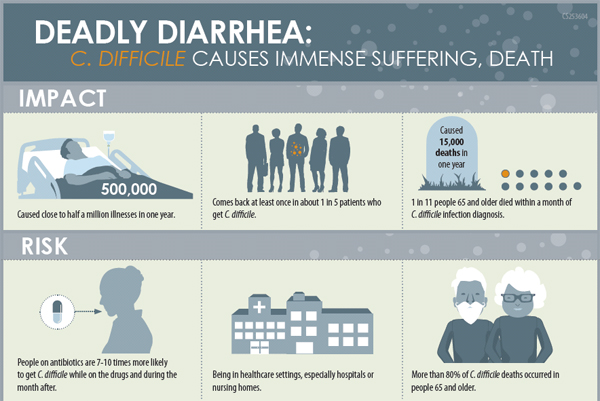
Some of the most well-known hospitals in the nation rank among the worst in preventing deadly Clostridium difficile infections, according to a new Consumer Reports analysis.

The publication analyzed C. diff infections at hospitals across the country, based on data reported to the Centers for Disease Control and Prevention between 2014 and 2015. It found well-known teaching hospitals like the Cleveland Clinic, Baylor University Medical Center in Dallas, Brigham and Women’s Hospital in Boston and Cedars-Sinai Medical Center in Los Angeles had the lowest or second-lowest ranking, indicators that these hospitals fall short against the national benchmark to control such infections.

“Teaching hospitals are supposed to be places where we identify the best practices and put them to work,” Lisa McGiffert, director of Consumer Reports‘ Safe Patient Project, said in an announcement of the findings. “But even they seem to be struggling against this infection.”

The report analyzed data from more than 3,100 U.S. hospitals and found that more than a third received a low score for C. diff infection control.

Only two large teaching hospitals, Mount Sinai Medical Center in Miami Beach, Florida and Maimonides Medical Center in Brooklyn, New York, earned top marks from Consumer Reportson controlling C. diff.

PBS Frontline: Hunting the Nightmare Bacteria

http://www.pbs.org/video/2365104403/

Antibiotic Resistance

http://www.pbs.org/video/2365089175/

http://www.pbs.org/video/2365540415/

C. Diff: Deadly Infection on the Rise in U.S. Hospitals

http://www.consumerreports.org/doctors-hospitals/c-diff-deadly-infection-on-rise-us-hospitals/

C. Diff. Image: Washing hands with soap.

Hospital Infection Rates Are On The Downslide (With One Troubling Exception)

Hospital Infection Rates Are On The Downslide (With One Troubling Exception)

C-Diff

12 Hospitals You Might Want to Avoid

http://www.consumerreports.org/cro/health/12-hospitals-to-avoid

A surgeon washing his hands. Consumer Reports identifies 12 hospitals that did poorly in our hospital Ratings against infections.