California city anticipates 1,200 jobs spurred by Kaiser, Adventist and Sutter expansions

https://www.beckershospitalreview.com/workforce/california-city-anticipates-1-200-jobs-spurred-by-kaiser-adventist-and-sutter-expansions.html

Image result for California city anticipates 1,200 jobs spurred by Kaiser, Adventist and Sutter expansions


The city of Roseville, Calif., anticipates a job boom as healthcare giants Kaiser Permanente, Adventist Health and Sutter Health expand in the area, reports The Sacramento Bee.

The area is expected to see about 1,200 more jobs over several years resulting from the projects.

“We are expecting a significant, 11 percent job growth over the next five years, and these expansions play into that,” Laura Matteoli, the city’s acting economic development director, told the publication.

Roseville, Calif.-based Adventist Health’s plans involve consolidation. According to the report, the system will consolidate its corporate headquarters and other buildings into one 275,000-square-foot building, projected to cost $100 million and slated to open in January. Human resources, IT and strategy departments will be housed in the building. Adventist Health also is building a clinic for its workers in Roseville, vice president of talent strategy Doris Tetz Carpenter told The Sacramento Bee.

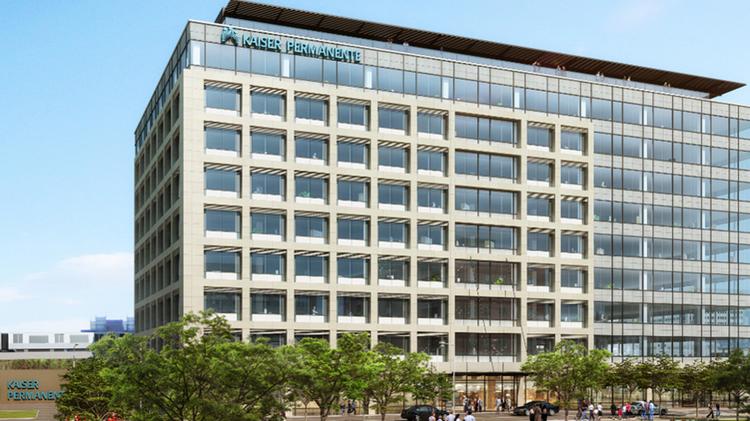
Oakland, Calif.-based Kaiser Permanente’s plans in Roseville involve replacing its 90,000-square-foot Riverside Medical Offices with one 210,000-square-foot building that will offer outpatient services, spokesperson Edwin Garcia said.

At Sacramento, Calif.-based Sutter Health, hospital officials are expanding the system’s Roseville hospital’s emergency and intensive care unit, the report states. The 97,000-square-foot building addition is slated for completion in 2020.


18k Kaiser nurses vote for option to strike at California facilities

https://www.beckershospitalreview.com/human-capital-and-risk/18k-kaiser-nurses-vote-for-option-to-strike-at-california-facilities.html

Image result for california nurses union

Tens of thousands unionized registered nurses at facilities owned by Oakland, Calif.-based Kaiser Permanente voted for the option to call a strike if an agreement is not reached on issues such as staffing and patient care, according to a California Nurses Association news release.

The CNA — which represents 18,000 RNs who work at more than 20 Kaiser Permanente medical centers and dozens of medical clinics and office buildings in California — said nurses are calling on the healthcare giant to improve patient care standards.

“With this vote nurses are making it absolutely clear: We are ready to strike to make sure our patients get safe care,” said Zenei Cortez, a South San Francisco Kaiser Permanente RN and co-president of CNA.

Union officials said nurses specifically are calling on Kaiser Permanente to support their proposals regarding staffing and patient care standards. These include bringing in a charge nurse on each unit, as well as resource nurses to assist other nurses so they are able to take breaks. The union said nurses also propose “interventions with pharmacy to expedite patients receiving correct medications,” and “increased staffing when needed due to emergent conditions and heightened patient volume.”

Additionally, the CNA said nurses are opposed to Kaiser Permanente’s proposal to move from the existing GRASP patient classification system to Epic Acuity, which nurses contend is less transparent. Nurses are also opposed to what they said are Kaiser Permanente’s plans to cut pay for new hires by 10 percent in the Sacramento region, and 20 percent in Fresno and the Central Valley.

Regarding the union’s claims about staffing, Debora Catsavas, senior vice president of human resources for Kaiser Permanente Northern California, said in a statement: “Our nurse staffing meets, and often exceeds, state-mandated staffing as necessary for patients, based on the complexity of their medical conditions. We employ more than 18,000 nurses, and have hired more than 2,000 nurses in multiple key specialty areas over the last three years, and continue to hire more as needed.”

As far as the move to Epic Acuity, Ms. Catsavas said the move addresses various issues nurses have raised about the existing GRASP patient classification system.

“GRASP is a system from the 1980s based on studies of nursing work flows conducted nearly 50 years ago. Epic Acuity is an up-to-date, comprehensive system that directly reflects the care provided and allows nurses to spend more time at the bedside,” her statement reads. “Epic Acuity uses clinical information directly inputted by the nurses into our electronic medical record.”

She said Kaiser Permanente also offered nurse representatives paid time to talk about and review Epic Acuity’s implementation.

Furthermore, Ms. Catsavas said there are no proposed wage cuts or wage reductions for current nurses. However, she said Kaiser Permanente last October proposed a new wage scale for new nurses hired in the Sacramento, Central Valley and Fresno areas on or after Jan. 1, 2019, “to more closely align with the lower cost of living in these markets.”

She noted Kaiser Permanente nurses in Sacramento, the Central Valley and Fresno earn 24 percent, 37 percent and 45 percent more than non-Kaiser Permanente nurses, respectively.

While the Kaiser Permanente nurses have authorized a potential strike, no strike date is set. For a strike to occur, nurses would have to provide at least 10 days notice.

Ms. Catsavas said Kaiser Permanente anticipated a strike authorization might occur but believes an agreement is within reach.


Kaiser’s operating income jumps 57% to $772M

http://www.beckershospitalreview.com/finance/kaiser-s-operating-income-jumps-57-to-772m.html

Image result for kaiser permanente

Oakland, Calif.-based Kaiser Permanente reported higher revenue and operating income for its nonprofit hospital and health plan units in the second quarter of 2017.

Kaiser saw revenue climb to $18.1 billion in the second quarter of this year. That’s up 14.6 percent from revenue of $15.8 billion in the same period of 2016.

That boost was attributable, in part, to the system’s health plan unit. In the first half of 2017 Kaiser added 1.1 million health plan members. This growth was partially attributable to Kaiser’s acquisition of Seattle-based Group Health Cooperative in February. As of June 30, Kaiser had about 11.7 million members.

Kaiser reported operating income of $772 million in the second quarter of this year, up 57.2 percent from $491 million in the same period of 2016.

After factoring in non-operating income, Kaiser ended the second quarter of 2017 with net income of $1 billion, up from net income of $707 million in the second quarter of the year prior.

Kaiser Permanente plans $200M medical hub in N. Va.

https://www.bizjournals.com/washington/news/2017/07/18/kaiser-permanente-eyes-200m-medical-hub-in-prince.html?lipi=urn%3Ali%3Apage%3Ad_flagship3_feed%3BjOr1uQoFRSCV0kd0MJgD3Q%3D%3D

Kaiser Permanente of the Mid-Atlantic States is looking to build a medical center in Prince William County.

Kaiser Permanente of the Mid-Atlantic States is seeking approval to build a $200 million medical facility in Woodbridge as a “hub” for its ongoing growth in Greater Washington.

According to an application filed with Prince William County, Kaiser officials propose a 270,000-square-foot, five-and-a-half story medical center on a 15-acre parcel the company already owns at 13285 Minnieville Road. The project would include 1,270 surface and structured parking spaces and a plan for future expansion of about 65,000 square feet.

Kaiser officials declined Tuesday to comment about the project, but the application says Kaiser wants to make it the health system’s sixth hub in the region to offer urgent and specialty care. The company has been aggressively growing its footprint across the region in recent months in an apparent bid to gain market share in the already highly competitive Northern Virginia health care business.

The Woodbridge space would include space for adult and pediatric care, women’s health services and pharmacy, lab, optometry and outpatient surgery. It will also include virtual visit technology, an MRI suite and consult rooms. The Kaiser hub model offers specialty care for issues that are too complex for a doctor’s office but do not require a multiple-day hospitalization.

“Kaiser plans to continue to expand throughout Maryland, Virginia and Washington D.C. based on the needs of the community and its growing membership base,” officials said in the application.

The company, an affiliate of health care giant Kaiser Permanente, is headquartered in Rockville. It has more than 710,000 members in Maryland, Virginia and D.C. and comprises Kaiser Foundation Health Plan of the Mid-Atlantic States Inc. and The Mid-Atlantic Permanente Medical Group PC, an independent medical group of more than 1,300 physicians.

Kaiser has partnerships with 11 area hospitals, including Virginia Hospital Center, Reston Hospital Center and Stafford Hospital, as well as Sibley Memorial Hospital and Children’s National Health System in the District, Suburban Hospital in Bethesda and Holy Cross Hospital in Silver Spring.

Kaiser officials said they plan to employ 185 people at the Woodbridge site, which would accommodate an additional 60 jobs following future expansion. They also expect the project would create 200 temporary construction jobs.

Kaiser officials said they will create a “health park” with recreational elements such as workout stations, trails, woodlands and “sensory nooks.”

Documents show Kaiser is working with HKS Architects Inc. Law firm Cooley LLP is listed as the authorized agent and Annandale-based Dewberry Consulting LLC is listed as the engineer.

The project is among of a blitz of real estate moves by the health care in giant in Greater Washington this year.

Kaiser officials said they have invested more than $446 million across the region between 2012 and 2016.


Kaiser raises record $4.4 billion in white-hot hospital bond market

http://www.modernhealthcare.com/article/20170510/NEWS/170519985

Image result for white-hot hospital bond market

Kaiser Permanente raised $4.4 billion through a series of three bond offerings this month.

That’s a record for the Oakland, Calif.-based health plan and hospital giant, which plans to use the proceeds to fuel expansion, said Chief Financial Officer Kathy Lancaster.

The aggregate interest rate on the A+-rated bonds was a stellar 3.8%.

Kaiser Permanente investors ordered four to five times as many of the A+-rated bonds as were available, Kaiser Treasurer Tom Meier said. Overall, the bond market is white-hot for hospital debt offerings.

Just this month, Community Health Systems grew a $700 million debt offering to $900 million. Competition for MetroHealth’s $945.7 million offering dropped the rate to under 5%.

MetroHealth, located just west of Cleveland, raised the money to finance the transformation of its main campus, including a new replacement hospital. Struggling CHS is refinancing debt that was expiring.

Corporate bond activity is expected to remain robust, even if the Federal Reserve raises interest rates a couple of quarter-point notches this year, according to an April debt report by Fitch Ratings.

Even with a quarter-point increase in March, Fed borrowing rates are still near a historic low at 1%. The government will only continue to raise interest rates if the economy is strong, said Fitch Managing Director Megan Neuburger.

What that means for hospitals is that higher interest rates would be offset by more patient volume since consumers might feel more financially comfortable getting elective and preventive care.

That’s the case even for troubled systems such as CHS with below-investment-grade debt ratings.

“The high-yield (bond) market is healthy,” Neuburger said.

Kaiser, the nation’s largest integrated health system with annual revenue of $71 billion, needs more hospital capacity, physician offices and technology enhancements after adding about 2.5 million new health plan members over the past three years, Lancaster said.

The recent acquisition of Group Health in Seattle and other organic growth has brought Kaiser’s enrollment to 11.7 million members.

Most of those enrollees will get their care at Kaiser’s 39 hospitals and hundreds of medical offices staffed by Permanente physicians contracted to Kaiser.

For Kaiser to meet its mission of convenient, affordable care, the system needs to keep investing in locations and technology that allows patients to select whether they come to a physician office or connect with its physicians through telemedicine or secure internet links, CEO Bernard Tyson told a Nashville Health Care Council luncheon audience last month.

Part of the reason this month’s offering was so big is that Kaiser had not gone to the debt markets since 2012, Lancaster said. Typically, it would do an offering every other year. But the need for capital and low interest rates urged Kaiser to put together the offering, Lancaster said.

Kaiser likes to operate with a debt-to-capitalization ratio of 20% to 30%, she said. The recent offering puts the system at 28%.

Interestingly, $1 billion of the $4.4 billion in bonds were designated as “green bonds” or those that appeal to funds and investors that look for environmentally or socially friendly organizations to invest in, Lancaster said.

Kaiser received that designation due to its new environmentally friendly hospital in San Diego that opened two weeks ago, she said.

MetroHealth reports that it had 122 banks, funds, firms and individuals put in orders for its hospital bonds.

“Not only is this an important validation of the success we’ve earned with our strategy, recent growth and operating performance improvements, it’s proof of the industry’s belief in MetroHealth and the path we’re taking,” said Dr. Akram Boutros, MetroHealth CEO.

The health system is using the proceeds to construct a new 12-story, 270-bed replacement hospital on its main campus as well as a new central utility plant and parking garage among other projects.


Kaiser hits $1 billion operating gain in Q1

http://www.modernhealthcare.com/article/20170515/NEWS/170519892?utm_campaign=CHL:%20Daily%20Edition&utm_source=hs_email&utm_medium=email&utm_content=51986490&_hsenc=p2ANqtz-839Ex2h99Z8rm5tf8l2lPojAGaBIqcTZ4WSv6wsJY2cbOYWcNtHo6UgIzmQJnqy-2QzLnCsclP8jXne8igI2EeUoSRaA&_hsmi=51986490

Image result for kaiser permanente thrive

Kaiser Permanente Monday posted a record $1 billion operating gain in its first quarter, just days after holding its largest-ever bond offering.

The Oakland, Calif.-based health plan and hospital giant eclipsed the $1 billion barrier on revenue of $18.1 billion. That compared with an operating gain of $701 million on revenue of $16.3 billion in the year-earlier quarter.

The 5.5% operating margin in the first quarter beat the strong 4.3% operating margin from the year-earlier period.

Not-for-profit Kaiser is the nation’s largest integrated health system with 11.7 million health plan members and 39 hospitals.

Its record first quarter was disclosed in a financial filing Monday.

Efforts to reach Kaiser for a comment late Monday were unsuccessful.

Kaiser’s performance was only nominally aided by contributions from its $1.8 billion acquisition of Seattle-based Group Health Cooperative on Feb. 1.

Group Health contributed $18 million of operating income on revenue of $709 million over the last two months of the quarter, the financial filing shows.

Kaiser earlier this month raised a record $4.4 billion through a series of three bond offerings to build out access points in its current markets and look for growth opportunities in communities neighboring its facilities. Those include hundreds of physician offices and outpatient centers across the country.

Kaiser reported operating income of $1.9 billion on revenue of $64.6 billion in full-year 2016 compared with operating income of $1.8 billion on revenue of $60.7 billion in the prior year.

In the first quarter of 2017, Kaiser also posted an investment gain of $582 million compared with an investment loss of $157 million in the year-ago period.

The operating gain coupled with the investment gain and other non-operating income pushed Kaiser to a net gain in the quarter of $1.56 billion.

Kaiser only books actual investment gains, not paper or unrealized gains in its investment portfolio.

Kaiser releases plans for California medical school: 6 things to know

http://www.beckershospitalreview.com/facilities-management/kaiser-releases-plans-for-california-medical-school-6-things-to-know.html

Oakland, Calif.-based Kaiser Permanente revealed plans to replace a former office building and parking lot in Pasadena, Calif., with an 80,000-square-foot medical school, according to the Pasadena Star-News.

Here are six things to know about the proposed medical school.

1. The four-story building will reportedly feature floor-to-ceiling windows on the first floor, an open rooftop and state-of-the-art classrooms.

2. The health system previously disclosed plans to build the medical school in 2015. Officials chose to build in Pasadena because of the location’s proximity to other Kaiser facilities and access to affordable housing, public transit and major highways, according to the report.

3. Two additional Kaiser-owned research and administrative facilities will remain on site.

4. The health system expects to open the medical school in 2019 with an inaugural class of 48 students. By 2022, officials expect a full enrollment of 192 students, according to the report.

5. The School of Medicine will not maintain any clinics or patients within the facility. Instead, students will travel to the health system’s 14 other locations in southern California to gain hands-on experience.

6. Officials said they hope to break ground on the facility by the end of the year. The proposal must first undergo environmental and design reviews by the city’s design commission, according to the report.