The Devil is in the Culture: It is all about Will!

http://www.mobihealthnews.com/content/value-based-care-patient-engagement-local-attention-and-digital-technology-are-fixes

Image result for cartoon the devil in the culture

As lawmakers on Capitol Hill wrangle over the fate of the Affordable Care Act and its would-be replacement, the American Health Care Act, the National Academy of Medicine said its four main priorities for fixing the country’s healthcare industry include continuing the shift from fee-for-service to value based payment models; empowering people to be fully engaged in their healthcare decisions; tapping communities for local health solutions; and implementing integrated services and seamless digital interfaces.

Writing a blog for the Journal of the American Medical AssociationDonald M. Berwick, MD, acknowledged that these solutions don’t exactly reinvent the wheel.

“The strength of the Vital Directions report is not in its innovativeness; it contains no surprises,” said Berwick. “This report offers a template for change broad and inclusive enough for it to be a charter for coherent and effective system redesign.”

The first step in that redesign, the shift from volume to value, is already underway, and the academy contends that its continuation is vital in terms of reducing waste and improving value.

Berwick agreed that this shift is needed, but wrote that fee-for-service behaviors “and top line-driven revenue growth strategies continue to dominate healthcare economies, and recent political pushback has been strong against expanding effective bundled payment models and value-based pharmaceutical purchasing.”

The report also cites evidence that underinvestment in social services relative to healthcare services may be contributing to the country’s poor health performance. To reduce inequality and increase cost savings, the report recommends integrating clinical care services and non-medical services, such as housing, food, transportation and income assistance.

That solution leads into another of the report’s action plans, activating communities. A person’s health is very much a product of the available social supports within their community, their physical environment and their behavior. The U.S. continues to invest far less in community-based social services, which the report said is vital to combating health threats such as chronic disease and substance abuse. The report recommends investing in local leadership and infrastructure capacity for public health initiatives, and calls for collaboration from leaders in different sectors, such as business, education, housing and transportation. For this approach to be successful, close coordination is needed between medical and social services.

When it comes to empowering and engaging people, the report claims that patients are often insufficiently involved in their own care decisions, sometimes resulting in care that doesn’t take their specific life situations into account. Health regimens and treatments should work within that context, and policymakers should focus on increasing the amount of information that’s available, the authors wrote. Telehealth was identified as an important component of that, as it helps patients in underserved or remote areas and essentially gives them greater ownership of their health information.

Revamping digital interfaces, the fourth action plan, is particularly vital, the authors said, because the extent to which systems can share and make use of data remains severely limited. That causes breaks in care continuity, which not only predisposes the patient to harm but increases stress for the clinician. Creating principals for end-to-end interoperability, strengthening the overall data infrastructure, building public trust around privacy and security, and smoothing over inconsistent state and local policies on data use and sharing are possible solutions.

Berwick wrote that if the country adopted these policy frameworks, healthcare quality and costs would likely improve dramatically within a decade.

“The devil is not in the details here,” wrote Berwick. “Everything the authors recommend can, in principle, be done with remarkably few cycles of trial and learning. The devil is in the culture. It is all about will.”

“Leaders must recruit the courage to make the case and put their own political and organizational futures on the line,” wrote Berwick.


True Sign of a Great Leader > How Well They Protect PTO

http://fistfuloftalent.com/2017/03/true-sign-great-leadership-protect-pto.html?utm_source=feedburner&utm_medium=email&utm_campaign=Feed%3A+FistfulOfTalent+%28Fistful+of+Talent%29

pto

To me there is one way to know if a leader is worth their salt.  It is something I don’t recall seeing in leadership books, white papers, or in training sessions.  To me the simplest way to see if a leader is doing their job is to ask team members one question:

“Did you use all your PTO last year?”

When a team member tells me they did not, my antennae go up.  My follow up, of course, is “well, why not?”.  Answers I get:

  • I didn’t have time to take it
  • I didn’t want to leave my team short-handed during that data conversion
  • I forgot I even had PTO
  • I have so much PTO I could never use it all
  • I’d rather use our great benefit that allows me to “cash in” my PTO

Here is the deal.  If you are a leader and you are OK with any of these reasons, you are not doing your job. I’ll take it a step further and say you should not be a leader.  Quit.  Be an incredible individual contributor.  But you need to let go of your dreams of being a leader.  Let that go. It’s over.

I’m emphatic about this.

The best of Michael Dowling: 8 timeless pieces of leadership advice

http://www.beckershospitalreview.com/hospital-management-administration/the-best-of-michael-dowling-8-timeless-pieces-of-leadership-advice.html

Image result for timeless leadership

When it comes to offering leadership advice, Michael Dowling, president and CEO of New Hyde Park, N.Y.-based Northwell Health, has vast experience to draw from.

Mr. Dowling has led Northwell Health since 2002. Before that, he served as the health system’s executive vice president and COO. Prior roles include senior vice president at Empire Blue Cross/Blue Shield and various roles in the New York State government, including director of Health, Education and Human Services and deputy secretary to the governor.

At the helm of Northwell Health, Mr. Dowling has guided the system through numerous accomplishments, including the expansion of its footprint across New York, the launch of a health plan that covers more than 100,000 people, a systemwide rebranding and the creation of an office dedicated to population health management.

Mr. Dowling’s leadership style is refreshingly candid with high integrity. A regular contributor to Becker’s, Mr. Dowling has shared innumerable pieces of valuable advice with our audience. Here, we’ve collected some of the best.

Why Organizations Fail to Solve Their Greatest People Challenges

https://www.linkedin.com/pulse/why-organizations-fail-solve-greatest-people-dr-marla-gottschalk?trk=v-feed&lipi=urn%3Ali%3Apage%3Ad_flagship3_feed%3BGeeDKIgSBUn6B98b%2B5BTqg%3D%3D

I’ve written previously concerning why people and organizations struggle to change. When we miss opportunities to do so — we fail to unlock an enormous amount of potential.

There is an enduring theme that must be acknowledged (and added) to that conversation. Organizations are made up of human beings. As human beings, we often struggle to let go of old product frameworks and notions concerning our customers. When organizations face persistent people problems such as low engagement, depleted morale or rising turnover — they also struggle to make progress — and there is a clear reason why this is the case. It’s often not about recognizing a shift.

Let me elaborate.

If there is a single, worrisome story that I observe it is the following:

Company finds great thing. Company begins to rest on its laurels concerning great thing. Company neglects great thing. Company eventually loses great thing. Company begins to decline.

Sadly we are not talking about customers or products — this story is about people. (Please know that I do not view people as “things”.)

Lamenting declining people-centric metrics will not solve people-centric problems. Identifying sub-groups of contributors in the gravest danger of jumping ship — is not the answer. Quantifying the high cost of turnover, is not the answer. (See a great discussion addressing employee engagement here.)

The answer lies in action.

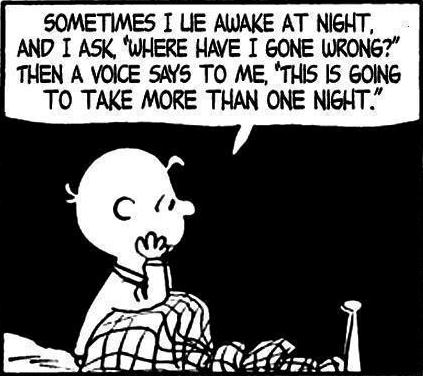
6 things keeping supply chain leaders up at night

http://www.beckershospitalreview.com/supply-chain/6-things-keeping-supply-chain-leaders-up-at-night.html

Related image

East Lansing-based Michigan State University partnered with the APICS Supply Chain Council to identify critical issues on the minds of supply chain leaders.

To compile the report, the groups interviewed leaders from more than 50 firms across the globe and asked them: “What keeps you awake at night?”

Here are the six most common issues on supply chain leaders’ minds, as identified in the report.

1. Capacity or resource availability. Many companies expecting market growth cited managing capacity issues as a main priority. They often wanted to avoid outsourcing and identified challenges to maximize their facilities’ capacity by replacing old equipment, among other activities.

“We’ve implemented a supply chain for a point in time,” one leader said, according to the report. “However, a supply chain is a living, breathing thing, and one needs to think about it as dynamic and impermanent. Is there a point where the supply chain becomes inappropriate for where we’re going, and we need to build a different kind of supply chain?”

2. Talent. Participating companies also described the struggle to find and keep good supply chain talent.

“The competition for talent is much higher [than it’s ever been],” said another participant in the report. “You go out to the market, and it’s one of those ironies. Right now, you put a job description out there, and you hear about 8 percent unemployment. However, I can’t find an industrial engineer worth his salt — you know, someone who can really think about strategy and think about [profit and loss statements] and drive change.”

3. Complexity. Some firms faced issues with their products becoming more complex and found it difficult to manage the increasing amount of stock keeping units.

“We’ve started building different types of products, completely new types of products. Whether it’s low or high volume, it creates another level of complexity,” said one leader in an interview.

4. Threats or challenges. A lot of supply chain leaders are worried about managing supply chain risk, and many mentioned the importance of continuity planning.

“I worry about supply risks in general, whether it’s from natural disasters or things like … a troubled supplier or a variety of issues with the whole supply chain risk piece,” one participant told researchers. “Partly that’s because that stuff is hard to control. You can try to proactively mitigate the downsides, but that’s just hard to control.”

5. Compliance. Participants cited numerous compliance issues like product regulation, trade controls and continually changing regulations, according to the report. Many leaders said they were struggling to keep up with both the high volume of regulations and how much they constantly changed.

“[The changes] are really causing us to spend a lot of money and a lot of our time. It is sucking up a huge amount of our information technology dollars and resources to be able to be compliant with those regulations,” said one study participant.

6. Cost or purchasing issues. While pressure to rein in costs is a focus for companies in every industry, it’s a top priority for healthcare and drug companies amid the shift toward value-based care, according to the report.

“Everything in healthcare is submitted through insurance for reimbursement,” one leader said. “The government won’t pay you any more to treat your patients, so you better get [the payout from] your suppliers. Well, we’re the supplier they’re coming after.”

To view the complete report, click here.