300 nurses walk off job at Pennsylvania hospital

https://www.beckershospitalreview.com/human-capital-and-risk/300-nurses-walk-off-job-at-pennsylvania-hospital.html

Image result for nurses strike

More than 300 Indiana (Pa.) Regional Medical Center nurses went on strike on Nov. 26, according to a KDKA report.

Nurses walked off the job at 7 a.m., despite hospital leaders previously asking them to cancel the strike due to the $1.5 million in estimated costs to hire temporary workers.

Nurses initially scheduled a one-day strike. But hospital leaders have said striking nurses who don’t report to work Nov. 26 won’t be able to return to work for an additional four days because of a minimum five-day commitment required to hire temporary staff.

According to the report, no scheduled surgeries and appointments were canceled due to the strike.

The hospital has been in negotiations with the Indiana Registered Nurses Association, which represents about 380 nurses at the hospital. Health insurance costs and wages reportedly have been key sticking points in the negotiations.

Both sides are scheduled to return to the bargaining table Nov. 29.

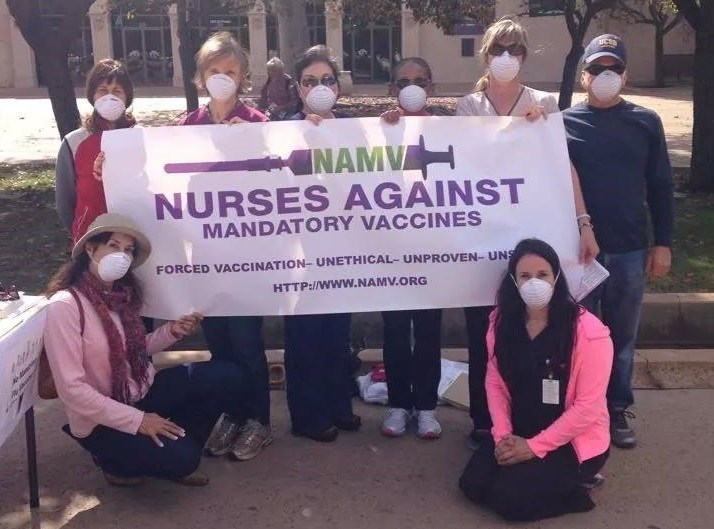
Essentia to continue mandatory flu shot policy

https://www.beckershospitalreview.com/human-capital-and-risk/essentia-to-continue-mandatory-flu-shot-policy.html?origin=bhre&utm_source=bhre

Related image

Duluth, Minn.-based Essentia Health rolled out a mandatory flu shot policy last year, and the health system will continue the program this year.

Under the program, employees had until Nov. 20, 2017, to receive a flu shot, obtain a medical/religious exemption or face termination. Essentia reported more than 99.5 percent compliance with the program.

For 2018, Essentia will continue its mandatory flu shot program, which also applies to students who train and vendors who operate at the health system’s facilities, as well as people who volunteer through Essentia programs.

To ensure there is plenty of time to review medical/religious exemptions before this year’s Nov. 20 compliance deadline, Essentia moved up the deadline to submit exemption requests.

“The first year [is] the most difficult because everyone [is] doing first-time medical and religious exemption requests,” said Rajesh Prabhu, MD, infectious disease and chief patient quality and safety officer for the system. “Those granted medical exemptions last year still [have their medical exemptions] in place. For religious exemptions, they just have to confirm their belief hasn’t changed from last year.”

He expects compliance to increase this year since fewer people need to request medical exemptions for the first time. Essentia now has 14,700 employees and began its flu shot campaign Oct. 2.

Dr. Prabhu encouraged other systems or hospitals considering a mandatory flu shot program to focus on the reasoning behind beginning the program.

“It’s not just a technical change. You have to get everyone to feel why this is important for not only our employees but [also] the patients we serve. We focus a lot of efforts on that end,” he said.

Dr. Prabhu said support from leadership helped make the first year of Essentia’s mandatory flu shot program a success.

“We had support from our CEO and everyone in leadership,” he said. “[They had] direct, in-person communication with some of those hesitant to get vaccinated because sometimes it’s good to talk to people to understand their concerns and barriers.”

Lessons learned

Essentia announced its mandatory flu shot program in September 2017 and some employees felt they didn’t get enough notice to comply. However, Dr. Prabhu said he believes some employees would not have complied with the program even if they were given more time.

“No matter how much lead time you give, I don’t think it will change the minds of people who are resistant to get the influenza vaccine,” he said.

Essentia’s flu shot policy encountered opposition from unions as well. The Minnesota Nurses Association and some other labor groups that represent Essentia employees continue to challenge the flu shot policy. In July, an arbitrator sided with Essentia over the United Steelworkers Union regarding the policy.

Despite the opposition and a few challenges in the initial rollout, Dr. Prabhu said Essentia needed the policy. He said the system was not going to get to where it wanted to be with its previous voluntary policy, which had 82 percent compliance. And, after evaluating the first year, Essentia decided it was necessary to continue the policy into the 2018-19 flu season.

2018-19 flu season

For this flu season, the CDC recommends everyone 6 months and older receive a flu vaccine by the end of October. Nasal spray FluMist was not recommended last season, but it is recommended for 2018-19 as an option for flu vaccination of nonpregnant individuals age 2 to 49.

It’s unclear how severe the 2018-19 flu season will be. Last year’s flu season was particularly severe, with about 900,000 people hospitalized and about 80,000 people dead due to the virus.

Dr. Prabhu said the flu season hasn’t hit the Duluth area yet, but Essentia is trying to do everything possible to prevent the spread of the virus among patients and staff.


UVM Medical Center, nurses reach tentative labor deal

https://www.beckershospitalreview.com/human-capital-and-risk/uvm-medical-center-nurses-reach-tentative-labor-deal.html

Image result for university of vermont medical center

University of Vermont Medical Center in Burlington has reached a tentative contract agreement with the union representing about 1,800 licensed practical nurses, registered nurses and nurse practitioners.

The three-year tentative agreement, reached Sept. 19, includes a 16 percent average base salary increase over the life of the contract, according to hospital officials. They said raises for ambulatory nurses will be retroactive to the first pay period in September.

Additionally, the Vermont Federation of Nurses and Health Professionals conceded on its previously proposed increases to certain shift differentials as part of the deal.

The tentative agreement comes after six months of bargaining and demonstrations by nurses, including a 48-hour strike in July. Both sides said they were pleased they were able to make progress.

“We are looking forward to implementing the many positive changes that result from the new contract, which will enhance patient care, provide additional support for nurses and allow for new opportunities to advance the nursing profession,” hospital officials told Becker’s.

Molly Wallner, lead negotiator for the union, said: “We are proud of the unity, strength and perseverance our nurses have shown. This has been a long and difficult road for all of us, and we are proud of what we have accomplished. Our fight for patient safety is not over, and we will continue that fight through the [state] legislature.”

Nurses are expected to vote on the tentative agreement soon.


Should Hospitals Limit the Number of Patients Nurses Can Help?

http://www.governing.com/topics/health-human-services/gov-massachusetts-ballot-nurses-patient-ratio-health-care.html

A male nurse with an elderly patient.


The medical community is divided over a November ballot measure that would make Massachusetts only the second state with such staffing requirements.

Voters this fall could make Massachusetts only the second state in the country to limit the number of patients that hospital nurses can help at one time.

Question 1 would create legal ratios based on the type of patients that nurses are dealing with. Nurses aiding women during birth and up to two hours after, for instance, would be limited to one patient. If they’re working with children, they could see four patients at once. In the psychiatric ward, nurses could help up to five patients.

While nurses unions and progressive political groups back the ballot measure, most medical groups — including the Massachusetts chapter of the American Nurses Association and the state’s Health and Hospital Association — oppose it.

The ballot measure’s supporters argue that not regulating this negatively impacts patient care and overall health outcomes.

“There is overwhelming evidence when you look at studies and talk to nurses that when there are limits, there are better health outcomes,” says Kate Norton, campaign spokewoman for the Committee to Ensure Safe Patient Care, which is the official campaign for the ballot measure.

2011 study in the journal Health Affairs found that nurse-patient ratios in California resulted in decreased mortality rates after surgery and an additional half-hour of care for patients overall.

Seven states have laws that require hospitals to have committees that address staffing issues, but California is the only state with a cap on the number of patients a nurse can see during one shift. Advocates have struggled to gain support for ratio laws elsewhere, in part because the hospital industry doesn’t believe there’s enough evidence to support them.

California’s regulations were drafted by the state’s department of health and have been in effect since 2004. There was some fear at the time that hospitals would be forced to hire more nurses with less education in order to comply with the ratios. But according to the 2011 study, that didn’t happen.

Opponents of Massachusetts’ measure also worry that it would force hospitals “to make deep cuts to critical programs, such as opioid treatment and mental health services. Many community hospitals will not be able to absorb the added cost and will be forced to close.”

In California’s experience, those fears are likely overblown.

Research by the California Healthcare Foundation in 2009 shows that while “leaders reported difficulties in absorbing the costs of the ratios, and many had to reduce budgets, reduce services or employ other cost-saving measures,” the impact of the ratios was not discernible on hospital finances.

Research further shows that hiring levels only increased slightly after the mandate. But California is expected to have a nursing shortage of more than 44,000 by 2030. It’s not clear how big a role, if any, the staffing ratios play in this shortage.

In Massachusetts, opponents of the measure argue that it would worsen the existing nurse shortage there. Right now the vacancy rate for registered nurses in Massachusetts hospitals is 6.4 percent.

“If it passes, the estimates are that hospitals will have to hire 6,000 more nurses [according to a study led by the opposition camp]. Where will they get them?” says Jake Krilovich, director of policy and public affairs for the Home Care Alliance of Massachusetts, which opposes the measure.

But according to data from the U.S. Department of Health and Human Services, the state is projected to have a surplus of nurses by 2030.

Although well-financed organizations like the Massachusetts Business Roundtable, Massachusetts Health and Hospital Association and 11 local chamber of commerces oppose the measure, the supporting campaign has much more cash on hand: $1 million to just over $11,000 in the opposition camp.

There hasn’t been any formal polling done on the measure.


Labor Unions Will Be Smaller After Supreme Court Decision, but Maybe Not Weaker


Image result for Labor Unions Will Be Smaller After Supreme Court Decision, but Maybe Not Weaker

With the Supreme Court striking down laws that require government workers to pay union fees, one thing is clear: Most public-sector unions in more than 20 states with such laws are going to get smaller and poorer in the coming years.

Though it is difficult to predict with precision, experts and union officials say they could lose 10 percent to one-third of their members, or more, in the states affected, as conservative groups seek to persuade workers to drop out.

The court’s decision is the latest evidence that moves to weaken unions are exacting a major toll. Beyond the dropout campaigns aimed at members, conservatives are bringing lawsuits to retroactively recover fees collected by unions from nonmembers.

In May, President Trump signed three executive orders making it easier to fire government workers and reining in the role of unions representing federal workers.

Dropping out of a union is a more attractive proposition now that workers no longer have to pay a so-called agency fee, typically about 80 percent of union dues, if they choose not to belong to a union. (Those doing so generally account for a small fraction of the workers whom public-sector unions represent.)

In the five years after Michigan passed a law ending mandatory union fees in 2012, the number of active members of the Michigan Education Association dropped by about 25 percent, according to government filings, a much faster attrition rate than before. Its annual receipts fell by more than 10 percent, adjusting for inflation.

Still, the more interesting question is whether the unions, whatever the blow to their ranks and finances, will be substantially weaker.

Union leaders insist that they won’t — that the crisis posed by the case, Janus v. American Federation of State, County and Municipal Employees, has brought more cohesion and energy to their ranks.

“No one wanted this case,” said Randi Weingarten, president of the American Federation of Teachers. “But the gestalt around the country has been to turn an existential threat into an opportunity to engage with our members like never before.”

There are reasons to believe that the claim is not merely desperate bravado.

One parallel to the current development is a 2014 Supreme Court ruling known as Harris v. Quinn, which struck down mandatory union fees for home-based workers who serve private individuals but are paid through government programs like Medicaid.

As of late 2013, the Service Employees International Union represented about 60,000 public-sector home care and child-care workers in Illinois, about 40 percent of whom were union members. (The rest paid agency fees.)

Receipts for the service employees union local representing home-based workers in Illinois dropped significantly in the four years after the decision. But an aggressive membership campaign largely offset the loss of members.

It also built and reinforced personal relationships with members, who could be summoned to make demands of politicians in nearly every legislative district.

“Our members go and meet Sam McCann,” said Keith Kelleher, who until last year was president of the local representing these home-based workers, referring to a Republican state senator. “He says yes most of time because he’s got hundreds of members in his district.”

Public home-based workers in Illinois, a state with a notably anti-union Republican governor, continue to notch victories as a result. Last summer, home care workers won a 48-cent-an-hour wage increase from the state, up from an average wage of $13, in a budget that the legislature passed by overriding the governor’s veto. This spring, home child-care workers won more than a 4 percent raise.

In anticipation of the Janus ruling, major public-sector unions have invested heavily in recent years in reaching out to current members — an effort known as internal organizing — and to prospective members to keep their numbers from dropping precipitously and to create a more activist culture. They plan to continue funding these initiatives even if it requires cutting spending elsewhere.

Mary Kay Henry, the international president of the service employees union, said the union used projections derived from its experience after the Harris decision to cut its budget by 30 percent shortly after Mr. Trump was elected. She said the union, which represents about two million workers, roughly half of them in the public sector, was focusing its spending on recruiting members and mobilizing workers to face down employers and elect pro-labor politicians.

“We intend to prioritize the political and organizing work,” she said.

Government filings show that the union has cut contributions to organizations that it had traditionally supported, including the Children’s Defense Fund, People for the American Way, and the National Immigration Law Center. (The union says it provides nonmonetary support to some of these groups.)

At the same time, the union is investing tens of millions of dollars in a door-to-door canvassing initiative for the midterm elections, intended to turn out people who don’t normally vote.

Lee Saunders, president of the American Federation of State, County and Municipal Employees, said that his union’s two highest priorities going forward would be its internal outreach and helping to organize nonunionized workplaces, and that the union would probably “have to make adjustments” to fund these programs. The union spent more than $15 million during the 2016 campaign cycle supporting political candidates, parties and committees.

Mr. Saunders said the union, which represents over 1.2 million workers, had held one-on-one conversations with nearly 900,000 members since 2013. Among the goals of these conversations, he said, is to inoculate members against campaigns by conservative groups to urge them to quit.

“If someone knocks on their door talking about how you can get out of the union — ‘it would be so easy, you don’t have to pay union dues’ — our folks are prepared to tell them to get the hell off their doorstep,” he said.

Alexander Hertel-Fernandez, a political scientist at Columbia University who studies corporate and conservative efforts to weaken labor, said organized interest groups had traditionally had the greatest impact on elections by educating members about candidates and through on-the-ground canvassing rather than large campaign contributions. “It’s doubly so for unions,” he said, adding that the focus “seems like a wise decision, but the effectiveness has to be weighed against what happens to membership and overall revenues.”

The unions enjoy certain advantages. States like California and New Jersey have tried to ease the blow from Janus pre-emptively by passing legislation that, for example, guarantees public-sector unions access to new hires and their personal contact information to help in recruiting.

There is also a substantial wind at their back: a rising energy on the left during the Trump era. Workers in particular appear more willing to take to the streets and state capitols, including tens of thousands of teachers who walked off their jobs this year in conservative states to protest the underfunding of public education.

When the Supreme Court ruled last month that employment contracts could prohibit workers from bringing class-action lawsuits, activists in states like New York, Vermont and Oregon escalated their efforts to pass so-called private attorneys general legislation, allowing workers to bring cases on the state’s behalf that could benefit all affected workers, the same way litigation by an attorney general would.

“We’ve had many, many folks calling: ‘I heard about this legislation you helped design. How do we make this happen?’” said Deborah Axt, co-executive director of Make the Road New York, an advocacy group pushing the measure. Ms. Axt said the group planned to campaign for the legislation’s enactment this summer.

That kind of energy appears to be benefiting unions. A Gallup poll last summer showed labor’s approval at its highest level since 2003, and unions in West Virginia and several other states where teachers walked off the job this year report gains in members.

“We’ve seen a 13 percent jump in membership because of the walkout,” said Ed Allen, president of the Oklahoma City American Federation of Teachers. “We have over 300 people signed up to work in political campaigns. We’ve never seen those kinds of numbers before.”


18k Kaiser nurses vote for option to strike at California facilities

https://www.beckershospitalreview.com/human-capital-and-risk/18k-kaiser-nurses-vote-for-option-to-strike-at-california-facilities.html

Image result for california nurses union

Tens of thousands unionized registered nurses at facilities owned by Oakland, Calif.-based Kaiser Permanente voted for the option to call a strike if an agreement is not reached on issues such as staffing and patient care, according to a California Nurses Association news release.

The CNA — which represents 18,000 RNs who work at more than 20 Kaiser Permanente medical centers and dozens of medical clinics and office buildings in California — said nurses are calling on the healthcare giant to improve patient care standards.

“With this vote nurses are making it absolutely clear: We are ready to strike to make sure our patients get safe care,” said Zenei Cortez, a South San Francisco Kaiser Permanente RN and co-president of CNA.

Union officials said nurses specifically are calling on Kaiser Permanente to support their proposals regarding staffing and patient care standards. These include bringing in a charge nurse on each unit, as well as resource nurses to assist other nurses so they are able to take breaks. The union said nurses also propose “interventions with pharmacy to expedite patients receiving correct medications,” and “increased staffing when needed due to emergent conditions and heightened patient volume.”

Additionally, the CNA said nurses are opposed to Kaiser Permanente’s proposal to move from the existing GRASP patient classification system to Epic Acuity, which nurses contend is less transparent. Nurses are also opposed to what they said are Kaiser Permanente’s plans to cut pay for new hires by 10 percent in the Sacramento region, and 20 percent in Fresno and the Central Valley.

Regarding the union’s claims about staffing, Debora Catsavas, senior vice president of human resources for Kaiser Permanente Northern California, said in a statement: “Our nurse staffing meets, and often exceeds, state-mandated staffing as necessary for patients, based on the complexity of their medical conditions. We employ more than 18,000 nurses, and have hired more than 2,000 nurses in multiple key specialty areas over the last three years, and continue to hire more as needed.”

As far as the move to Epic Acuity, Ms. Catsavas said the move addresses various issues nurses have raised about the existing GRASP patient classification system.

“GRASP is a system from the 1980s based on studies of nursing work flows conducted nearly 50 years ago. Epic Acuity is an up-to-date, comprehensive system that directly reflects the care provided and allows nurses to spend more time at the bedside,” her statement reads. “Epic Acuity uses clinical information directly inputted by the nurses into our electronic medical record.”

She said Kaiser Permanente also offered nurse representatives paid time to talk about and review Epic Acuity’s implementation.

Furthermore, Ms. Catsavas said there are no proposed wage cuts or wage reductions for current nurses. However, she said Kaiser Permanente last October proposed a new wage scale for new nurses hired in the Sacramento, Central Valley and Fresno areas on or after Jan. 1, 2019, “to more closely align with the lower cost of living in these markets.”

She noted Kaiser Permanente nurses in Sacramento, the Central Valley and Fresno earn 24 percent, 37 percent and 45 percent more than non-Kaiser Permanente nurses, respectively.

While the Kaiser Permanente nurses have authorized a potential strike, no strike date is set. For a strike to occur, nurses would have to provide at least 10 days notice.

Ms. Catsavas said Kaiser Permanente anticipated a strike authorization might occur but believes an agreement is within reach.


Allina nurses reject contract, remain on strike

http://www.startribune.com/allina-nurse-voting-underway/395751251/?utm_campaign=KHN%3A+Daily+Health+Policy+Report&utm_source=hs_email&utm_medium=email&utm_content=35296430&_hsenc=p2ANqtz-8gHTYiuu9s2-hzZYnd1K270pbRMyWvz5PDcZt1i3W3MLFf53479V9qmXTqnKTYCGtVf9r4rk273AF7mRMZfoQlf_qMDg&_hsmi=35296430

itemprop

Allina Health hospital nurses voted Monday night to reject a contract offer from their employer, increasing the likelihood that their walkout over health benefits, staffing and safety concerns will go down as the longest nursing strike in Minnesota history.

While the Minnesota Nurses Association had not recommended a “no” vote, many nurses said they felt Allina’s latest offer was too similar to one they rejected in August, and to the terms their union negotiators rejected during last-ditch negotiations in September to avert a strike.

A new sign reading “New Lipstick, Same Pig” appeared at the picket line outside Allina’s Abbott Northwestern Hospital in Minneapolis Monday morning, foreshadowing the vote result that the union announced at 10:30 p.m. in St. Paul.

While she declined to provide exact results, MNA executive director Rose Roach called the vote margin “resounding” and said it sent a clear message from front-line nurses to go back to the bargaining table. “Each of them voted with their conscience, and with their patients and their families in mind,” she said.

The results mean that strikes will continue at Abbott as well as United Hospital in St. Paul, Mercy Hospital in Coon Rapids, Unity Hospital in Fridley and the Phillips Eye Institute in Minneapolis.

More than 4,000 nurses have been on strike for 29 days, since Labor Day, after a one-week walkout in June. The state’s longest nursing strike, in 1984, lasted 38 days.