Ex-MetroHealth COO sentenced to 15 years for defrauding hospital

https://www.beckershospitalreview.com/legal-regulatory-issues/ex-metrohealth-coo-sentenced-to-15-years-for-defrauding-hospital.html?origin=cfoe&utm_source=cfoe

Related image

The former chief operating officer of Cleveland-based MetroHealth System was sentenced to more than 15 years in prison for his role in a conspiracy to defraud the health system through a series of bribes and kickbacks, according to the Department of Justice.

Five things to know:

1. The sentencing came after former COO Edward Hills, DDS, and three co-defendants — all dentists at MetroHealth — were found guilty of criminal charges in July 2018. The four men were indicted for the crimes in October 2016.

2. According to court documents presented by the Justice Department during the trial, Dr. Hills and two of his co-defendants engaged in a racketeering conspiracy from 2008 through 2016 that involved a series of bribes, witness tampering and other crimes.

3. Federal prosecutors alleged Dr. Hills solicited cash, checks and expensive gifts from the two co-defendants beginning in 2009, and in return took actions on their behalf allowing them to operate their individual private dental clinics during regular business hours while receiving full-time salaries from MetroHealth.

4. Dr. Hills, who also served as interim president and CEO of MetroHealth from December 2012 through July 2013, allowed the co-defendants to hire MetroHealth dental residents to work at their private clinics during regular business hours and did not require them to pay wages or salaries to residents. He allowed the three individuals and others to solicit bribes from prospective dental school residents, which amounted to at least $75,000 between 2008 and 2014.

5. Dr. Hills’ co-defendants are scheduled to be sentenced later this month.


Ex-Cleveland Clinic Innovation executive pleads guilty in $2.7M fraud case, prison time likely

http://www.fiercehealthcare.com/antifraud/ex-cleveland-clinics-innovation-executive-pleads-guilty-2-7m-fraud-case-prison-time?utm_medium=nl&utm_source=internal&mrkid=959610&mkt_tok=eyJpIjoiWkRSalkyTXpOV0V4WkRkayIsInQiOiJHQUVNRTJhUmhhSkpXVk80NkJoOWo5R21nNW5iV0hQS3NxRzc4SUQrbmRyMFwveXlBUFEwRm83TXFUemp0ZE9aNWlBTmYzSVJWb0dzbXV0RTczYnZSTEFMaGhEeFZKYk9LMWJuaXNxUlRUd2V6WEZnZ3lqRUpYaWp6SU0rbUhUd0cifQ==

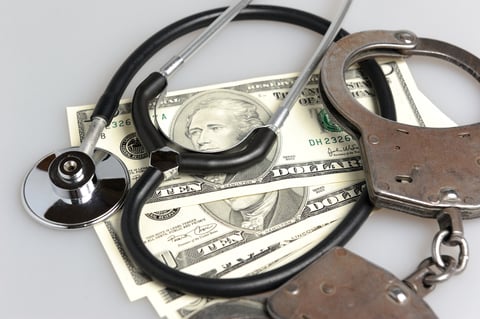
Money, handcuffs and a stethoscope

The former head of Cleveland Clinic Innovations pleaded guilty Tuesday for his role in defrauding the nonprofit academic medical center out of more than $2.7 million via a shell company.

Gary Fingerhut was arraigned in U.S. District Court and pleaded guilty to one count of conspiracy to commit wire fraud and honest services fraud and one count of making false statements, Crain’s Cleveland Business reports.

Although he won’t be formally sentenced until Jan. 30, Fingerhut’s attorney told the publication that federal prosecutors will ask U.S. District Judge Christopher Boyko for a sentence of between 41 and 51 months in federal prison. He may also be ordered to pay restitution to the Cleveland Clinic.

Fingerhut served as the executive director of the clinic’s innovation arm for two years until an FBI investigation revealed in 2015 that he was involved in a fraudulent scheme with the chief technology officer of a spinoff company to contract with a company that never intended to perform or provide any goods and services. The deal was in violation of Cleveland Clinic’s ethics and compliance policies and requirements, which prohibit employees from receiving any financial benefit from companies the Clinic did business with, and the organization fired Fingerhut.

Federal prosecutors said Fingerhut accepted at least $469,000 in payments in return for not disclosing the fraud scheme, which diverted nearly $3 million from the Clinic.

Fingerhut’s attorney, J. Timothy Bender of Bender, Alexander & Broome in Cleveland, told Crain’s that Fingerhut is very sorry for his role in the fraud scheme.

How the world’s richest doctor gave away millions — then steered the cash back to his company

How the world’s richest doctor gave away millions — then steered the cash back to his company

Image result for biotech laundry

He was greeted like a star philanthropist.

The world’s richest doctor had just made a $12 million gift to the University of Utah. Members of the university community were urged to come thank him. And so, a crowd gathered.

For months, Dr. Patrick Soon-Shiong would continue to reap praise for his generosity in publicity put out by the university. Not mentioned in any of the tributes: $10 million of his donation would be sent right back to one of his companies. And the contract for his gift was worded in a way that left the University of Utah with no other choice.

The university health system did get free and valuable information for genetics research through the deal. But a STAT investigation has found that Soon-Shiong benefited even more from his charitable donation.

He got reams of patient data to help him build a new commercial product meant to assess patients’ risk of rare and inherited diseases. He got a stream of cash for one of his struggling companies.

And the deal made it possible for his company to inflate, by more than 50 percent, the number of test orders it reported to investors late last year while updating them on interest in a flagship product, a diagnostic tool known as GPS Cancer. Soon-Shiong’s team counted genetic sequencing ordered by the University of Utah in those order numbers — even though the work for the university did not have anything to do with diagnosing or recommending treatments for cancer patients.

Even in the world of academic donations, which the wealthy often use to burnish their image or advance pet causes, the arrangement stands out as highly unusual.

STAT has previously detailed how Soon-Shiong’s high-profile cancer moonshot initiative achieved little scientific progress in its first year, instead functioning primarily as a marketing tool for GPS Cancer.

The University of Utah deal — laid out in contracts obtained by STAT through a public records request — illustrates how Soon-Shiong boosted his business through his philanthropy. He has been accused of doing just that in at least two legal filings, but the Utah contracts offer the first concrete example, spelled out in black and white.

Four tax experts who reviewed the contracts at STAT’s request all agreed that the Utah deal was suspicious. Two said it appeared to violate federal tax rules governing certain charitable donations, amounting to indirect self-dealing by Soon-Shiong and his foundations.

“They’re laundering the funds through the University of Utah,” said Marc Owens, a tax lawyer with Loeb & Loeb. Owens, who said the contracts appeared to violate federal rules, previously spent a decade as head of the Internal Revenue Service’s tax-exempt division.

The other two legal experts said the contracts were cleverly worded in a way that would likely steer clear of self-dealing — but agreed that, at the very least, they raised serious questions about Soon-Shiong’s intent.

“We pretty clearly have an optics problem,” said Morey Ward, a tax lawyer with Ropes & Gray who represents tax-exempt organizations.

Soon-Shiong’s spokeswoman, Jen Hodson, did not answer a list of emailed questions or return calls from STAT. Soon-Shiong has denied STAT’s repeated requests for an interview dating back to last fall.


Wall Street Journal combs through nonprofit hospitals’ board-business ties: 6 things to know

http://www.beckershospitalreview.com/finance/wall-street-journal-combs-through-nonprofit-hospitals-board-business-ties-6-things-to-know.html

As some of the largest nonprofits in the U.S., hospitals face a major challenge — their board members or executives often have direct ties to organizations with which the hospital does business, The Wall Street Journal reports.

Here are six things to know about nonprofit hospitals and their business associations, according toWSJ.