https://www.washingtonpost.com/national/health-science/ambulance-trips-can-leave-you-with-surprising–and-very-expensive–bills/2017/11/17/6be9280e-c313-11e7-84bc-5e285c7f4512_story.html?tid=ss_tw-bottom&utm_term=.78d3dfa36d97
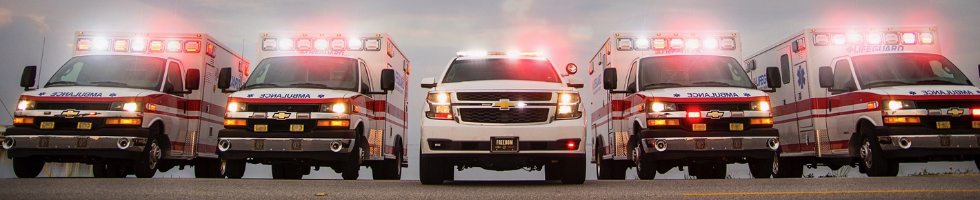
One patient got a $3,660 bill for a four-mile ride. Another was charged $8,460 for a trip from a hospital that could not handle his case to another that could. Still another found herself marooned at an out-of-network hospital, where she’d been taken by ambulance without her consent.
These patients all took ambulances in emergencies and got slammed with unexpected bills. Public outrage has erupted over surprise medical bills — generally out-of-network charges that a patient did not expect or could not control — prompting 21 states to pass laws over the years protecting consumers in some situations. But these laws largely ignore ground ambulance rides, which can leave patients stuck with hundreds or even thousands of dollars in bills and with few options for recourse, finds a Kaiser Health News review of 350 consumer complaints in 32 states.
Patients usually choose to go to the doctor, but they are vulnerable when they call 911 or get into an ambulance. The dispatcher picks the ambulance crew, which may be the local fire department or a private company hired by the municipality. The crew, in turn, often picks the hospital. Moreover, many ambulances are not summoned by patients, but by police or a bystander.
Betsy Imholz, special projects director at the Consumers Union, which has collected more than 700 patient stories about surprise medical bills, said at least a quarter concern ambulances.
“It’s a huge problem,” she said.
Forty years ago, most ambulances were free for patients, provided by volunteers or town fire departments using taxpayer money, said Jay Fitch, president of Fitch & Associates, an emergency services consulting firm. Today, ambulances are increasingly run by private companies and venture capital firms. Ambulance operators now often charge by the mile and sometimes for each “service,” such as providing oxygen. If the ambulance is staffed by paramedics rather than emergency medical technicians, that will result in a higher charge — even if the patient didn’t need paramedic-level services. Charges range from zero to thousands of dollars.
The core of the problem is that ambulance companies and private insurers often can’t agree on a fair price, so the ambulance service doesn’t join the insurer’s network. That leaves patients stuck with out-of-network charges that are not negotiated, Imholz said.
This happens to patients frequently, according to a recent study of more than half a million ambulance trips taken by patients with private insurance in 2014. The study, by two staffers at the Federal Trade Commission, found that 26 percent of these trips were billed on an out-of-network basis.
That figure is “quite jarring,” said Loren Adler, co-author of a recent report on surprise billing.
The KHN review of complaints revealed two common scenarios leaving patients in debt: First, patients get into an ambulance after a 911 call. Second, an ambulance transfers them between hospitals. In both scenarios, patients later learn the fee is much higher because the ambulance was out-of-network, and after the insurer pays what it deems fair, they get a surprise bill for the balance, also known as a “balance bill.”
The Better Business Bureau has received nearly 1,200 consumer complaints about ambulances in the past three years; half were related to billing, and 46 mentioned out-of-network charges, spokeswoman Katherine Hutt said.
While the federal government sets reimbursement rates for patients on Medicare, it does not regulate ambulance fees for patients with private insurance. Those patients are left with a highly fragmented system in which the cost of a similar ambulance trip can vary widely from town to town. There are about 14,000 ambulance services across the country, run by governments, volunteers, hospitals and private companies, according to the American Ambulance Association. (The Washington area reflects that mix.)
For a glimpse into the unpredictable system, consider the case of Roman Barshay. The 46-year-old software engineer, who lives in Brooklyn, was visiting friends in the Boston suburb of Chestnut Hill last November when he took a nasty fall.
Barshay felt a sharp pain in his chest and back, and he had trouble walking. An ambulance crew responded to a 911 call at his friends’ house and drove him four miles to Brigham and Women’s Hospital, taking his blood pressure as he lay down in the back. Doctors there determined he had sprained tendons and ligaments and a bruised foot, and released him after about four hours, he said.
After Barshay returned to Brooklyn, he got a bill for $3,660, or $915 for each mile of the ambulance ride. His insurance had covered nearly half, leaving him to pay the remaining $1,890.50.
“I thought it was a mistake,” Barshay said.
But Fallon Ambulance Service, the private company that brought him to the hospital, was out-of-network for his UnitedHealthcare insurance plan.
“The cost is outrageous,” said Barshay, who reluctantly paid the bill after Fallon sent it to a collection agency. If he had known what the ride would cost, he said, he would at least have been able to refuse the ride and “crawl to the hospital myself.”
In a statement, UnitedHealthcare said: “Out-of-network ambulance companies should not be using emergencies as an opportunity to bill patients excessive amounts when they are at their most vulnerable.”
“You feel horribly to send a patient a bill like that,” said Peter Racicot, senior vice president of Fallon, a family-owned company based outside Boston.
But ambulance firms are “severely underfunded” by Medicare and Medicaid, Racicot said, so Fallon must balance the books by charging higher rates for patients with private insurance.
Racicot said his company has not contracted with Barshay’s insurer because they couldn’t agree on a fair rate. When insurers and ambulance companies can’t agree, he said, “unfortunately, the subscribers wind up in the middle.”
It’s also unrealistic to expect EMTs and paramedics at the scene of an emergency to determine whether their company takes a patient’s insurance, Racicot added.
Ambulance services must charge enough to subsidize the cost of keeping their crews ready around the clock, said Fitch, the ambulance consultant. In a third of the cases where an ambulance crew answers a call, he added, they end up not transporting anyone and the company typically isn’t reimbursed for the trip.
In part, Barshay had bad luck. If his injury had happened just a mile away — inside Boston’s city limits — he could have ridden a city ambulance, which would have charged $1,490, according to Boston EMS, a sum that his insurer probably would have covered in full.
Very few states have laws limiting ambulance charges, and most state laws that protect patients from surprise billing do not apply to ground ambulance rides, according to Brian Werfel, a consultant to the American Ambulance Association. And none of the surprise-billing protections apply to people with self-funded employer-sponsored health insurance plans, which are regulated only by federal law. That’s a huge exception: 61 percent of privately insured employees are covered by self-funded employer-sponsored plans.
Some towns that hire private companies to respond to 911 calls may regulate fees or prohibit balance billing, Werfel said, but each locality is different.
Insurers try to protect patients from balance billing by negotiating rates with ambulance companies, said Cathryn Donaldson, a spokeswoman for America’s Health Insurance Plans. But “some ambulance companies have been resistant to join plan networks” that offer Medicare-based rates, she said.
Medicare rates vary widely by geographic area. On average, ambulance services make a small profit on Medicare payments, according to a report by the Government Accountability Office. If a patient uses a basic life support ambulance in an emergency in an urban area, for instance, Medicare payments range from $324 to $453, plus $7.29 per mile. Medicaid rates tend to be significantly lower.
There’s evidence of waste and fraud in the ambulance industry, Donaldson added, citing a study from the Office of Inspector General at the Department of Health and Human Services. The report concluded that in 2012 Medicare paid more than $50 million in improper ambulance bills, including for supposedly emergency-level transport that ended at a nursing home, not a hospital. One in 5 ambulance services had “questionable billing” practices, said the report, which noted that Medicare spent $5.8 billion on ambulance transport that year.
Most complaints reviewed by Kaiser Health News did not appear to involve fraudulent charges. Instead, patients got caught in a system in which ambulance services can legally charge thousands of dollars for a single trip — even when the trip starts at an in-network hospital.
That’s what happened to Devin Hall, a 67-year-old retired postal inspector in Northern California. While he faces Stage 3 prostate cancer, Hall is also fighting a $7,109.70 bill from American Medical Response, the nation’s largest ambulance provider.
On Dec. 27, 2016, Hall went to a local hospital with rectal bleeding. Because the hospital didn’t have the right specialist to treat his symptoms, it arranged for an ambulance ride to another hospital about 20 miles away. Even though the hospital was in his network, the ambulance was not.
Hall was stunned to see that AMR billed $8,460 for the trip. His federal health plan, the Special Agents Mutual Benefit Association, paid $1,350.30 and held Hall responsible for $727.08, records show. (According to his plan’s explanation of benefits, it paid that amount because AMR’s charges exceeded the plan’s Medicare-based fee schedule, which is based on Medicare rates.) But AMR turned his case over to a debt collector, Credence Resource Management, which sent an Aug. 25 notice seeking the full balance of $7,109.70.
“These charges are exorbitant — I just don’t think what AMR is doing is right,” said Hall, noting that he had intentionally sought treatment at an in-network hospital.
He has spent months on the phone calling the hospital, his insurer and AMR trying to resolve the matter. Given his prognosis, he worries about leaving his wife with a legal fight and a lien on their Brentwood, Calif., house for a debt they shouldn’t owe.
After being contacted by Kaiser Health News, AMR said it pulled Hall’s case from collections while it reviews the billing. After further review, company spokesman Jason Sorrick said the charges were warranted because it was a “critical care transport, which requires a specialized nurse and equipment on board.”
Sorrick faulted Hall’s health plan for underpaying, and said Hall could receive a discount if he qualifies for AMR’s “compassionate care program” based on his financial and medical situation.
“In this case, it appears the patient’s insurance company simply made up a price they wanted to pay,” Sorrick said.
In July, a California law went into effect that protects consumers from surprise medical bills from out-of-network providers, including some ambulance transport between hospitals. But Hall’s case occurred before that, and the state law doesn’t apply to him because of his federal insurance plan.
The consumer complaints reviewed by Kaiser Health News reveal a wide variety of ways that patients are left fighting big bills:
• An older patient in California said debt collectors called incessantly, including on Sunday mornings and at night, demanding an extra $500 on top of the $1,000 that his insurance had paid for an ambulance trip.
• Two ambulance services responded to a New Jersey man’s 911 call when he felt burning in his chest. One of them charged him $2,100 for treating him on the scene for less than 30 minutes — even though he never rode in that company’s ambulance.
• A woman who rolled over in her Jeep in Texas was charged a $26,400 “trauma activation fee” — a fee triggered when the ambulance service called ahead to the emergency department to assemble a trauma team. The woman, who did not require trauma care, fought the hospital to get the fee waived.
In other cases, patients face financial hardship when ambulances take them to out-of-network hospitals. Patients don’t always have a choice in where to seek care; that’s up to the ambulance crew and depends on the protocols written by the medical director of each ambulance service, said Werfel, the ambulance association consultant.
Sarah Wilson, a 36-year-old microbiologist, had a seizure at her grandmother’s house in rural Ohio on March 18, 2016, the day after having hip surgery at Akron City Hospital. When her husband called 911, the private ambulance crew that responded refused to take her back to Akron City Hospital, instead driving her to an out-of-network hospital that was 22 miles closer. Wilson refused care because the hospital was out-of-network, she said.
Wilson wanted to leave. But “I was literally trapped in my stretcher,” without the crutches she needed to walk, she said. Her husband, who had followed by car, wasn’t allowed to see her right away. She ended up leaving against medical advice at 4 a.m. She landed in collections for a $202 hospital bill for a medical examination, a debt that damaged her credit score, she said.
Ken Joseph, chief paramedic of Emergency Medical Transport, the private ambulance company that transported Wilson, said company protocol is to take patients to the “closest appropriate facility.” Serving a large area with just two ambulances, the company has to get each ambulance back to its station quickly so it can be ready for the next call, he said.
Patients such as Wilson are often left to battle these bills alone, because there are no federal protections for patients with private insurance.
Rep. Lloyd Doggett (D-Texas), who has been pushing for federal legislation protecting patients from surprise hospital bills, said in a statement that he supports doing the same for ambulance bills.
Meanwhile, patients do have the right to refuse an ambulance ride, as long as they are older than 18 and mentally capable.
“You could just take an Uber,” said Adler, co-author of the surprise-billing report. But if you need an ambulance, there’s little recourse to avoid unexpected bills, he said, “other than yelling at the insurance company after the fact, or yelling at the ambulance company.”


 HENRY KOTULA