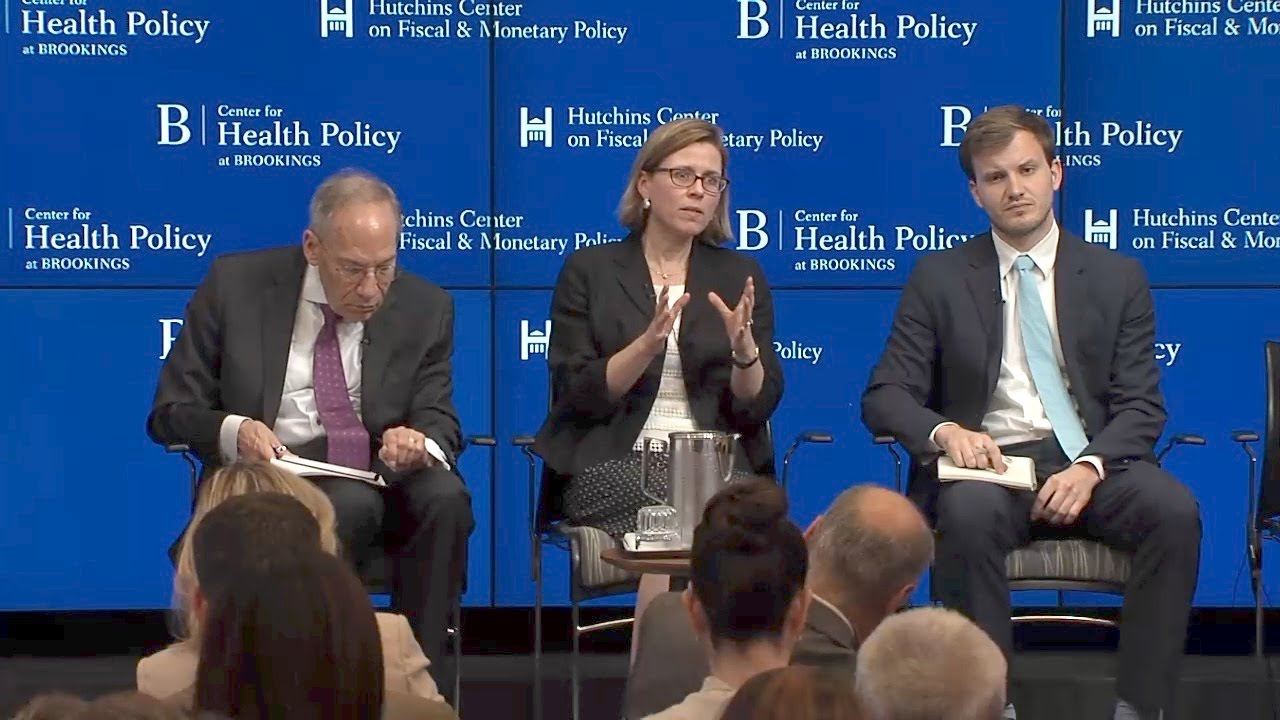
Uwe Reinhardt: Giant, mensch, knife twister

Uwe Reinhardt: Giant, mensch, knife twister

Image result for uwe reinhardt


The renowned Princeton University health economist Uwe Reinhardt died today. The email from his Dean at the Woodrow Wilson school said he passed peacefully and surrounded by family.

Reactions on Twitter resonate with my own. They reflect Uwe’s contributions to and presence in health care policy and education — “insightful, “a treasure,” focused on the “moral underpinnings of policy,” “one of the nicest and funniest people in the field of health econ,” “a godfather of health policy and economics,” “a unique and disarmingly powerful voice in health policy,” a “world-class mensch,” “a gifted teacher and inspiring leader,” one of the “most acerbic speakers in Health Care over the last 20+ years. Never afraid to speak truth to power,” “engaging and understandable,” “a giant.”

I once called him “the narrator of U.S. health care policy.” Any journalist who could get hold of him for a health care story was sure to get pure gold. His wit and precision were evident in his spoken and written word. His command of English was tremendous. His ability to explain to lay audiences, legendary. If you’re unfamiliar, go read anything he wrote for The New York Times Economix blog, where he posted regularly for years. He can teach. You will learn.

Born and raised in Germany, he did it all in a second language. Of this, he reminded audiences regularly. The title of one of his presentations was, “Still Confused, After 40 Years in America!” Don’t believe it. Uwe was always the least confused person in the room.

He opened many speeches with, “I’m just an immigrant so maybe I am missing something about the curious American health care system” (or similar). I heard it many times. It never got old, particularly because I knew what was coming next. Just after such an opening, he would reveal some peculiarity of the health system I had never noticed in the same way. And then he proceeded to show how it was illogical, in violation of basic concepts of economics, immoral, or hypocritical.

He was a knife twister of the first class. Should you hold dearly an idea he targeted for systematic dismantling, you would squirm. If only I could write half as well or think one-third as clearly.

He touched so many lives and careers, including my own.

My first engagement with Uwe was in 2009, over one of his Economix posts. In the comments to that post, I asked him for an economics argument in favor of a public option. He was kind enough to respond at length directly to my inquiry in a follow-up Economix post. I was thrilled, even as I took a beating. I documented the encounter on this blog.

Perhaps due to my repeated blog-based engagement with him — like a fly that just won’t go away — Uwe took some interest in what I was doing on TIE. He noticed my many posts on hospital cost shifting and suggested that an updated literature review should be published. I counter-offered that we do it together, and he accepted.

I knew exactly what this meant. I was to write the first draft and he would serve as senior author and tell me how much more work it needed. Here’s where Uwe surprised me and earned my deepest respect. His response to my first draft was that it was so good he did not think it right that his name appear on it. Instead, I should publish it solo, with his support. This is good mentorship. It was my first solo-authored paper and is my most cited publication.

I met Uwe in person only once, in Princeton in 2010. I was there to visit my parents and give a talk at the Woodrow Wilson School. Learning I’d be in town, he invited me to lunch. I thought it was just going to be the two of us, but he insisted I bring my parents too — his treat. (In advance of the lunch, with some help from YouTube, I practiced how to pronounce his name. It’s “oo-va” not “you-ee.”)

Though I never saw him again in person, for years I encountered him over email. Usually our threads began with me asking a question or him sharing one of his lengthy emails to some other scholar or policymaker. (Oh, what a shame it is he didn’t post those emails for all to see. They were gems.) But frequently he would email out of the blue to inquire about my family. He took an interest in hearing what my children were up to and used that as an opportunity to remind me how different parenting or childhood was in his day.

“Child rearing is so different nowadays,” he wrote me once. “When we were little, we left the house after lunch and came home for supper, roaming the country side in the meantime (and playing with live ammunition [left over from WW II]).” I have very few folders of saved emails, but this one and others of his I filed away, not to be deleted.

Frequently, in the email back-and-forth that ensued he would type out some amazing story of past hijinks. Here’s one:

Once, at a Duke University private sector conference, the entire brass of the AMA happened to be there. It was my turn at the podium and I could not resist the following stunt.

The late James Sammons, then head of the AMA, had given interview in which he said Congress had carved Medicare to death like a turkey. I showed a slide of that quote which happened to have his picture next to it. I then showed data according to which between 1980 and 1988 constant-dollar Medicare spending on physician services per beneficiary rose 83%. Apologizing for this low number on behalf of taxpayers (the growth of 83% real allegedly did not permit physicians to give the elderly adequate care), I asked the AMA people: “What increase would have been adequate in your view?” So I counted out numbers (on a slide) like an auctioneer – 100%, 120% , …– but never got any takers. After +160% I left a blank spot and said: “Evidently 160% would not do it, so you give me the number. Is it 300%?” Icy silence. I then had a slide quoting country-music singer Conway Twitty or whoever it was from his song: “I need more of you (moolah) – more, anything less would not do.”

I then I ended saying that Karen Davis and I, both then serving on the PPRC (now Medpac) would propose a budget for Medicare physician payment (the VPS), because the docs would not come to the table with a reasonable number.

For a while I literally was banned at the AMA; but later I ended up on the JAMA board.

With tales like this, I thought of him as the Richard Feynman of health policy — brilliant in his field but with an appetite for adventure and practical jokes. I encouraged him many times to write up stories like these in a book, interwoven with health policy analysis or history. Sadly, he never did. Though he took pride in his past escapades, perhaps he saw himself differently late in his career.

“When I was younger I was more brash,” Uwe wrote me. “Now I’ve mellowed.”

There are many giants in academia, and many in health care. But there are none I know like Uwe.

Trump to Scrap Critical Health Care Subsidies, Hitting Obamacare Again

Related image

 President Trump will scrap subsidies to health insurance companies that help pay out-of-pocket costs of low-income people, the White House said late Thursday. His plans were disclosed hours after the president ordered potentially sweeping changes in the nation’s insurance system, including sales of cheaper policies with fewer benefits and fewer protections for consumers.

The twin hits to the Affordable Care Act could unravel President Barack Obama’s signature domestic achievement, sending insurance premiums soaring and insurance companies fleeing from the health law’s online marketplaces. After Republicans failed to repeal the health law in Congress, Mr. Trump appears determined to dismantle it on his own.

Without the subsidies, insurance markets could quickly unravel. Insurers have said they will need much higher premiums and may pull out of the insurance exchanges created under the Affordable Care Act if the subsidies were cut off. Known as cost-sharing reduction payments, the subsidies were expected to total $9 billion in the coming year and nearly $100 billion in the coming decade.

“The government cannot lawfully make the cost-sharing reduction payments,” the White House said in a statement.

It concluded that “Congress needs to repeal and replace the disastrous Obamacare law and provide real relief to the American people.”

In a joint statement, the top Democrats in Congress, Senator Chuck Schumer of New York and Representative Nancy Pelosi of California, said Mr. Trump had “apparently decided to punish the American people for his inability to improve our health care system.”

“It is a spiteful act of vast, pointless sabotage leveled at working families and the middle class in every corner of America,” they said. “Make no mistake about it, Trump will try to blame the Affordable Care Act, but this will fall on his back and he will pay the price for it.”

Lawmakers from both parties have urged the president to continue the payments. Mr. Trump had raised the possibility of eliminating the subsidies at a White House meeting with Republican senators several months ago. At the time, one senator told him that the Republican Party would effectively “own health care” as a political issue if the president did so.

“Cutting health care subsidies will mean more uninsured in my district,” Representative Ileana Ros-Lehtinen, Republican of Florida, wrote on Twitter late Thursday. She added that Mr. Trump “promised more access, affordable coverage. This does opposite.”

But Speaker Paul D. Ryan, Republican of Wisconsin, praised Mr. Trump’s decision and said the Obama administration had usurped the authority of Congress by paying the subsidies. “Under our Constitution,” Mr. Ryan said, “the power of the purse belongs to Congress, not the executive branch.”

The future of the payments has been in doubt because of a lawsuit filed in 2014 by House Republicans, who said the Obama administration was paying the subsidies illegally. Judge Rosemary M. Collyer of the United States District Court in Washington agreed, finding that Congress had never appropriated money for the cost-sharing subsidies.

The Obama administration appealed the ruling. The Trump administration has continued the payments from month to month, even though Mr. Trump has made clear that he detests the payments and sees them as a bailout for insurance companies.

This summer, a group of states, including New York and California, was allowed to intervene in the court case over the subsidies. The New York attorney general, Eric T. Schneiderman, said on Thursday night that the coalition of states “stands ready to sue” if Mr. Trump cut off the subsidies.

What the administration has done to weaken the health law.

Mr. Trump’s decision to stop the subsidy payments puts pressure on Congress to provide money for them in a spending bill.

Senator Lamar Alexander, Republican of Tennessee and the chairman of the Senate health committee, and Senator Patty Murray of Washington, the senior Democrat on the panel, have been trying to work out a bipartisan deal that would continue the subsidy payments while making it easier for states to obtain waivers from some requirements of the Affordable Care Act. White House officials have sent mixed signals about whether Mr. Trump was open to such a deal.

The decision to end subsidies came on the heels of Mr. Trump’s executive order, which he signed earlier Thursday.

With an 1,100-word directive to federal agencies, the president laid the groundwork for an expanding array of health insurance products, mainly less comprehensive plans offered through associations of small employers and greater use of short-term medical coverage.

It was the first time since efforts to repeal the landmark health law collapsed in Congress that Mr. Trump has set forth his vision of how to remake the nation’s health care system using the powers of the executive branch. It immediately touched off a debate over whether the move would fatally destabilize the Affordable Care Act marketplaces or add welcome options to consumers complaining of high premiums and not enough choice.

Most of the changes will not occur until federal agencies write and adopt regulations implementing them. The process, which includes a period for public comments, could take months. That means the order will probably not affect insurance coverage next year, but could lead to major changes in 2019.

“With these actions,” Mr. Trump said at a White House ceremony, “we are moving toward lower costs and more options in the health care market, and taking crucial steps toward saving the American people from the nightmare of Obamacare.”

“This is going to be something that millions and millions of people will be signing up for,” the president predicted, “and they’re going to be very happy.”

But many patients, doctors, hospital executives and state insurance regulators were not so happy. They said the changes envisioned by Mr. Trump could raise costs for sick people, increase sales of bare-bones insurance and add uncertainty to wobbly health insurance markets.

Chris Hansen, the president of the lobbying arm of the American Cancer Society, said the order “could leave millions of cancer patients and survivors unable to access meaningful coverage.”

In a statement from six physician groups, including the American Academy of Family Physicians, the doctors predicted that “allowing insurers to sell narrow, low-cost health plans likely will cause significant economic harm to women and older, sicker Americans who stand to face higher-cost and fewer insurance options.”

While many health insurers remained silent about the executive order, some voiced concern that it could destabilize the market. The Trump proposal “would draw younger and healthier people away from the exchanges and drive additional plans out of the market,” warned Ceci Connolly, the chief executive of the Alliance of Community Health Plans.

Administration officials said they had not yet decided which federal and state rules would apply to the new products. Without changing the law, they said, they can rewrite federal regulations so that more health plans would be exempt from some of its requirements.

The Affordable Care Act has expanded private insurance to millions of people through the creation of marketplaces, also known as exchanges, where people can purchase plans, in many cases using government subsidies to offset the cost. It also required that plans offered on the exchanges include a specific set of benefits, including hospital care, maternity care and mental health services, and it prohibited insurers from denying coverage to people with pre-existing medical conditions.

The executive order’s quickest effect on the marketplaces would be the potential expansion of short-term plans, which are exempt from Affordable Care Act requirements. Many health policy experts worry that if large numbers of healthy people move into such plans, it would drive up premiums for those left in Affordable Care Act plans because the risk pool would have sicker people.

“If the short-term plans are able to siphon off the healthiest people, then the more highly regulated marketplaces may not be sustainable,” said Larry Levitt, a senior vice president for the Kaiser Family Foundation. “These plans follow no rules.”

Mr. Trump’s order would also eventually make it easier for small businesses to band together and buy insurance through entities known as association health plans, which could be created by business and professional groups. A White House official said these health plans “could potentially allow American employers to form groups across state lines” — a goal championed by Mr. Trump and many other Republicans — allowing more options and the formation of larger risk pools.

Association plans have a troubled history. Because the plans were not subject to state regulations that required insurers to have adequate financial resources, some became insolvent, leaving people with unpaid medical bills. Some insurers were accused of fraud, telling customers that the plans were more comprehensive than they were and leaving them uncovered when consumers became seriously ill.

The White House said that a broader interpretation of federal law — the Employee Retirement Income Security Act of 1974 — “could potentially allow employers in the same line of business anywhere in the country to join together to offer health care coverage to their employees.”

The order won applause from potential sponsors of association health plans, including the National Federation of Independent Business, the National Restaurant Association, the U.S. Chamber of Commerce and Associated Builders and Contractors, a trade group for the construction industry.

The White House released a document saying that some consumer protections would remain in place for association plans. “Employers participating in an association health plan cannot exclude any employee from joining the plan and cannot develop premiums based on health conditions” of individual employees, according to the document. But state officials pointed out that an association health plan can set different rates for different employers, so that a company with older, sicker workers might have to pay much more than a firm with young, healthy employees.

“Two employers in an association can be charged very different rates, based on the medical claims filed by their employees,” said Mike Kreidler, the state insurance commissioner in Washington.

Mr. Trump’s order followed the pattern of previous policy shifts that originated with similar directives to agencies to come up with new rules.

Within hours of his inauguration in January, he ordered federal agencies to find ways to waive or defer provisions of the Affordable Care Act that might burden consumers, insurers or health care providers. In May, he directed officials to help employers with religious objections to the federal mandate for insurance coverage of contraception.

Both of those orders were followed up with specific, substantive regulations that rolled back Mr. Obama’s policies.

In battles over the Affordable Care Act this year, Mr. Trump and Senate Republicans said they wanted to give state officials vast new power to regulate insurance because state officials were wiser than federal officials and better understood local needs. But under Thursday’s order, the federal government could pre-empt many state insurance rules, a prospect that alarms state insurance regulators.

Another part of Mr. Trump’s order indicates that he may wish to crack down on the consolidation of doctors, hospitals and other health care providers, a trend that critics say has driven up costs for consumers. Mr. Trump said that administration officials, working with the Federal Trade Commission, should report to him within 180 days on federal and state policies that limit competition and choice in the health care industry.

The Best Health Care System in the World: Which One Would You Pick?

“Medicare for all,” or “single-payer,” is becoming a rallying cry for Democrats.

This is often accompanied by calls to match the health care coverage of “the rest of the world.” But this overlooks a crucial fact: The “rest of the world” is not all alike.

The commonality is universal coverage, but wealthy nations have taken varying approaches to it, some relying heavily on the government (as with single-payer); some relying more on private insurers; others in between.

Experts don’t agree on which is best; a lot depends on perspective. But we thought it would be fun to stage a small tournament.

We selected eight countries, representing a range of health care systems, and established a bracket by randomly assigning seeds.

To select the winner of each matchup, we gathered a small judging panel, which includes us:

  • Aaron Carroll, a health services researcher and professor of pediatrics at Indiana University School of Medicine
  • Austin Frakt, director of the Partnered Evidence-Based Policy Resource Center at the V.A. Boston Healthcare System; associate professor with Boston University’s School of Public Health; and adjunct associate professor with the Harvard T.H. Chan School of Public Health

and three economists and physician experts in health care systems:

  • Craig Garthwaite, a health economist with Northwestern University’s Kellogg School of Management
  • Uwe Reinhardt, a health economist with Princeton University’s Woodrow Wilson School of Public and International Affairs
  • Ashish Jha, a physician with the Harvard T.H. Chan School of Public Health and the director of the Harvard Global Health Institute

A summary of our worldviews on health care is at bottom.

So that you can play along at home and make your own picks, we’ll describe each system along with our choices (the experts’ selections will decide who advances). When we cite hard data, they come from the Commonwealth Fund’s International Country Comparison in 2017.

But enough talk. Let’s play.

How to turn healthcare’s single-payer threat into a reality

http://www.modernhealthcare.com/article/20170913/NEWS/170919942

Related image

What’s behind the renewed enthusiasm in the Democratic Party for Sen. Bernie Sanders’ single-payer healthcare bill? The GOP still controls both houses of Congress and the White House. The Affordable Care Act still faces an existential crisis.

Unless something is done in the next few weeks to shore up the exchanges for 2018 and reverse HHS’ mean-spirited efforts to undermine enrollment, the enormous progress made over the past four years—last week the Census Bureau announced the nation’s uninsured rate had dropped sharply over that period to 8.8%—will begin to reverse. For those desperately working to avert the immediate danger, single-payer advocacy is a distraction.

Unfortunately, the logic of contemporary politics made the current push for single-payer inevitable. President Donald Trump and the tea party set the table. They proved that in a populist moment, extreme positions that cater to a sliver of the electorate are a viable path to electoral success.

Expect left-wing challengers supporting single-payer to win numerous Democratic House and Senate primaries next spring. A wave election typical of first-term, off-year elections will lead to a single-payer caucus in the next Congress with as much power as the tea party caucus had after the wave of election of 2010.

Single-payer looms as their threat. If you destroy President Barack Obama’s grand compromise-his eponymous plan relied on private insurers and preserved the employer-based system- the fire next time will get rid of both.

Unlike the tea party, single-payer advocates have history on their side. The U.S. over the last half century has moved inexorably toward universal coverage: Medicare and Medicaid; the Children’s Health Insurance Program; the ACA. It will get there one way or another.

Sanders asked the right question in his op-ed last week in the New York Times. “Do we, as a nation, join the rest of the industrialized world and guarantee comprehensive health care to every person as a human right?”

Polls now report growing support for single-payer health insurance. When asked if the government has the responsibility to guarantee access to healthcare for all Americans, nearly 60% answer yes. In other words, a clear majority of Americans now say yes to Sanders’ question.

It’s not just a human-rights issue. Universal access through universal insurance coverage is a necessary if insufficient component of getting healthcare costs under control. It is also a building block for restoring the nation’s economic competitiveness, especially in areas of the country suffering from a prolonged decline. No region can thrive unless it has a well-educated, healthy workforce.

Industrialized countries diverged in how they achieved universal coverage. Some chose a government-funded, single-payer system. Others chose well-regulated private insurers. Still others chose a combination of the two.

The U.S., because its employers used health benefits to get around World War II’s wage-and-price controls, accidentally chose a mixed system. It was the erosion of the employer-based system that led to Obamacare.

Sanders and his 15 Senate co-sponsors propose to eliminate the employer-based system entirely. He would gradually expand Medicare to cover everyone over four years.

The legislation is silent on how to transfer the $1.1 trillion spent by employers on health insurance to government coffers, necessary to defray the cost of his plan. He doesn’t address how he would counter the tremendous opposition that disrupting the existing system would draw from employers and their workers, including those in many unions.

Sanders decries the lack of progressive think tanks to come up with answers to those and other transition questions. But the problem isn’t the absence of good ideas. It’s the absence of fertile soil in which those ideas can grow.

That will change rapidly if Republicans succeed in repealing Obamacare, or undermine it and send the uninsured rate soaring again. That, and only that, will turn the single-payer threat into the last viable path to universal coverage.

Why Bernie Sanders’s plan for universal health care is only half right

https://www.brookings.edu/blog/fixgov/2017/09/13/why-bernie-sanderss-plan-for-universal-health-care-is-only-half-right/?utm_campaign=Brookings%20Brief&utm_source=hs_email&utm_medium=email&utm_content=56298642

Image result for brookings institute health

Sen. Bernie Sanders plans to introduce his universal health care bill Wednesday; it is likely to serve as a litmus test for Democrats with presidential aspirations. The legislation is bold and simple, which makes it very appealing. A recent survey by the Pew Research Center found that 60 percent of Americans believe the federal government should ensure health coverage for all Americans.

But Sanders’s bill only gets it half right.

The part that’s right is that every American would automatically get health insurance. If that came to pass, the door would be open to lowering costs while eliminating the highly complex regulations needed to police our current system and the inequitable tax treatment that sustains it.

The part that Sanders gets wrong is that he would turn Medicare into a single-payer system for all, supplanting private insurers.

That approach has lots of problems, not least of which is an enormous price tag. Consider what happened in California earlier this year when the state legislature briefly considered a single-payer bill. An appropriations committee estimated it would cost $400 billion, over twice the state’s annual budget. Such complications make the Sanders bill — and other Medicare for all proposals — virtually impossible to enact.

People also forget that Medicare is a hidebound system. It took Congress more than 40 years to offer a prescription drug benefit, for example. Physicians are paid using an arcane system developed decades ago and that has now ballooned to more than 140,000 procedure codes, all of which is supervised (and gamed) by physicians themselves. Standard private sector cost-saving measures, like competitive bidding for routine services, are rarely used.

There is a better way — called universal catastrophic coverage — which borrows from both progressive and conservative playbooks. It would combine the federal guarantee of insurance for all with the cost-controlling benefits of insurers competing for that business.

From the consumer viewpoint, universal catastrophic coverage would look like this: All Americans not covered by Medicaid and Medicare would be placed in a single, massive risk pool. The government would assume the risk of insuring everyone, using a high-deductible policy that would guarantee that no one would be without care in the event of a health care crisis.

To keep the plan progressive and affordable for all, deductibles would be tied to income. Services that are very effective would be exempt from the deductible and fully covered. This includes many prevention services — like flu shots — but also medications for chronic disease, certain vaccines, and the like.

This would eliminate a host of problems in the current system: no more worries about preexisting conditions, no more losing insurance when changing jobs, no more mandated buy-in, and no more upward spiraling of premiums for those buying policies because healthy people are staying uninsured and not paying their share.

From the point of view of insurers, the new system would look like Medicare’s prescription drug plan, in which they compete for market share by offering different networks, deductibles, premiums, and supplemental coverage.

version of universal catastrophic coverage that I devised with my colleague, Kip Hagopian, would cost the government about 15 percent less than the Affordable Care Act while insuring 115 million more people, according to a RAND study. Premiums would be about $3,000 annually, about 40 percent less than the ACA silver plans.

This approach borrows from liberal dreams for health care as a right, and from conservative conviction that market forces are the most efficient way to deliver health care and keep costs under control. That is why both sides can support it.

Being bold means asking for big changes. The current system of employer-based insurance would lose its tax-protected status, which currently costs the federal government $236 billion (about the same as the mortgage interest deduction, charitable deductions, and retirement benefit exclusions combined, according to the Tax Policy Center). Those savings would be used to underwrite the new system.

Vested interests will find many reasons to oppose change. But the bottom line is that we can cover everyone if we are smart about it.

The Politics of Single Payer Healthcare

https://www.axios.com/how-single-payer-helps-republicans-change-the-subject-2484804538.html?utm_campaign=KFF-2017-Drew-Axios-Sept14-single-payer&utm_medium=email&_hsenc=p2ANqtz–Q_Zmd1SqMI79AseTc1OIcHEN8DwUamYUmNIxGr2HLethhmoTOcQG43KssI13yVmZtpoP_AaEj9gRTHI4q68FAj7yloQ&_hsmi=56318621&utm_content=56318621&utm_source=hs_email&hsCtaTracking=18c76970-ffc0-4c0b-bb7a-ae1162b26233%7C7e107385-a85c-47b5-9c31-a303df175f96


Since the collapse of the GOP effort to repeal and replace the Affordable Care Act, single payer has gained new life on the left. Sen. Bernie Sanders released his “Medicare for all” plan yesterday, and a majority of House Democrats have signed on to another version proposed by Rep. John Conyers.

Data: Kaiser Family Foundation Polls; Note: 2008-09 is an average of 7 polls; Chart: Andrew Witherspoon / AxiosThe big picture: Politically, single payer — the idea of having the government pay for health care rather than private insurers — can help rally the left much like the prospect of repealing the ACA rallied the right. But it could also help Republicans, who own the problems in health care now, switch the target to the Democrats and their sweeping new health reform plan.

The pros for Democrats:

  • As the chart shows, single payer is popular among Democrats, with about two thirds in favor. But it has also gained popularity among independents in recent years, with over half supporting it. Republicans, not surprisingly, aren’t so crazy about it.
  • Single payer is a big idea many Democrats can rally around. It excites the base and party activists by establishing health care as a right, achieving universal coverage, and eliminating insurance companies. This analysis is about politics, but most advocates of single payer advance the idea because they believe in it, not as a political calculation.

The cons for Democrats:

  • They could lose a one-time opportunity to tar Republicans with the damage their ACA replacement plan would have done to millions of people, according to the multiple analyses that showed lost coverage and higher premiums for vulnerable people.
  • By campaigning on their own sweeping health reform plan, Democrats could give Republicans a fighting chance to change the subject.
  • More targeted policy ideas, such as Medicaid buy-in options for the ACA marketplaces and a Medicare buy-in for 50-64 year olds, could also be popular on the left and the center, while offering far smaller targets than a sweeping single-payer plan would.

Reality check: Single payer is popular, but polling today doesn’t tell us much about where the public will be if there is a national debate about actual single-payer legislation in the Congress. ACA repeal had the support of about half the public in Kaiser Family Foundation polling in late 2016 and early 2017, but fell to closer to 30 percent once there was an replacement plan under the microscope.

Support for single-payer falls by 10 to 20 percentage points when people are read common criticisms, such as that it will increase taxes or give the government too much control over health care. Arguments in favor, including that single payer will make health a basic right or reduce administrative costs, increase support by similar amounts.

We cannot simulate what will happen in a real debate, which depends on the actual details of the legislation and the power of the arguments made.

Be smart: This is more than just a health policy debate. It is also a proxy debate about the future of the Democratic Party. The party can swing left trying to build energy in the base, or it can move to the center, trying to capture the votes of many of the more conservative working people who voted for President Trump.

Don’t forget: Most Americans are far less focused on sweeping health policy ideas than they are on lowering their out-of-pocket costs. Health reformers – left, right, or center – who make the connection between their policy ideas and these pocketbook concerns may capture the most voters.

Sanders’ single-payer push splits Democrats

http://www.politico.com/story/2017/09/13/bernie-sanders-single-payer-democrats-medicare-242616

Image result for single payer healthcare

Most liberals are on board with the bill being introduced Wednesday, but Democratic leaders and vulnerable incumbents largely steer clear.

Bernie Sanders’ single-payer health care plan has won over most other liberal senators, including many weighing 2020 bids.

The rest of the Democratic Party is another matter.

As Sanders prepares to unveil his Medicare for All legislation on Wednesday, most of the party’s congressional leaders and vulnerable Senate incumbents are steering clear. Even as the left celebrates Sanders’ ability to push the Democratic agenda leftward after his primary challenge to Hillary Clinton last year, that success appears to have its limits.

Senate Minority Leader Chuck Schumer told reporters that he would be “looking at all of” the party’s “many good” proposals to expand health care access, but declined to back Sanders. House Minority Leader Nancy Pelosi declared that her priority is shielding Obamacare from a GOP repeal push that’s not yet dead for good.

Connecticut Sen. Chris Murphy, one of the few Democrats subject to 2020 speculation who has not signed on to the Sanders bill, warned against letting the party’s attention slip to “longer-term health care policy” while the future of the Affordable Care Act remains up for debate.

“I think the risk is that we get distracted,” Murphy told reporters. “September’s not done. They can still ram through a repeal bill.”

Wisconsin Sen. Tammy Baldwin on Tuesday became the single-payer bill’s first supporter from the class of Senate Democrats up for reelection next year in states Trump carried. But other politically imperiled incumbent Democrats have said no to Sanders.

Sen. Claire McCaskill said in a brief interview that lawmakers have more work to do to keep health care costs in check “before we would think about expanding that [Medicare] system to everyone.”

Single-payer on a national level would have “a lot of problems,” McCaskill added, although she came out in support of allowing individuals as young as 55 to buy into Medicare. That idea is also backed by Baldwin and two other red-state Democrats up for reelection next year who are declining to endorse Sanders’ bill: Sens. Sherrod Brown of Ohio and Debbie Stabenow of Michigan.

Stabenow, also a member of Democratic leadership, said Tuesday that she would keep working on her Medicare-at-55 plan “because I think there is some bipartisan interest in that.” She said the party’s first order of business should be shoring up the Obamacare markets, followed by other goals.

“The first thing has to be to protect the health care people have now and stabilize markets, no question,” Stabenow said. “But we need to focus on lowering the cost of prescription drugs and providing more health care, more health care options.”

Improving the Affordable Care Act is the core of a bipartisan effort in the Senate health committee. The panel’s ranking member, Sen. Patty Murray of Washington, a member of the Democratic leadership, also declined to endorse Sanders’ bill on Tuesday.

“There’s a lot of Democratic ideas out there, and I haven’t had the chance to look at all of them,” Murray said, adding that she remains “very focused” on the committee’s work.

Republicans have already seized on the high costs of imposing a single-payer system — which Sanders’ presidential campaign proposed to pay for with new taxes on employers and wealthy individuals — to hammer Democrats for supporting the idea. The National Republican Senatorial Committee criticized Baldwin on Tuesday for backing “the left’s radical plans for government-run health care.”

Sen. John Barrasso (R-Wyo.), a member of GOP leadership, also reminded reporters Tuesday that Sanders’ home state of Vermont had to back away from its own single-payer health proposal after the economic burden proved too onerous.

Backers of the Sanders bill acknowledge that single-payer is a heavy political lift but describe it as an important benchmark for Democrats’ future. As the party hones its identity beyond opposition to Trump’s agenda, single-payer fans see enough room to set big long-term goals while waging the shorter-term battle to protect Obamacare.

“There’s nothing about the politics of the moment or the Affordable Care Act that in any way precludes supporting Medicare-for-all as the ultimate goal, and there’s a clear path to it,” said Sen. Richard Blumenthal. The Connecticut Democrat signed on to the bill Tuesday.

Sen. Al Franken (D-Minn.), who has been mentioned as a possible 2020 candidate, also expects to sign on to the single-payer bill, a spokesman said Tuesday. Franken noted that his cosponsorship reflects the bill’s status as a long-term goal while the party continues short-term work on Obamacare.

“This bill is aspirational, and I’m hopeful that it can serve as a starting point for where we need to go as a country,” Franken said in a statement. “In the short term, however, I strongly believe we must pursue bipartisan policies that improve our current health care system for all Americans — and that’s exactly what we’re doing right now in the Senate Health Committee, on which both Senator Sanders and I sit.”

For other Democrats, however, the idea’s time may have not yet come.

Ben Cardin said in an interview that he supports universal health coverage but has “certain concerns” about using single-payer to achieve that goal.

“There’s the political issue, but there’s also the issue about how you make sure there will be adequate resources put into health care,” the Maryland Democrat said.

Sen. Joe Manchin of West Virginia, a member of leadership who’s among the GOP’s top targets in 2018, walked a fine line Tuesday as Republicans revived his past comments welcoming a discussion of a government-run health care system.

“I am skeptical that single-payer is the right solution, but I believe that the Senate should carefully consider all of the options through regular order so that we can fully understand the impacts of these ideas on both our people and our economy,” Manchin said in a statement on Tuesday.

Sen. Dianne Feinstein, facing consternation from liberals in her home state of California — where an effort to enact single-payer statewide ran aground this year — said that she would want to see the price tag before taking a position on Sanders’ bill.

“My understanding is, the cost of single-payer is enormous,” Feinstein said, noting that she supports a public option for health insurance outside the private market.

Murphy and Hawaii Sen. Brian Schatz have offered their own ideas to shift the party’s health care debate leftward without going as far as Sanders’ plan would. The Connecticut Democrat is working on legislation creating a Medicare buy-in for all individuals and businesses, while Schatz told POLITICO he expects to release a Medicaid buy-in proposal later this month.

Murphy said he would not sign on to Sanders’ bill before its release, urging “our party to take some time and look at all the options available to us before we decide on one unitary route.”

And even as some Sanders-aligned activists spook Democrats with talk of possible primary challenges to candidates who don’t support the single-payer plan, other liberals were content to cheer the Vermont independent for attracting more than one-quarter of the caucus to his legislation. Progressive Change Campaign Committee co-founder Adam Green, who worked with Murphy on the Medicare buy-in plan, said that “Democrats are increasingly wrapping themselves in the flag of” Medicare for all without closing off other options that advance the ball.

“This is how big ideas like expanding Social Security and debt-free college were moved into the mainstream — the North Star gets put up, solid organizing is done, critical mass is built in Congress and on the campaign trail, and party consensus falls into place,” Green said by email. “It’s happening now.”

The GOP’s problem on health reform is they’ve spent years hiding their real position

http://www.vox.com/policy-and-politics/2017/4/17/15325366/gop-problem-on-health-reform

The most interesting policy argument in America right now is the debate between conservatives’ real position on health care and their fake position.

The fake, but popular, position goes something like this: Conservatives think everyone deserves affordable health insurance, but they disagree with Democrats about how to get everyone covered at the best price. This was the language that surrounded Paul Ryan and Donald Trump’s Obamacare alternative — an alternative that crashed and burned when it came clear that it would lead to more people with worse (or no) health insurance and higher medical bills.

Conservatives’ real, but unpopular, position on health care is quite different, and it explains their behavior much better. Their real position is that universal coverage is a philosophically unsound goal, and that blocking Democrats from creating a universal health care system is of overriding importance. To many conservatives, it is not the government’s role to make sure everyone who wants health insurance can get it, and it would be a massive step toward socialism if that changed.

This view provided the actual justification for Ryan and Trump’s Obamacare alternative — it’s why they designed a bill that led to more people with worse (or no) health insurance and higher medical bills, but that cut taxes for the rich and shrank the government’s role in providing health care.

There was, for decades, a logic to the GOP’s dual positions: the fake but popular position was used to pursue the ends of the real but unpopular position. But in the post-Obamacare world, the chasm that has opened between conservatives’ fake and real positions has become unmanageable, and how — or whether — conservatives resolve it has become perhaps the most interesting public policy question going today.

A real conservative health care debate worth hearing

On the latest episode of Peter Robinson’s Uncommon Knowledge, Avik Roy and John Podhoretz have perhaps the most honest and bracing discussion of this I’ve heard. Podhoretz, a columnist and editor with a deep pedigree in conservative politics, begins by arguing that the passage of Obamacare, and the debate over the American Health Care Act, shows a “Rubicon” has been crossed in American politics — there is now an “almost unspoken acceptance of the idea that there should be universal coverage for health care in the United States.”


Universal Health Coverage In California: Is It Even Possible?

Universal Health Coverage In California: Is It Even Possible?

Image result for Universal Health Coverage In California

Can’t see the audio player? Click here to download.

As Congress looks at repealing key parts of the Affordable Care Act, California Lt. Gov. Gavin Newsom is suggesting the state take another run at universal health coverage.

Newsom is among several candidates likely to run for governor next year and is proposing a universal health plan as part of his campaign. He said he’s still coming up with the details but is drawing inspiration from the Healthy San Francisco program that he signed into law a decade ago as the city’s mayor. It uses a mix of public dollars and employer contributions to help the uninsured.

Other elected Democrats have recently endorsed the idea of a single-payer system in California. State Sen. Ricardo Lara (D-Bell Gardens) filed legislation last month that would take a first step toward such a system.

Generally speaking, universal health care and single-payer plans can use a variety of means to achieve coverage for all (or nearly all) residents.

These moves come as House Republicans are proposing major cutbacks to Medicaid and to federal subsidies Californians use to purchase health insurance. The Trump administration said it wants to give states more flexibility in running their health care programs, but it’s unclear whether that stance would apply to a deep-blue state like California.

Could universal health care coexist with Republican health plans in Washington? Chad Terhune, a senior correspondent at California Healthline and Kaiser Health News, discussed the question on Wednesday with A Martinez, host of the “Take Two” show on Southern California Public Radio.

Some Democrats Aren’t Giving Up on Universal Health Care

https://morningconsult.com/2016/06/20/some-democrats-arent-giving-up-on-universal-health-care/?utm_campaign=KHN%3A+Daily+Health+Policy+Report&utm_source=hs_email&utm_medium=email&utm_content=30825191&_hsenc=p2ANqtz–5Khvbin0eqd8lOVYUGjQOCkwHgK5yFJ0JfrGJu02u5DsX0eb2C2YyRqxE3kUAn9t8R_u1LZq77IAcdplSGjmcrsJmqA&_hsmi=30825191

Rob Kunzig/Morning Consult

Democrats should push for universal health coverage ahead of the November election, several health care advocates urged the committee drafting the Democratic National Committee’s platform at a recent session focused on health policy.

Their liberal health care proposals echo a similar theme from an environment-themed session the same day, in which activists criticized DNC members for not pushing harder on climate change.

The hearing was part of a series of regional events held by the Democratic Platform Drafting Committee “designed to engage every voice in the party.”

Too many people are still uninsured six years after the passage of the Affordable Care Act, said many of the advocates who spoke before the committee in Phoenix on Friday. Still more are underinsured, they said, and people are struggling to pay for rising premiums and to afford prescription drugs.