


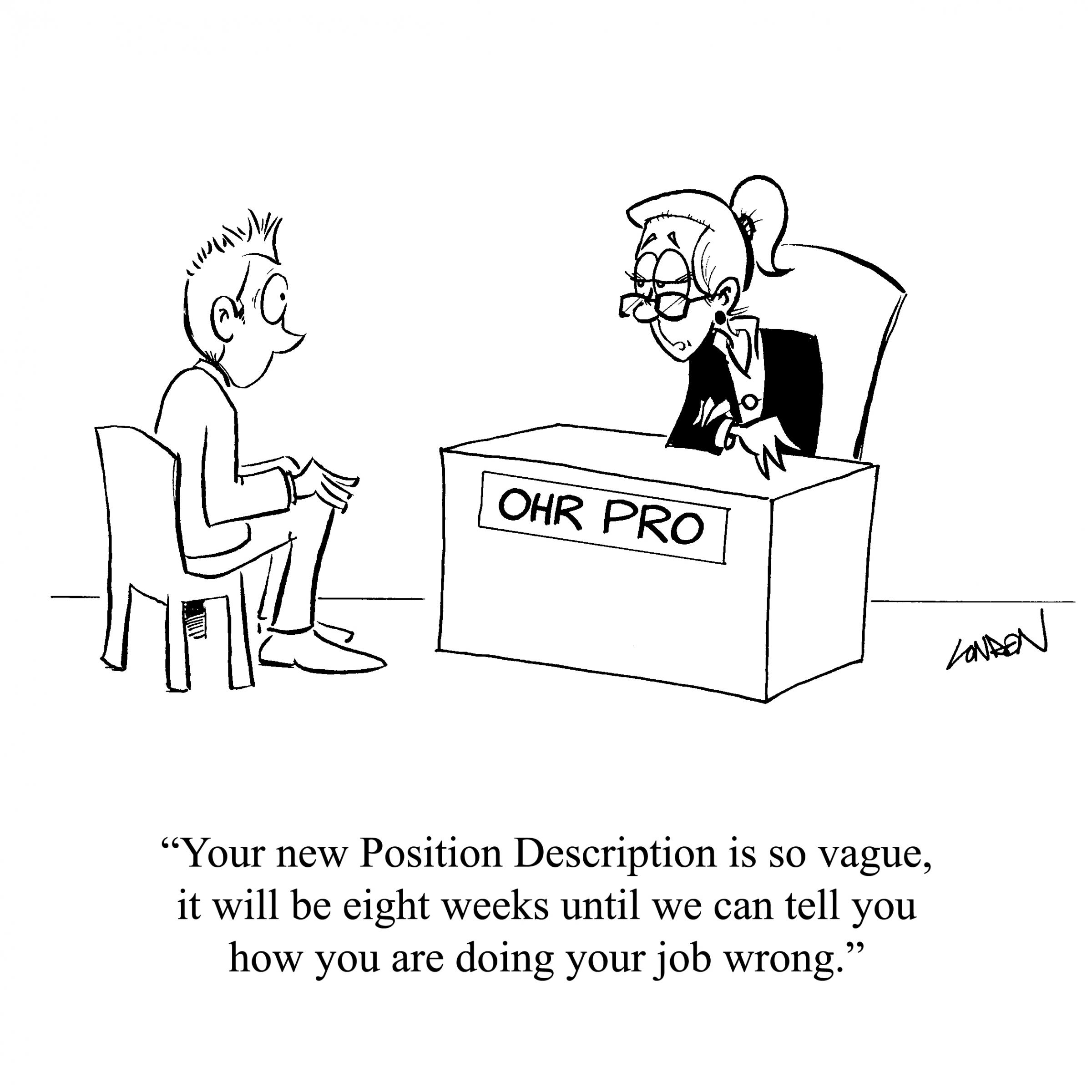
Cartoon – This resume is incredible



https://www.healthcaredive.com/news/payer-trade-groups-slam-short-term-health-plan-proposal/521941/

More organizations, including Aetna and the American Medical Association, submitted comments on the proposed rule Monday.
The comments are indicative that many insurers are hesitant to back health plans that lack the consumer protections the ACA put into place due to a fear such plans would destabilize the individual market. Monday is the last day to submit comments on the rule.
A new Kaiser Family Foundation brief notes that many middle-income people not shielded by premium subsidies in the individual market would likely see premium costs increase. Combined with the individual mandate penalty being zeroed out, the effort to increase STLD plans could result in fewer individuals enrolled in the ACA market, adversely impacting its stability.
“Short-term plans were designed for consumers to use as temporary, stop-gap measures when moving between plans – not as long-term replacements for health insurance,” ACHP CEO Ceci Connolly said in a statement. “A broad, stable risk pool is crucial for providing affordable coverage and care. ACHP believes that other policy options, such as reinsurance, would be far more effective at promoting high-quality, affordable coverage and care for all Americans.”
ACHP argued the proposed rule should not be finalized, saying the current status-quo limit of 90 days should be maintained.
AHIP called for any final rule to limit the duration of STLD plans to six months, adding that the plans should be required to have a plain-language disclosure that the plans should not be considered comprehensive health insurance. The group argued that the effective date of any final rule should come no sooner than Jan. 1, 2020.
“As the Departments advance policies to expand access to lower-cost coverage choices for a subgroup of consumers, it is critical to improve the affordability of comprehensive coverage options for all Americans, regardless of health status,” Matthew Eyles, AHIP COO, wrote in the group’s comment.
But major insurer Aetna, which left AHIP in 2016, said in its comment STLD plans “can be a valuable option for many consumers.”
The insurer argued that such plans must be transparent with disclosure language, limit any look-back period for pre-existing conditions to 12 months and define a minimum floor of benefits including inpatient hospital services, physician services, mental health and substance abuse services and one annual physical and annual well-woman visit before the deductible.
A group of Senate Democrats were among those asking for the rule to not be finalized, arguing it “could increase costs and reduce access to quality coverage for millions of Americans, harm people with pre-existing conditions, and force premium increases on older Americans.”
The American Medical Association also echoed the insurance lobby’s concern, saying STLD plans would endanger the coverage gains of the past decade and destabilize the market. AMA argued the administration should withdraw the proposed rule, saying it is “a step in the wrong direction and will lead to a proliferation of inadequate health insurance policies in the market.”
A joint comment of 21 consumer advocates, including March of Dimes and the American Cancer Society Cancer Action Network, also called for withdrawing the proposal.
PhRMA voiced concern in its comment over the lack of prescription drug coverage in STLD plans, citing an analysis that found than 71% of such plans do not cover outpatient prescription drugs. “If consumers can renew these plans for an extended period, it increases the chances that consumers may find themselves diagnosed with a new condition that can be effectively treated by an innovative drug at a time when they are covered by a short-term plan that does not cover prescriptions drugs,” PhRMA wrote.
https://www.healthcaredive.com/news/court-allows-class-action-csr-payment-lawsuit/521866/

The ACA provided CSR payments to insurers to cover Americans with household incomes between 100% and 250% of the poverty line. The payments were supposed to keep down out-of-pocket costs for lower-income Americans.
However, Trump ended the CSR payments last October with the administration arguing Congress is responsible for them. Efforts on Capitol Hill to grant those payments have since faltered.
Without those CSR payments, insurance companies in the ACA exchanges charged higher premiums for 2018. Middle class and upper middle class members in ACA plans saw their insurance premiums rise this year.
However, stopping CSR payments actually resulted in lower healthcare costs for the poorest people in the ACA marketplace. An ACA provision kicked in that provides premium-reducing subsidies if the premiums increased too much for lower-income members.
Another piece in the CSR discussion is the payer practice of “silver loading,” in which ACA insurers put all the losses associated with no CSR payments onto their silver plans. CSR discounts were only offered for silver plans and they make up more than half of ACA plans. CMS Administrator Seema Verma recently declined to say whether the administration will limit payers’ use of government subsidies, and a Robert Wood Johnson Foundation paper predicted “silver loading is likely to continue next year and will probably expand to more states.”
As the deadline for payers to set 2019 rates narrows, insurers are threatening even higher premiums without CSRs and other market stabilization efforts, such as a reinsurance program.
Alliance of Community Health Plans CEO Ceci Connolly recently told Healthcare Dive, “Losing the individual mandate, losing the cost-sharing reduction subsidies and losing any hint of reinsurance, not to mention the risk corridors that were already gone, you’re just running out of options to manage the cost of this program.”
In a recent report, the Center on Budget and Policy Priorities warned higher premiums may cause healthy members in ACA plans to flee the market and either drop health coverage or choose a low-cost plan, such as a short-term catastrophic plan.
https://www.healthcaredive.com/news/adventist-healths-net-income-nears-230m-in-fy17/522093/

Adventist’s rosy performance gain reflects at least a short-term upward trend in financials as nonprofits show some signs of bouncing back from several years of rough currents fueled by shrinking volumes and reimbursement cuts. Geisinger Health System saw net income jump nearly $200 million to $324.9 million in the first half of fiscal year 2018, compared with the prior year, providing an excess margin of 9%.
Mayo Clinic reported $707 million in operating income and $12 billion in revenue for 2017, an increase of more than $225 million and $1 billion, respectively, from the previous year. Meanwhile, UPMC’s net income rose to $1.3 billion last year, spurred by strong operating and investing results and integration of UPMC Pinnacle into UPMC operations. Operating revenue and operating income also increased.
Adventist is looking to expand its brand footprint. Earlier this month, the system inked a deal to acquire Florida-based 421-bed Munroe Regional Medical Center from Community Health Systems. It has also broadened its reach in northern California through an affiliation agreement with Fremont-Rideout Health Group, which become effective at the first of this month.
Net patient service revenue at Adventist was $3.8 billion, up from $3.6 billion a year earlier. Total expenses rose to $3.9 billion, versus $3.7 billion in 2016. Of that, $1.9 billion was for employee compensation. The system recorded total cash and investments of $1.9 billion for last year.
Occupancy of licensed beds stayed mostly flat at 55.6% across the system. Average length of stay was down slightly and outpatient revenues as a percentage of gross patient revenue was down to 44.7% from 45.1% in 2016.

The protests appear to be the continuation of similar actions earlier this year when SEIU organized protests at 32 hospitals in February and March.
The company recently issued an official notice to lay off 61 pharmacy warehouse workers in Downey, California. According to SEIU-UHW, the company plans to lay off 175 more pharmacy warehouse employees in Oakland, Livermore and Los Angeles and relocate 700 call center jobs to cheaper areas of the state.
The union noted that 55,000 Kaiser Permanente employees in California are members of SEIU-UHW. The national agreement with Kaiser for a broader group of unions expires Sept. 30.
John Nelson, vice president of communications at Kaiser Permanente, called the claims by SEIU-UHW misleading.
“Kaiser Permanente is growing, and we are adding jobs overall. As one of the largest private employers in California with more than 149,000 employees and 16,000 physicians in the state, since 2015, we have added more than 13,000 jobs in California and continue to add jobs with more than 12,000 open staff positions and hundreds of physician positions,” Nelson said in a statement.
It appears that politics may be coming into play. Several elected officials have sent letters including California Democrat Reps. Tony Cardenas, Grace Napolitano, Adam Schiff, Lucille Roybal-Allard and Brad Sherman urging Kaiser Permanente to reconsider its plans.
“It is imperative that Kaiser Permanente continue to flourish by providing quality healthcare to patients while also being a good partner when it comes to job creation which benefits our community,” former California Senate President Pro Tempore Kevin De León wrote in a letter.
 HENRY KOTULA